Basic Math Skills Sorting Worksheets
4 filtered results
-
From - To
Enhance your child's foundational math abilities with our Basic Math Skills Sorting Worksheets! Perfect for early learners, these worksheets focus on critical sorting and categorization skills that support children in recognizing numbers, shapes, and patterns. Engaging and interactive, our worksheets are designed to make learning fun and effective, fostering essential problem-solving skills. Kids will enjoy sorting various items and numbers, which helps to improve their analytical thinking and organizational abilities. Ideal for classroom settings or home practice, our worksheets are easily downloadable and printable, providing a convenient way to reinforce basic math concepts while keeping your little ones entertained. Start sorting today!
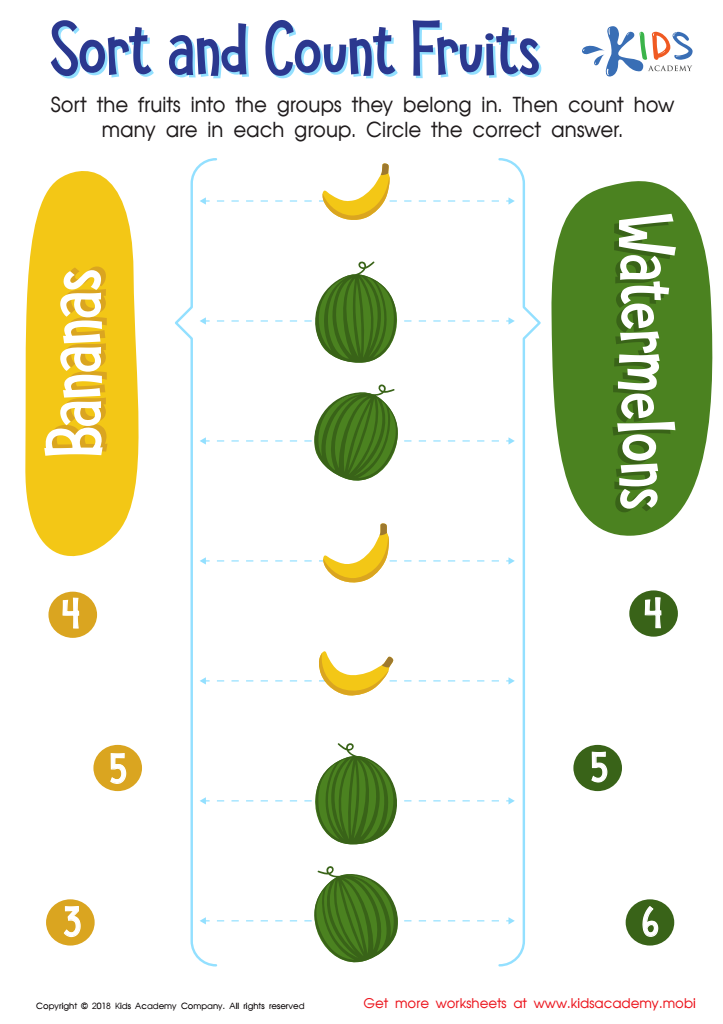
Sort and Count Fruits Worksheet
 Assign to My Students
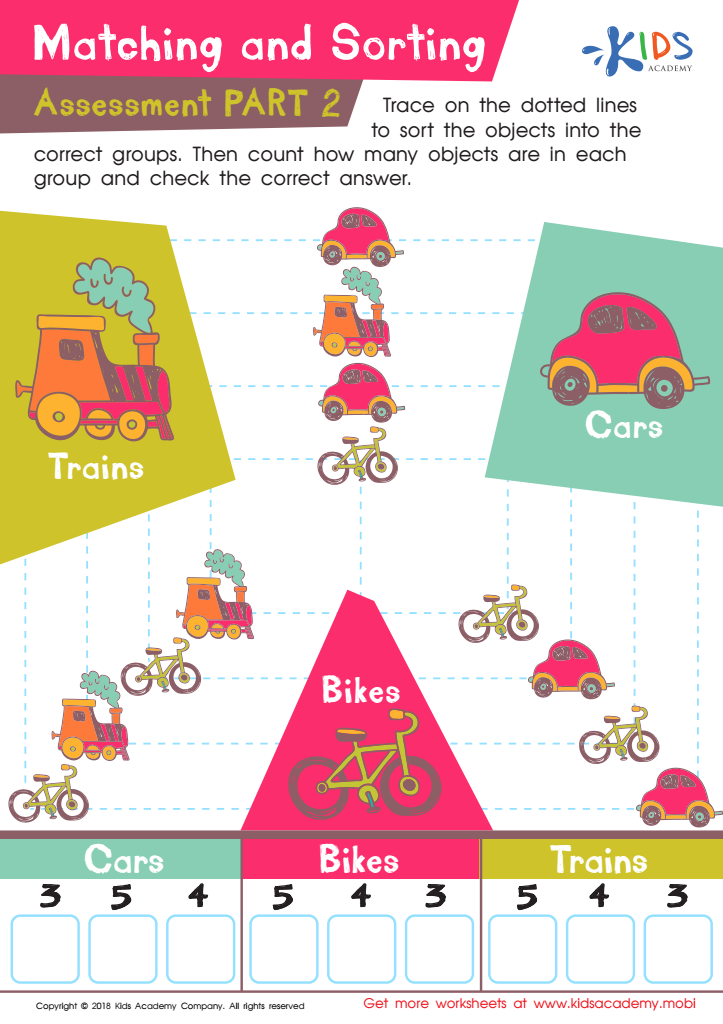
Matching and Sorting for Kindergarten: Assessment 2 Worksheet
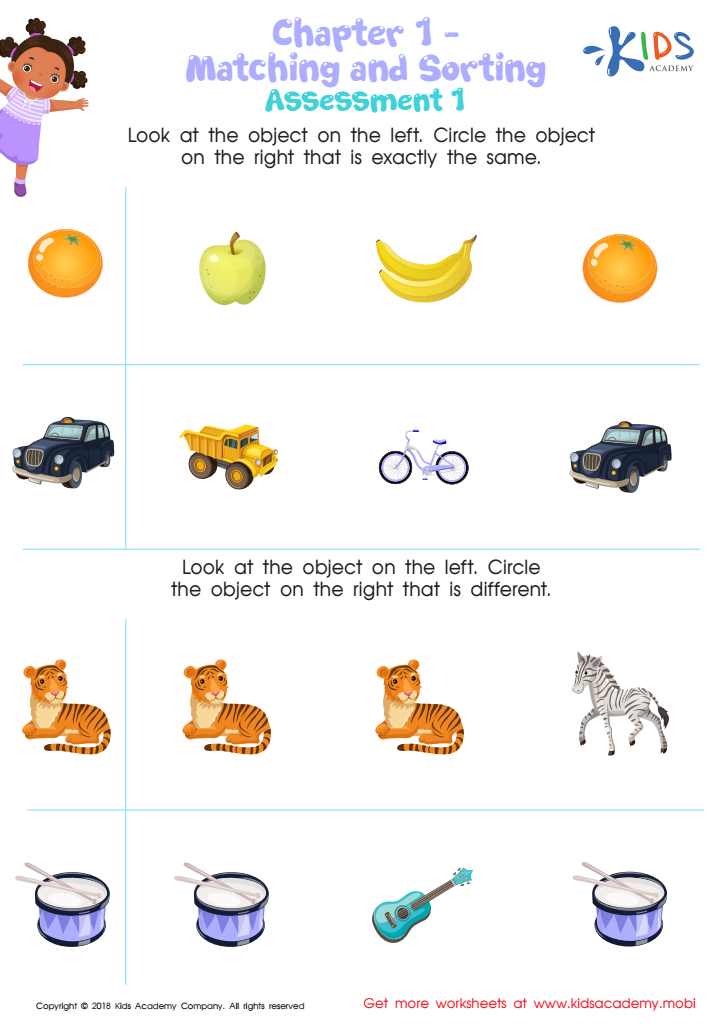
Matching and Sorting for Preschool: Assessment 1 Worksheet
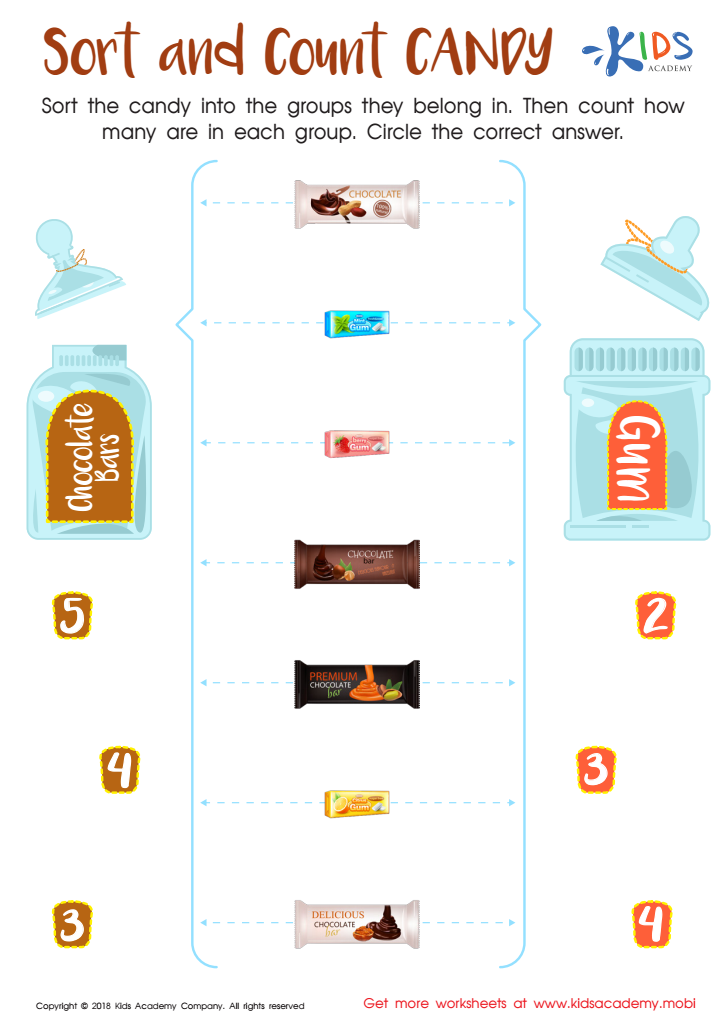
Sort and Count Candy Worksheet







Basic math skills, such as sorting, are foundational for young learners and play a critical role in their cognitive development. Parents and teachers should prioritize sorting activities because they help children learn to categorize and organize their thoughts, enhancing problem-solving abilities. Sorting activities reinforce children’s understanding of patterns, which is essential in mathematics and science.
Moreover, sorting encourages critical thinking and decision-making, as children assess attributes such as size, shape, and color to group objects. These skills not only lay the groundwork for more complex math concepts in the future, but they also support language development when children articulate their reasoning and describe their sorting process.
Additionally, sorting can have a broader impact on everyday life skills. Learning to observe and classify items helps children apply logical reasoning in real-world contexts, fostering independence. By engaging in sorting games or activities, students gain confidence and enjoyment in math, progressively reducing any anxiety related to the subject.
Ultimately, teaching sorting isn’t just about math; it equips kids with essential skills that benefit their overall educational journey and personal growth, essential for thriving in a structured environment. Providing opportunities to develop these skills contributes to empowered, capable young learners.








