Understanding fractions Sorting Worksheets
3 filtered results
-
From - To
Discover the engaging "Understanding Fractions Sorting Worksheets" designed to help young learners grasp the concept of fractions in a fun and interactive way. These worksheets provide a hands-on approach to sorting and classifying fractions, enabling students to distinguish between proper, improper, and equivalent fractions. As children work through various sorting activities, they sharpen their critical thinking and organizational skills, making fraction learning enjoyable and effective. Perfect for educators and parents alike, these worksheets align with early math curricula and help lay a solid foundation for future math success. Dive into the world of fractions and inspire confidence in young learners today!
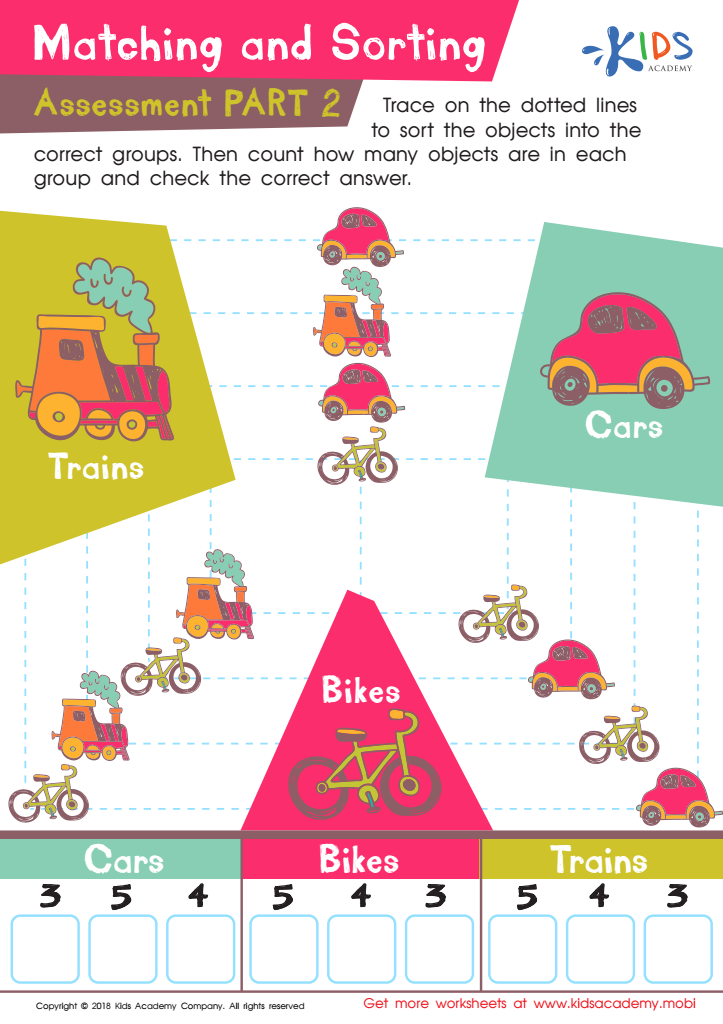
Matching and Sorting for Kindergarten: Assessment 2 Worksheet
 Assign to My Students
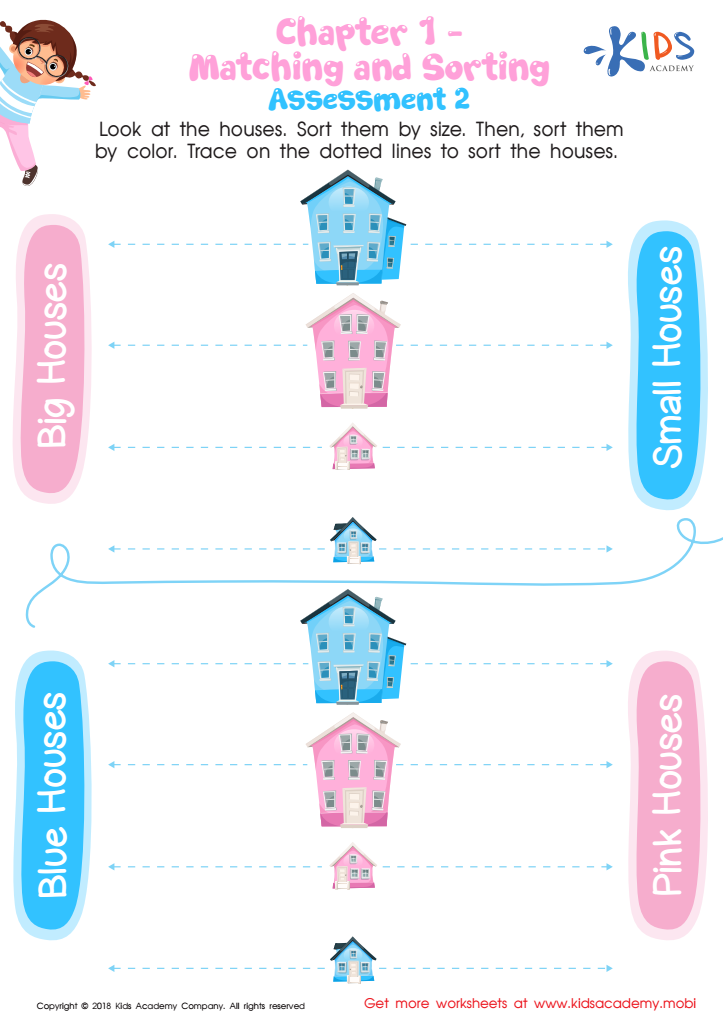
Matching and Sorting for Preschool: Assessment 2 Worksheet
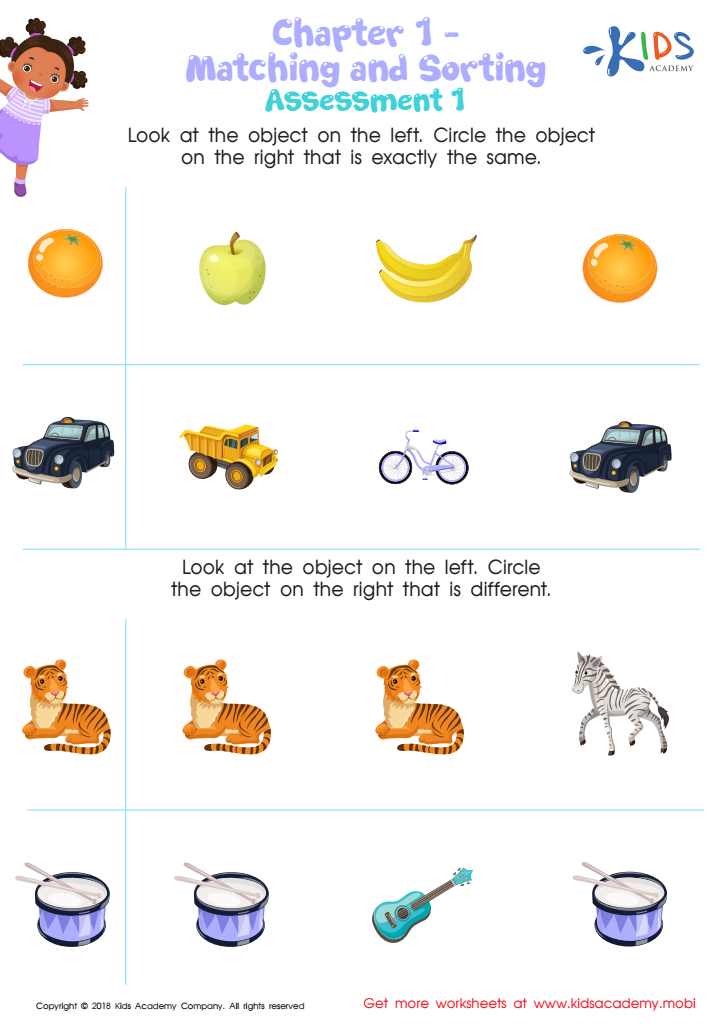
Matching and Sorting for Preschool: Assessment 1 Worksheet








Understanding fractions is a critical skill for young learners, as it lays the foundation for more advanced mathematical concepts. Parents and teachers should prioritize teaching fractions because they support numerous everyday applications. Fractions aid in cooking, measuring, budgeting, and understanding proportions, making them essential for daily life.
Sorting fractions reinforces comprehension by allowing students to categorize and compare them visually. This helps in grasping concepts such as equivalence, addition, and subtraction of fractions. By sorting, students learn to recognize patterns and relationships between different fractions, which deepens their understanding. Moreover, engaging in sorting activities promotes critical thinking, as students analyze and classify fractions based on common denominators or numerators.
Fostering an understanding of fractions also inspires confidence in math, reducing anxiety around numbers. When children can visualize and manipulate fractions through sorting, they become more proficient problem-solvers. For parents and teachers, encouraging this skill not only enhances students' mathematical abilities but also contributes to overall academic success and engagement. Investing time in understanding fractions equips learners with tools they need, ensuring they become competent and confident math users in the future.








