
Understanding time Time Worksheets
3 filtered results
Difficulty Level
Grade
Age
-
From - To
Subject
Activity
Standards
Discover engaging Understanding Time worksheets designed to help young learners master the concept of time. Our resources simplify the learning process, allowing students to grasp essential skills such as reading clocks, identifying AM and PM, and understanding elapsed time. Each worksheet features fun, interactive activities that make practicing time-telling enjoyable. Perfect for early grade teachers and parents, these worksheets cater to various learning styles, ensuring a comprehensive understanding of time for all children. Whether in the classroom or at home, our easy-to-use worksheets provide a valuable tool in building foundational time management skills. Explore our collection for playful and effective learning!
Favorites
With answer key
Interactive
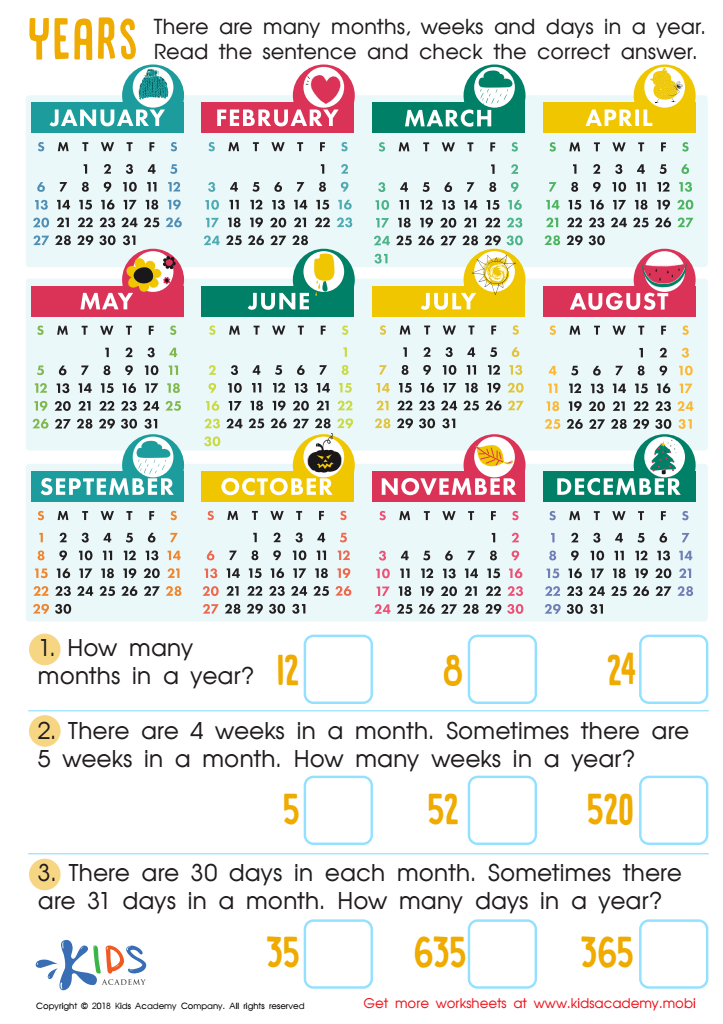
Years Worksheet
This worksheet is a great way to test your children's knowledge of the calendar. Ask them if they can name the days of the week and months in a year. Read and discuss the questions with them and help them find the right answers. Encourage them to check their answers.
 Assign to My Students
Years Worksheet
Worksheet
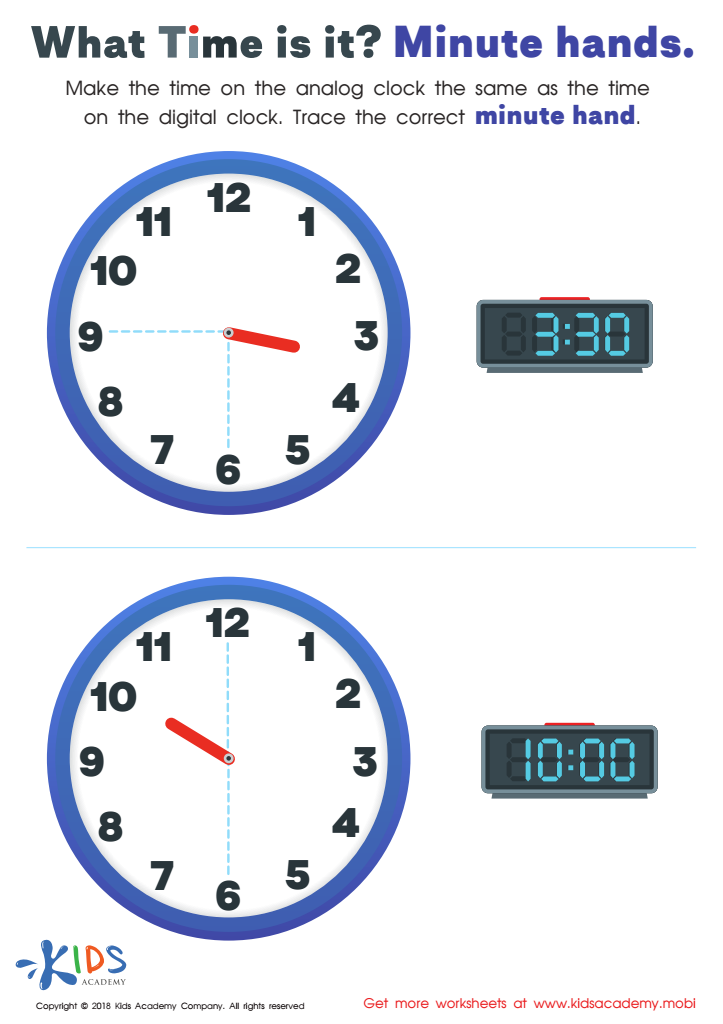
What Time Is it? Minute Hands Worksheet
Help your kids telling time with the minute hand correctly with this tracing sheet. Trace the correct minute hand to make the time on the analog clock the same as the time on the digital clock. Give them a pictured demonstration of how to do it and you'll be all set!
What Time Is it? Minute Hands Worksheet
Worksheet
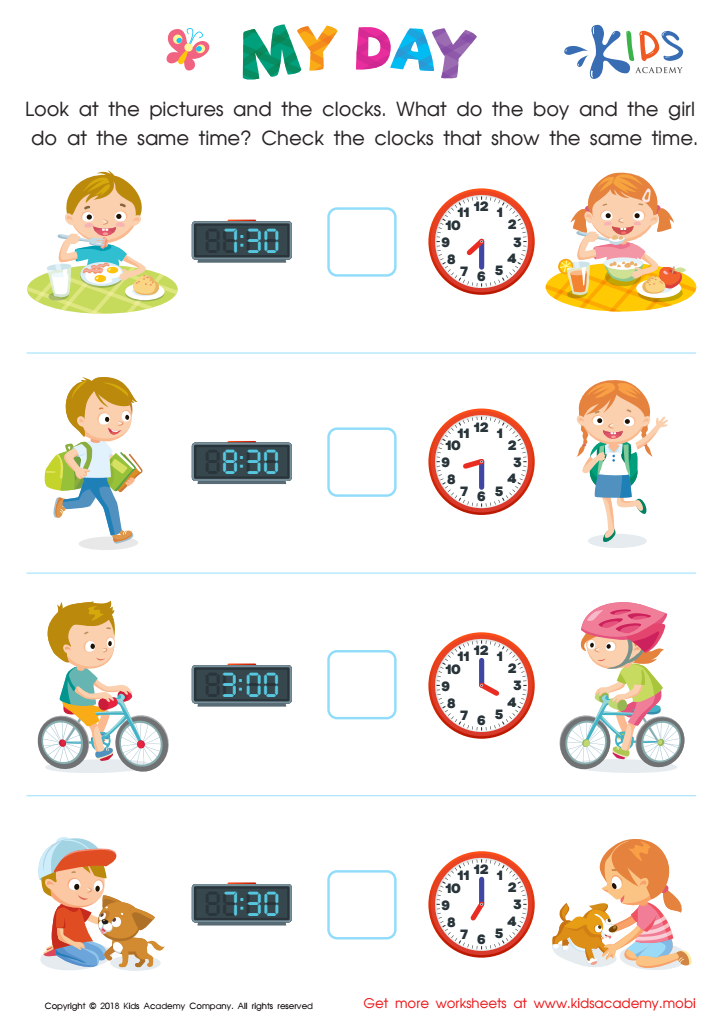
My Day Worksheet
Show your students the pictures and clocks in the colorful worksheet. Ask what the boy and girl are doing in each, then what time the clocks show. Finally, ask what activities they both do at the same time. Help them check the clocks showing the same time in both pictures.
My Day Worksheet
Worksheet
Join Kids Academy for Free
Who is primarily going to use this learning content?







.jpg)
Understanding time is essential for both parents and teachers as it plays a crucial role in helping children develop life skills, organizational abilities, and a sense of responsibility. Time management fosters independence in children, allowing them to prioritize tasks like homework, chores, and extracurricular activities. By instilling an appreciation of time, parents and teachers can empower children to set and achieve their goals effectively.
Moreover, time helps children understand routines and structure which is vital for their emotional and social development. Knowing the importance of punctuality prepares them for future academic and professional environments where deadlines and schedules are prevalent. Additionally, understanding concepts like past, present, and future supports cognitive development and enhances language skills.
Teaching children to read clocks, follow schedules, and plan ahead contributes to a stronger sense of self-discipline and improves their confidence. Furthermore, embracing experiences related to time, such as family traditions or school events, cultivates a deeper understanding of community and relationships.
Ultimately, by emphasizing the significance of time, parents and teachers equip children with essential skills necessary for navigating both their academic journeys and personal lives in a fast-paced world.








