Shape identification Tracing Shapes Worksheets
3 filtered results
-
From - To
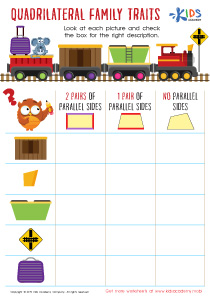
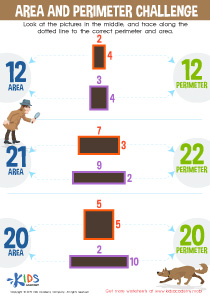
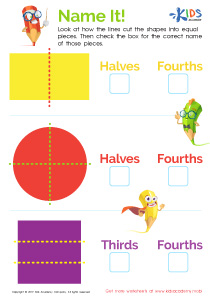
Discover our engaging "Shape Identification Tracing Shapes Worksheets" designed to help young learners master the basics of geometry. These delightful, educational worksheets from Kids Academy provide a fun and interactive way for children to identify and trace various shapes, enhancing their understanding and recognition. Through perfectly curated activities, kids develop fine motor skills, critical thinking, and spatial awareness, all while enjoying the learning process. Ideal for preschool to early grade students, our shapes tracing worksheets are a powerful tool for building a strong foundational knowledge of geometry. Explore today and make shape learning an exciting adventure!
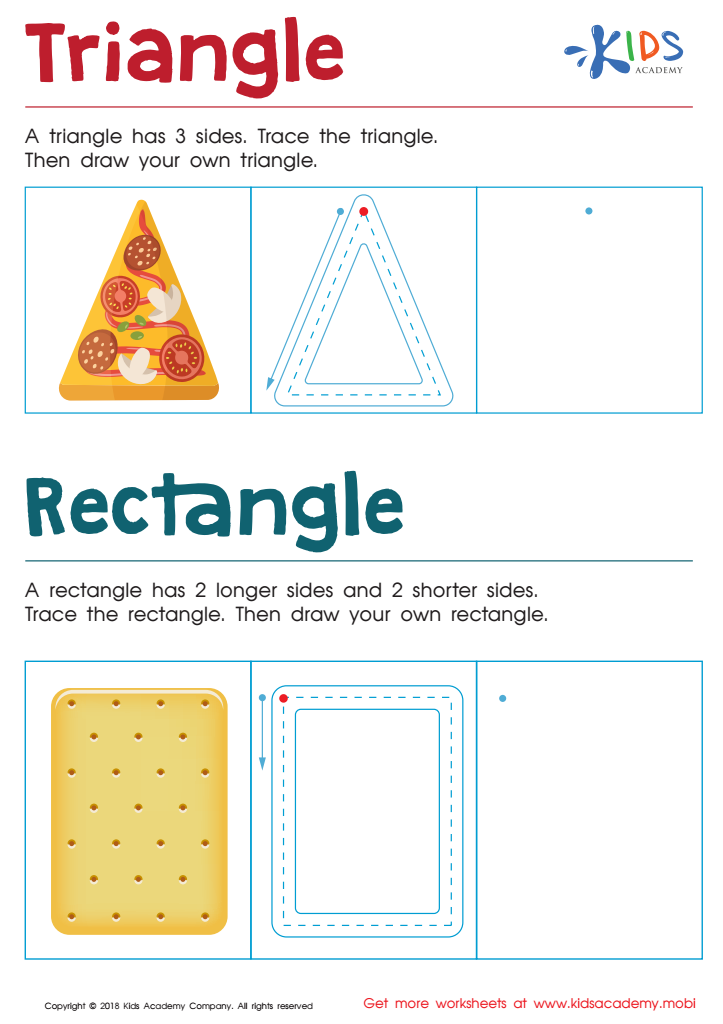
Triangle Rectangle Worksheet
 Assign to My Students
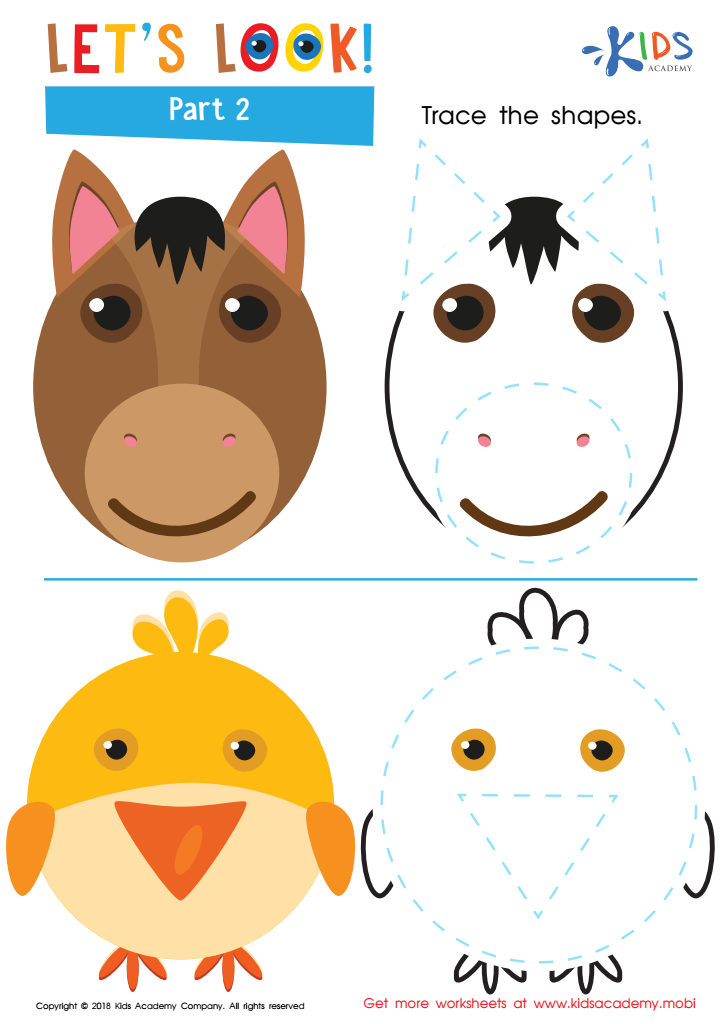
Let's Look! Part 2 Worksheet
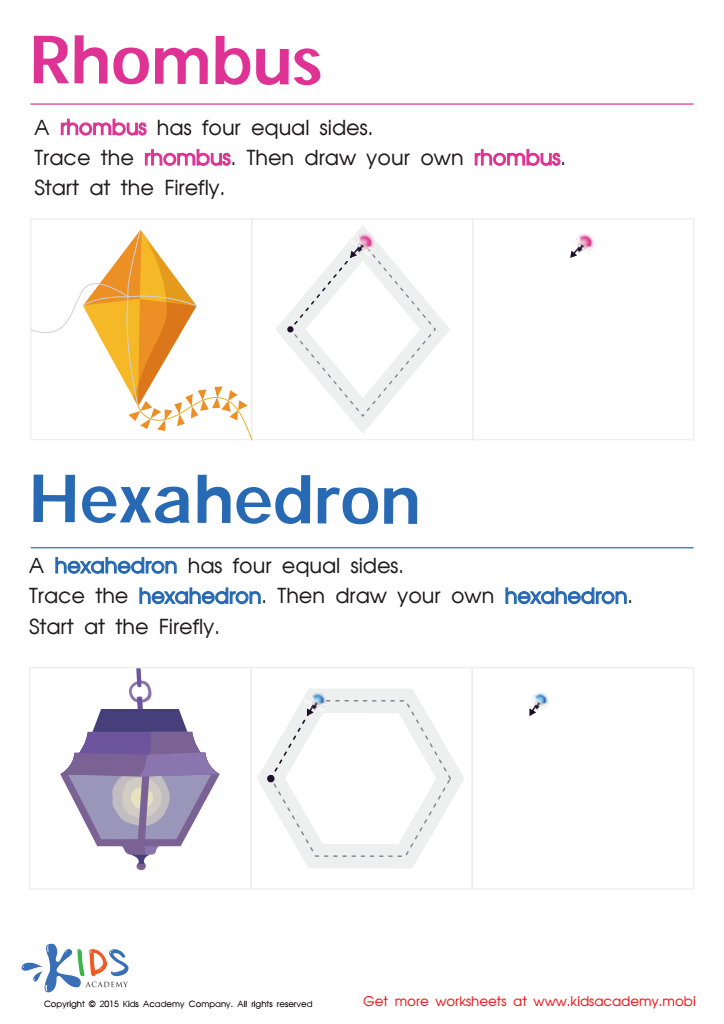
Draw a Rhombus And a Hexahedron Printable








Parents and teachers should care about shape identification and tracing shapes because these foundational activities support critical developmental milestones in early childhood education. Learning to identify shapes aids in the development of visual discrimination skills, which are crucial for recognizing patterns, letters, and numbers in the future. Tracing shapes, on the other hand, promotes fine motor development, enhancing children’s hand-eye coordination and muscle control needed for writing and other daily tasks.
Moreover, understanding shapes forms the basis for geometry, a key area in mathematics, encouraging spatial awareness and logical thinking. Recognizing shapes in their environment helps children make sense of the world around them, improving their observational skills and cognitive development.
Engaging in shape-related activities also nurtures creativity as children use shapes in drawing and constructing objects, allowing them to express themselves and expand their imagination. These activities can be particularly engaging and fun, which fosters a positive attitude towards learning.
In addition, shape identification and tracing can help in language development, as children learn new vocabulary and concepts through structured play. Overall, these skills are interconnected with multiple domains of early learning, making them essential elements to focus on for holistic child development.