Handwriting Skills Normal ABC Order Worksheets for Ages 3-4
5 filtered results
Difficulty Level
Grade
Age
-
From - To
Subject
Activity
Standards
Welcome to our "Handwriting Skills Normal ABC Order Worksheets," designed specifically for ages 3-4! These engaging worksheets facilitate young learners in mastering the alphabet while developing essential handwriting skills. Each page is tailored to help children recognize letter shapes and learn the proper writing techniques through fun, interactive activities. Our worksheets promote fine motor skills and encourage confidence in penmanship, setting a solid foundation for future learning. With vibrant illustrations and age-appropriate challenges, your little ones will enjoy honing their handwriting skills while exploring the world of letters. Start the journey to literacy today with these delightful worksheets!
Favorites
With answer key
Interactive
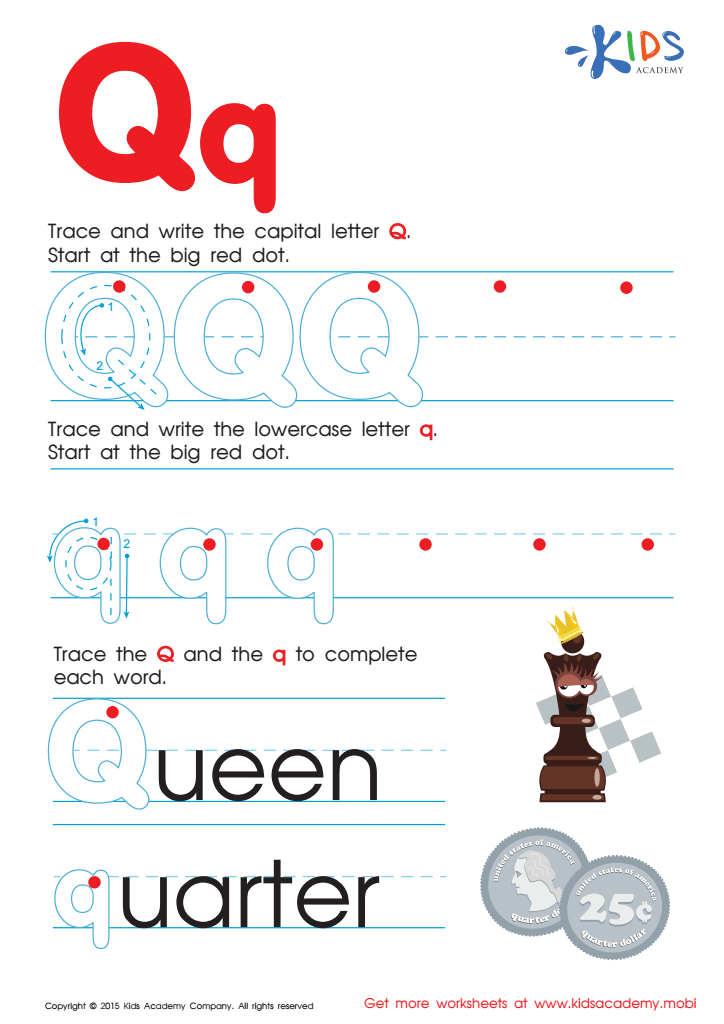
Letter Q Tracing Page
Learn the letter "Q"! Trace and write it a few times in upper and lowercase. Then help the Queen by writing her initial letter. Finally, write "quarters" and practice with more alphabet worksheets.
 Assign to My Students
Letter Q Tracing Page
Worksheet


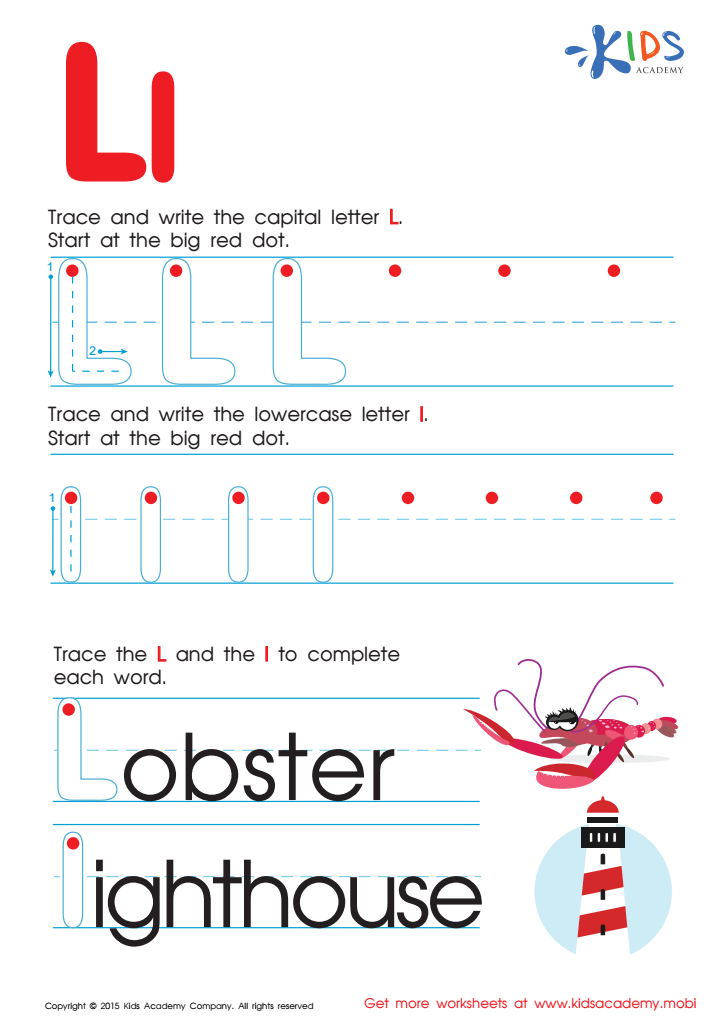
Letter L Tracing Page
Trace uppercase and lowercase letters to practice writing. Pay attention to the lowercase letters, like the "L", that are not as tall as an uppercase "I" or as short as a lowercase "i". Words like "lobster" and "lighthouse" are waiting to be completed. Enjoy!
Letter L Tracing Page
Worksheet
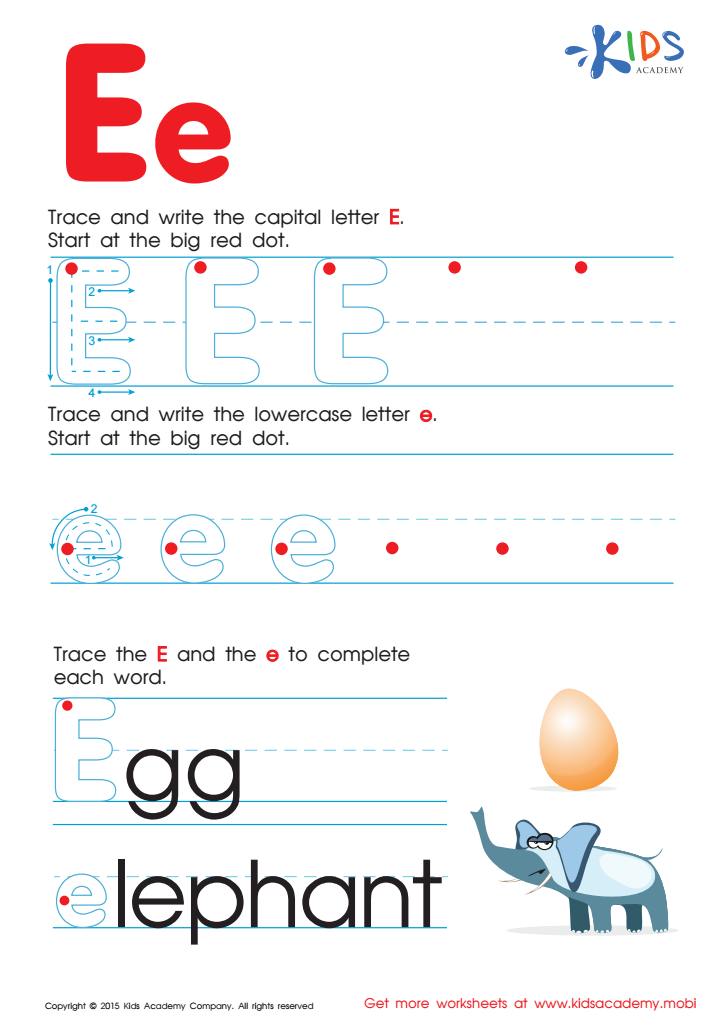
Letter E Tracing Page
Trace and write the uppercase and lowercase "E" starting at the big red dot. Complete words to perfect letter writing. Egg and Elephant must be written carefully. More alphabet worksheets for kindergarten are available for download to spend more time with your children learning.
Letter E Tracing Page
Worksheet
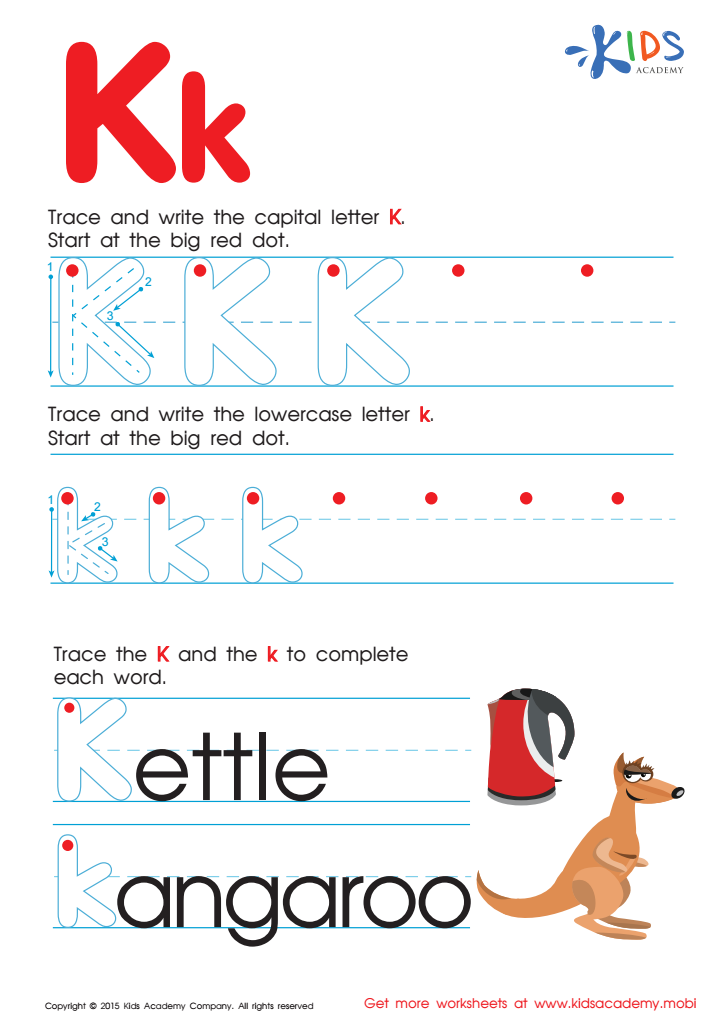
Letter K Tracing Page
Trace and write the letter K; start at the big red dot. Use it to complete words like "Kettle" and "Kangaroo". Visit Kids Academy for more free alphabet worksheets for kindergarten.
Letter K Tracing Page
Worksheet

Letter F Tracing Page
Trace "F" with your pencil! Start at the red dot and draw lines — it's fun! Check it out — it looks great! Keep practicing to make it even better. Then, try completing words. Help out the broken fan and funny frog! Get free alphabet worksheets and activities for your kids. Come see our new tracing pages!
Letter F Tracing Page
Worksheet
Join Kids Academy for Free
Who is primarily going to use this learning content?








Handwriting skills, particularly learning the normal ABC order, are essential for children aged 3-4 as they lay the foundation for future literacy and communication. At this age, children are not only developing fine motor skills but also cognitive abilities that will significantly influence their academic journey. Mastering the alphabet in sequence helps children recognize and differentiate letters, enhancing their reading and writing capabilities.
Learning the alphabet in proper order promotes symmetry and spatial awareness, allowing children to understand how letters relate to each other within words. Moreover, it fosters phonemic awareness, which is crucial for language development. When parents and teachers emphasize this skill, they effectively support children's self-expression and creativity, as writing serves as a powerful tool for them to share ideas and emotions.
Additionally, engaging activities centered around handwriting make learning fun and interactive. By prioritizing handwriting skills, parents and teachers equip children with essential tools for their educational path, thereby instilling confidence and motivation in their literary competencies. Overall, understanding the importance of handwriting skills in alphabetical order serves as a stepping stone for broader learning concepts, making it a vital focus in early childhood education.