Rhyming skills development Normal Alphabet Worksheets for Ages 3-4
3 filtered results
-
From - To
Our Rhyming Skills Development Worksheets for Ages 3-4 are designed to enhance your child's early literacy through fun and engaging activities. These normal alphabet worksheets focus on building essential rhyming skills, which are crucial for phonemic awareness and overall language development. Featuring colorful illustrations and playful exercises, children will enjoy exploring word sounds and relationships while honing their writing abilities. Perfect for home or classroom use, these worksheets serve as a valuable resource to help young learners grasp the magic of rhymes, setting a solid foundation for reading success. Start your child’s rhyming journey today!
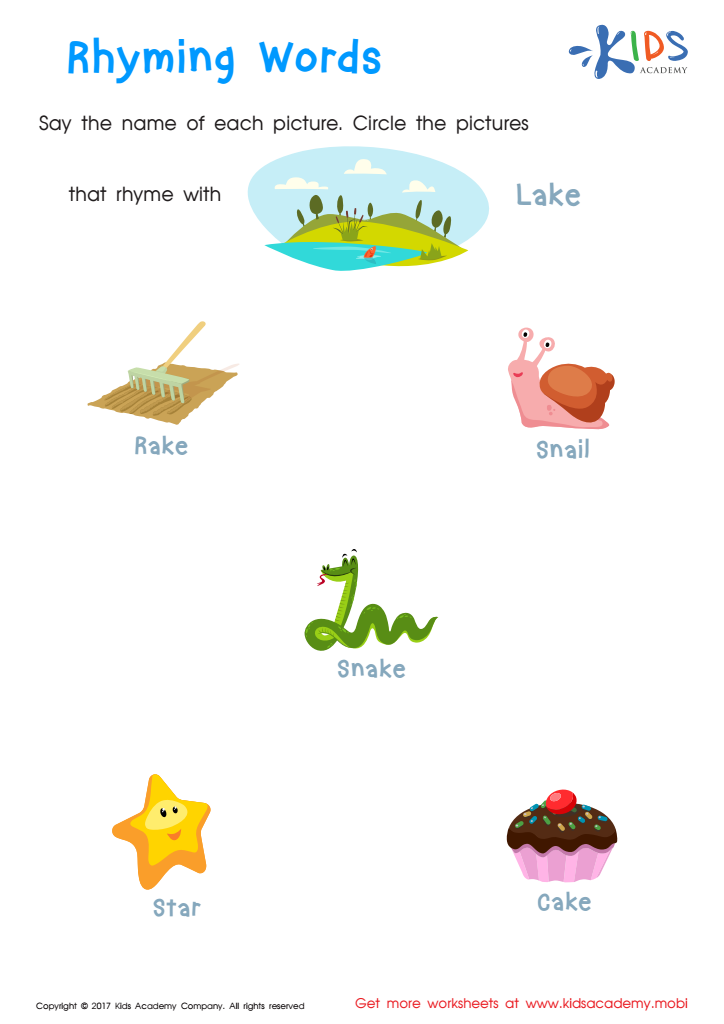
Rhyming Words Rhyming Worksheet
 Assign to My Students
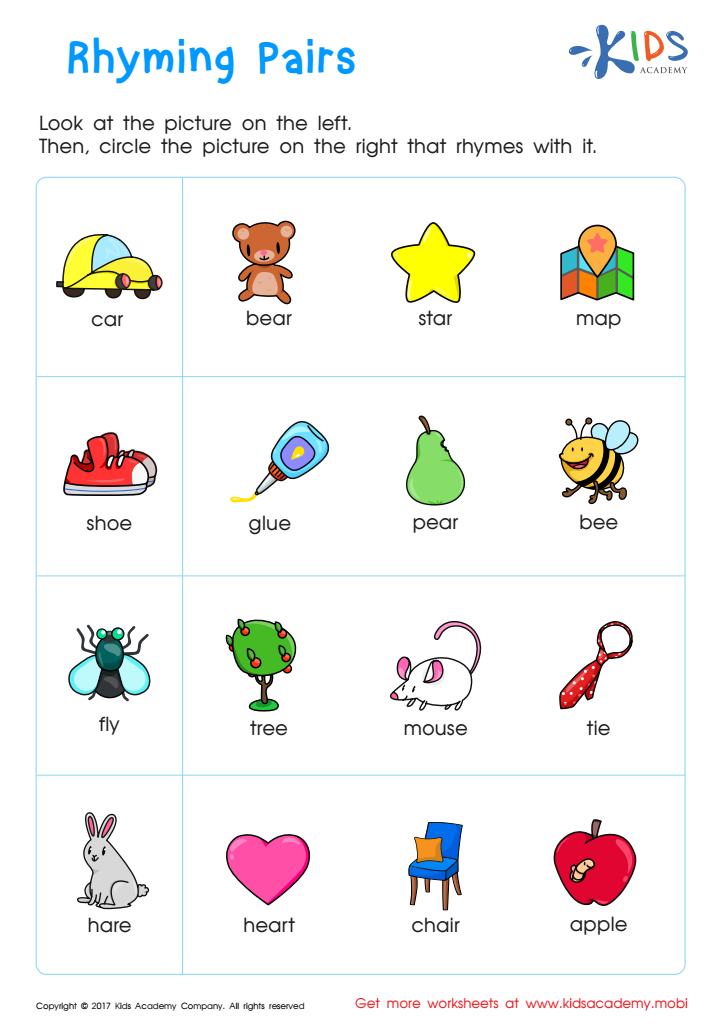
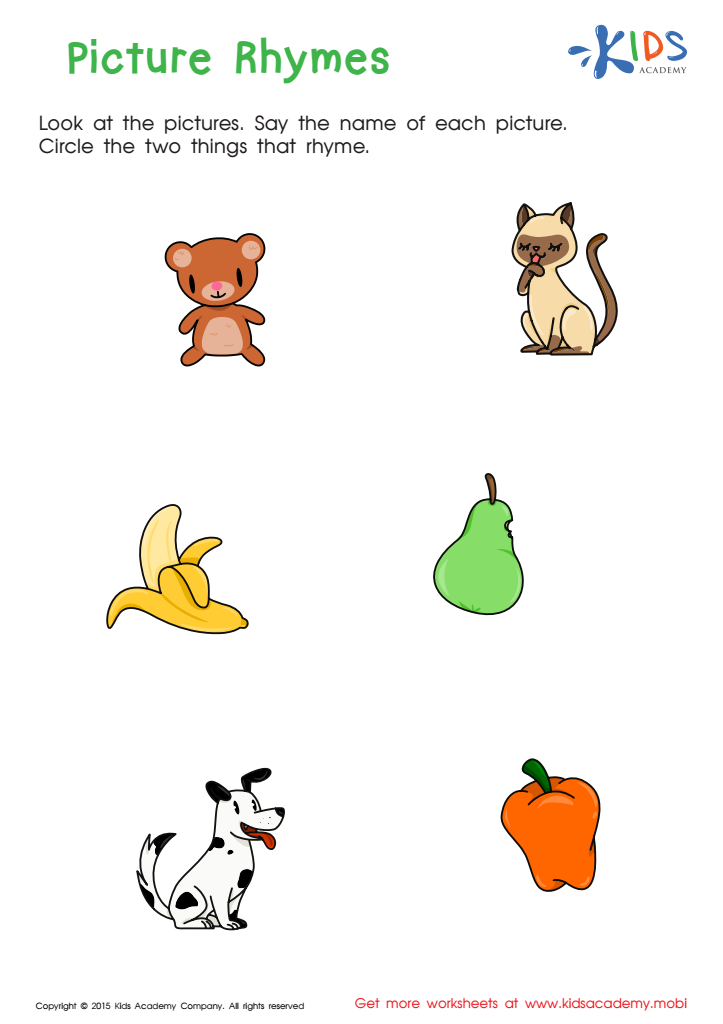
First Words: Picture Rhymes Worksheet








Rhyming skills development is an essential aspect of early literacy for children aged 3-4, often overlooked by parents and teachers. Firstly, rhyming helps in phonemic awareness, a vital precursor to reading. Children learn to recognize and manipulate sounds, which lays a solid foundation for decoding words in the future.
Additionally, engaging in rhyming activities enhances vocabulary development. When kids play with sounds, they become more familiar with words and their meanings, leading to richer language skills. Furthermore, rhyming promotes memory retention, as repetitive sounds and patterns make it easier for young minds to recall information.
Rhyming also encourages creativity and linguistic play. As children experiment with sounds and words, they gain confidence in their verbal abilities, making communication more fun and interactive. This skill fosters social development as children share and create stories during playtime, strengthening their social bonds.
Moreover, rhyming in songs and games nurtures a love for language and literature, building a lifelong interest in reading. For parents and teachers, supporting rhyming skills not only aids academic success but also enriches a child's overall development, making it a crucial element of early childhood education.







