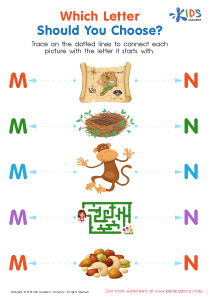
Lowercase identification Normal Lowercase/Small Letters Worksheets for Ages 3-4
4 filtered results
-
From - To
Welcome to our collection of Lowercase Identification Worksheets, designed specifically for children aged 3-4! These engaging activities help young learners develop essential skills in recognizing and identifying lowercase letters. Our printable worksheets feature colorful illustrations and interactive exercises that make learning fun and enjoyable. Each worksheet encourages kids to practice their letter identification, setting a solid foundation for future reading and writing success. Perfect for use at home or in preschool settings, these worksheets support early literacy development while keeping little ones entertained. Explore our resources today and help your child build confidence in their lowercase letter recognition skills!
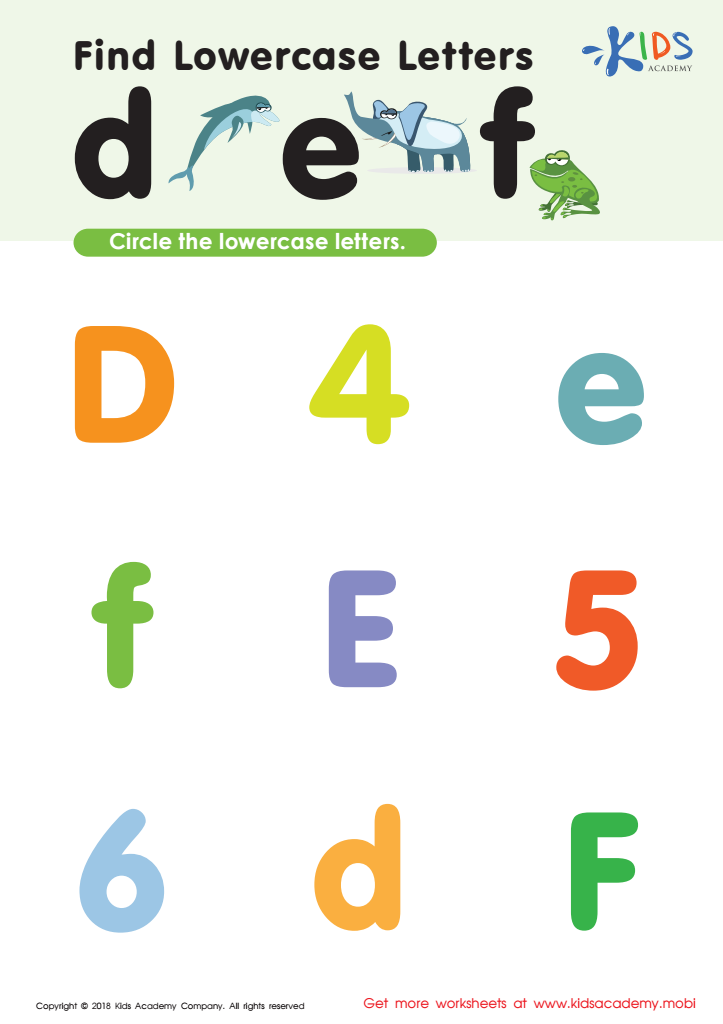
Find Lowercase Letters d e f Worksheet
 Assign to My Students
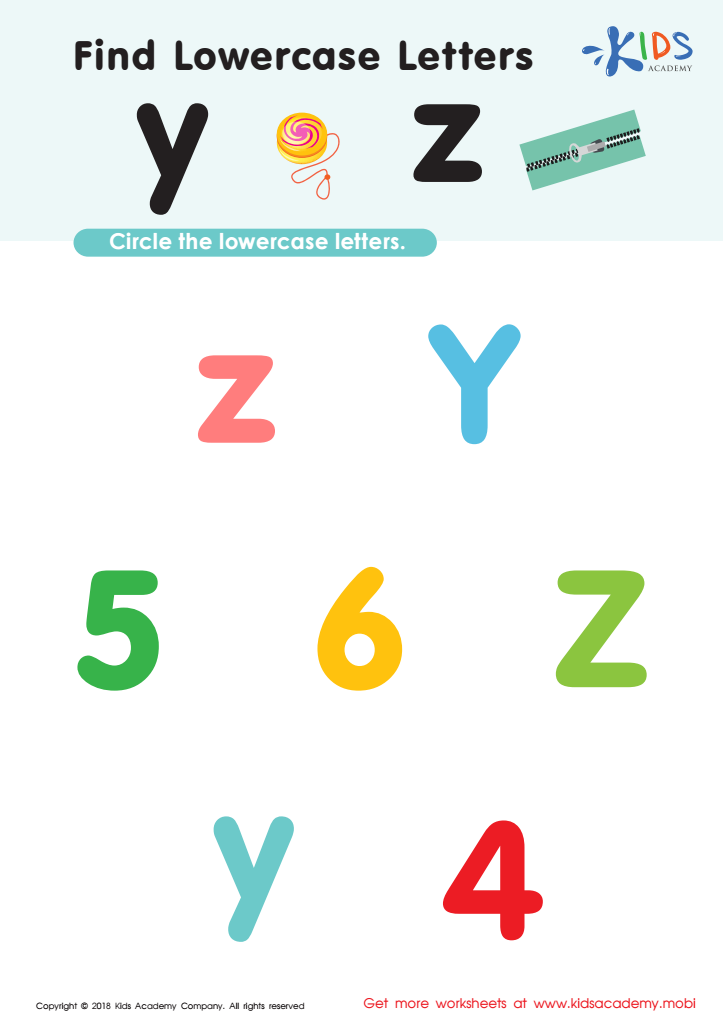
Find Lowercase Letters y z Worksheet
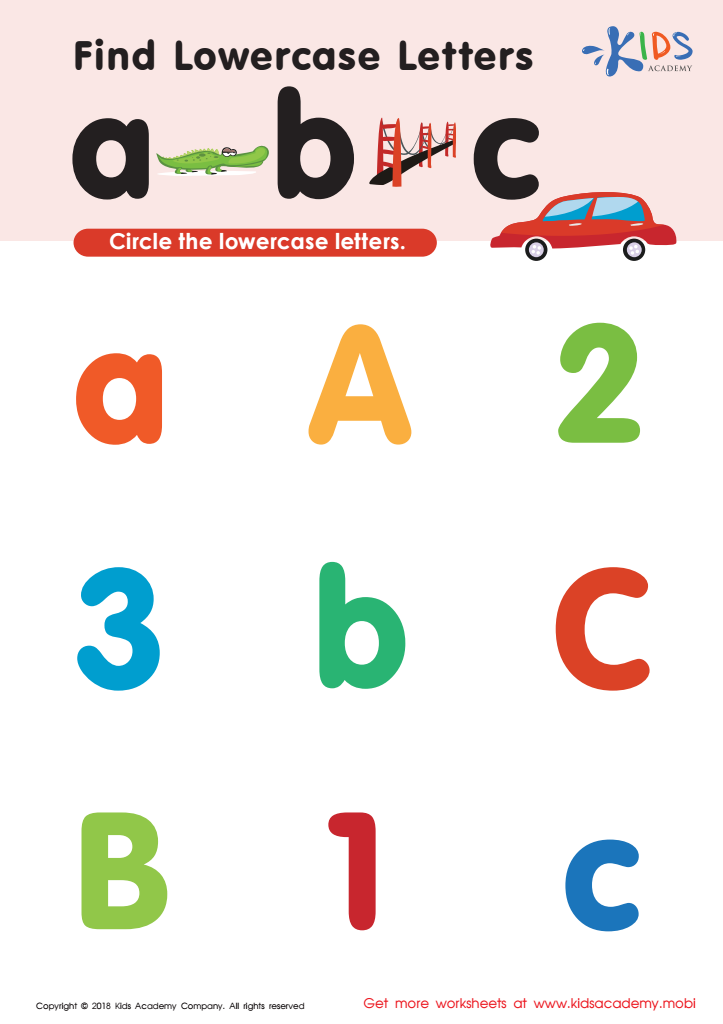
Find lowercase letters a b c Worksheet

Find Lowercase Letters v w x Worksheet


Teaching lowercase letter identification to children aged 3-4 is crucial as it lays the foundation for their literacy development. At this age, children's cognitive skills are rapidly growing, and introducing them to lowercase letters fosters early reading and writing abilities. Recognizing lowercase letters is essential because they form the bulk of written language; most texts are composed primarily of lowercase letters, and children will encounter them often in books, labels, and everyday communication.
Understanding lowercase letters also enhances children's phonemic awareness, as they learn to connect letters to their corresponding sounds. This skill is vital for early reading, helping children sound out words and develop decoding strategies. Moreover, it boosts their confidence in recognizing words, promoting a love for reading.
For parents and teachers, prioritizing lowercase letter identification can also encourage engaging activities like storytelling, alphabet games, and interactive reading sessions. By focusing on this foundational skill, they are better equipped to support children's language development, preparing them for successful literacy experiences as they progress in their education. In essence, fostering lowercase letter recognition is an investment in a child's academic journey and a catalyst for lifelong learning.