Cognitive Development Normal Phonics Worksheets for Ages 3-4
3 filtered results
-
From - To
Discover our engaging Cognitive Development Normal Phonics Worksheets, specially designed for children ages 3-4. These worksheets encourage early literacy by fostering phonemic awareness through fun and interactive activities. Kids will explore letter sounds and develop their cognitive skills as they connect letters with images, practice tracing, and complete engaging exercises. Our resources promote concentration, memory, and critical thinking, laying a solid foundation for future learning. With colorful designs and age-appropriate challenges, your little ones will be excited about learning phonics! Visit our website to access these valuable tools and help nurture your child's language skills in a playful, effective way.
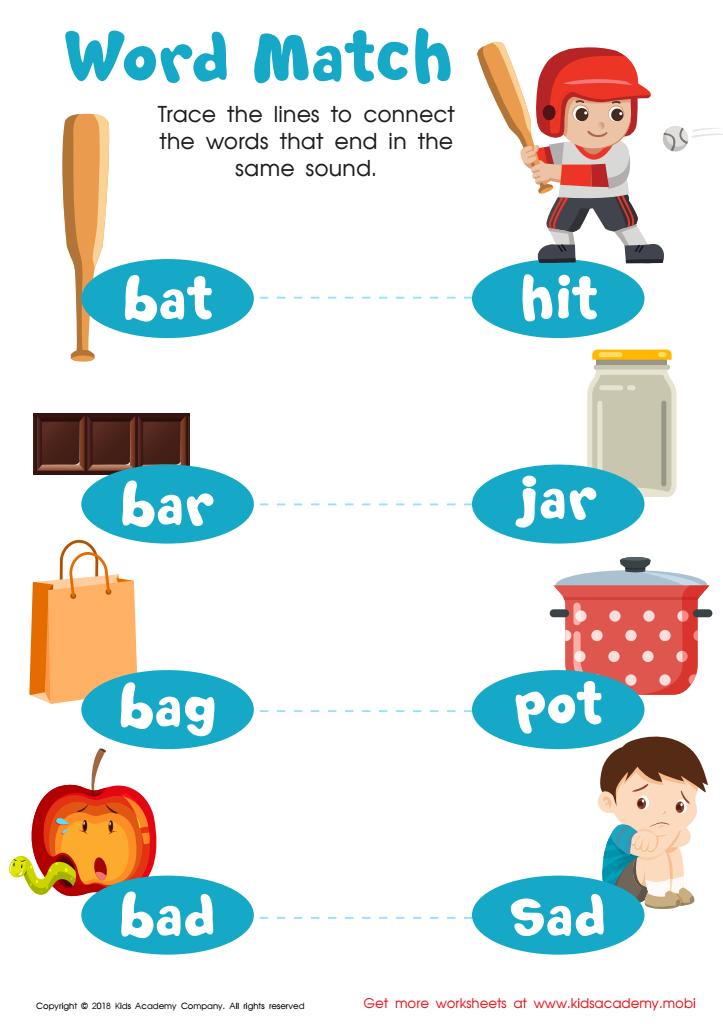
Word Match Reading Worksheet
 Assign to My Students
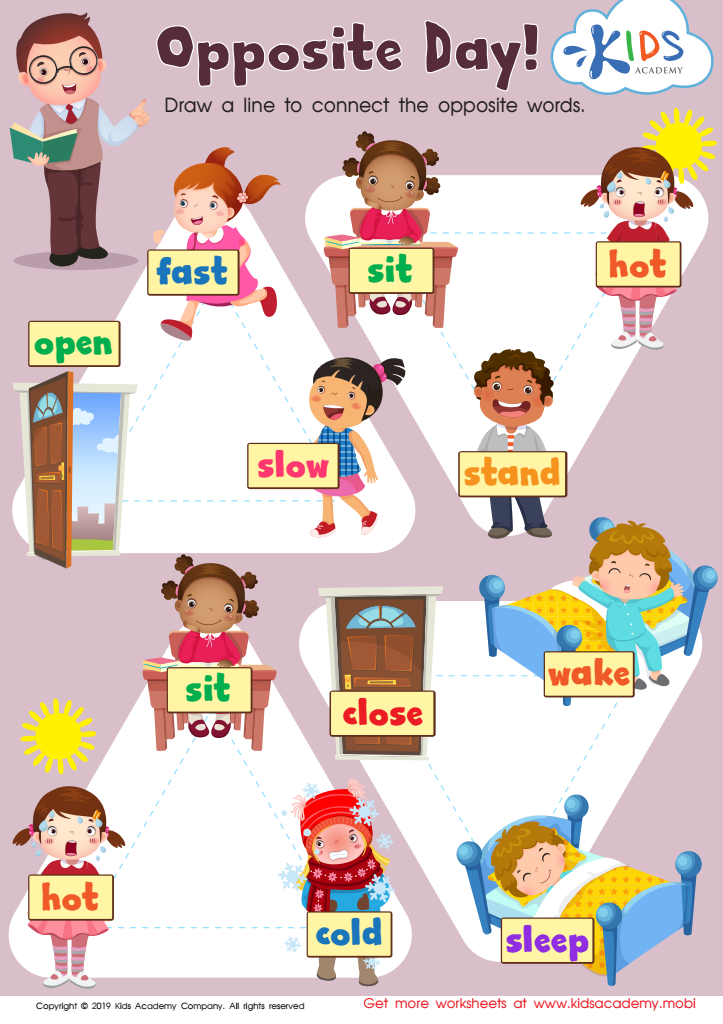
Opposite Day Worksheet
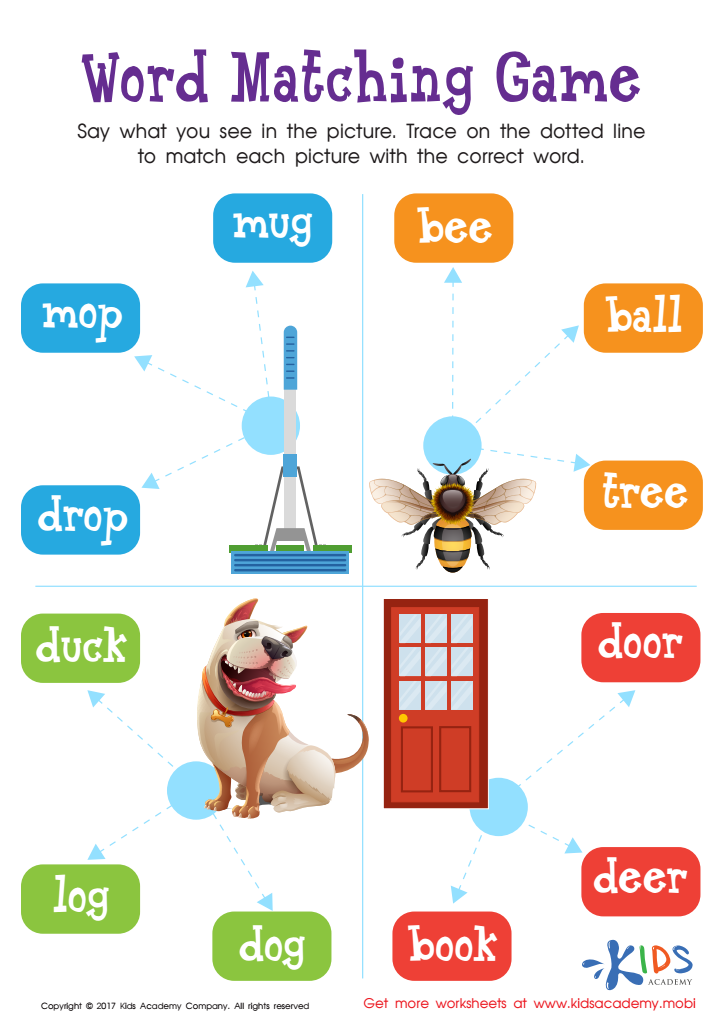
Word Matching Game Worksheet








Cognitive development is crucial in early childhood, as it lays the foundation for future learning and intellectual growth. Understanding normal phonics for ages 3-4 enhances this development by introducing young children to the sounds and structures of language. At this age, children's brains are rapidly developing, making them especially adept at acquiring new skills.
Phonics, the method of connecting sounds with letters, fosters essential pre-reading skills. By engaging in phonics activities, such as rhyming and sound games, children enhance their listening abilities, vocabulary, and comprehension skills. This enables them to recognize words more easily when they start reading, ultimately leading to improved literacy.
Parents and teachers should prioritize cognitive development through phonics because it contributes to a child's overall academic success and boosts their confidence. Moreover, early phonetic awareness can prevent future reading difficulties, ensuring that children are set on the right path for lifelong learning. A solid grasp of phonics encourages curiosity, communication skills, and critical thinking, all of which are vital for effective learning.
Investing time in phonics activities fosters a love for reading, empowering children to explore stories, ideas, and the world around them, making it an essential focus during these formative years.







