Letter tracing skills Normal Tracing Letters Worksheets for Ages 3-4
3 filtered results
-
From - To
Enhance your little one's handwriting with our "Letter Tracing Skills: Normal Tracing Letters Worksheets for Ages 3-4." These worksheets are designed to build early writing skills, helping children master the formation of each letter with ease. Perfectly crafted for preschoolers, they combine fun with learning, ensuring kids remain engaged while developing fine motor skills. Our worksheets guide tiny hands in tracing both uppercase and lowercase letters, paving the way for confident writing in the future. Give your child a head start on literacy with these engaging and educational tracing sheets. Start their writing journey today!
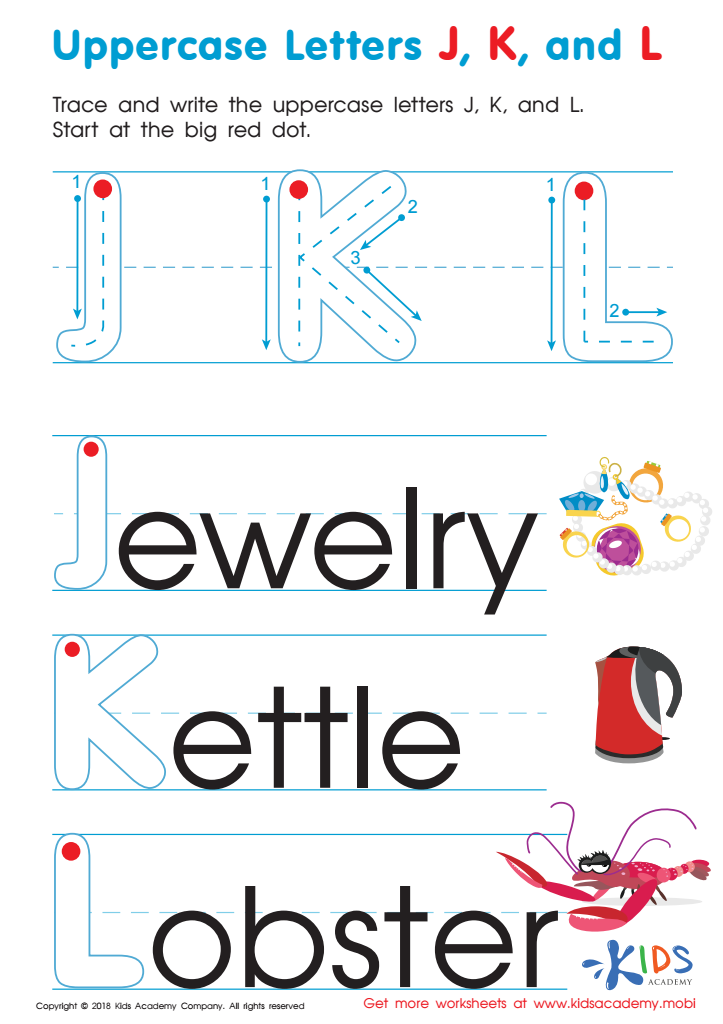
Uppercase Letters J, K, and L Worksheet
 Assign to My Students

Letter C Tracing Page
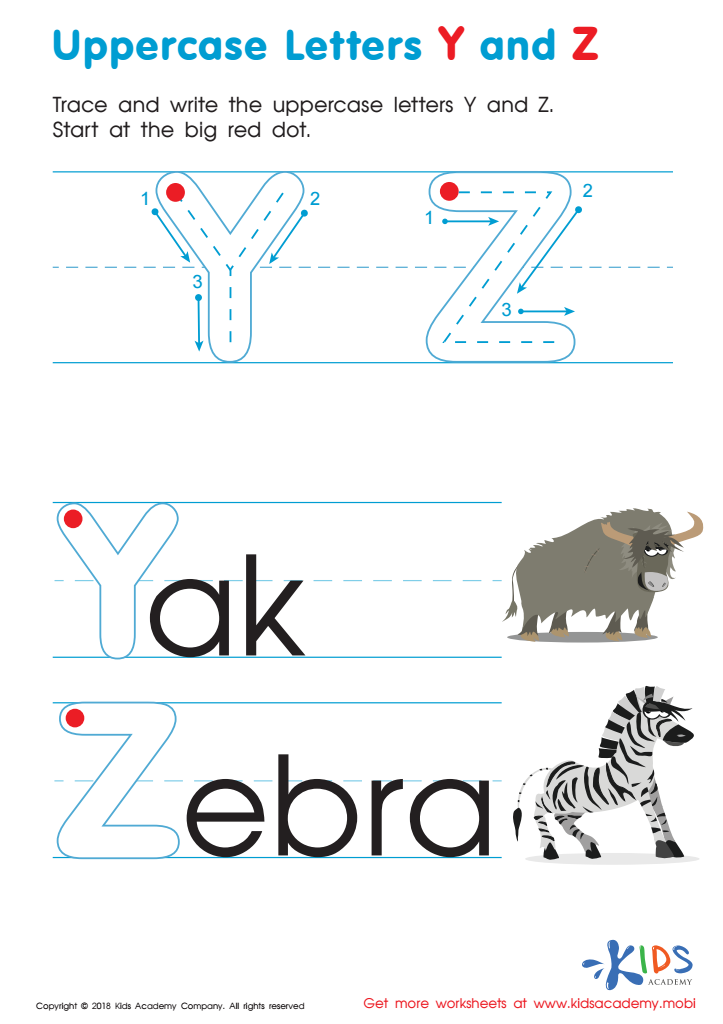
Uppercase Letters Y Z Worksheet








Parents and teachers should care about letter tracing skills for children aged 3-4 because it lays the foundational groundwork for essential literacy and fine motor development. At this critical developmental stage, children are beginning to interact more with their environment and express themselves. Tracing letters helps them recognize the alphabet and comprehend the basic structures of written language, which is crucial for future reading and writing skills.
Furthermore, letter tracing is an effective and engaging way to strengthen fine motor skills. Holding a pencil, crayon, or marker while tracing aids in developing the muscles and coordination necessary for writing. These skills also translate into better hand-eye coordination and overall dexterity, which are important for a multitude of tasks both academic and everyday, such as tying shoelaces or using utensils.
In addition, early exposure to letter tracing promotes a positive attitude towards learning. Children enjoy the interactive and rewarding experience of creating recognizable shapes and patterns, which builds confidence and enthusiasm for learning. Engaging in such activities can enhance their attention span and foster a sense of achievement.
Overall, prioritizing letter tracing in early education supports cognitive, motor, and emotional development, setting a strong foundation for academic success and everyday competences.








