Filters

6 filtered results

Clear all filters
Favorites
With answer key
Interactive

6 filtered results

Difficulty Level

Grade


Discover our engaging Handwriting Practice Normal Uppercase Letters Worksheets, specially designed for children aged 3-4. These worksheets offer young learners the perfect opportunity to develop their handwriting skills while familiarizing themselves with uppercase letters. Each worksheet is crafted with delightful visuals to capture children's attention and make learning enjoyable. Through various tracing activities, kids will enhance their fine motor skills and boost hand-eye coordination. With our easy-to-follow format, parents and educators can support preschoolers in mastering the fundamentals of handwriting. Start your child’s writing journey today and encourage their confidence as they learn! Suitable for fun learning at home or in the classroom!

Check out this FREE Trial Lesson on Uppercase Letters for age 3-4!

Tracing Uppercase Letters J-R

Favorites
With answer key
Interactive
  • 3-4
  • Handwriting practice
  • Uppercase Letters
  • Normal
Uppercase Letters J, K, and L Worksheet Preview

Uppercase Letters J, K, and L Worksheet

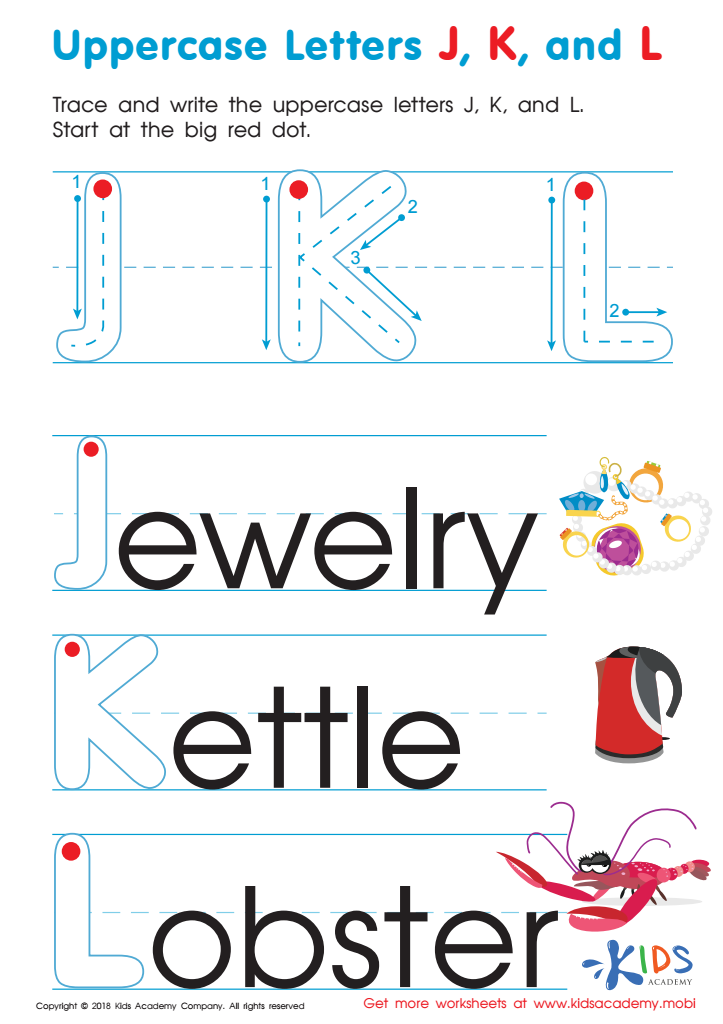
Jewelry, kettle and lobster share a common trait: their names start with J, K and L, 3 letter neighbors found in the middle of the alphabet. This traceable worksheet helps kids learn letter sounds and practice writing. Arrows and tracing lines make it easy to form neat pencil strokes. Red dot shows where kids should start. Perfect for preschoolers and kindergarteners!
Uppercase Letters J, K, and L Worksheet
Worksheet
Uppercase Letters S, T, and U Worksheet

Uppercase Letters S, T, and U Worksheet

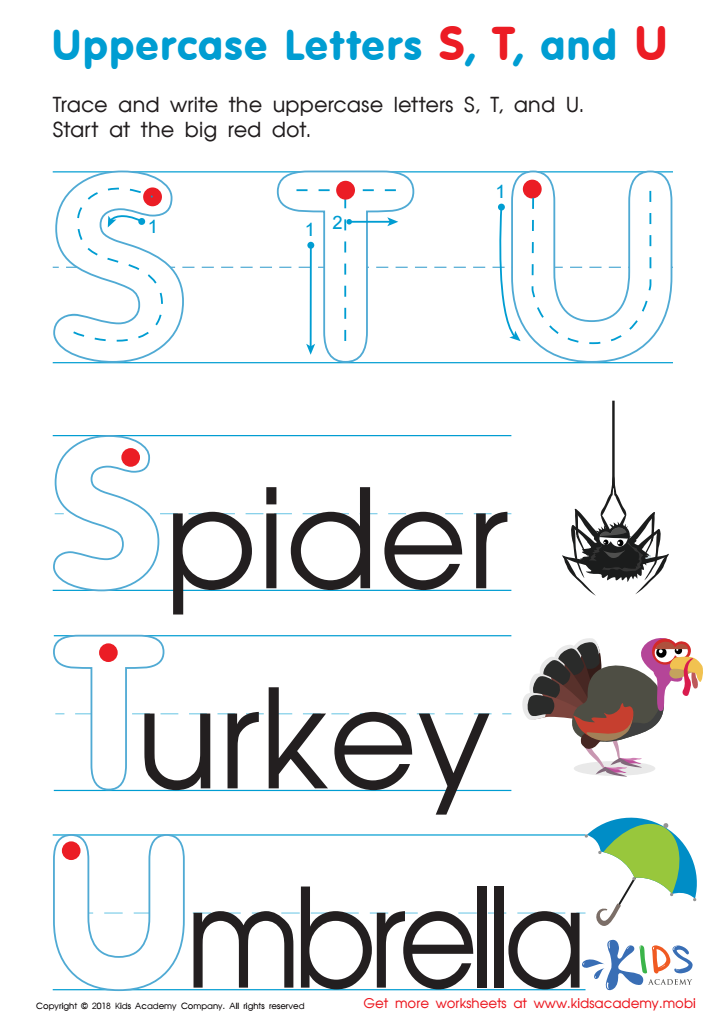
Help your kids learn to write upper-case letters with this fun tracing sheet. Start at the big red dot for each letter: S, T, and U. Show them the pictures and ask what letter each word starts with. Guide their hand and watch them learn!
Uppercase Letters S, T, and U Worksheet
Worksheet
Uppercase Letters G, H, and I Worksheet Preview

Uppercase Letters G, H, and I Worksheet

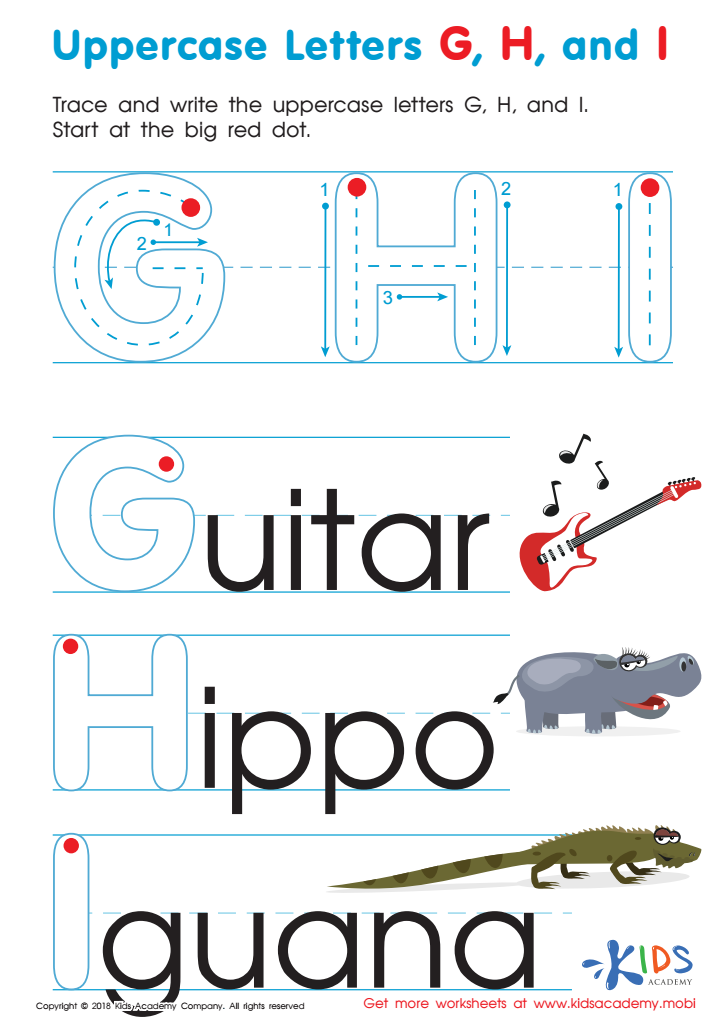
Trace each letter with the big red dot, connecting them to sounds as you go. Then write G to I. Congrats on a job well done! Rock on with a cute hippo and iguana while working on this delightful kindergarten worksheet!
Uppercase Letters G, H, and I Worksheet
Worksheet
Uppercase Letters D, E, and F Worksheet Preview

Uppercase Letters D, E, and F Worksheet

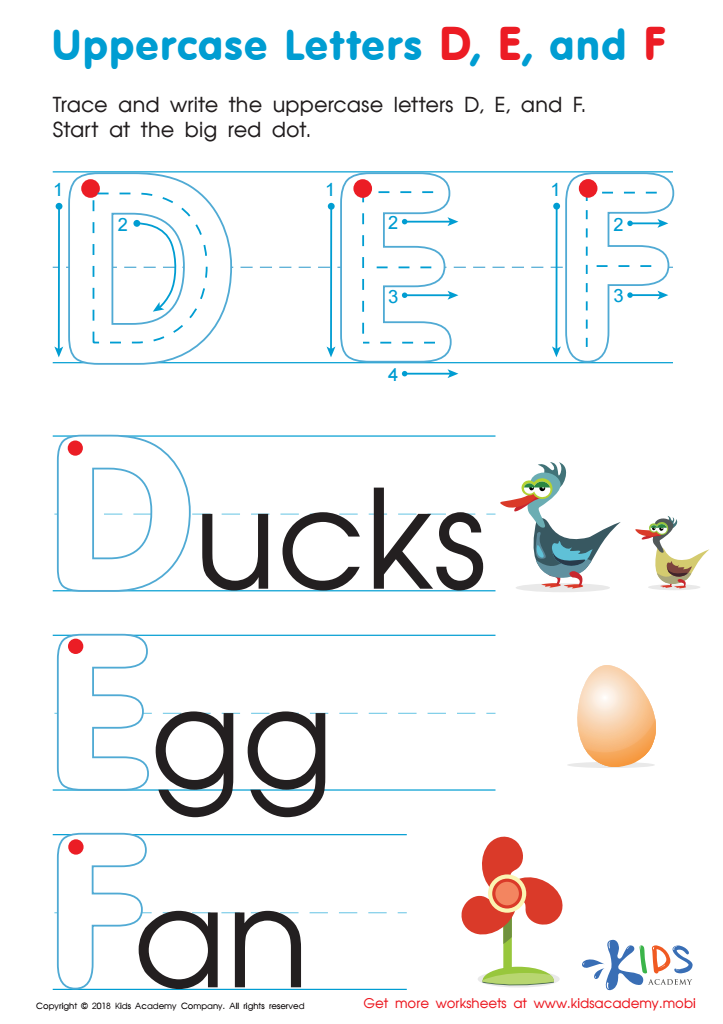
A-F are important letters! Get kids tracing with this free printable worksheet. Help them learn the right pencil strokes by following the tracing lines, starting at the big red dot. Reinforce letter sounds with the colorful pictures. 80 words.
Uppercase Letters D, E, and F Worksheet
Worksheet
Uppercase Letters Y Z Worksheet

Uppercase Letters Y Z Worksheet

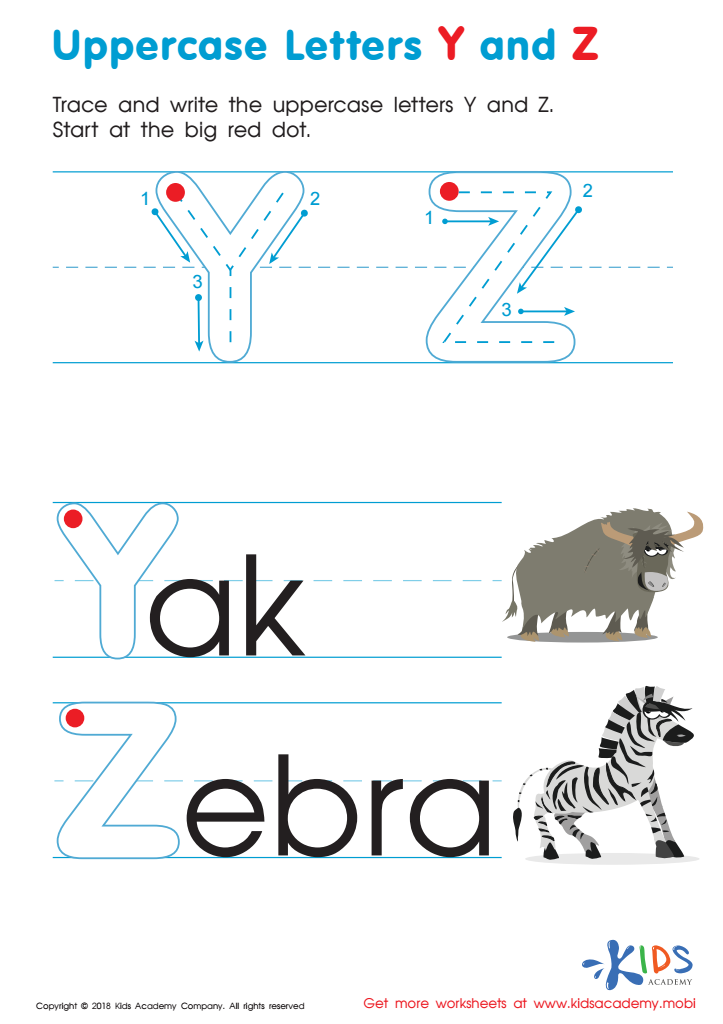
Help your child learn their ABCs with this fun tracing activity! They must trace and write Y and Z in uppercase form, starting from the red dot. Kids will love the fun images for extra engagement. Guiding their hand carefully will help them practice and perfect their writing skills.
Uppercase Letters Y Z Worksheet
Worksheet
Uppercase Letters V, W, and X Worksheet


Uppercase Letters V, W, and X Worksheet

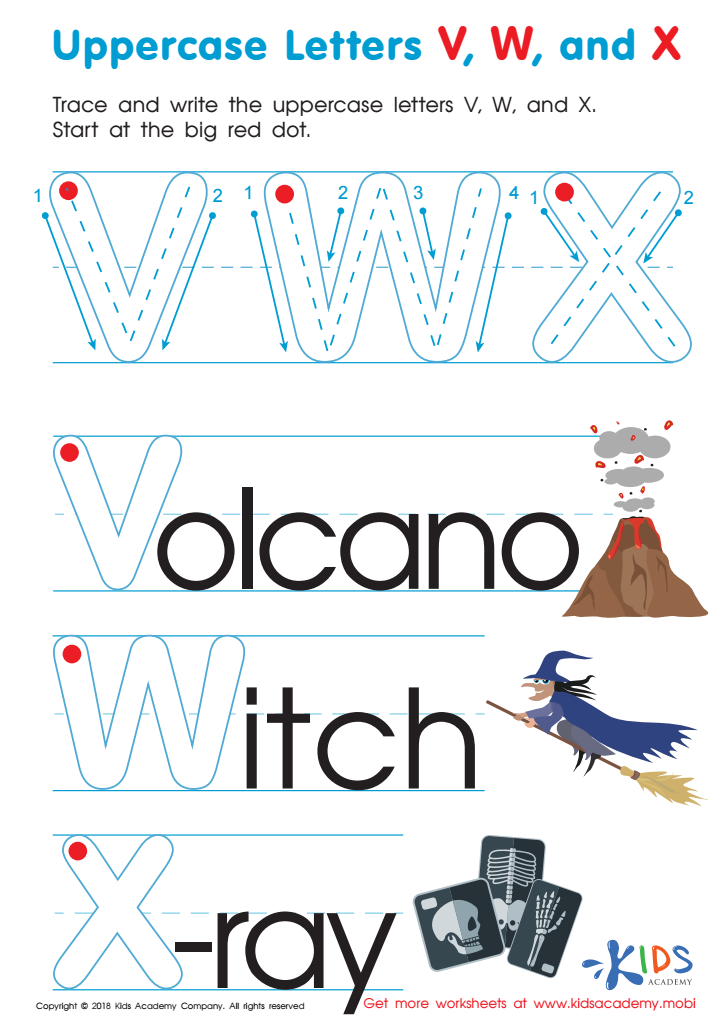
This worksheet is perfect for kids struggling to write uppercase letters V, W, and X. Warm up their brains first by having them name words starting with these letters. Then, help them trace and write each letter from the big red dot. With your assistance, they will quickly sharpen their writing skills.
Uppercase Letters V, W, and X Worksheet

Worksheet


Handwriting practice for normal uppercase letters is essential for children aged 3-4 as it lays the groundwork for their writing skills and cognitive development. At this age, children are developing fine motor skills and hand-eye coordination, and practicing handwriting helps strengthen these abilities. It enhances muscle memory, making the act of writing easier as they progress.

Furthermore, learning uppercase letters introduces children to the foundational aspects of language. Uppercase letters are not only the first letters they will encounter in their names and everyday signs, but they also represent the beginning of sentences, which reinforces language structure. Early mastery of uppercase writing fosters confidence as children begin to express themselves through written communication.

Additionally, handwriting practice promotes focus, patience, and perseverance—a crucial combination of skills as young learners engage in school work and various tasks. As children practice, they experience accomplishment and gradual improvement, which builds their self-esteem.

Finally, handwriting connects with broader literacy development. As children progress, the skills they gain from practicing uppercase letters will seamlessly transition to lowercase letters and more complex writing tasks. Parents and teachers alike should prioritize this aspect of early education to ensure holistic growth in young learners.