
Basic arithmetic practice Normal Worksheets for Ages 3-4
3 filtered results
Difficulty Level
Grade
Age
-
From - To
Subject
Activity
Standards
Discover our "Basic Arithmetic Practice Normal Worksheets" designed for children ages 3-4! These engaging and interactive worksheets introduce young learners to fundamental math concepts, making learning fun and easy. Each worksheet focuses on essential skills such as counting, addition, and subtraction, tailored to ignite children's curiosity and boost their confidence in mathematics. Our colorful, age-appropriate exercises are perfect for at-home practice or in early learning environments. Explore exciting activities that foster number recognition and problem-solving while keeping your little ones entertained. Help your child build a strong math foundation with our expertly crafted worksheets, paving the way for future academic success!
Favorites
With answer key
Interactive
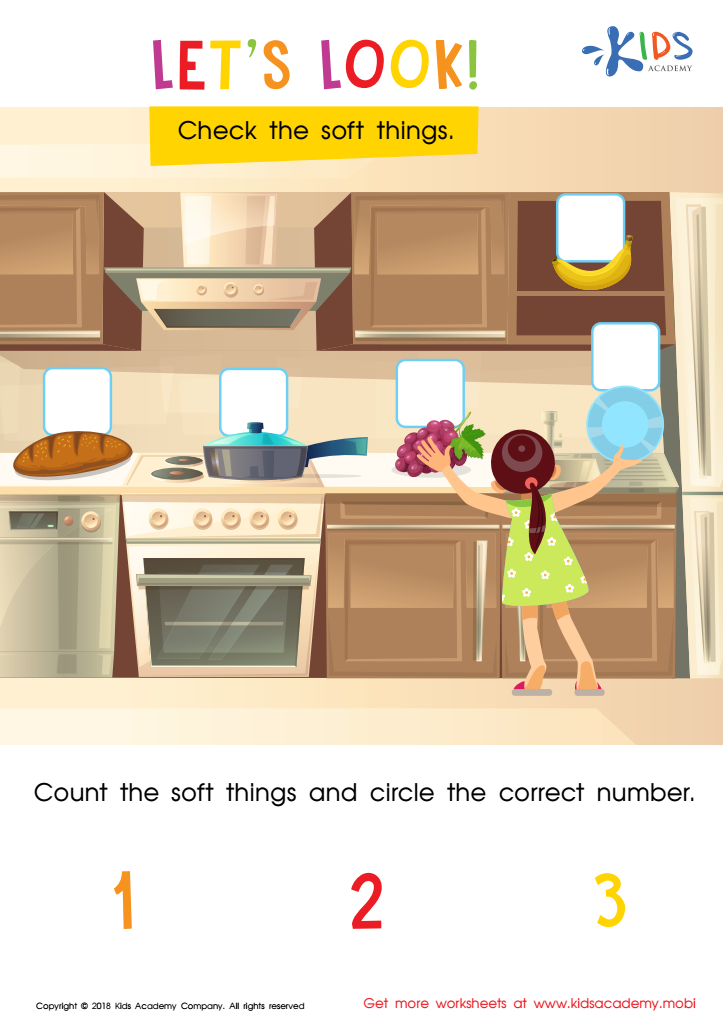
Let's Look! Assessment Worksheet
Have your child look at the picture in the printout and name the objects. Ask which ones are soft and hard and have them count the soft objects and circle the number. This worksheet will engage your child's thinking and teach them about texture.
 Assign to My Students
Let's Look! Assessment Worksheet
Worksheet
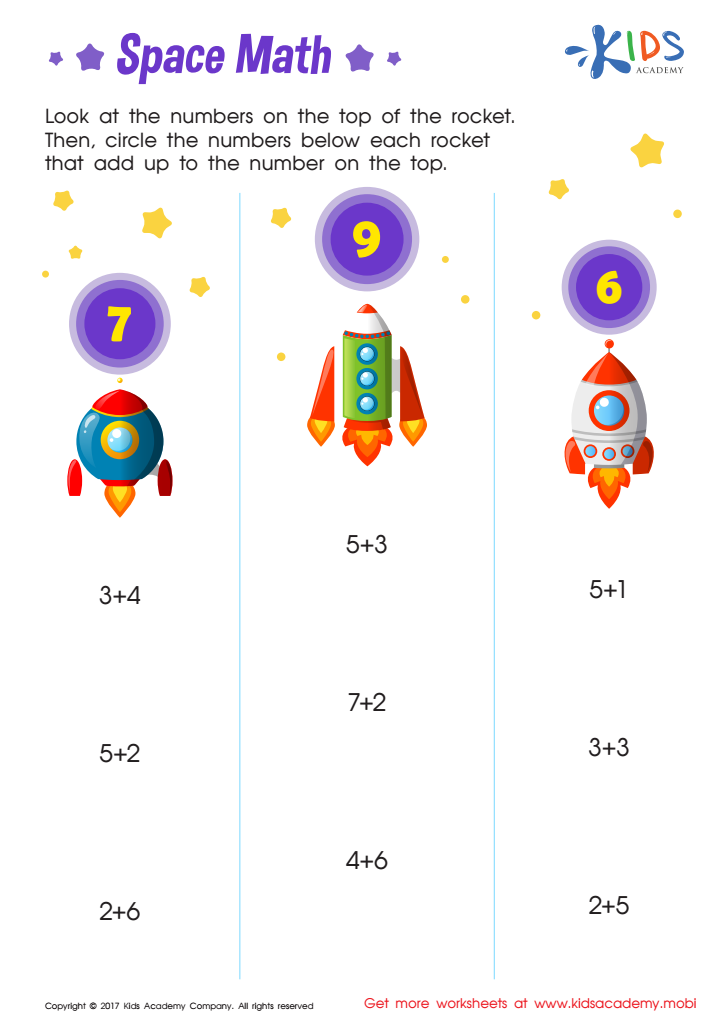
Addition: Space Math Worksheet
Fun and engaging space-themed practice with vivid pictures and matching numbers will make learning more meaningful. Take their math skills out of this galaxy today with Kids Academy!
Addition: Space Math Worksheet
Worksheet
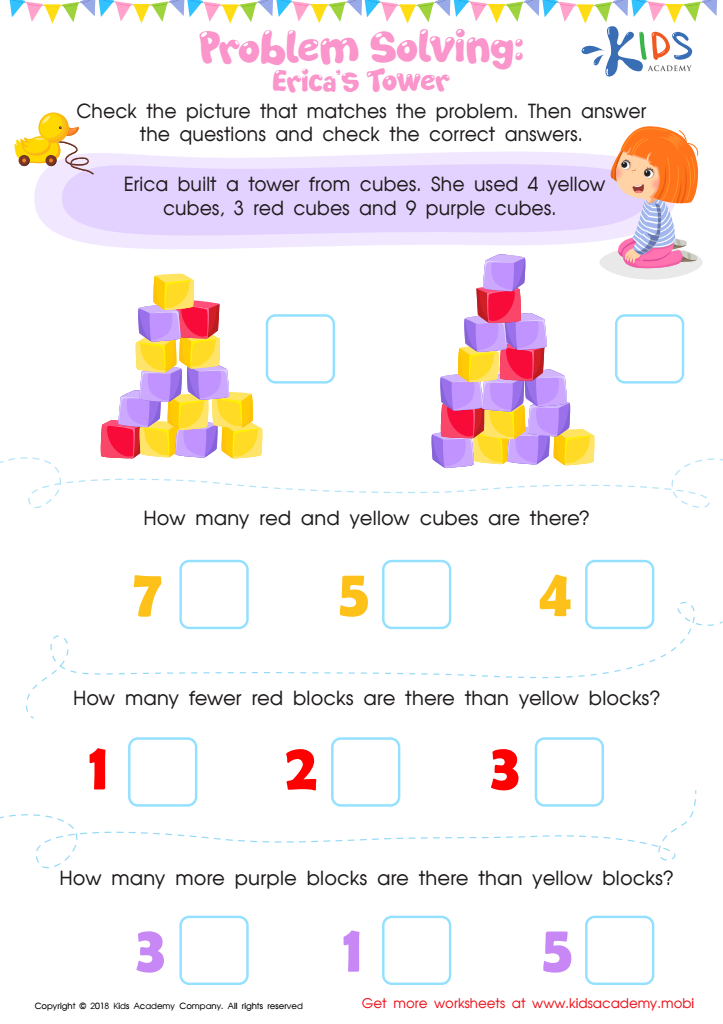
Problem Solving: Erica's Tower Worksheet
Sweet Erica needs your math student's help! Download the PDF worksheet and have your little math whiz read the word problems, match the pictures and solve basic addition/subtraction problems with two/three addends, minuends and subtrahends. They'll be having fun while strengthening their math fact skills!
Problem Solving: Erica's Tower Worksheet
Worksheet
Join Kids Academy for Free
Who is primarily going to use this learning content?






.jpg)

Basic arithmetic practice for children ages 3-4 is crucial for several reasons. At this developmental stage, children are naturally curious and eager to learn, making it an ideal time to introduce foundational math concepts. Early exposure to numbers and simple arithmetic helps develop cognitive skills, promotes critical thinking, and fosters problem-solving abilities.
Engaging in arithmetic activities, such as counting toys or sharing snacks, enhances children’s understanding of quantity and quantity relations. It also builds their confidence and prepares them for more complex math skills in later years. These practices form a solid base that can lead to improved math performance as they progress through school.
Moreover, early math skills have been linked to later academic success. Research indicates that strong early numeracy abilities predict better math performance in later grades. By nurturing children's mathematical understanding in their preschool years, parents and teachers can help reduce the likelihood of math anxiety as they grow older.
Additionally, family involvement in arithmetic practice can strengthen relationships through shared activities, such as counting games or simple math challenges. With the right encouragement and resources, the tasty fruit of math can become a delightful experience for young learners, laying the groundwork for lifelong learning in both mathematics and beyond.








