Differentiating shapes Normal Worksheets for Ages 3-4
3 filtered results
-
From - To
Our "Differentiating Shapes" worksheets for ages 3-4 are designed to help young learners identify and distinguish between various shapes. These engaging, fun-filled activities enhance children's cognitive and motor skills through hands-on practice. Each worksheet presents colorful shapes and prompts kids to match, trace, and identify them, making learning enjoyable and effective. Perfect for preschool and early kindergarten, these worksheets foster shape recognition and pave the way for future geometry skills. Download now to boost your child's early learning journey with stimulating and educational shape differentiation exercises!
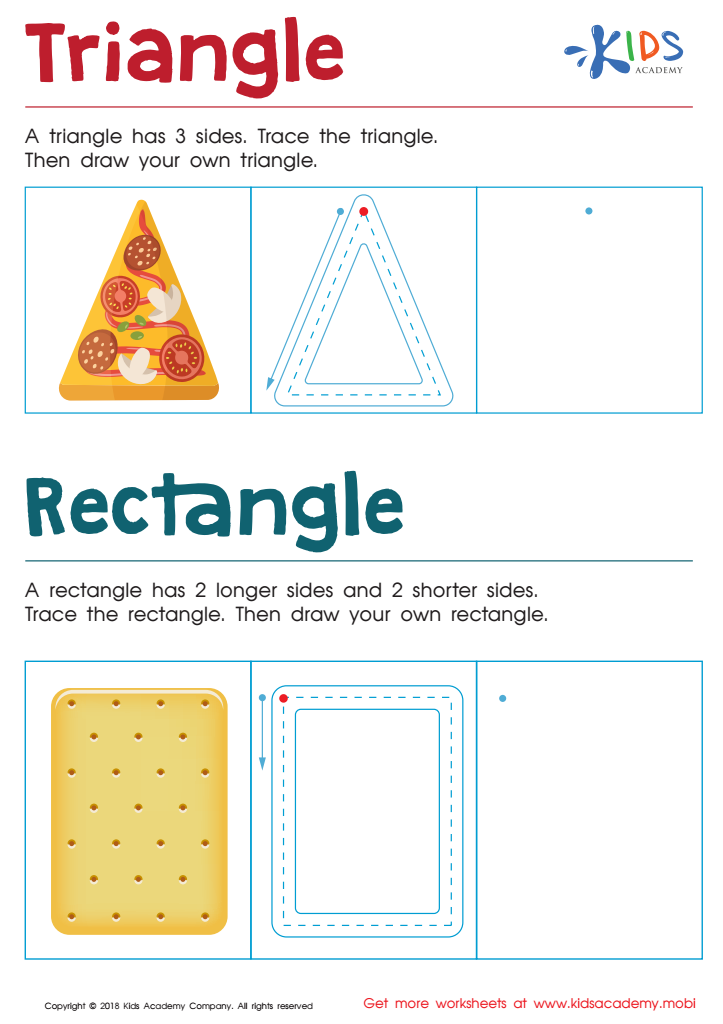
Triangle Rectangle Worksheet
 Assign to My Students
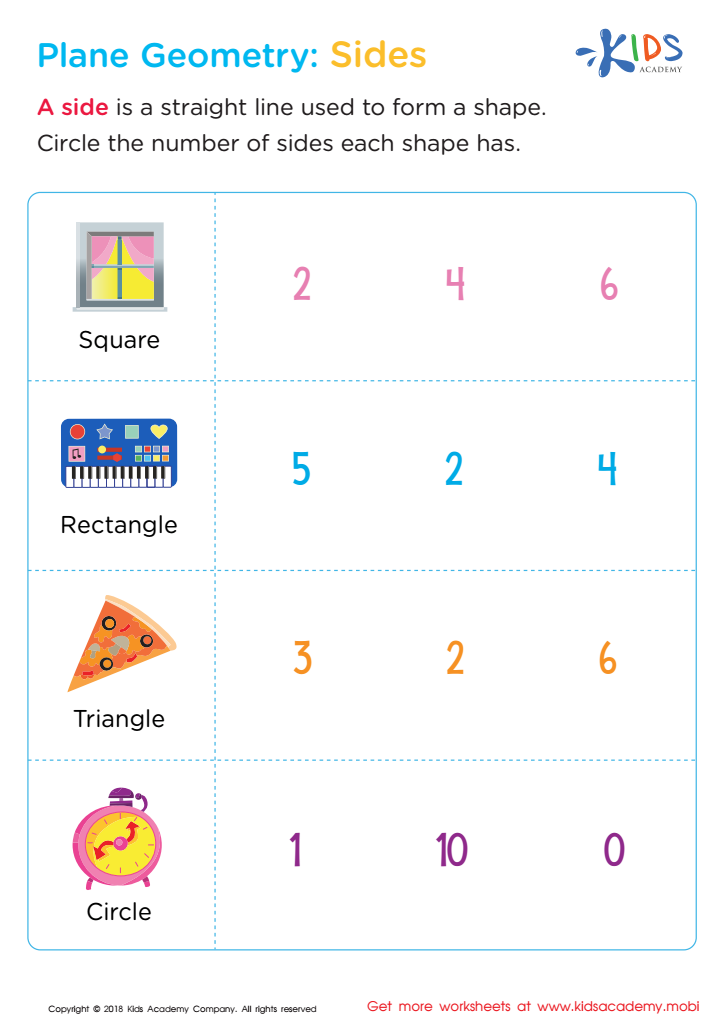
Plane Geometry: Sides Worksheet
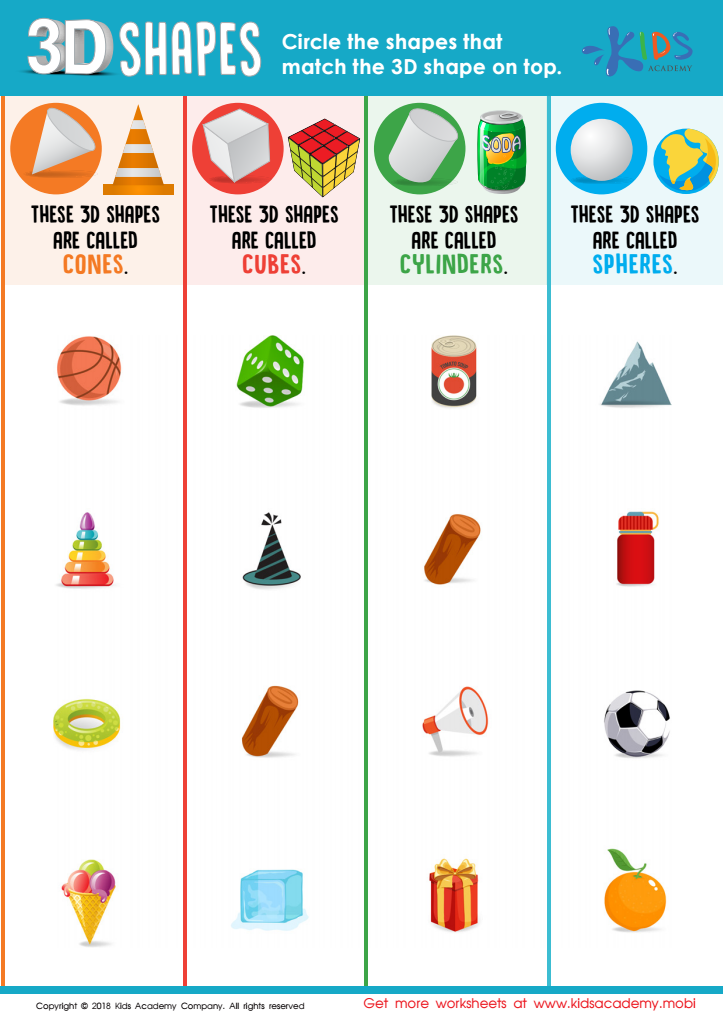
3D Shapes Worksheet






Differentiating shapes for children aged 3-4 is crucial in early childhood education as it lays the foundation for cognitive and perceptual development. At this developmental stage, children are beginning to explore complex concepts through simple and engaging hands-on activities. Recognizing and categorizing shapes help young minds improve their visual and spatial awareness, which are critical skills for problem-solving and understanding the world around them.
When parents and teachers invest time in teaching shapes, they are fostering early math skills, as shapes are a fundamental component of geometry. Additionally, shape differentiation activities can enhance language development. As children learn to identify shapes, they expand their vocabulary with words like "circle," "square," "triangle," and "rectangle," enabling them to communicate more effectively.
Moreover, shape recognition aids in pattern recognition, which is essential for future learning areas such as reading and science. Differentiating shapes also sharpens fine motor skills; for instance, tracing shapes can improve a child’s hand-eye coordination and writing readiness.
By caring about and actively teaching shape differentiation, parents and teachers empower children with a solid foundation for academic achievements and practical life skills, ensuring they are better prepared for more complex concepts and tasks in their educational journey.








