Fine motor skills development Normal Worksheets for Ages 3-4
6 filtered results
-
From - To
Enhance your child's fine motor skills with our engaging worksheets designed for ages 3-4. These printable activities focus on crucial skills such as hand-eye coordination, grasping, and manipulation. Ideal for early learners, our worksheets incorporate fun themes and colorful designs to keep your child motivated. From tracing and cutting to coloring and connecting dots, each exercise fosters growth and development while promoting creativity and focus. Encourage your child's fine motor mastery in a playful and supportive way, setting the foundation for future learning success. Explore our comprehensive collection today and watch your little one's skills flourish!

I Stands High Worksheet
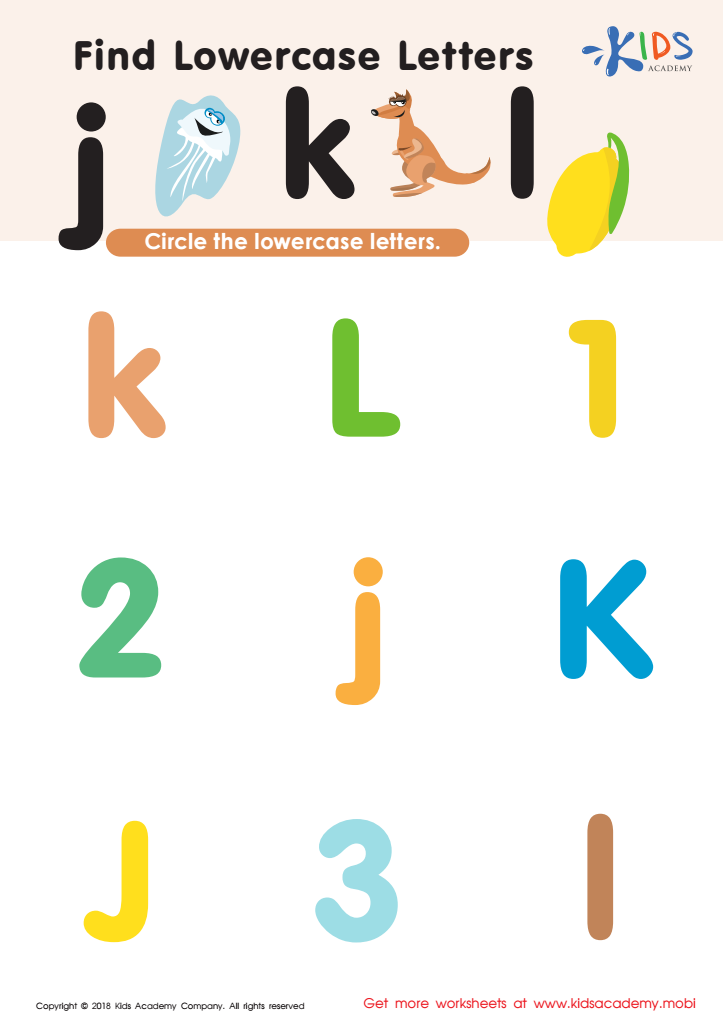
Find Lowercase Letters j k l Worksheet

Letter J Tracing Page
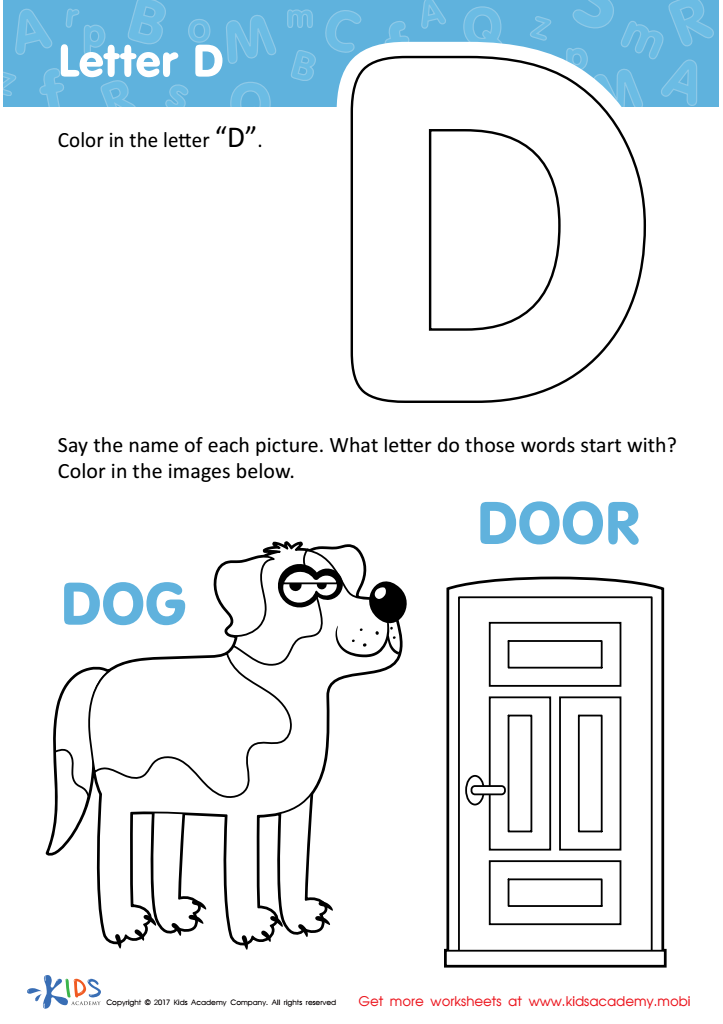
Letter D Coloring Sheet
 Assign to My Students
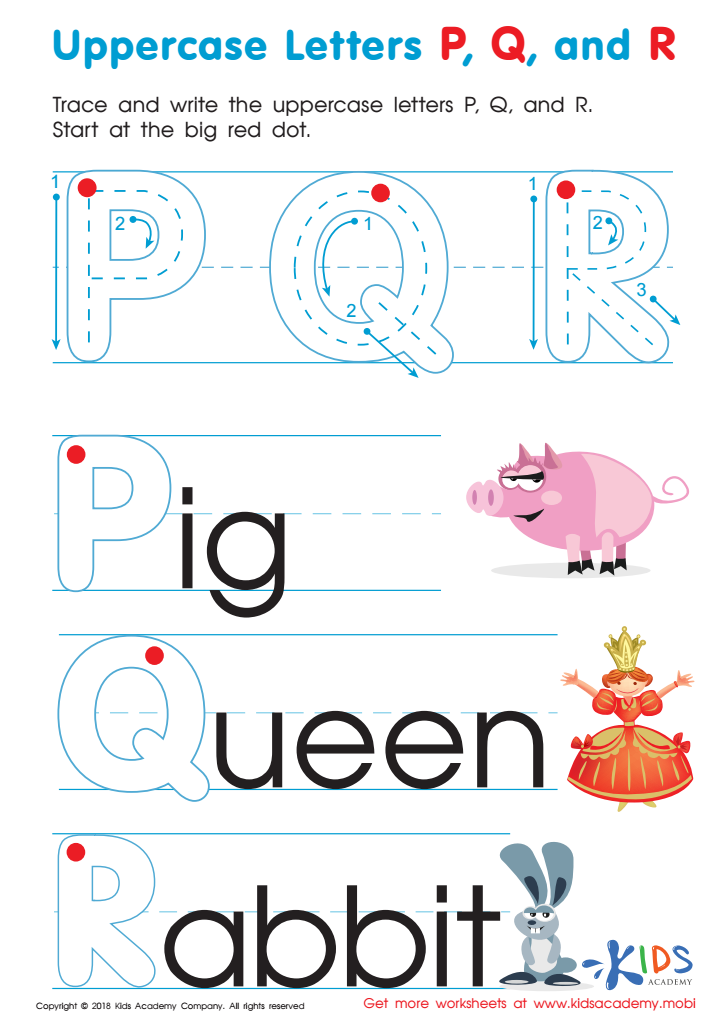
Uppercase Letters P, Q, and R Worksheet

Tracing Horizontal Lines Worksheet








Fine motor skills refer to the precise movements of the small muscles in the hands and fingers that allow children to perform tasks such as grasping, holding, and manipulating objects. For children aged 3 to 4, developing these skills is crucial, as they form the foundation for everyday activities and academic tasks later on.
Parents and teachers should care about fine motor skills development at this age because strong fine motor skills contribute significantly to a child’s overall growth. Children who excel in these skills are better equipped for activities like writing, drawing, and self-care tasks—such as buttoning clothing or using utensils—promoting independence and confidence. Moreover, fine motor development is closely linked to cognitive skills; engaging in activities like puzzles or building with blocks not only enhances dexterity but also boosts problem-solving abilities and hand-eye coordination.
Furthermore, early intervention can address potential delays in fine motor skill development, which may impact school readiness. Parents and teachers can support this growth by providing age-appropriate activities that encourage exploration, creativity, and practice. Simple activities like drawing, playing with playdough, or using scissors can make a significant difference, setting the stage for a child's future success in school and daily life.








