Hand-eye Coordination Normal Worksheets for Ages 3-4 - Page 2
26 filtered results
-
From - To
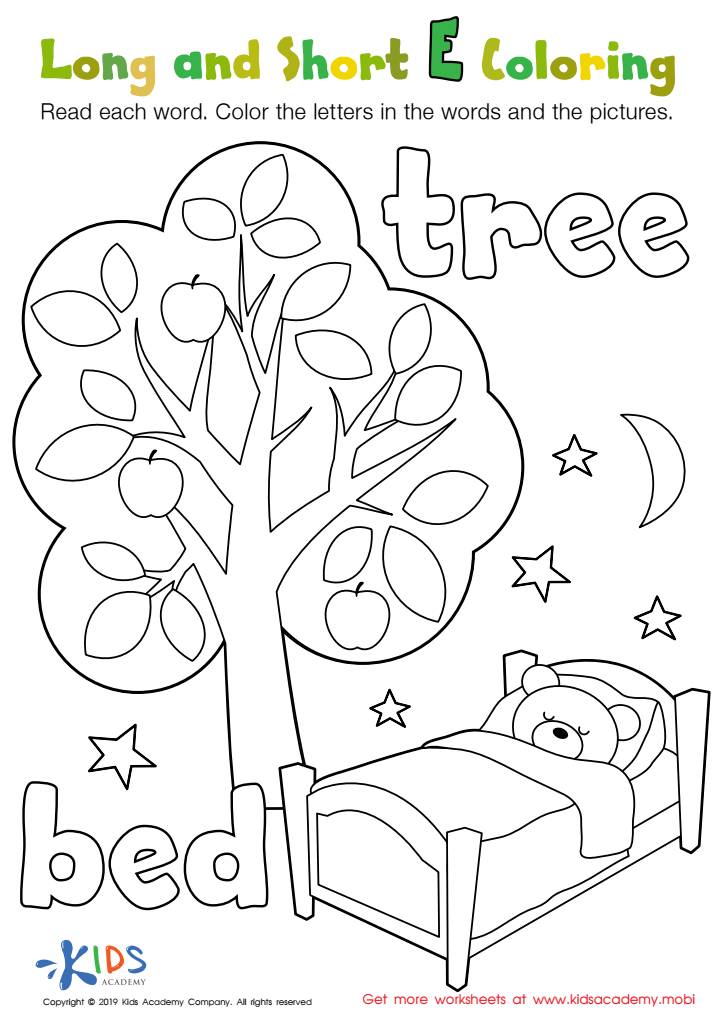
Long and Short E Worksheet
 Assign to My Students

Letter D Tracing Page







Hand-eye coordination is a crucial developmental milestone for children aged 3-4, impacting their overall growth and future learning capacities. At this age, children are exploring their environment and engaging in numerous activities that require precision and coordination, such as drawing, stacking blocks, and enjoying simple sports.
For parents and teachers, fostering hand-eye coordination should be a priority because it significantly influences children's cognitive and motor skills. Good hand-eye coordination helps toddlers to refine their fine motor skills, which are essential for everyday tasks like writing, buttoning clothes, and self-feeding. Engaging in activities that enhance this skill lays a solid foundation for later academic success.
Furthermore, fostering hand-eye coordination can boost a child's confidence. When children can successfully perform tasks, they feel more capable, which contributes to positive self-esteem and willingness to take on new challenges. It also has implications for social interactions; cooperative play often involves tasks where coordination plays a key role.
Teachers and parents can assist by providing opportunities for practice through play, crafts, and games that require manipulation of objects. By paying attention to this vital skill, they can help children build the abilities they need in future educational settings and daily life.








