
Letter identification Normal Worksheets for Ages 3-4
4 filtered results
Difficulty Level
Grade
Age
-
From - To
Subject
Activity
Standards
Welcome to our Letter Identification Normal Worksheets for Ages 3-4! These engaging, printable worksheets are designed to help young learners develop essential letter recognition skills in a fun and interactive way. Each worksheet features colorful illustrations and age-appropriate activities to captivate children's attention and encourage active participation. Kids will enjoy tracing, coloring, and identifying letters while enhancing their fine motor skills and vocabulary. Perfect for home or classroom use, our worksheets provide a structured yet enjoyable approach to early literacy. Start your child's reading journey today with these expertly crafted resources that make learning letters both exciting and educational!
Favorites
With answer key
Interactive
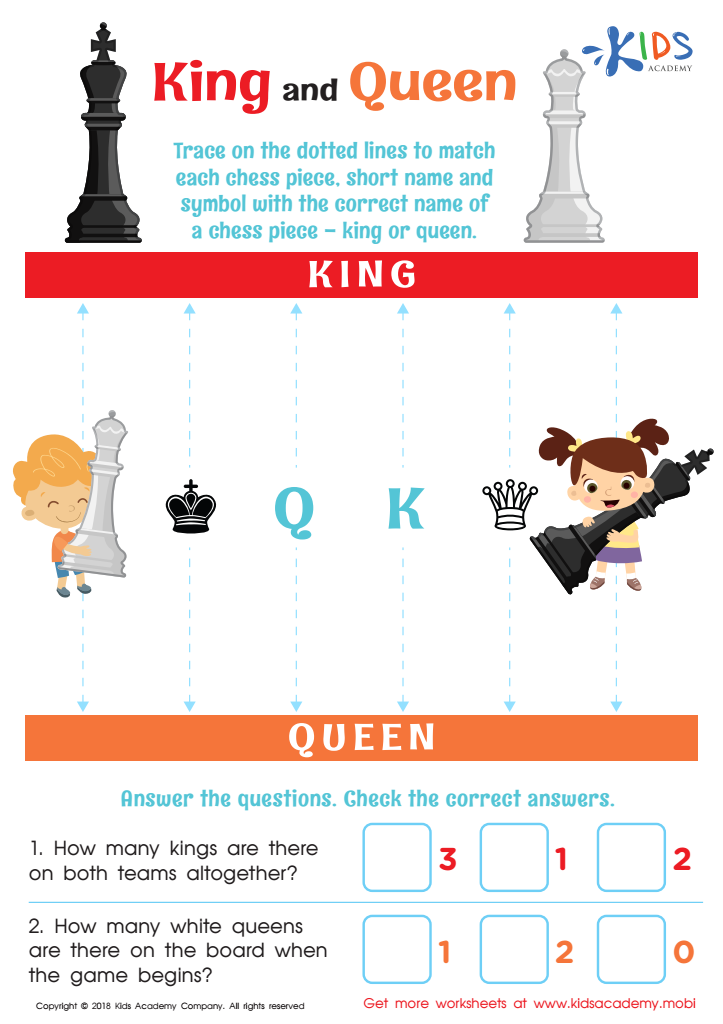
King and Queen Worksheet
Instruct your kids to trace the dotted lines to match each chess piece, short name, and symbol with either king or queen.Answer the questions at the bottom and check the answers. This exercise will help your children to differentiate between a king and queen chess piece and know their symbols.
 Assign to My Students
King and Queen Worksheet
Worksheet
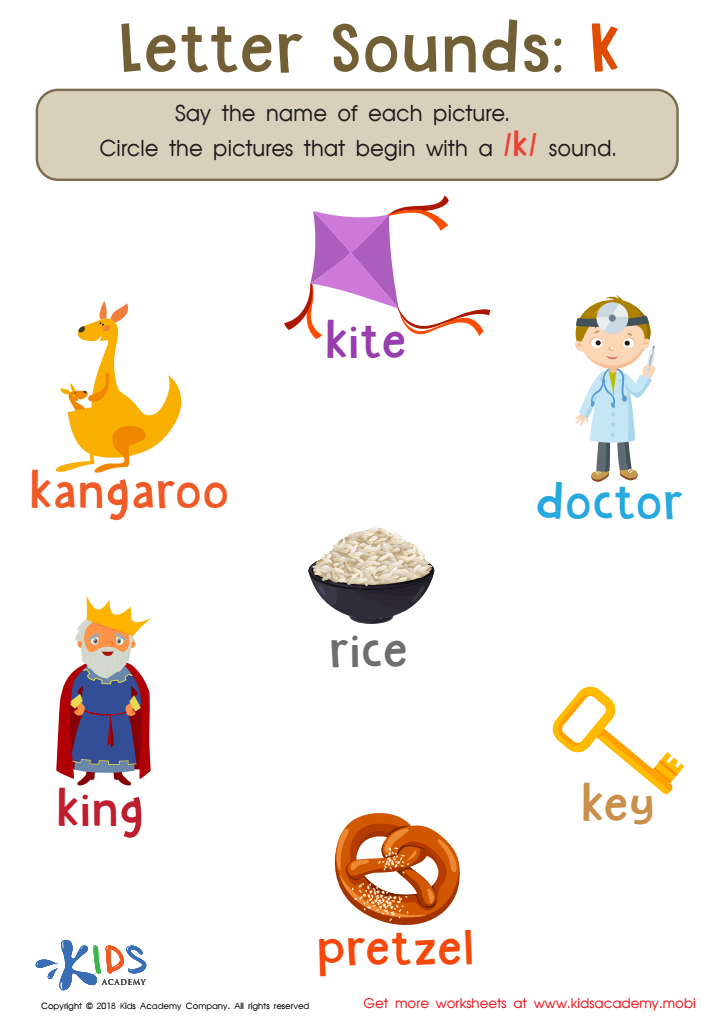
Letter K Sounds Worksheet
Help your child practice phonics with Kids Academy's illustrated worksheet! Have them look at the pictures, read the words and say them aloud. Only circle those that start with a hard 'K' sound. Perfect for preschoolers and kindergarteners! Plus, they'll learn the silent K used in a few words.
Letter K Sounds Worksheet
Worksheet
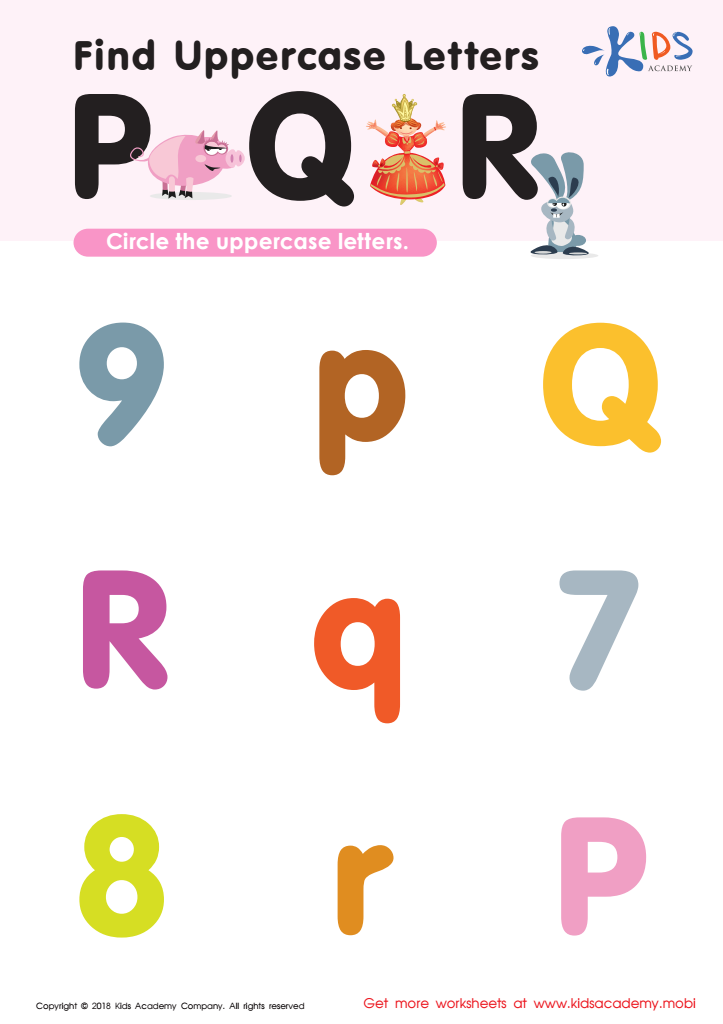
Find Uppercase Letters P, Q, and R Worksheet
Kids learn best when they can make connections. This free printable worksheet guides kids to solve the puzzle using the example letters P, Q, and R, supported by graphics and colors. Point out the page is pink, like the pig (which starts with P!) and solve by finding and circling the uppercase letters – be careful of the numbers!
Find Uppercase Letters P, Q, and R Worksheet
Worksheet
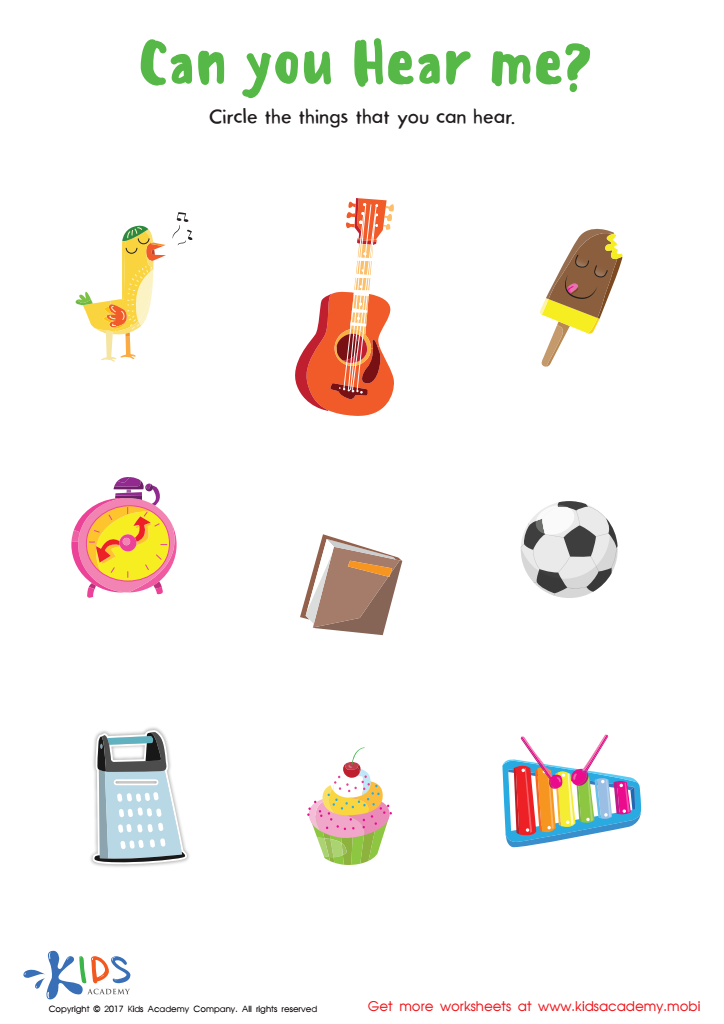
Can You Hear Me Worksheet
Challenge your child's thinking and help them learn by using this cute "Can You Hear Me?" worksheet. It encourages use of prior knowledge to identify objects that make sounds, developing critical thinking skills. As they imagine balls and cupcakes making sounds, your child will have plenty of laughs. Extend learning by talking about the sounds and why certain objects make them.
Can You Hear Me Worksheet
Worksheet
Join Kids Academy for Free
Who is primarily going to use this learning content?







Letter identification is a pivotal milestone for children aged 3-4, as it serves as the foundation for literacy development. During this age, children's brains are highly receptive to language and printed words, making it the ideal time to foster early reading skills. When parents and teachers prioritize letter identification, they not only enhance children's literacy skills but also promote their overall cognitive and social-emotional development.
Understanding letters aids in vocabulary building, which, in turn, nurtures communication and expression. Children who can identify letters are better equipped to recognize their names and other meaningful signs in their environment, thereby boosting their confidence and sense of agency. This foundational skill also makes future learning, such as phonemic awareness and decoding, much more accessible.
Moreover, engaging children in letter identification activities—like reading aloud, singing alphabet songs, or playing games—creates a joyful learning atmosphere. This encourages a love for reading that can persist throughout their lives. Early literacy engagement cultivates critical thinking and problem-solving skills as well. Ultimately, when parents and teachers recognize the importance of letter identification, they play an instrumental role in setting children on a positive trajectory toward academic success and lifelong learning.








