
Phonological awareness Normal Worksheets for Ages 3-4
3 filtered results
Difficulty Level
Grade
Age
-
From - To
Subject
Activity
Standards
Discover a world of fun and learning with our Phonological Awareness Normal Worksheets designed specifically for children ages 3-4. These engaging worksheets help young learners develop essential listening skills, rhyming ability, and sound recognition, laying a strong foundation for reading. Each printable activity is thoughtfully crafted to ensure that phonological awareness becomes an enjoyable and interactive experience. With colorful illustrations and playful exercises, children can enhance their language skills in an inviting environment. Ideal for parents and educators alike, our worksheets encourage early literacy development while fostering a love for learning. Get started today and watch your child's confidence grow!
Favorites
With answer key
Interactive
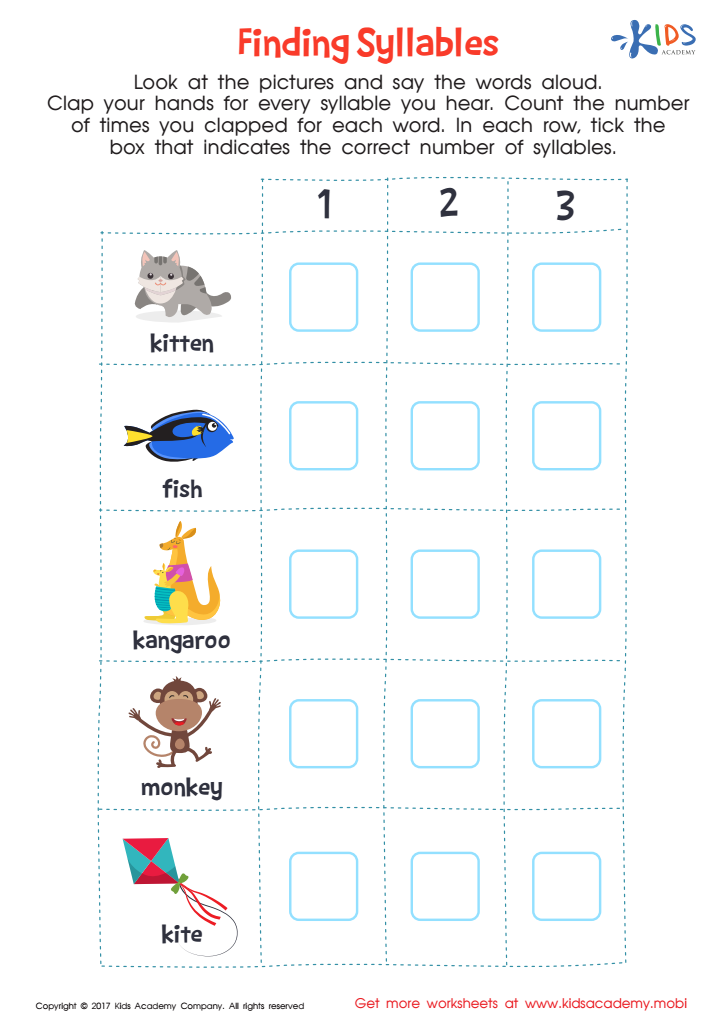
Finding Syllables Word Structure Worksheet
Have your kid clap and count syllables in words to improve their reading and spelling! Use this word structure worksheet for a fun activity - syllables!
 Assign to My Students
Finding Syllables Word Structure Worksheet
Worksheet
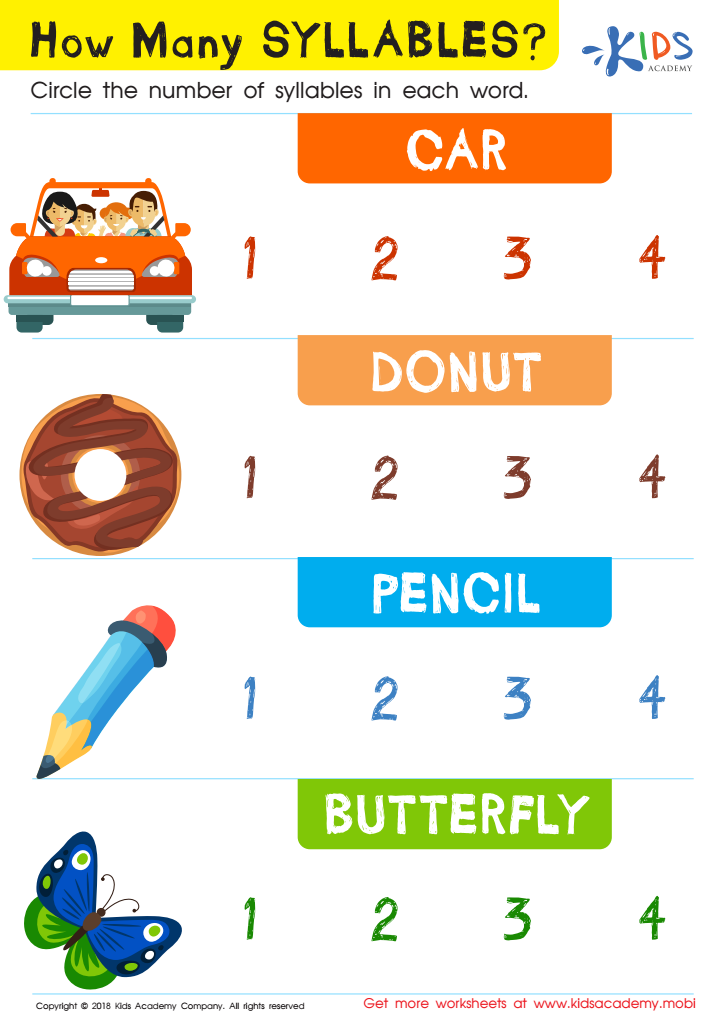
How Many Syllables? Worksheet
Syllabication or 'chunking' helps students decode words more quickly and increase fluency. This traceable worksheet is great for emerging readers, combining fun and fine motor practice with chunking words and counting syllables.
How Many Syllables? Worksheet
Worksheet
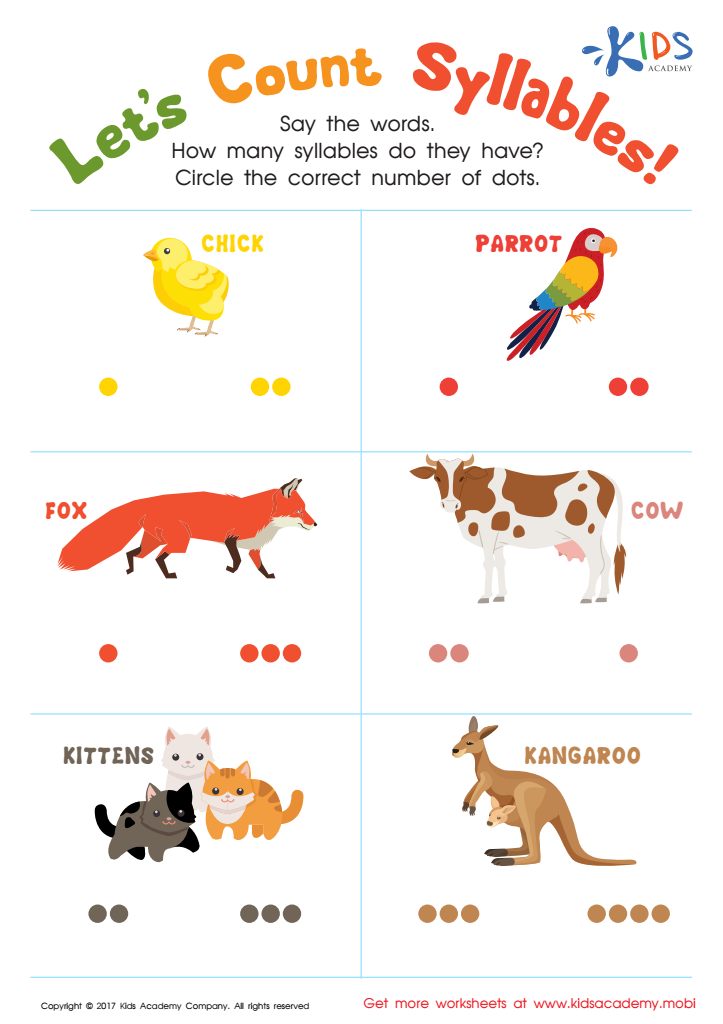
Lets Count Syllables Worksheet
This fun animal worksheet makes learning to read easier by breaking words into syllables. Bright, cheery pictures give context and help kids choose the right syllable count. Count together and enjoy as your child learns and gains success!
Lets Count Syllables Worksheet
Worksheet
Join Kids Academy for Free
Who is primarily going to use this learning content?



.jpg)


Phonological awareness is a critical skill for early literacy development in children aged 3-4. At this stage, children begin to recognize and manipulate sounds in language, an essential cornerstone for reading and writing. Parents and teachers should prioritize phonological awareness because it lays the groundwork for a child’s future literacy skills.
Firstly, phonological awareness aids in differentiating sounds, helping children to grasp that words are made up of smaller sound units, like syllables and phonemes. This understanding is vital for developing decoding skills, allowing children to sound out words when learning to read.
Moreover, strong phonological skills can enhance vocabulary development and comprehension. Children who are phonologically aware can engage more effectively with language, leading to richer communication skills.
Additionally, incorporating playful activities at this age, such as rhyming games and sound manipulation exercises, nurtures a love for language and learning.
By fostering phonological awareness, parents and teachers can provide children with essential tools for academic success, boosting their confidence as they transition from pre-reading to reading stages. Investing time and resources in developing these skills cultivates a strong literacy foundation that will benefit children throughout their educational journey.








