Enhance your child's critical thinking with our Problem-Solving Abilities Worksheets for Ages 3-4. Designed for early learners, these engaging worksheets introduce foundational skills necessary for effective problem-solving. Through fun activities like puzzles and logical challenges, children will hone their ability to analyze situations, think creatively, and find solutions independently. Our carefully crafted worksheets foster cognitive development while ensuring that learning remains enjoyable. Ideal for parents and teachers seeking resources that align with developmental milestones, our problem-solving worksheets will inspire curiosity and encourage young minds to explore their potential. Start your child's journey to becoming a confident thinker today!

Check out this FREE "Problem-solving abilities" Trial Lesson for age 3-4!

Special Moves: Promotion

Favorites
With answer key
Interactive
  • 3-4
  • Problem-solving abilities
  • Normal
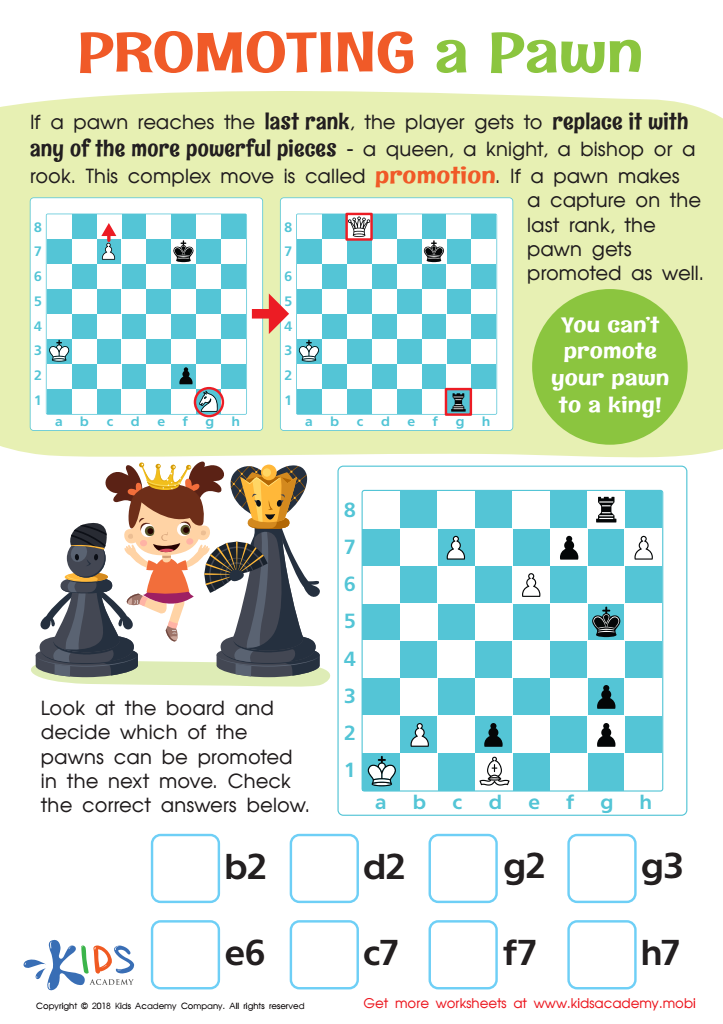
Promoting a Pawn Worksheet

Promoting a Pawn Worksheet

Teach your kids all about pawns with this fun worksheet! Pawns may seem restricted, but experienced players can guide them across the board. If a pawn reaches the last rank, the player can upgrade it to a more powerful piece (e.g. queen, knight), or promote it if it captures an enemy piece. Give them the tools to master the game!
Promoting a Pawn Worksheet
Worksheet
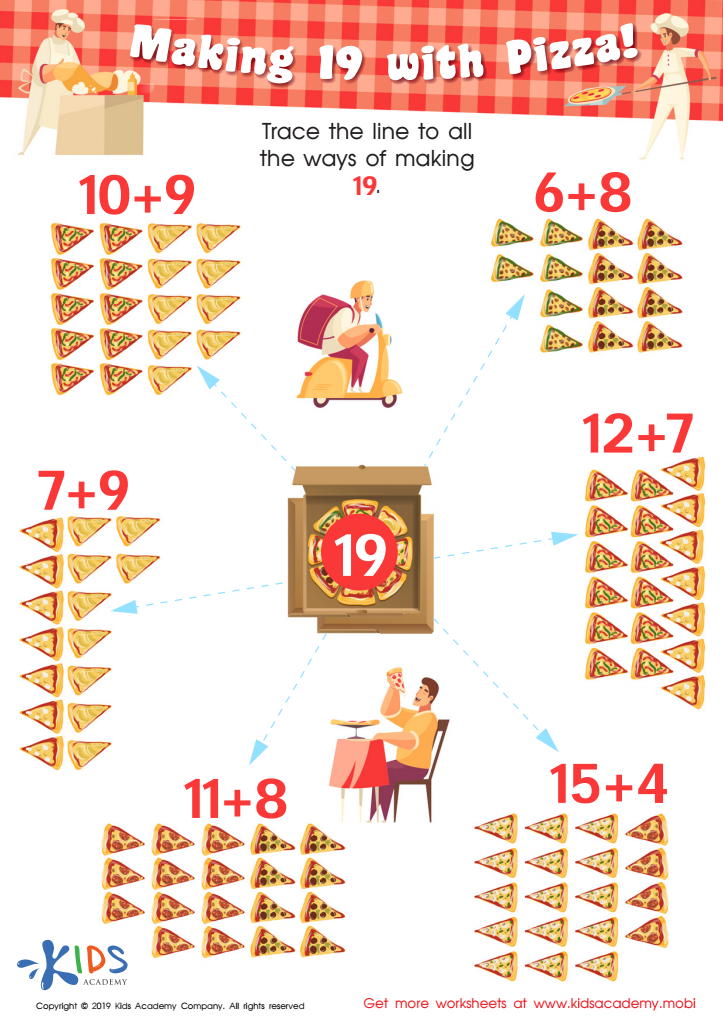
Making 19 with Pizza! Worksheet

Making 19 with Pizza! Worksheet

Who loves pizza? Your kids do! Next time you need to teach them math, make it fun by combining it with something they enjoy. This worksheet uses a pizza-themed problem to help them practice solving equations. Have them trace the line to figure out how to make 19. It's a great way to make learning math fun!
Making 19 with Pizza! Worksheet
Worksheet
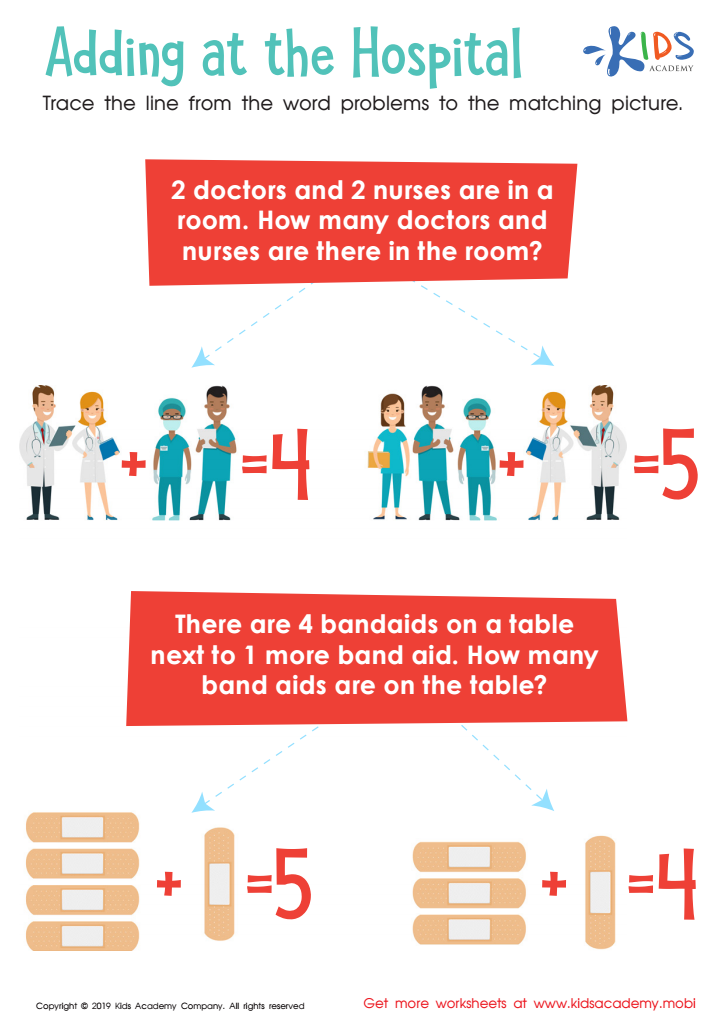
Adding at the Hospital Worksheet
Adding at the Hospital Worksheet

A hospital visit doesn't have to be scary for kids. With this worksheet, they can count along with doctors and nurses, by reading the word problems and tracing lines to the corresponding picture. Guide them through it and you'll help them have a fun experience.
Adding at the Hospital Worksheet
Worksheet
Addition Worksheet for 2nd Grade

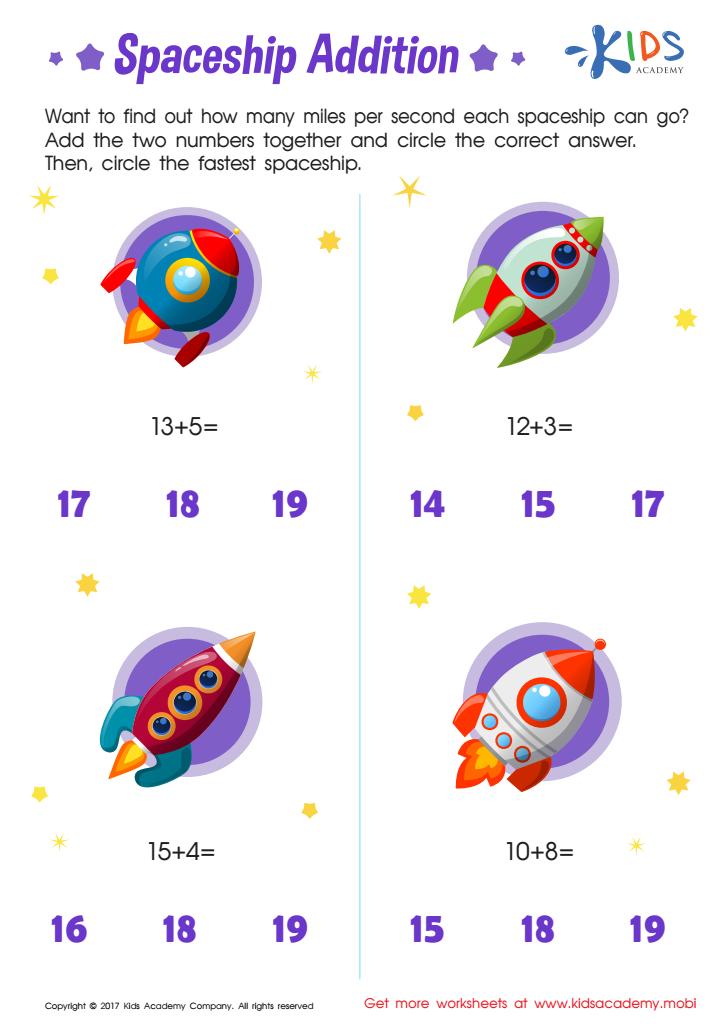
Spaceship Addition Worksheet

Blast off!
Spaceship Addition Worksheet
Worksheet
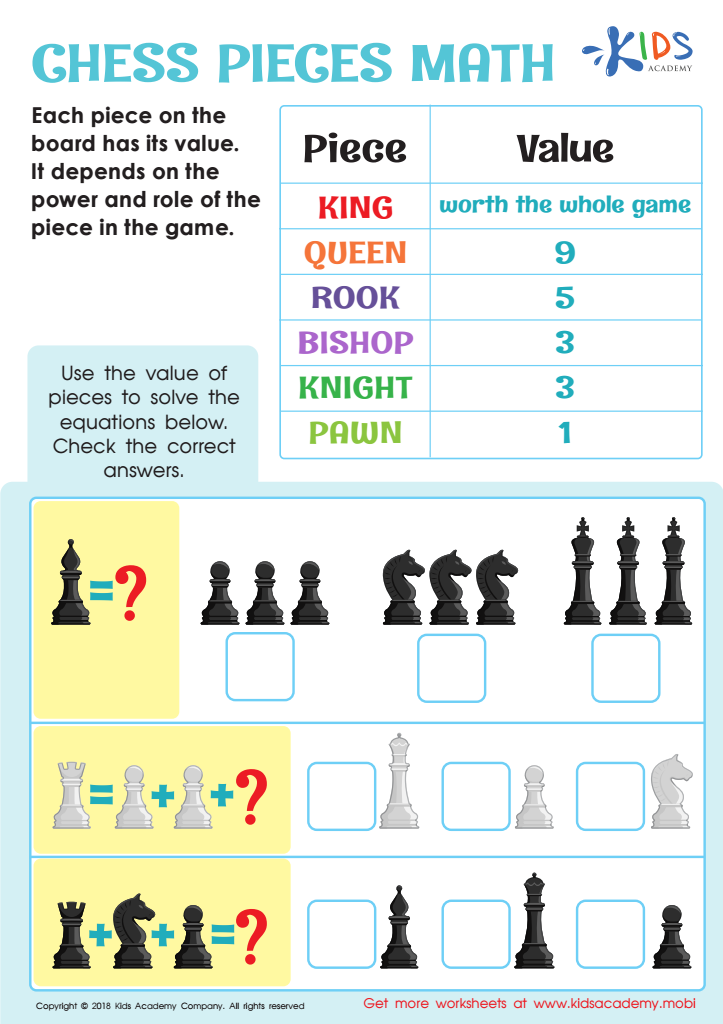
Chess Pieces Math Worksheet

Chess Pieces Math Worksheet

Chess involves math! Each piece has its own value, from the king (worth the entire game) to the queen (9 points), varying according to their power and role. In the worksheet, your child must use these values to solve the equations at the bottom.
Chess Pieces Math Worksheet
Worksheet
Pirate Ship Addition Worksheet

Pirate Ship Addition Worksheet

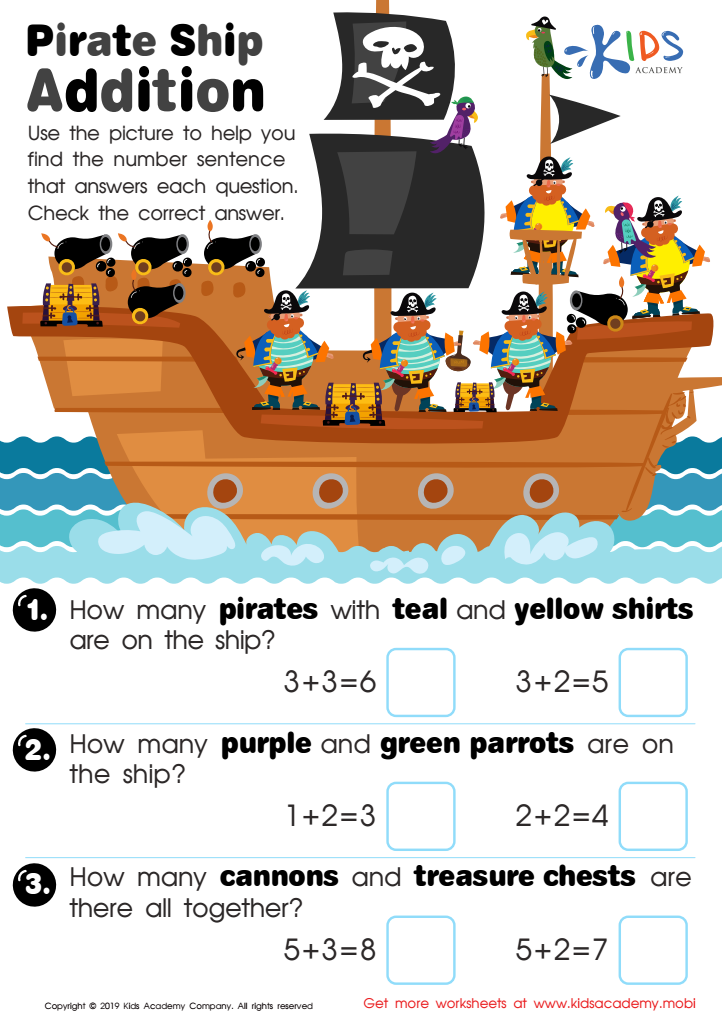
Does your family love pirate stories? Get your kids excited about this easy activity! Ask them to explain what makes pirate tales special, then look at the picture in the printout. Answer the three number questions at the bottom - use the picture to find the right number sentence. Help your kids check the correct answer. Max 80 words.
Pirate Ship Addition Worksheet
Worksheet
Find the Difference Worksheet

Find the Difference Worksheet

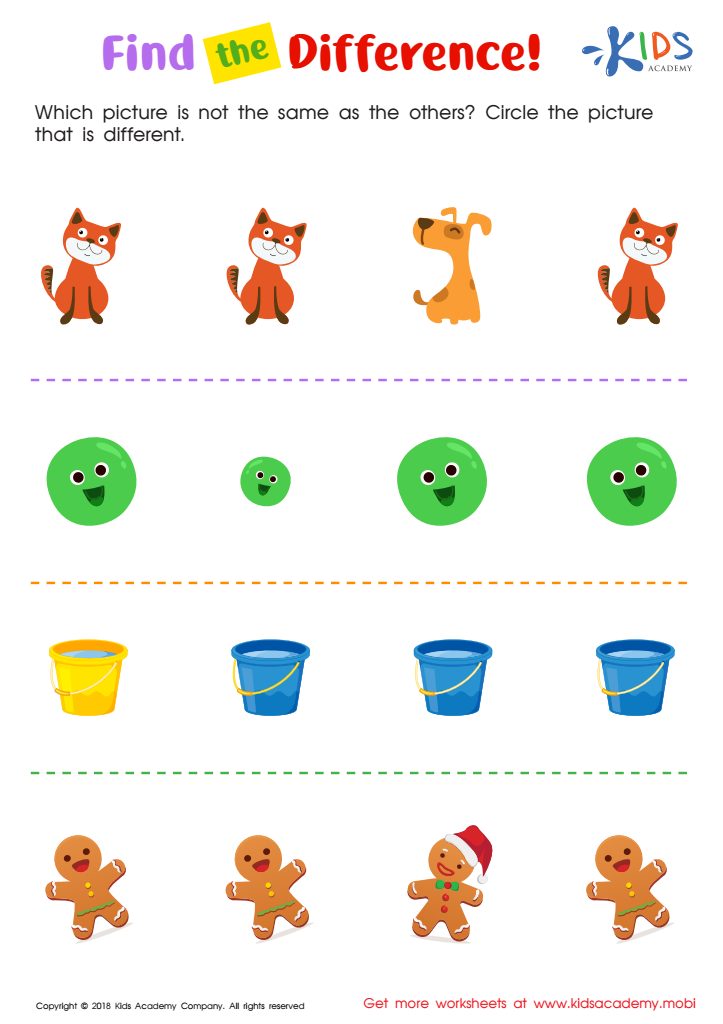
Test your kids' skills with this worksheet! Ask them to look at the pictures in each row and tell you what the objects are. Help them identify the odd item in each row by circling it. See if they can spot the difference!
Find the Difference Worksheet
Worksheet
Pyramid Math to Make 11 Worksheet


Pyramid Math to Make 11 Worksheet

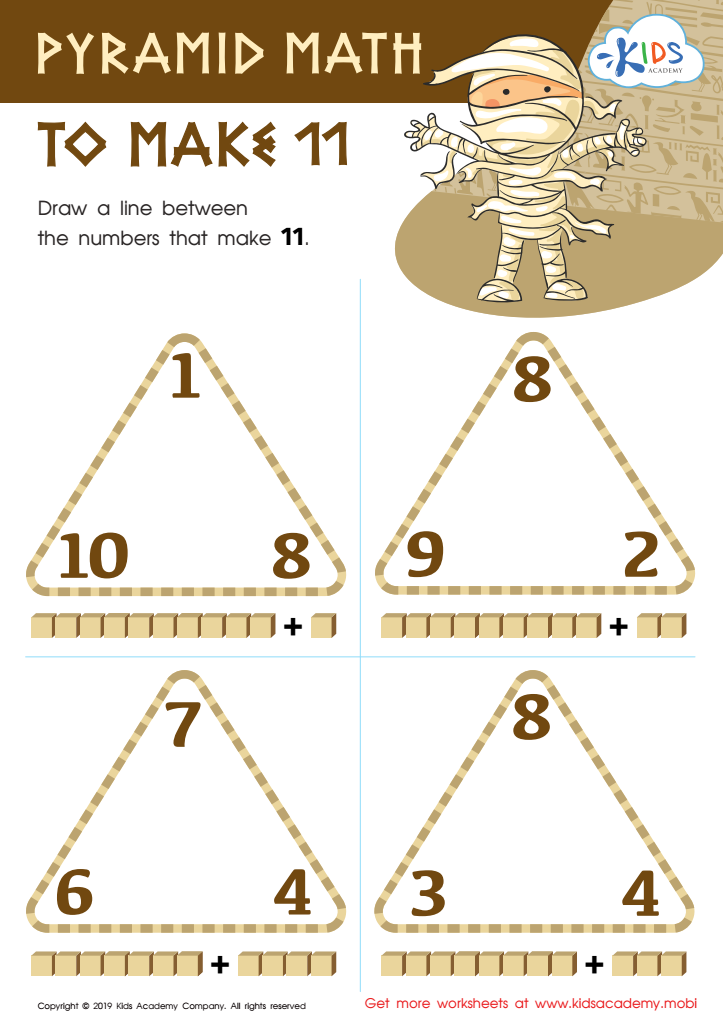
Have your kids look at the picture of the Egyptian pyramids and tell you what they see. Then, help them do simple math by adding up the numbers in the pyramids and connecting those that make 11. This worksheet is perfect for teaching your kids about history, mathematics, and problem-solving.
Pyramid Math to Make 11 Worksheet
Worksheet


Parents and teachers should prioritize developing problem-solving abilities in children aged 3-4 because it lays the foundation for lifelong learning and critical thinking. At this stage, children are naturally curious and eager to explore their environment. Supporting their problem-solving skills enhances cognitive development and helps them grasp complex concepts later in life.

Problem-solving encourages children to think independently, fostering confidence as they learn to tackle challenges on their own. It also promotes resilience; when children face obstacles, learning to strategize, experiment, and adapt can help them cope with failure and setbacks, equipping them for future challenges. Additionally, these skills encourage collaboration when children work together to find solutions, strengthening social interactions and emotional intelligence.

Moreover, early exposure to problem-solving creates a love for learning. Engaging in activities like puzzles, games, or open-ended play allows children to make connections, analyze situations, and develop reasoning skills. Parents and educators can facilitate this growth by providing opportunities for exploration and guiding discussions that stimulate critical thinking.

By nurturing these abilities at such a young age, parents and teachers help children establish a strong intellectual foundation that supports academics, social relationships, and personal growth throughout their lives.