Spatial reasoning Normal Worksheets for Ages 3-4
5 filtered results
-
From - To
Introduce young minds to the world of spatial reasoning with our engaging worksheets designed specifically for ages 3-4. These fun-filled activities help preschoolers enhance their cognitive abilities by teaching them how to visualize and manipulate objects in space. Through colorful illustrations and creative exercises, our worksheets stimulate their observational skills, hand-eye coordination, and problem-solving techniques. Perfect for early learning, these resources prepare children for future success in math and science, while keeping them entertained. Spark curiosity and boost their confidence as they explore shapes, patterns, and spatial concepts in a playful and enriching manner.
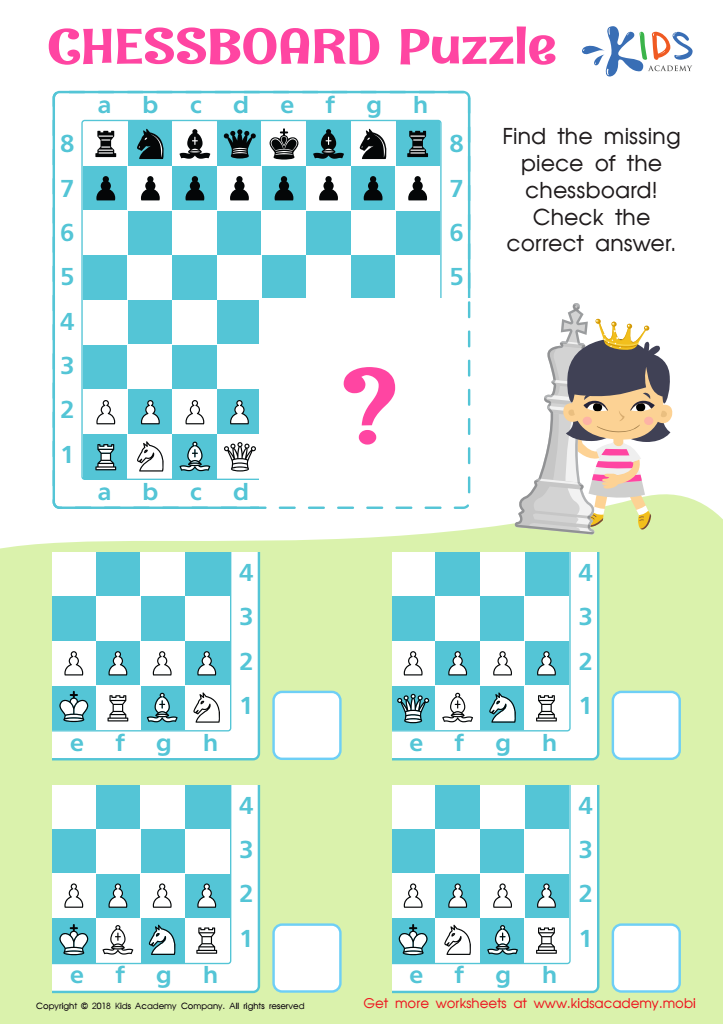
Chessboard Puzzle Worksheet
 Assign to My Students
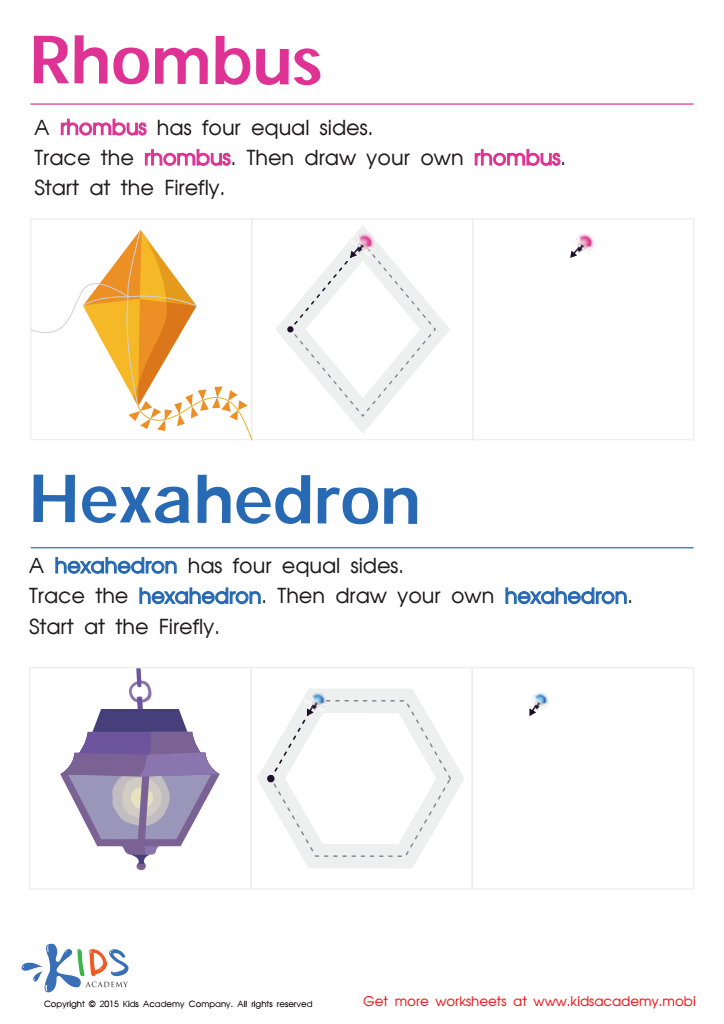
Draw a Rhombus And a Hexahedron Printable
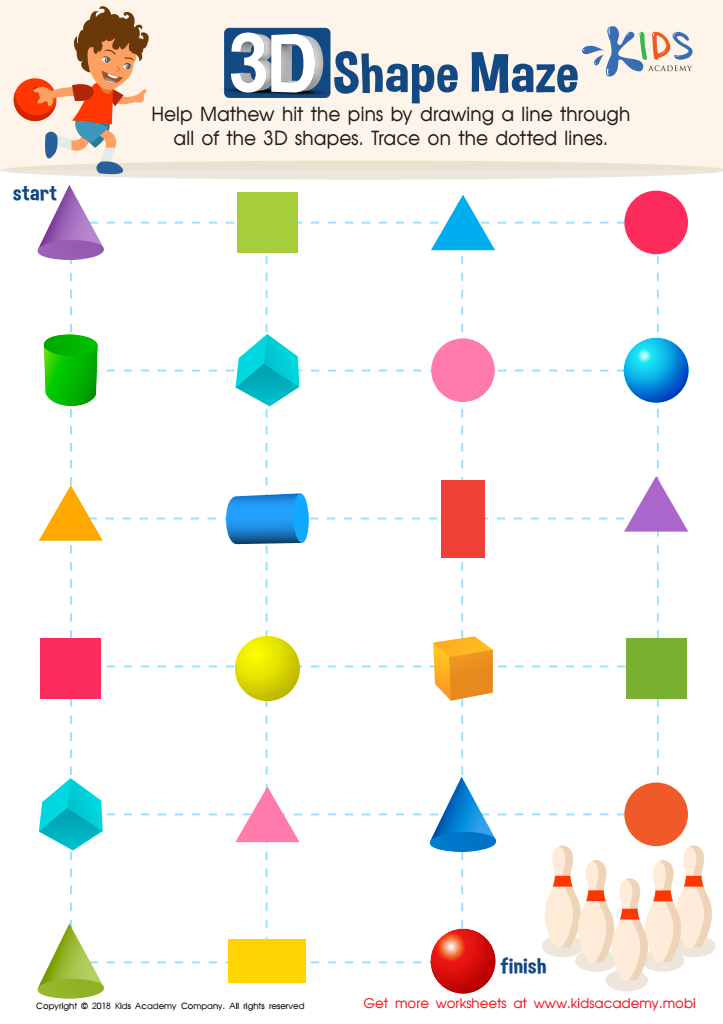
Shapes Maze Geometry Worksheet
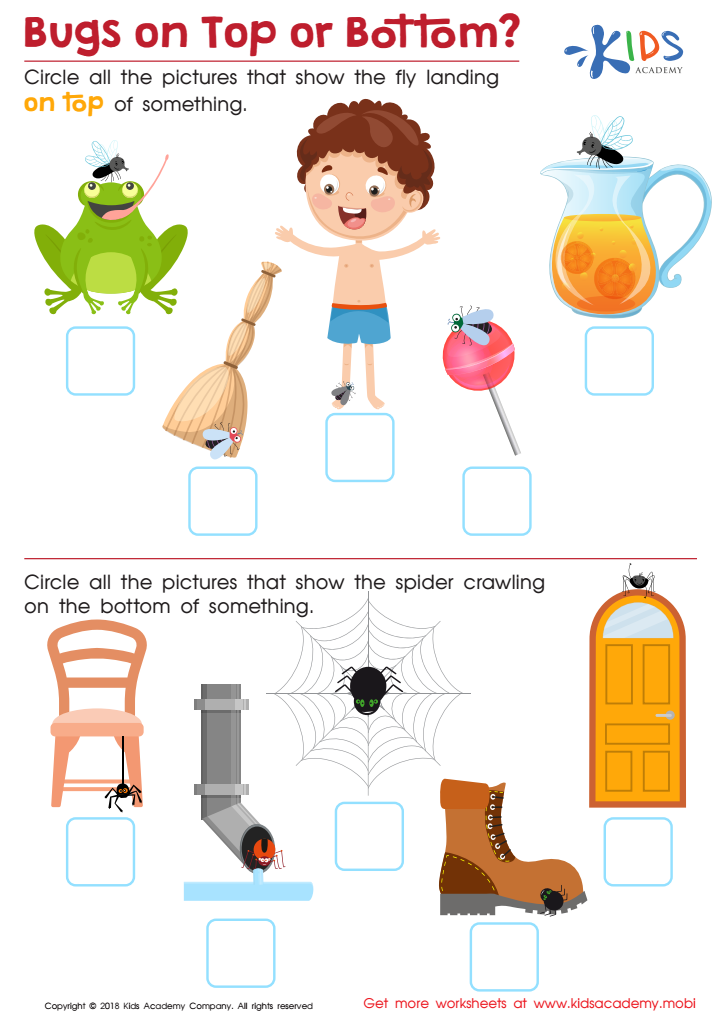
Bugs on Top or Bottom? Worksheet
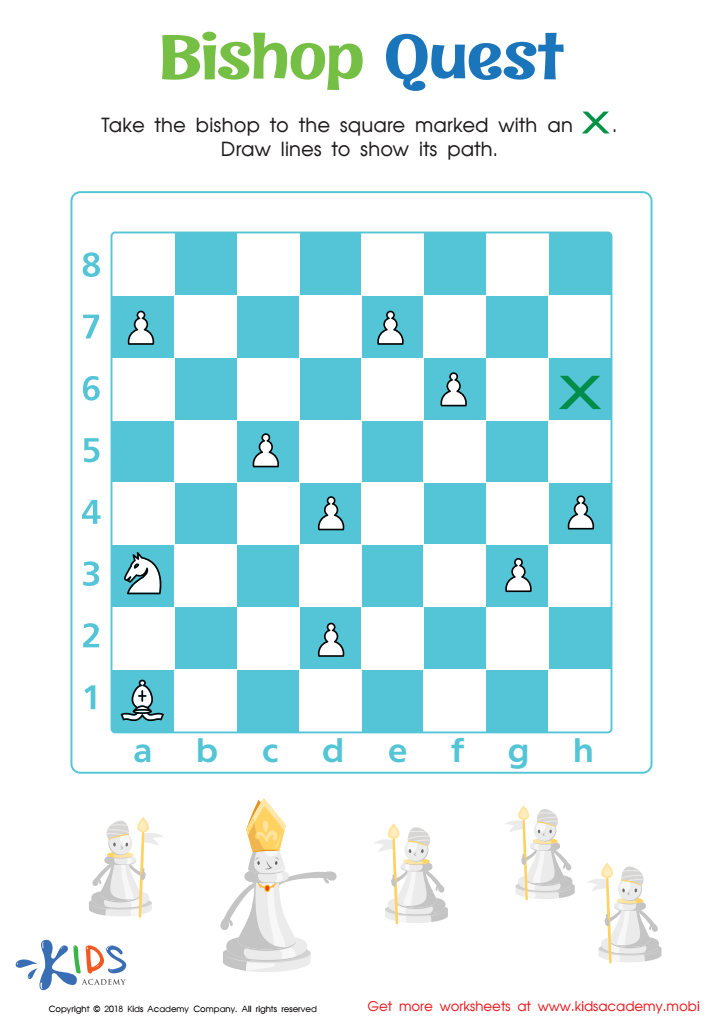
Bishop Quest Worksheet







Spatial reasoning is a crucial cognitive skill that allows children to understand and interact with the world around them. For children aged 3-4, developing strong spatial reasoning abilities is important for several reasons. First, it bolsters their early mathematical skills, such as understanding shapes, sizes, and spatial relationships, which are foundational for more complex mathematical concepts later in life. Research shows that children who excel in spatial reasoning tend to perform better in subjects like mathematics and science as they progress in their education.
Second, spatial reasoning is integral to everyday problem-solving and navigation. Children with good spatial skills can better understand directions and use tools more effectively. This enhances their capacity to engage in tasks such as puzzle-solving, building with blocks, and drawing, which are vital activities for their fine motor development and creativity.
Third, fostering spatial reasoning can also improve language development. When children describe objects and their positions relative to each other, they use spatial language that enhances both their vocabulary and their ability to communicate complex ideas.
Finally, nurturing spatial abilities is crucial for children’s self-confidence and academic enthusiasm. By engaging in play and exploration that promotes spatial reasoning, parents and teachers help children gain a sense of achievement and stimulate their curiosity about the world, laying a strong foundation for lifelong learning.








