Subtraction skills Normal Worksheets for Ages 3-4
4 filtered results
-
From - To
Welcome to our "Subtraction Skills Normal Worksheets" for ages 3-4! These engaging and interactive worksheets are designed to introduce young learners to the concept of subtraction in a fun and accessible way. With colorful visuals and age-appropriate exercises, children will practice counting and subtracting through enjoyable activities. Each worksheet is tailored to build foundational math skills, helping toddlers grasp simple subtraction concepts with ease. Encourage your child's mathematical growth and confidence as they explore essential skills through these playful and educational worksheets. Perfect for home or preschool use, our resources are ideal for nurturing a love for learning at an early age!
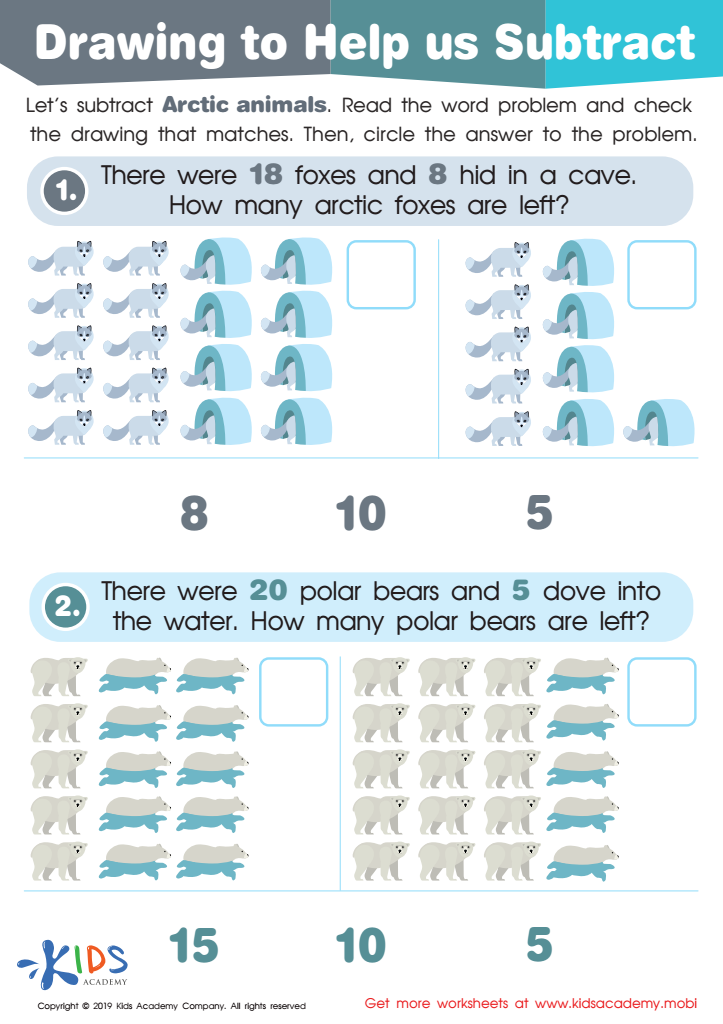
Drawing to Help Us Subtract Worksheet
 Assign to My Students
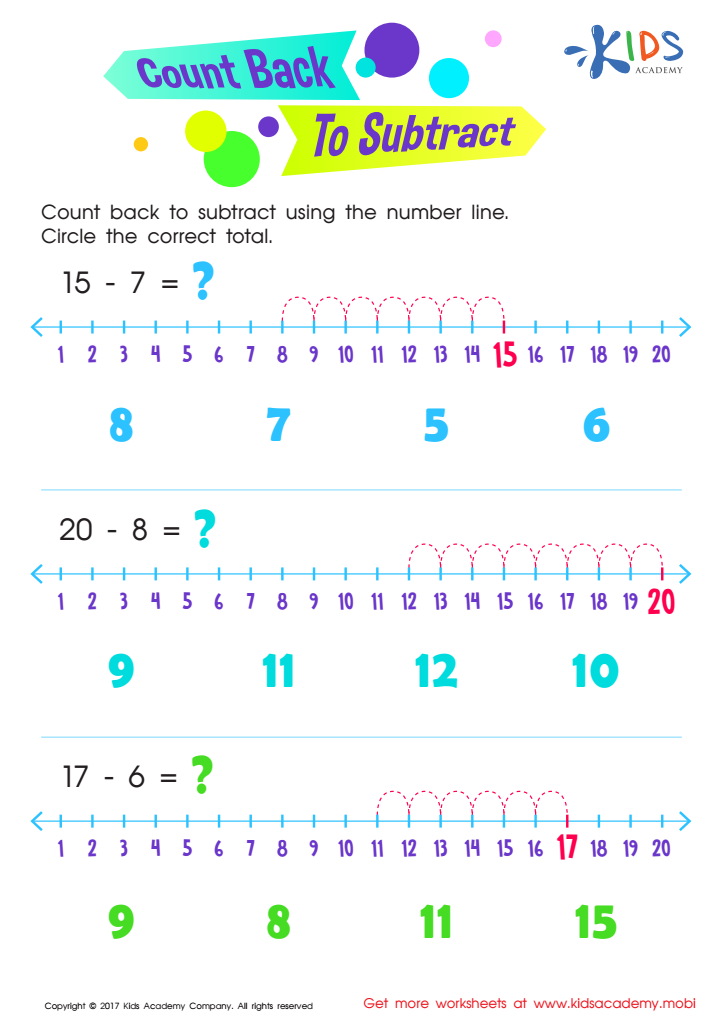
Count Back to Subtract Substraction Worksheet
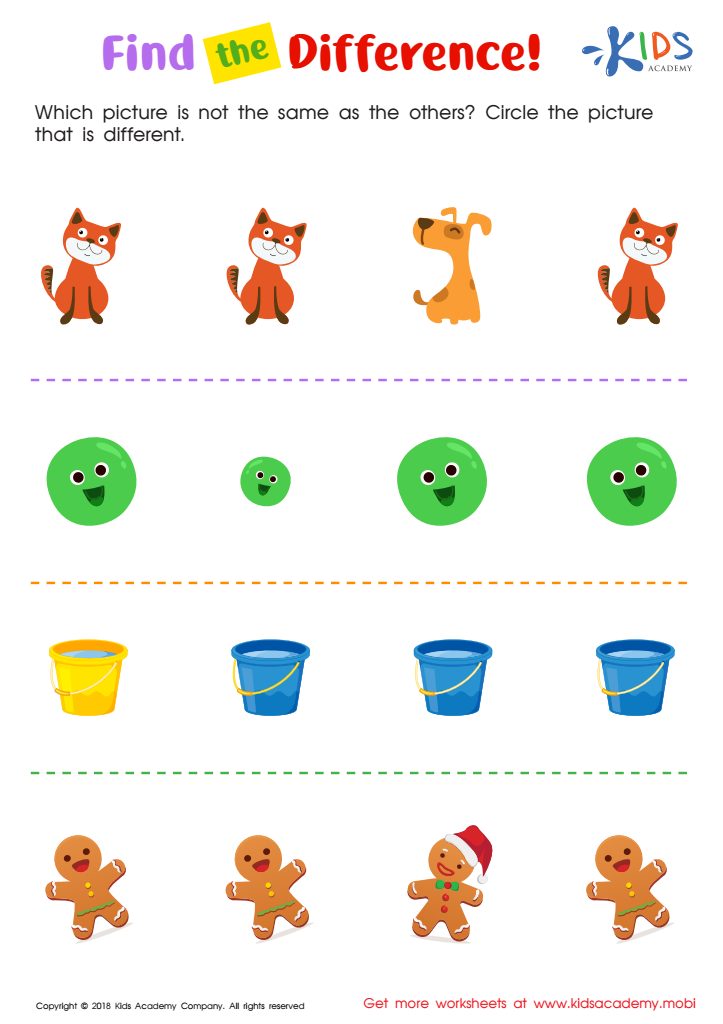
Find the Difference Worksheet
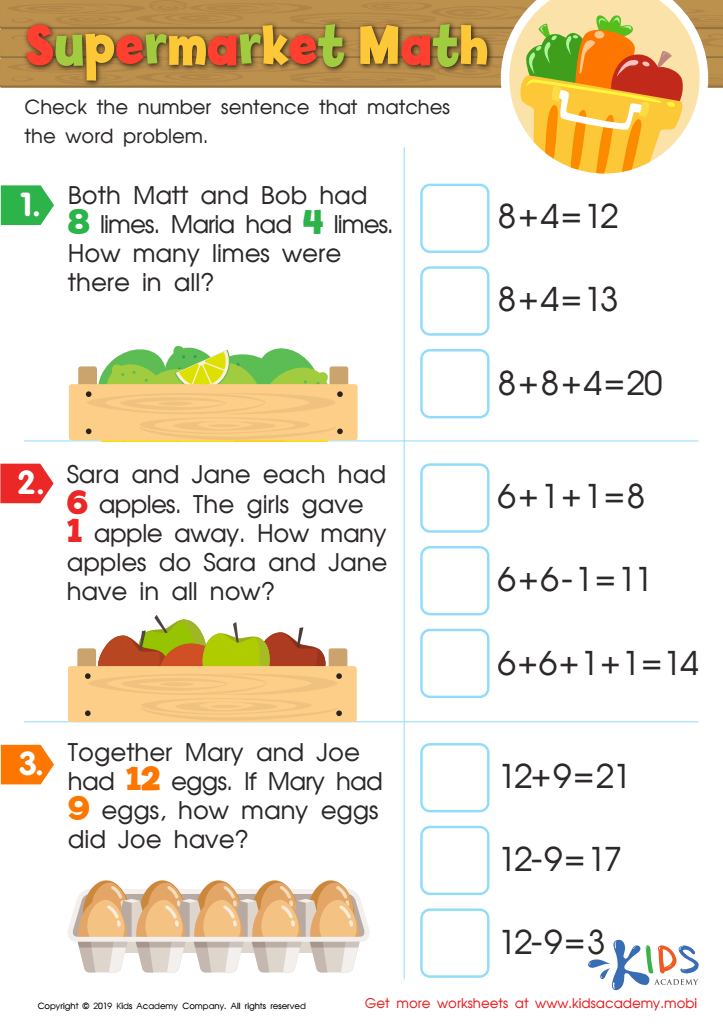
Supermarket Math Worksheet




.jpg)

Parents and teachers should prioritize subtraction skills for children ages 3-4 because these foundational mathematical concepts are critical for cognitive development. At this age, children are beginning to engage with numbers and basic math operations, making it an ideal time to introduce subtraction. Developing these skills promotes logical thinking and problem-solving capabilities, which are essential throughout their educational journey.
Subtraction also enhances children's understanding of quantity and value, reinforcing concepts of "more" and "less." As they learn to subtract, children gain the ability to compare sets, fostering early number sense. This skill builds confidence in their mathematical abilities and encourages a positive attitude towards learning.
Moreover, subtraction activities can be fun and interactive, such as using toys or finger-counting games, making learning enjoyable and engaging. Involving parents in this process further strengthens the learning experience, allowing children to apply what they learn in school at home.
Finally, mastering the basics of subtraction prepares children for more complex mathematical operations in later grades. Ultimately, nurturing subtraction skills at a young age lays the groundwork for a strong educational foundation, ensuring that children are well-prepared for future academic challenges.








