Visual interpretation Normal Worksheets for Ages 3-4
3 filtered results
-
From - To
Discover our engaging "Visual Interpretation Normal Worksheets" designed specifically for children aged 3 to 4. These thoughtfully crafted worksheets help little learners enhance their visual recognition and cognitive skills through a variety of fun activities. With colorful illustrations and interactive exercises, kids will enjoy identifying shapes, colors, and objects, all while honing their auditory listening skills. Our visual interpretation worksheets provide the perfect blend of education and playtime, encouraging creativity and critical thinking. Visit us to support your child's early learning journey and watch them thrive as they develop essential skills in a fun, interactive way!
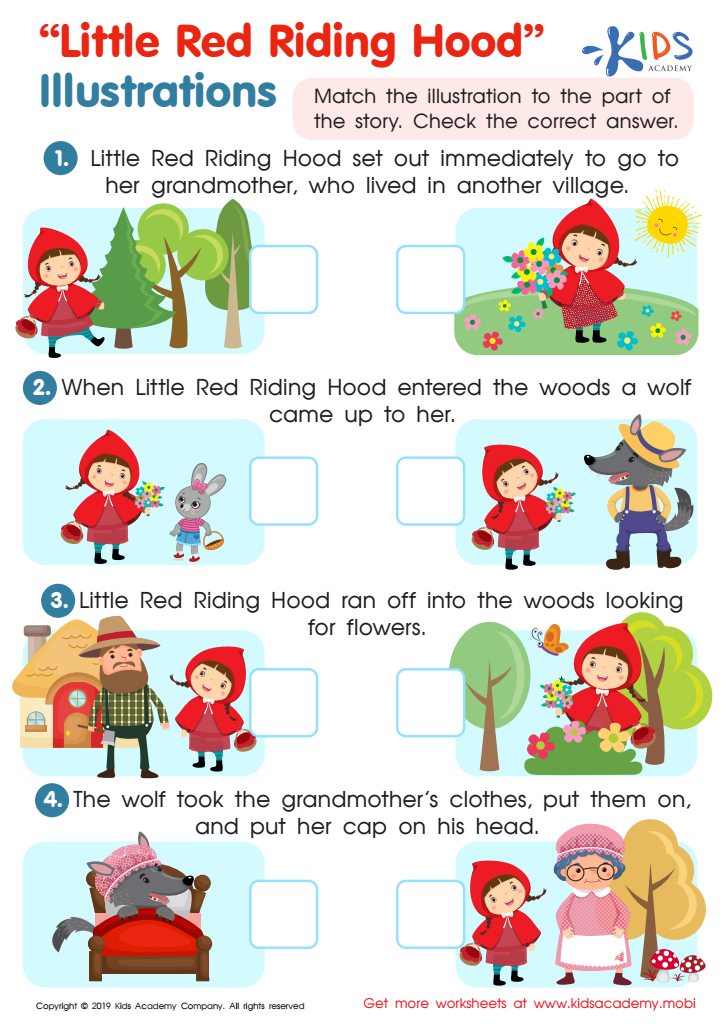
Little Red Riding Hood: Illustrations Worksheet
 Assign to My Students
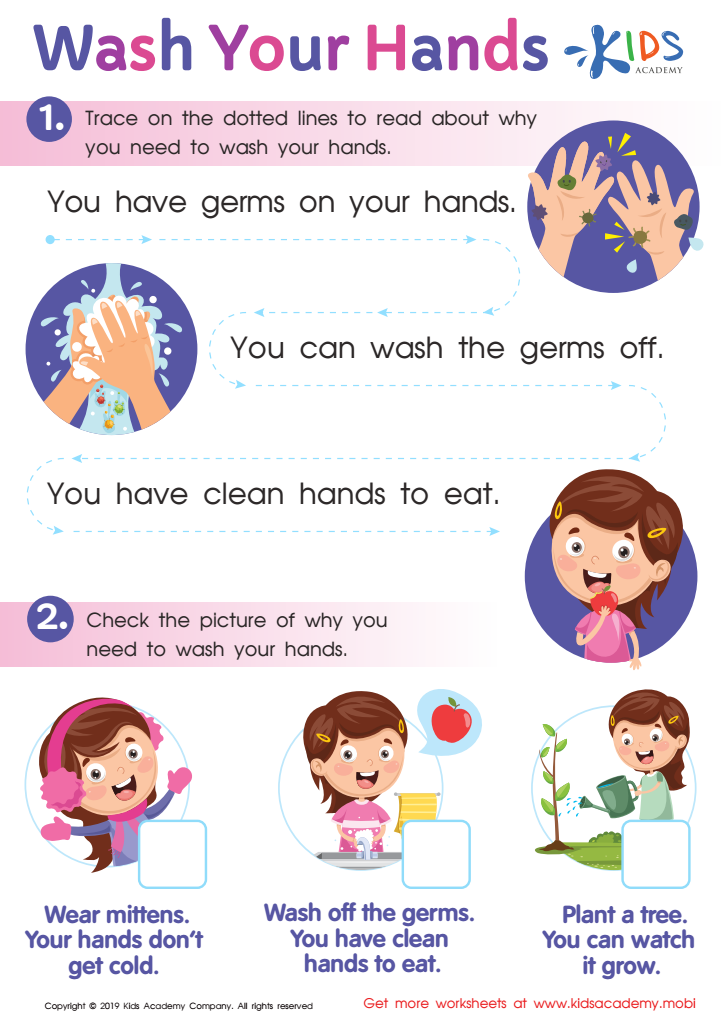
Wash Your Hands Worksheet
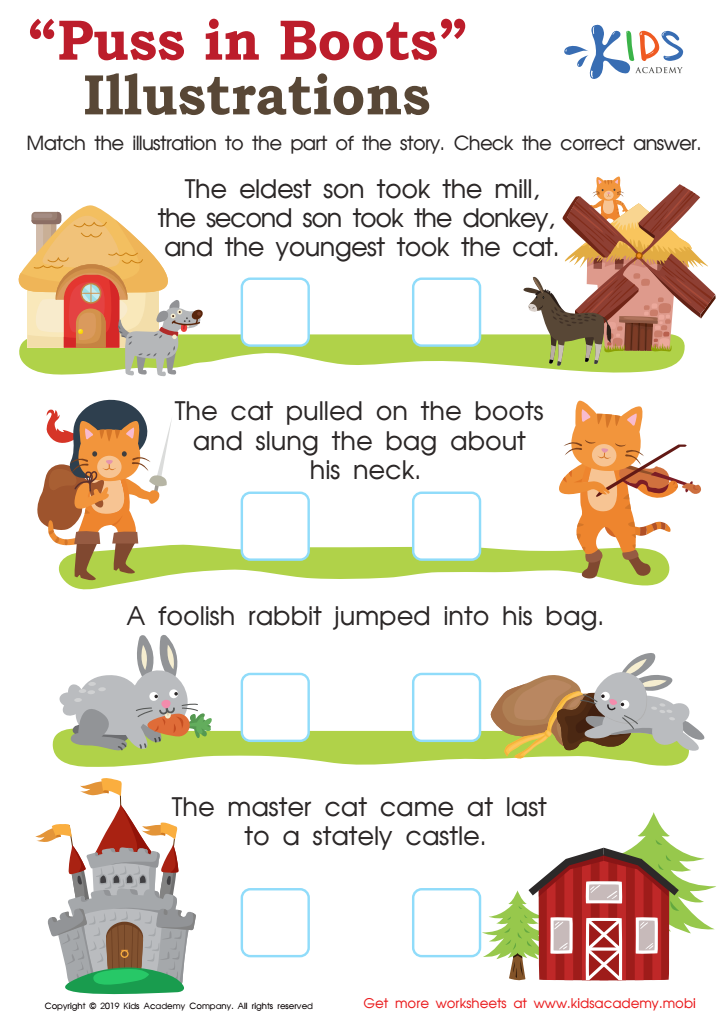
Puss in Boots Illustrations Worksheet







Visual interpretation skills are essential for children aged 3-4 as they serve as a foundation for learning and development. At this stage, children are exploring the world around them, and their ability to interpret visual information helps them understand their environment better. Parents and teachers should care about nurturing these skills because they play a crucial role in early literacy and cognitive development.
When children can recognize shapes, colors, and patterns, they enhance their ability to identify letters and numbers, setting the groundwork for later reading and math skills. Visual interpretation also fosters critical thinking; children learn to analyze and make connections between different visual stimuli. This encourages curiosity and problem-solving abilities.
In social contexts, interpreting visual cues like facial expressions and gestures is vital for developing empathy and effective communication skills. By engaging children with activities like storytelling, art, and interactive games that promote visual understanding, parents and teachers can enhance these competencies.
Ultimately, prioritizing visual interpretation skills supports holistic development in young learners, enabling them to become confident, well-rounded individuals. Investing in these foundational skills today ensures that children are better equipped for future learning challenges and social interactions.








