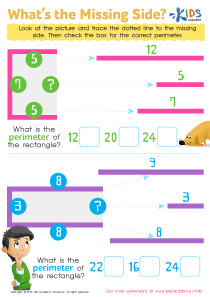
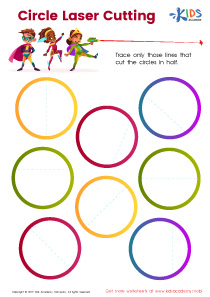
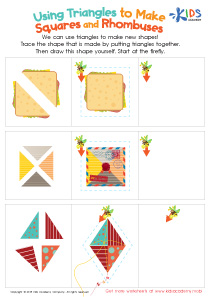
Pattern recognition Normal 2D Shapes Worksheets for Ages 3-4
3 filtered results
-
From - To
Discover our engaging Normal 2D Shapes Worksheets designed for children ages 3-4, focused on enhancing pattern recognition skills. These worksheets feature vibrant illustrations of common 2D shapes, making learning fun and interactive. Children will explore patterns through various activities, subtly developing critical thinking and visual recognition abilities. Perfect for early learners, these worksheets foster cognitive growth while enhancing fine motor skills through drawing and tracing exercises. Customize learning experiences that ignite curiosity about shapes and patterns. Ideal for home or classroom use, our resources ensure a solid foundation in math concepts while keeping young learners entertained. Start shaping young minds today!
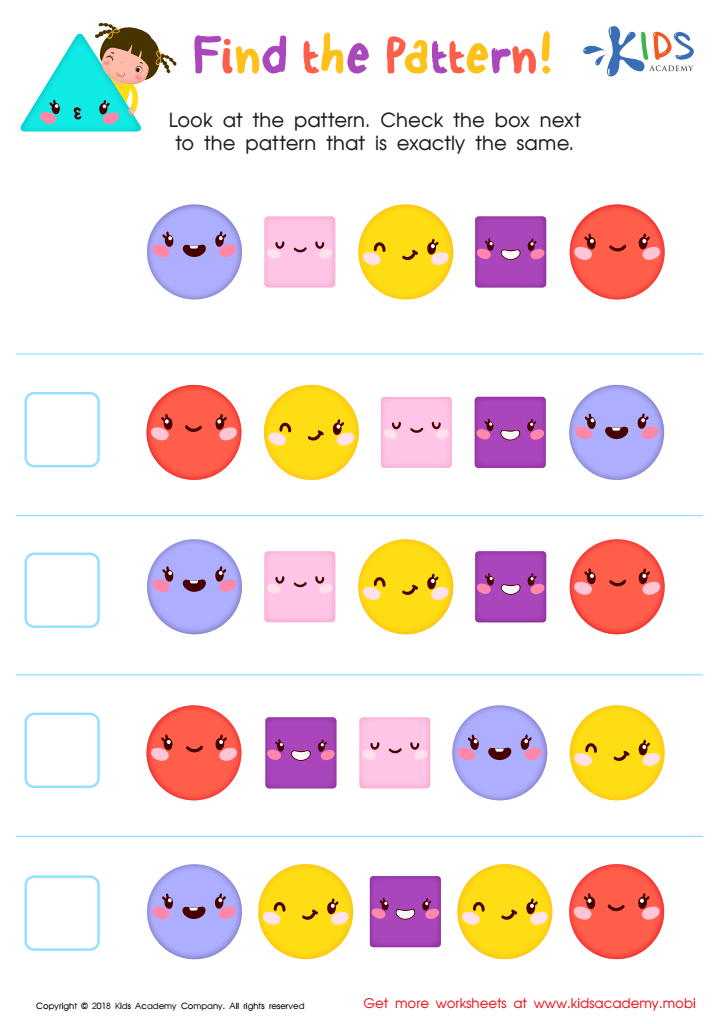
Find the Pattern Worksheet
 Assign to My Students


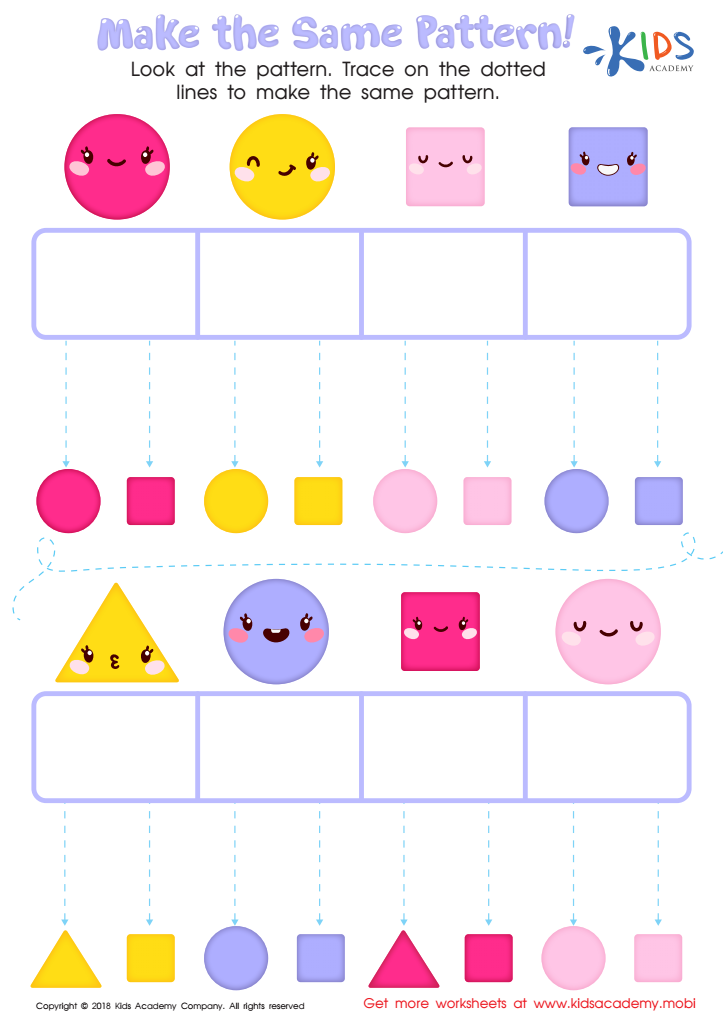
Make the Same Pattern Worksheet
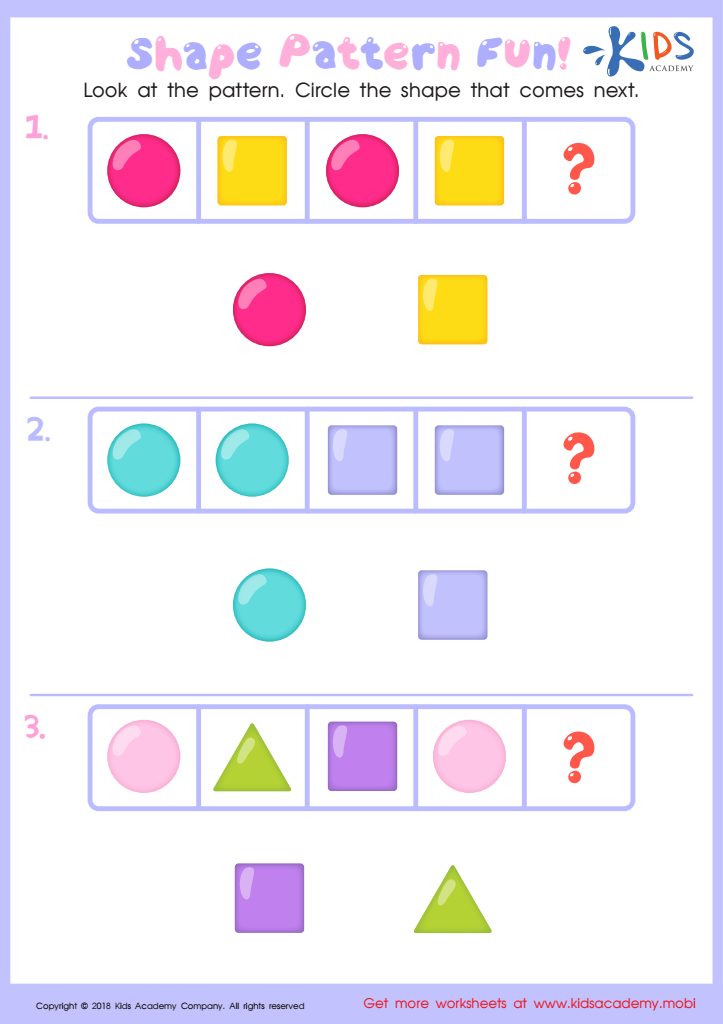
Shape Pattern Fun Worksheet







Pattern recognition and understanding normal 2D shapes are essential skills for children aged 3-4 years, and parents and teachers should prioritize these developmental milestones. Firstly, recognizing patterns helps children develop critical thinking and problem-solving skills. It lays the foundation for mathematical understanding, enabling them to identify relationships, predict outcomes, and even anticipate sequences in their surroundings.
Engaging with 2D shapes supports spatial awareness, enhancing a child's ability to comprehend size, position, and the relationships between objects. This understanding can influence later capabilities in geometry and even in daily activities, as children learn to navigate their environment more effectively.
In addition to cognitive benefits, practicing pattern recognition and shape identification fosters creative expression and fine motor skills. Activities involving tracing, drawing, or building shapes can enhance hand-eye coordination, which is crucial for writing and various self-care tasks.
Moreover, learning through play encourages social interaction and collaboration, as children often work together on shape and pattern activities. Involving parents and teachers in this process creates a supportive learning environment, which is crucial for instilling a lifelong love of learning. By caring about these skills, adults can help weave a rich tapestry of growth and ensure children are well-prepared for future educational challenges.