Counting skills Normal Addition and Subtraction Word Problems Worksheets for Ages 3-4
3 filtered results
-
From - To
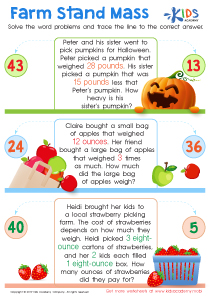
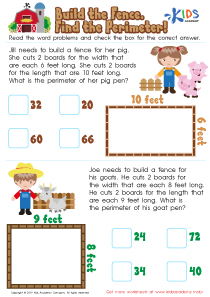
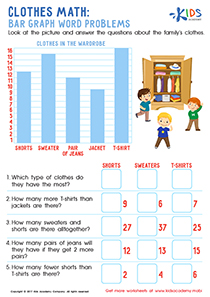
Nurture early math skills with our Counting Skills: Normal Addition and Subtraction Word Problems Worksheets tailored for ages 3-4. These engaging and colorful worksheets are designed to make learning fun and accessible for young children. Each activity focuses on developing fundamental counting abilities as well as introduction to simple addition and subtraction through relatable word problems. Ideal for both home and classroom settings, these resources support early cognitive development, problem-solving skills, and numerical literacy. Equip your child with a solid foundation in mathematics by exploring our expert-crafted worksheets today!
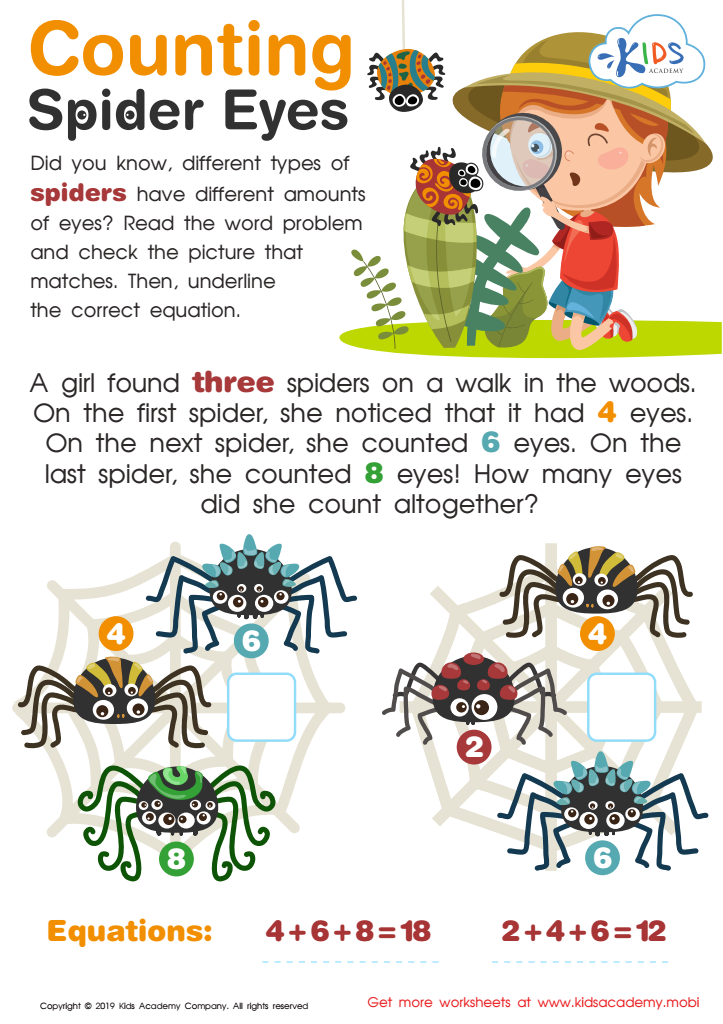
Counting Spider Eyes Worksheet
 Assign to My Students
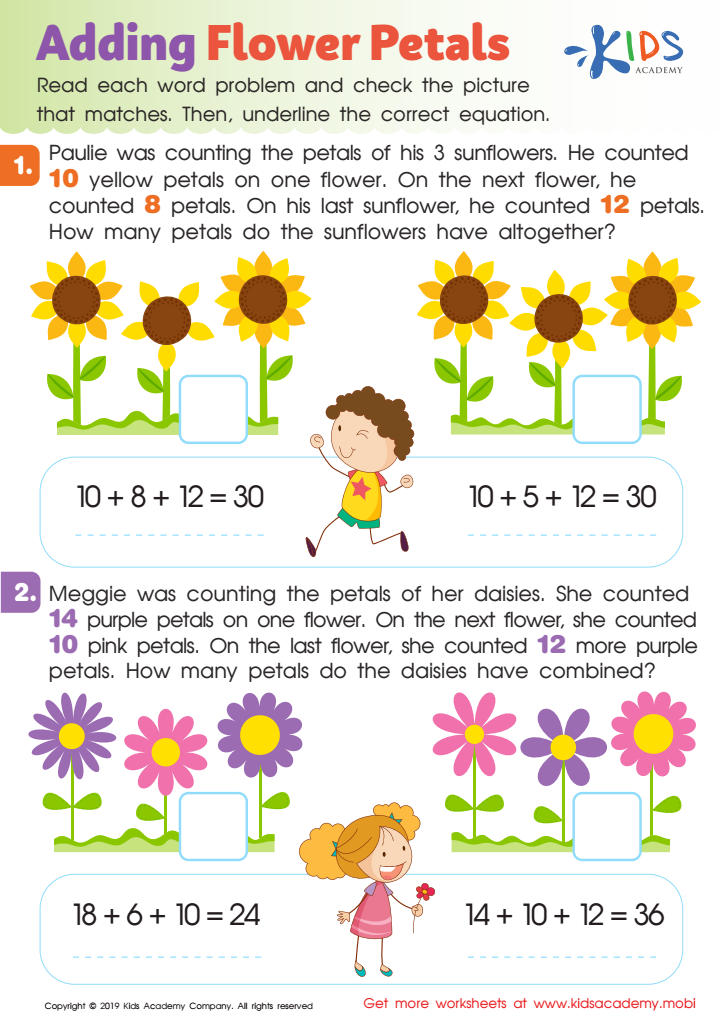
Adding Flower Petals Worksheet
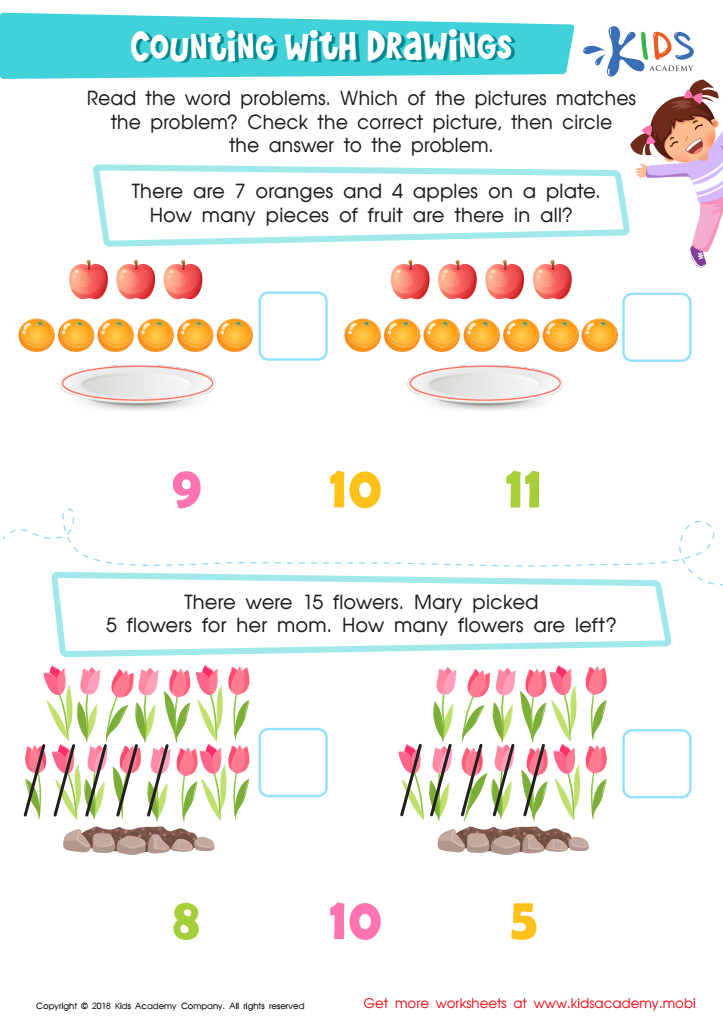
Counting with Drawings:Fruits & Flowers Worksheet








Counting skills and basic mathematical operations are fundamental building blocks in a child's early education and cognitive development. At ages 3-4, children are at a critical stage where they begin to understand and make sense of numbers and their relationships. Here are key reasons why parents and teachers should care about cultivating these skills:
-
Foundation for Future Learning: Early proficiency in counting and simple addition and subtraction forms the basis for more complex math concepts. Mastery of these basics ensures that children are well-prepared for future mathematical challenges in school.
-
Cognitive Development: Engaging in counting and basic arithmetic problems enhances children's cognitive abilities, such as problem-solving, logical thinking, and memory. These skills are not only applicable to mathematics but also to other areas of learning and daily life.
-
Confidence Building: Success in counting and simple math problems fosters a sense of accomplishment and confidence. This positive self-view encourages children to take on new challenges and can impact their attitude toward learning in general.
-
Real-life Application: Understanding numbers and arithmetic equips children with essential life skills. Simple tasks, such as identifying quantities and solving basic problems, become manageable, fostering independence and practical thinking.
In sum, focusing on counting and elementary arithmetic at a young age is essential for personal growth, academic achievement, and everyday functionality.