Logical Reasoning Normal Addition & Subtraction Worksheets for Ages 3-4
4 filtered results
-
From - To
Our "Logical Reasoning Normal Addition & Subtraction Worksheets for Ages 3-4" are designed to give kids a solid foundation in early math skills while enhancing their critical thinking. These fun and engaging printables introduce young learners to basic addition and subtraction through a variety of vibrant activities. By solving simple math problems, kids also develop their ability to use logical reasoning, recognize patterns, and build essential problem-solving skills. Ideal for preschoolers, our worksheets provide an excellent resource for parents and educators to support early childhood math development in an enjoyable and interactive way.
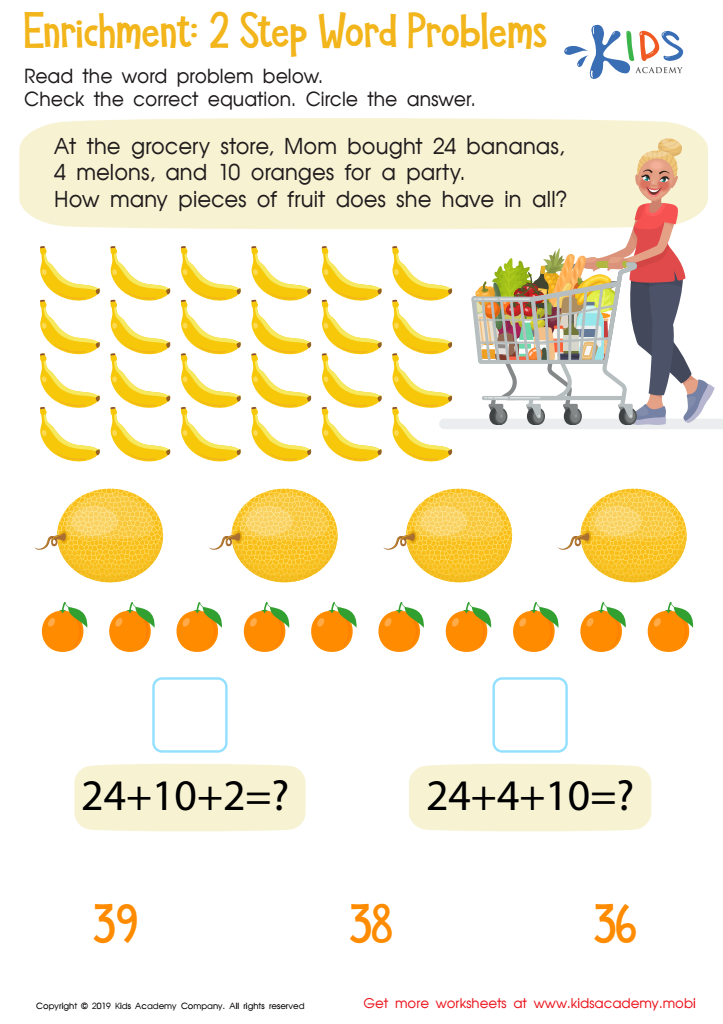
Enrichment -2 Step Word Problems Worksheet
 Assign to My Students
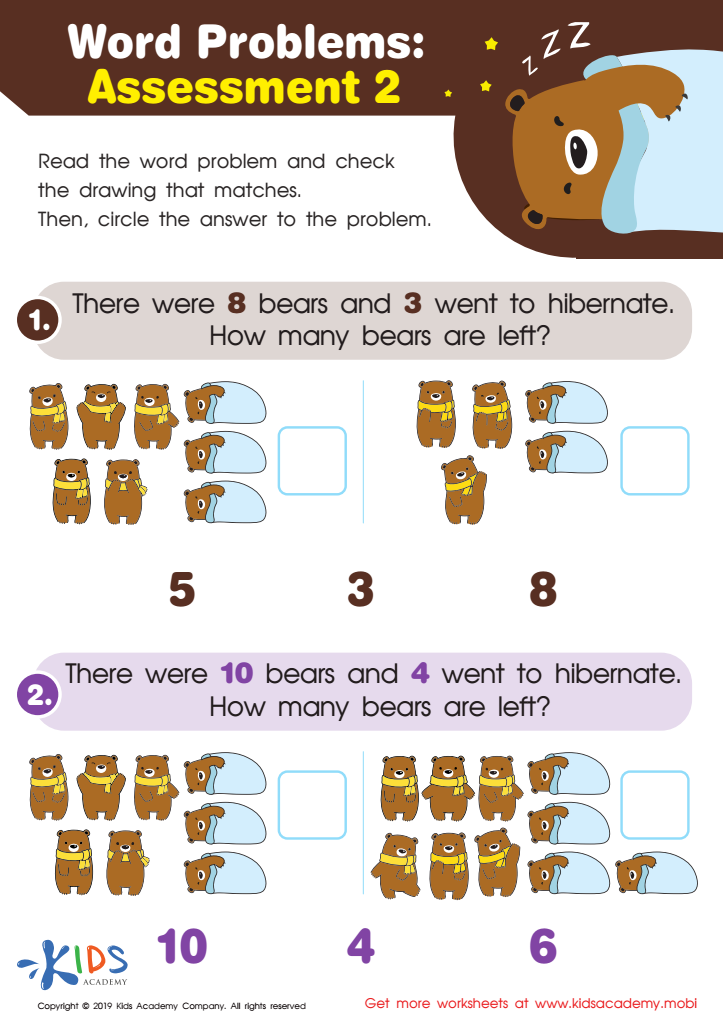
Word Problems: Assessment 2 Worksheet
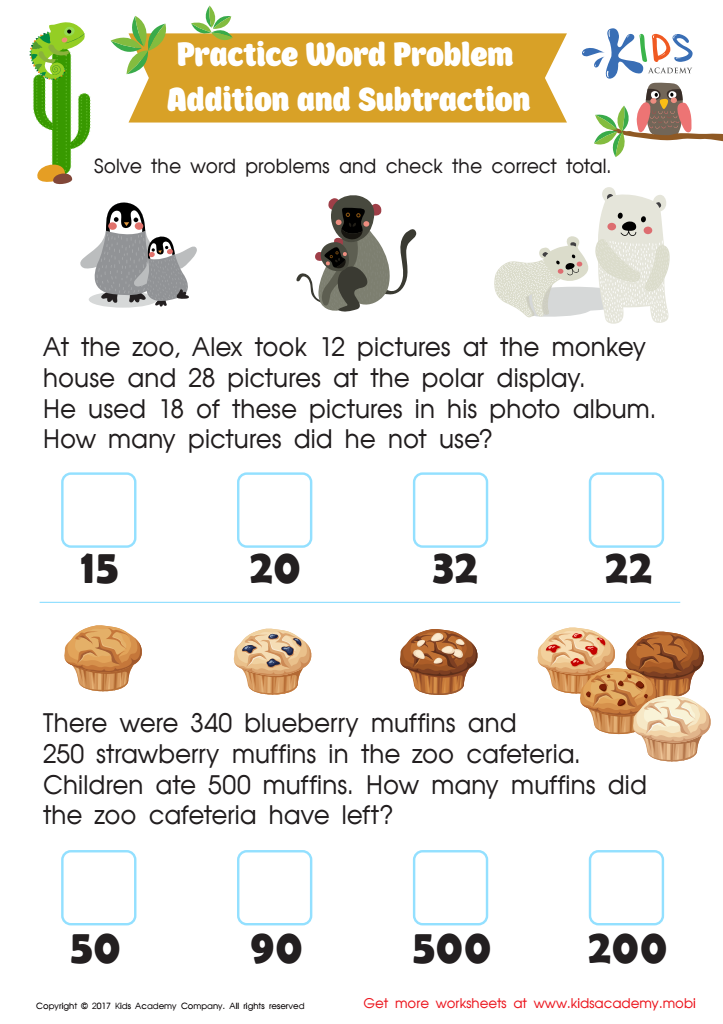
Addition and Subtraction: Word Problems Worksheet
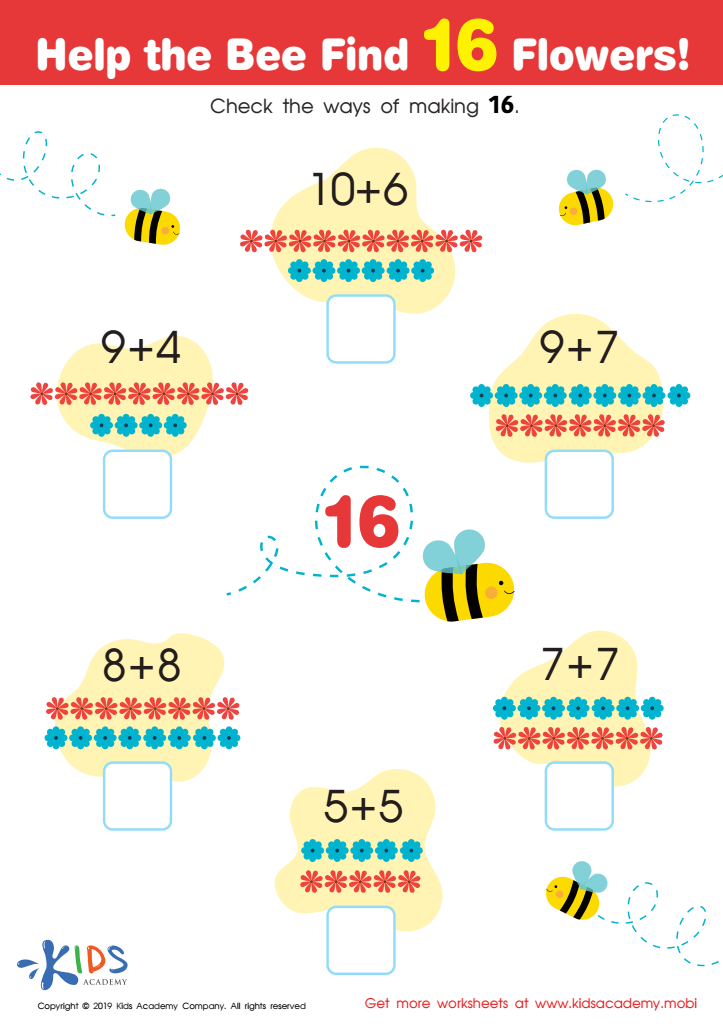
Help the Bee Find 16 Flowers Worksheet








Parents and teachers should place a strong emphasis on logical reasoning and fundamental math concepts like normal addition and subtraction for children aged 3-4 because these skills create a crucial foundation for future learning. During these formative years, children's brains are highly adaptable, and introducing them to basic math concepts promotes cognitive development.
By engaging in age-appropriate logical reasoning and simple mathematical operations, children develop critical thinking skills. These early experiences help them understand cause-and-effect relationships, enhance their problem-solving abilities, and stimulate curiosity. Basic addition and subtraction also equip children with the ability to recognize patterns and understand numerical relationships, fostering a solid mathematical foundation essential for more advanced concepts they will encounter in primary school.
Moreover, achieving proficiency in these areas at an early age boosts children's confidence. Successfully mastering fundamental skills enhances their self-esteem, making them more willing to tackle new challenges. Parents and educators who encourage these skills foster a love for learning, setting children on a positive educational trajectory.
Finally, early mastery of logical reasoning and basic math supports other academic areas, including literacy and science, due to the interconnectedness of cognitive skills. Therefore, fostering these abilities in young children lays the groundwork for well-rounded intellectual development.








