
Mental math skills Normal Addition & Subtraction Worksheets for Ages 3-4
3 filtered results
Difficulty Level
Grade
Age
-
From - To
Subject
Activity
Standards
Enhance your child's early learning experience with our engaging Mental Math Skills Normal Addition & Subtraction Worksheets designed for ages 3-4. These worksheets provide a fun and interactive way for young learners to develop essential math skills through visual and hands-on activities. Each worksheet encourages children to practice addition and subtraction in a simple, straightforward manner, reinforcing their understanding of numbers and basic math concepts. With colorful designs and age-appropriate challenges, children can build their confidence while honing their mental math abilities. Explore our collection and watch your little ones excel in math while having fun! Best of all, it’s completely printable!
Favorites
With answer key
Interactive
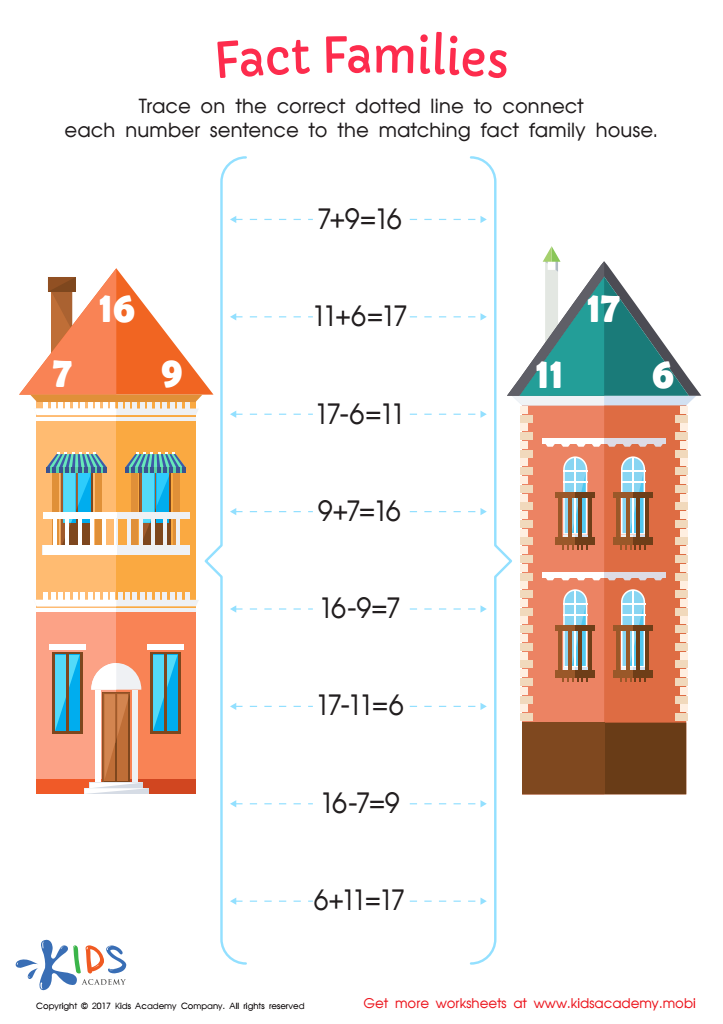
Fact Families — Add and Subtract Worksheet
Kids will love seeing how families of numbers "live" in their own houses!
 Assign to My Students
Fact Families — Add and Subtract Worksheet
Worksheet
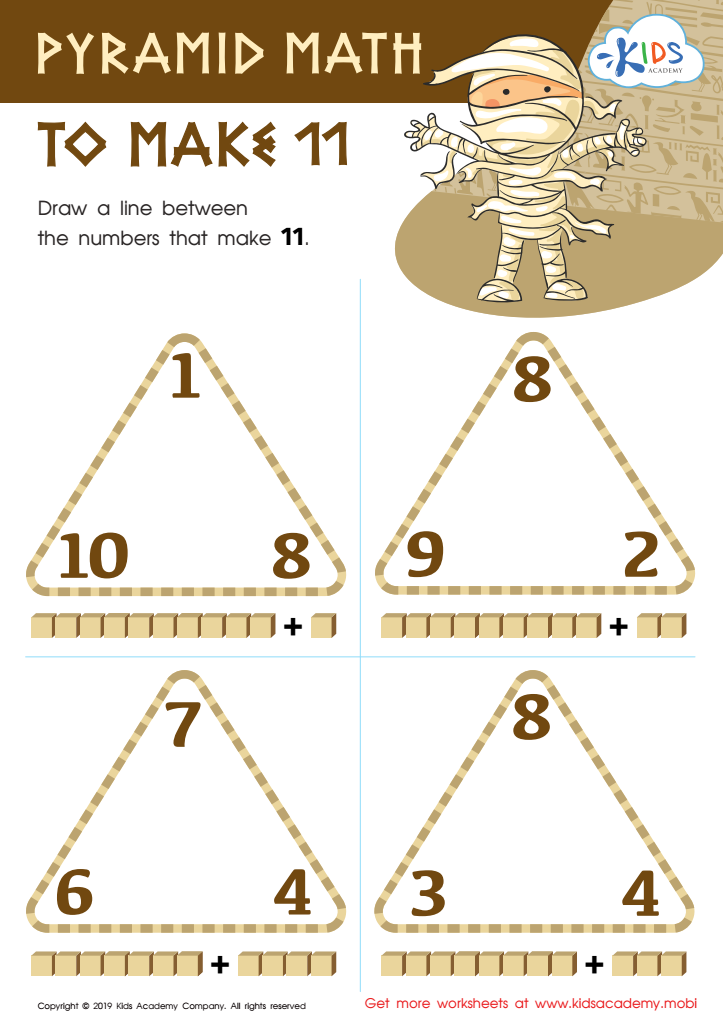
Pyramid Math to Make 11 Worksheet
Have your kids look at the picture of the Egyptian pyramids and tell you what they see. Then, help them do simple math by adding up the numbers in the pyramids and connecting those that make 11. This worksheet is perfect for teaching your kids about history, mathematics, and problem-solving.
Pyramid Math to Make 11 Worksheet
Worksheet
Join Kids Academy for Free
Who is primarily going to use this learning content?








Mental math skills, particularly in normal addition and subtraction, are foundational for children aged 3-4 and hold immense significance for parents and teachers. During these early years, children's brains are developing rapidly, and engaging them in simple mathematical concepts nurtures cognitive growth. Mental math activities enhance critical thinking, promote problem-solving abilities, and lay the groundwork for more advanced mathematics later in their education.
Fostering mental math skills helps children build number sense, which is crucial for understanding quantities and relationships. Engaging in addition and subtraction through play, storytelling, or everyday activities makes learning enjoyable and relevant. These skills also encourage children to develop confidence in their mathematical abilities, reducing math anxiety as they progress through their education.
Moreover, mental math opportunities in a supportive environment prepare children for formal schooling demands and collaborative efforts with peers. Encouraging mental math skills can also enhance their overall academic performance, as mathematics is interconnected with various subjects.
Ultimately, when parents and teachers prioritize mental math, they not only equip children with essential skills for math but also instill a love for learning that will last a lifetime. This makes mental math an essential focus for early childhood development.








