Problem-solving abilities Normal Addition & Subtraction Worksheets for Ages 3-4
5 filtered results
-
From - To
Our "Problem-solving Abilities: Normal Addition & Subtraction Worksheets for Ages 3-4" are designed to foster early math skills in preschoolers. These worksheets provide engaging exercises that introduce young learners to the basics of addition and subtraction, ensuring a strong mathematical foundation. Each activity is crafted to develop problem-solving abilities, encouraging children to think critically and apply logical reasoning. With colorful illustrations and kid-friendly formats, these worksheets keep children motivated as they practice essential math concepts. Perfect for both classroom settings and home learning, they are an excellent resource for helping young minds grow and excel in math.
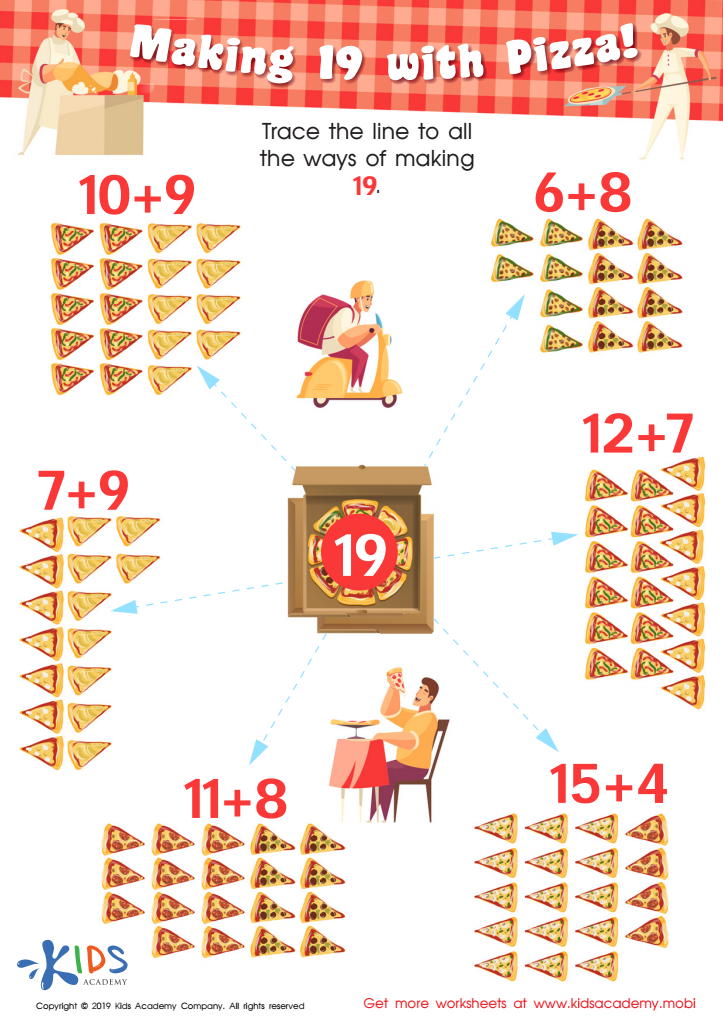
Making 19 with Pizza! Worksheet
 Assign to My Students
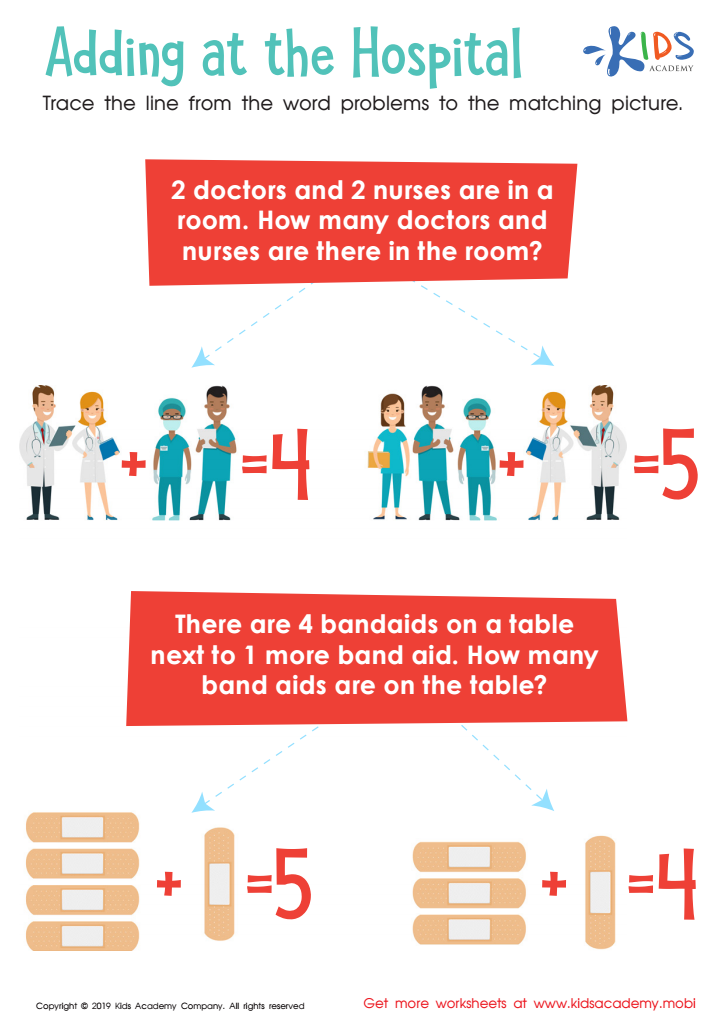
Adding at the Hospital Worksheet
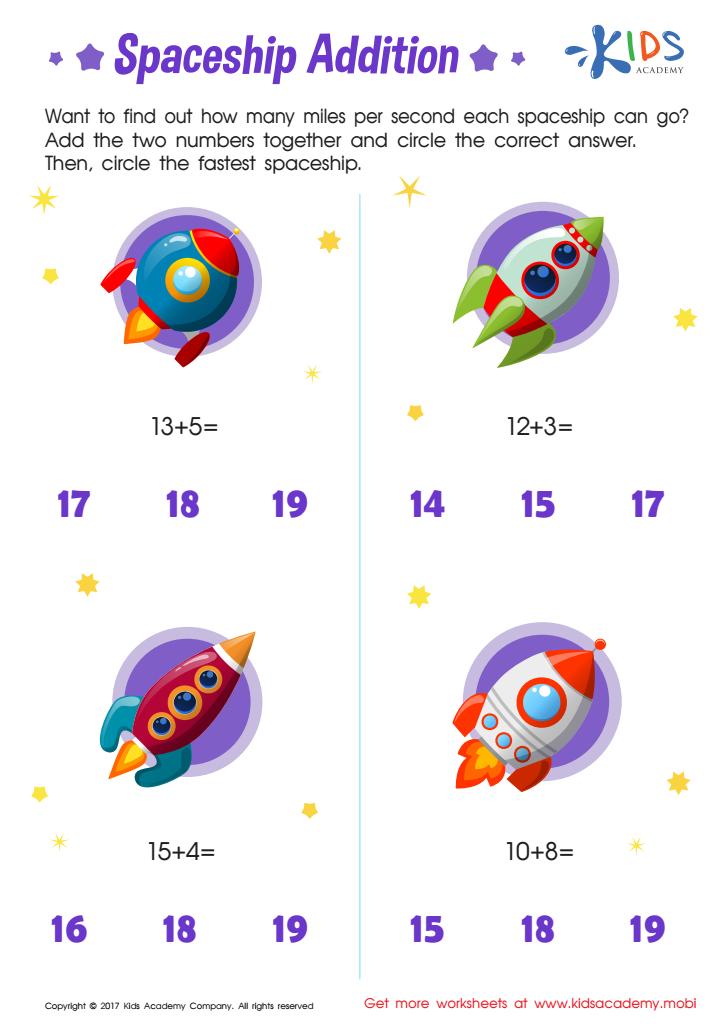
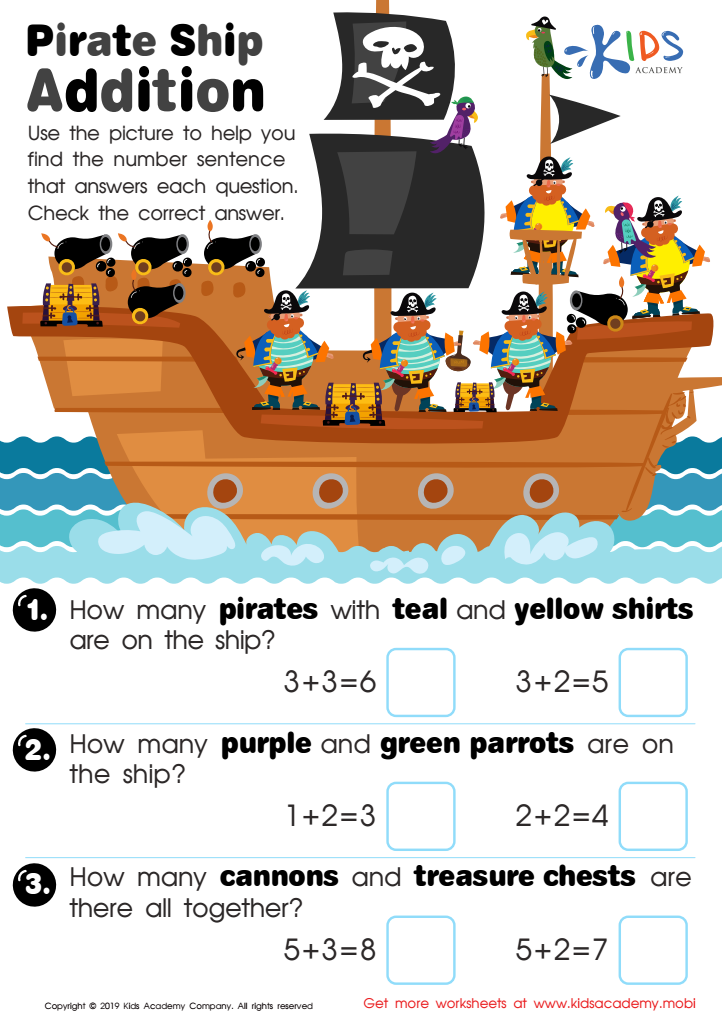
Pirate Ship Addition Worksheet
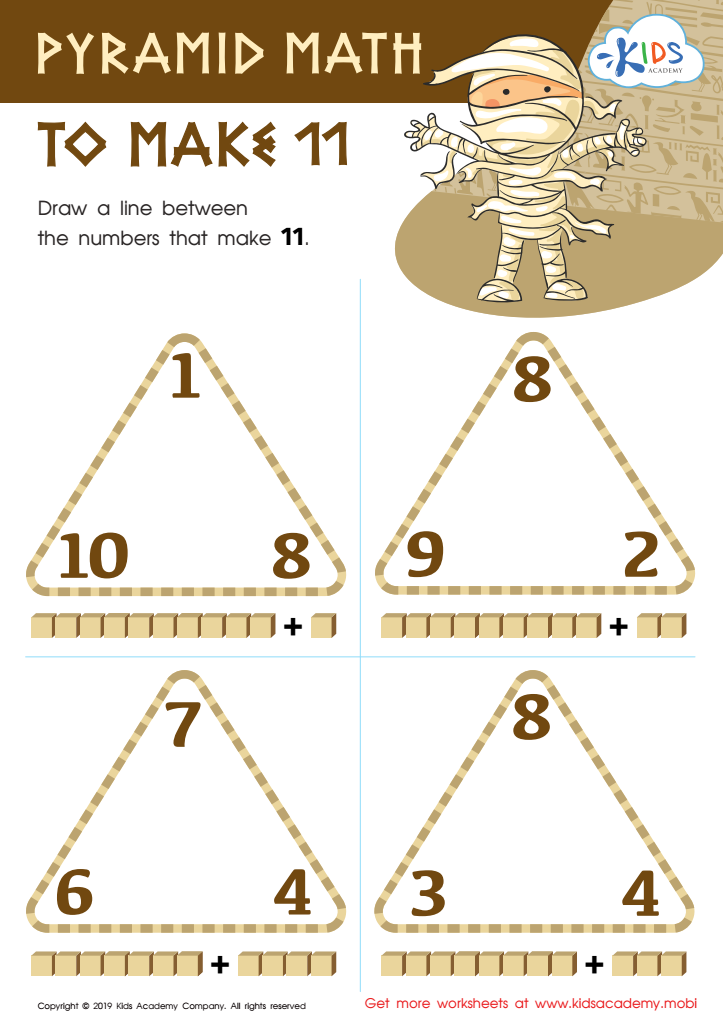
Pyramid Math to Make 11 Worksheet








Parents and teachers should prioritize the development of problem-solving abilities, normal addition, and subtraction for children aged 3-4 because these foundational skills are crucial for cognitive development and future academic success. At this early age, children's brains are particularly receptive to learning new concepts, making it an ideal time to introduce basic mathematical operations. Engaging young children in simple problem-solving activities helps build their analytical and critical thinking skills, which are essential throughout their education and beyond.
Adding and subtracting are not just about numbers; they enhance a child's ability to understand and manipulate their environment. For instance, these skills improve their ability to follow instructions, share resources, and make decisions—essential aspects of daily life. Additionally, mastering these basic math concepts boosts children's confidence and fosters a positive attitude towards learning, which can have long-term benefits in their educational journey.
Moreover, emphasizing problem-solving abilities in early childhood education encourages curiosity and exploration. It creates opportunities for children to ask questions, test out different solutions, and learn from mistakes in a supportive environment. This lays a robust foundation for more complex mathematical concepts and problem-solving tasks in later grades. Parents and teachers who invest in these early educational experiences are setting children up for ongoing academic and personal success.








