Division practice Normal Division Worksheets for Ages 3-4
3 filtered results
-
From - To
Introducing our Division Practice Normal Division Worksheets specially designed for ages 3-4! These fun and engaging sheets help young learners grasp basic division concepts effortlessly. With colorful illustrations and simple exercises, children develop foundational math skills while enjoying the process. Perfect for preschoolers, these printable worksheets ensure consistent practice, boosting confidence and enhancing understanding. Ideal for both classroom and at-home learning, our worksheets make division clear and exciting for early learners. Support your child’s math journey with our expertly crafted resources – setting the groundwork for future mathematical success. Download today and watch your little one's skills flourish!
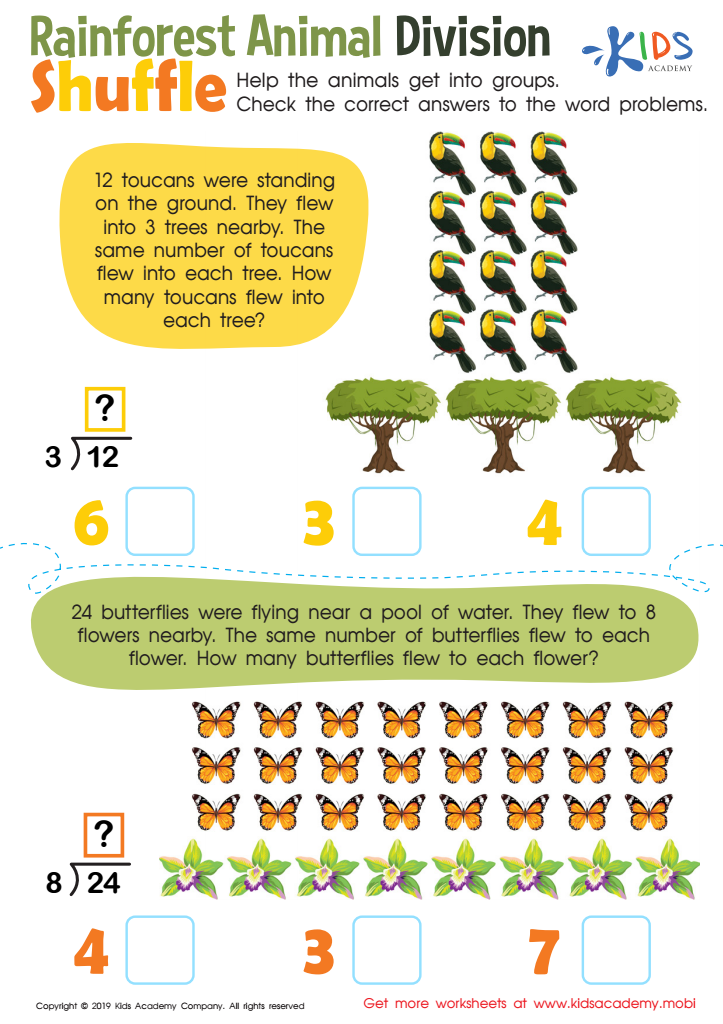
Rainforest Animal Division Worksheet
 Assign to My Students
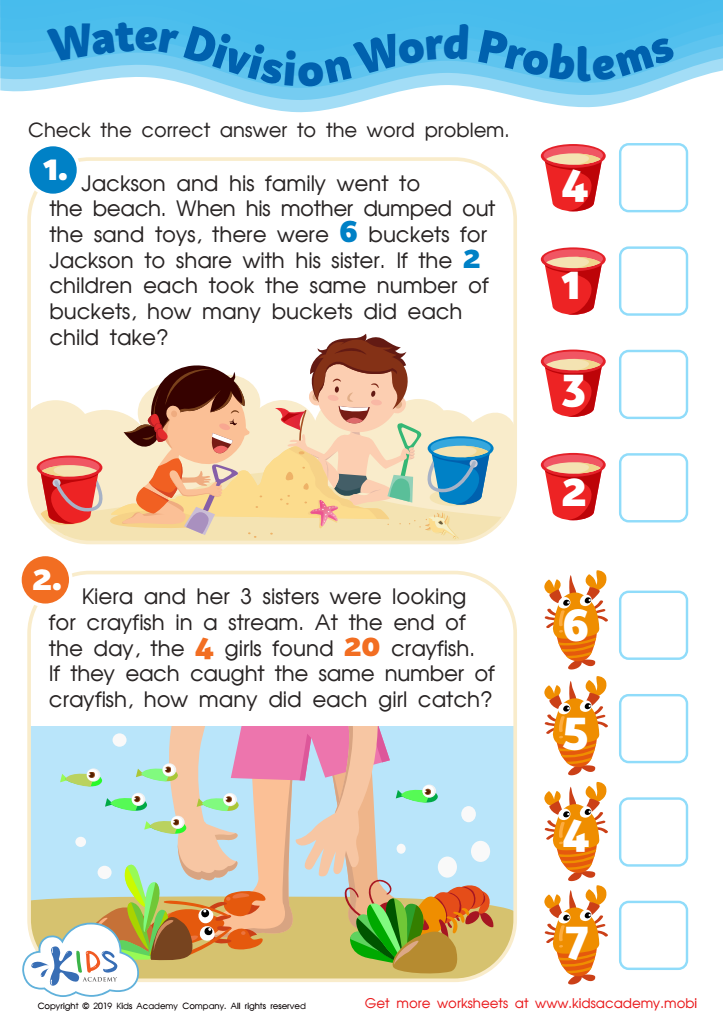
Water Division Word Problems Worksheet
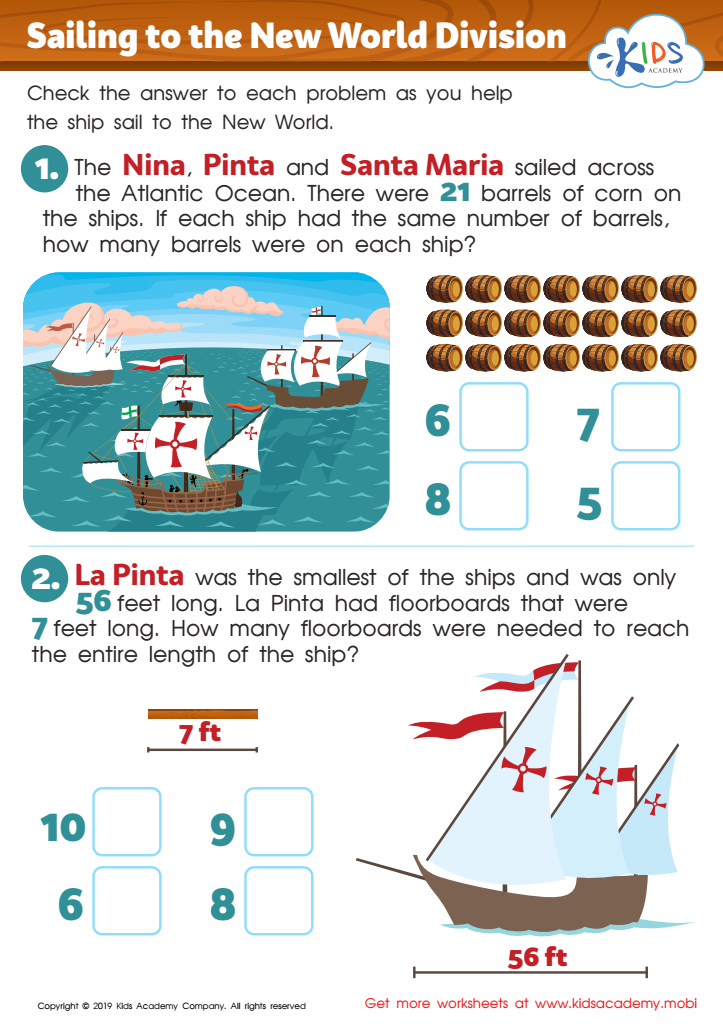
Sailing to the New World Division Worksheet








At ages 3-4, children are in a critical period of brain development where foundational math skills begin to take shape. While traditional division might seem advanced for this age group, preliminary division practices focus more on understanding the concepts of sharing and distributing, which are crucial for cognitive development.
Introducing kids to basic division concepts helps improve their number sense and problem-solving skills. When they practice dividing objects into equal parts, they start to understand fairness, quantity, and balance. This can lead to better performance in later mathematical endeavors and provides a building block for more complex concepts.
Moreover, early exposure to division encourages critical thinking. As children solve simple problems ("Can we share these 4 apples among 2 of us evenly?"), they learn to think logically and make reasoned decisions. Such exercises also improve attention span and memory.
Another aspect to consider is emotional and social development. Cooperative learning activities that involve dividing tasks or resources teach kids about teamwork, patience, and sharing. These are important life skills that go beyond mathematical ability.
Finally, early division practice can make math enjoyable. Fun, age-appropriate activities (like sharing toys or snacks) can foster a positive attitude towards learning. This sets a foundation for a lifelong interest and confidence in math, significantly boosting educational outcomes in the future.








