Differentiating shapes Normal Geometry Worksheets for Ages 3-4
3 filtered results
-
From - To
Introduce your young learners to the world of shapes with our Differentiating Shapes Normal Geometry Worksheets for Ages 3-4. These exciting, age-appropriate printable worksheets are designed to teach preschoolers to identify, differentiate, and classify various geometric shapes. Through fun and engaging activities, children will develop their visual-spatial skills, shape recognition, and critical thinking abilities. Our easy-to-follow exercises make learning enjoyable and effective, ensuring a solid foundation for future math success. Perfect for home or classroom use, these worksheets provide a fantastic way to cultivate early geometry skills in a playful and nurturing environment.
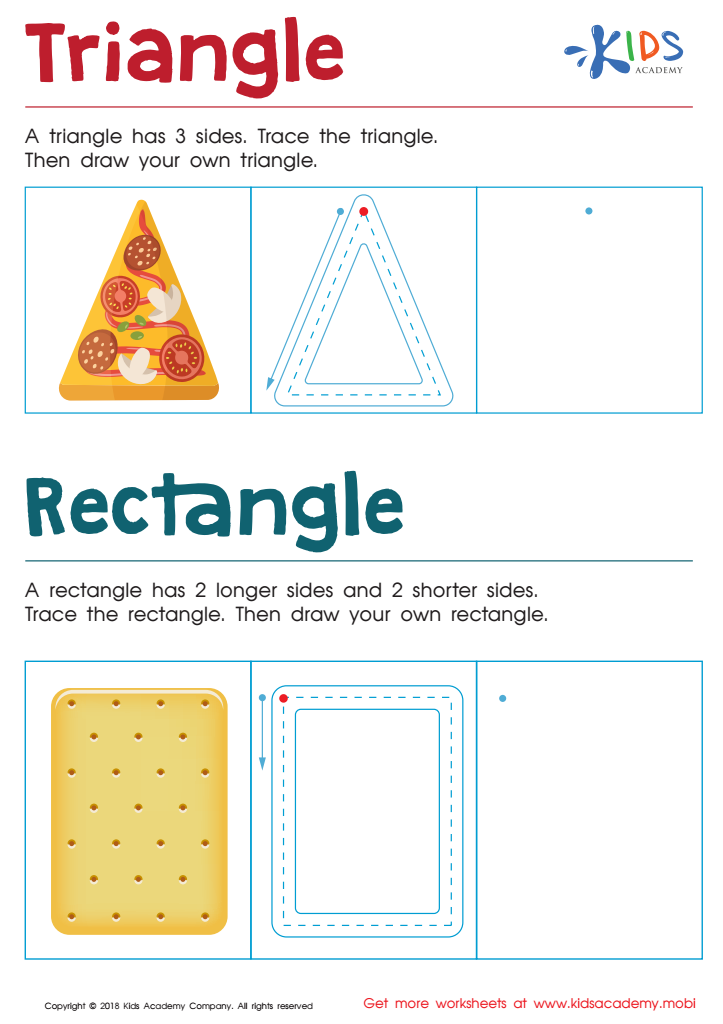
Triangle Rectangle Worksheet
 Assign to My Students











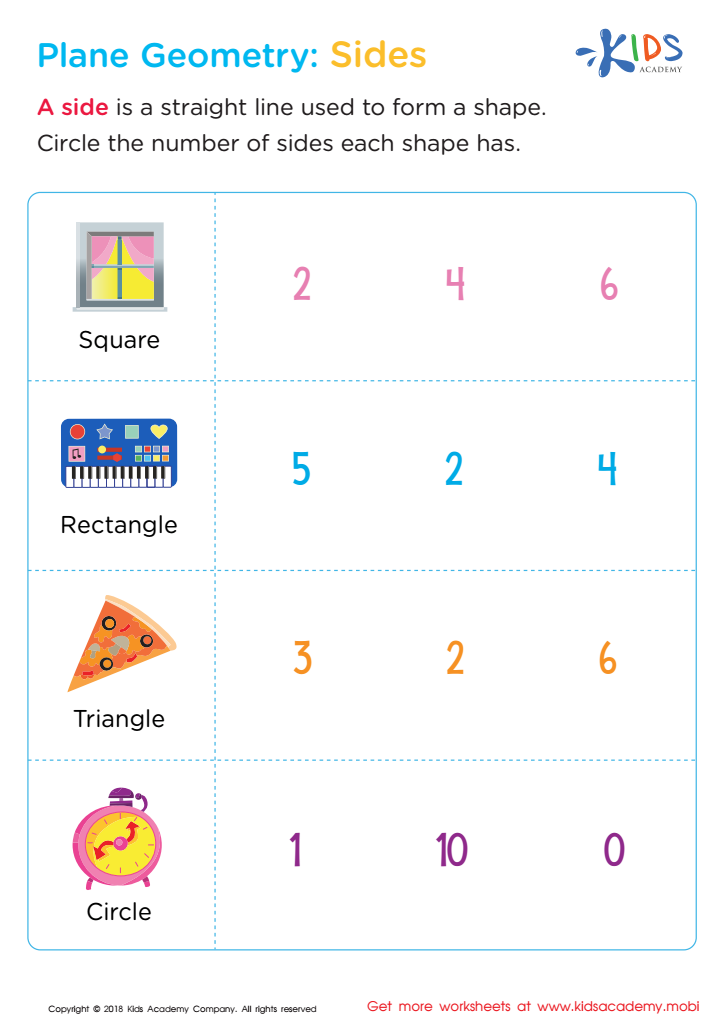
Plane Geometry: Sides Worksheet
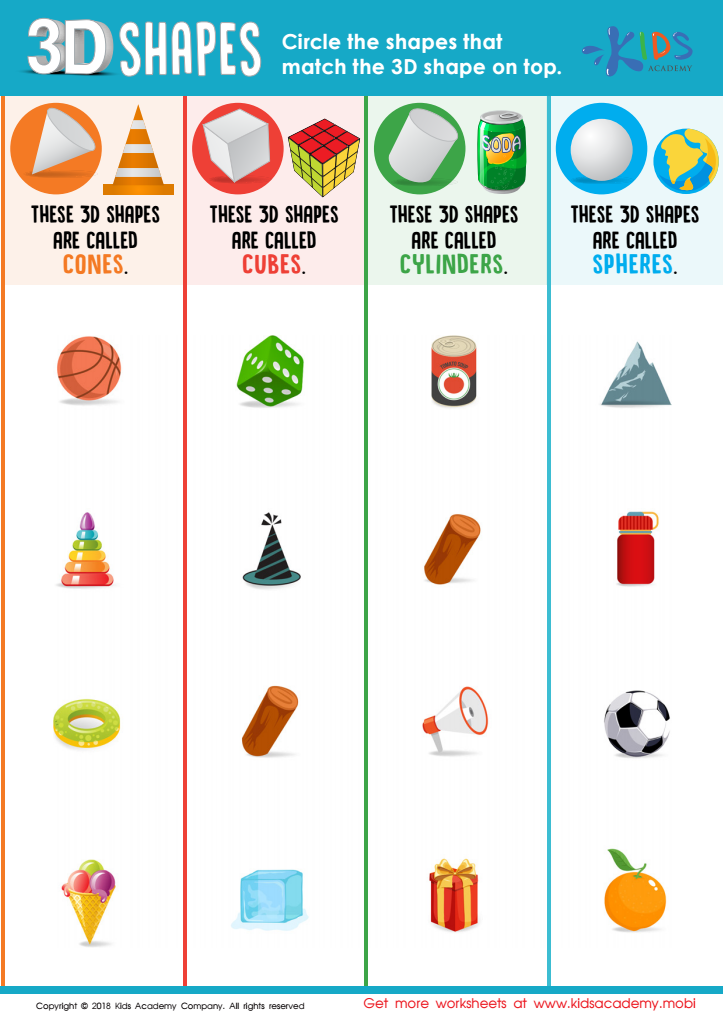
3D Shapes Worksheet








Differentiating shapes in geometry for ages 3-4 is pivotal to young children's cognitive and motor skill development. Parents and teachers should care deeply about incorporating this into early childhood education because it lays the foundation for more advanced mathematical concepts. Understanding shapes helps children recognize patterns and categorize objects, boosting their problem-solving abilities.
As young learners begin to distinguish between various geometric shapes—like circles, squares, and triangles—they enhance their spatial awareness and visual processing skills. This ability is critical not only in math but also in reading, writing, and overall cognitive development. When children identify and name shapes, they also develop language skills, enriching their vocabulary and communication.
Moreover, learning to differentiate shapes can aid in fine motor skill development. Activities like drawing shapes or constructing them with blocks require precision and hand-eye coordination, which strengthens their fine motor skills.
Incorporating shape activities in the curriculum or at home fosters an engaging and stimulating learning environment. It addresses diverse learning styles and keeps young minds curious and eager to learn. Thus, prioritizing shape differentiation for little ones offers a holistic approach to early education, nurturing both their intellectual and physical growth in a fun, meaningful way.








