Number Sequencing Normal Numbers Worksheets for Ages 3-4
4 filtered results
Difficulty Level
Grade
Age
-
From - To
Subject
Activity
Standards
Enhance your child's early math skills with our engaging Number Sequencing Worksheets, specifically designed for ages 3-4. These worksheets provide a fun and interactive way for young learners to understand the concept of normal numbers and their sequential order. Featuring colorful illustrations and simple exercises, children will enjoy identifying, arranging, and constructing number sequences. By improving their number recognition and sequencing abilities, these worksheets lay a strong foundation for future math success. Perfect for home or classroom use, our materials inspire curiosity and promote essential early learning through playful activities that make mastering numbers enjoyable and exciting!
Favorites
With answer key
Interactive
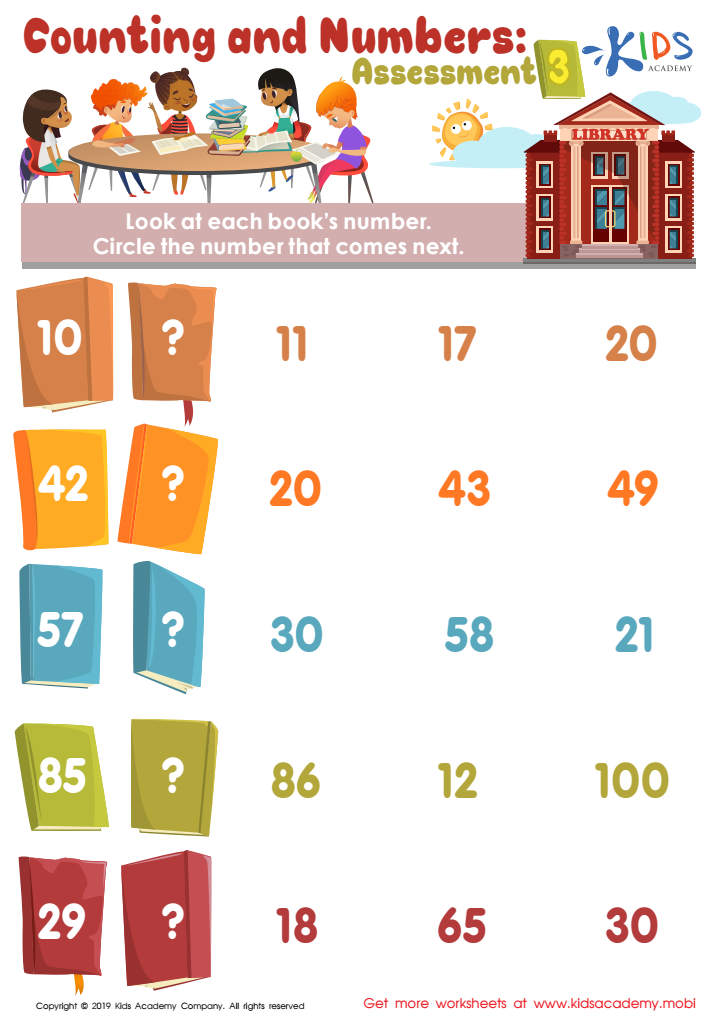
Counting and Numbers: Assessment Worksheet
Number line thinking is an essential math skill. Kids using this skill can compute math problems accurately and quickly. Our free assessment tests number line recognition; have your child pick the right number from the given options to follow the current number on the line. This assessment will give you an idea of their counting skills.
 Assign to My Students
Counting and Numbers: Assessment Worksheet
Worksheet
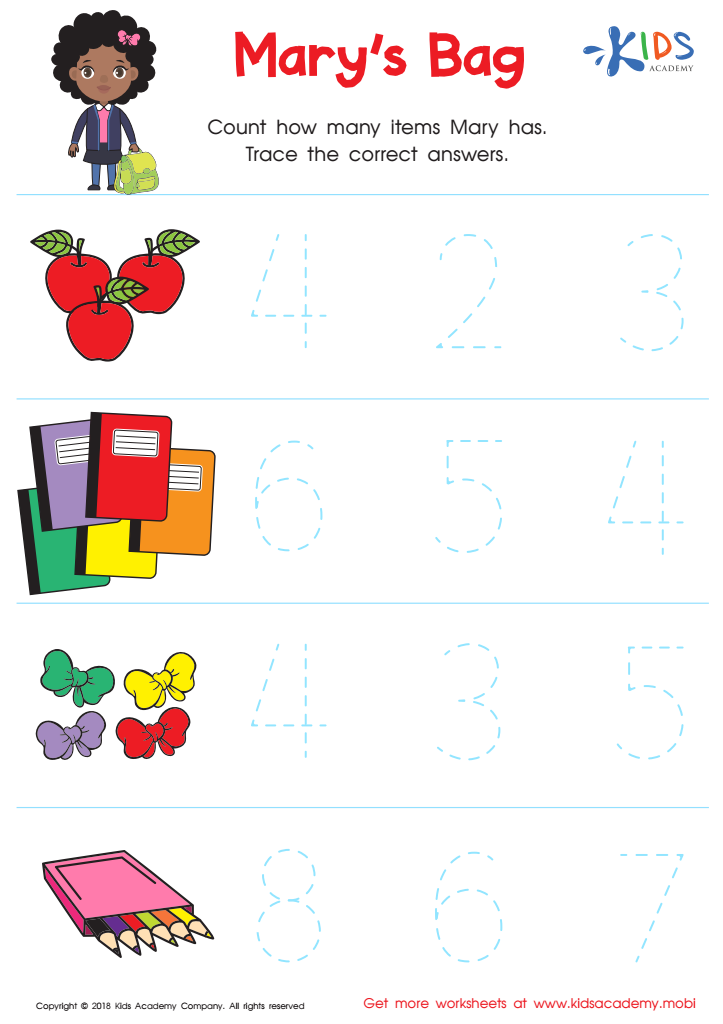
Kindergarten Number Tracing: Mary's Bag Worksheet
Counting and writing skills are honed with this kindergarten tracing worksheet. Guide Mary in counting the items in her bag then trace the correct number for each. Your child will get a great head start on essential kindergarten skills!
Kindergarten Number Tracing: Mary's Bag Worksheet
Worksheet
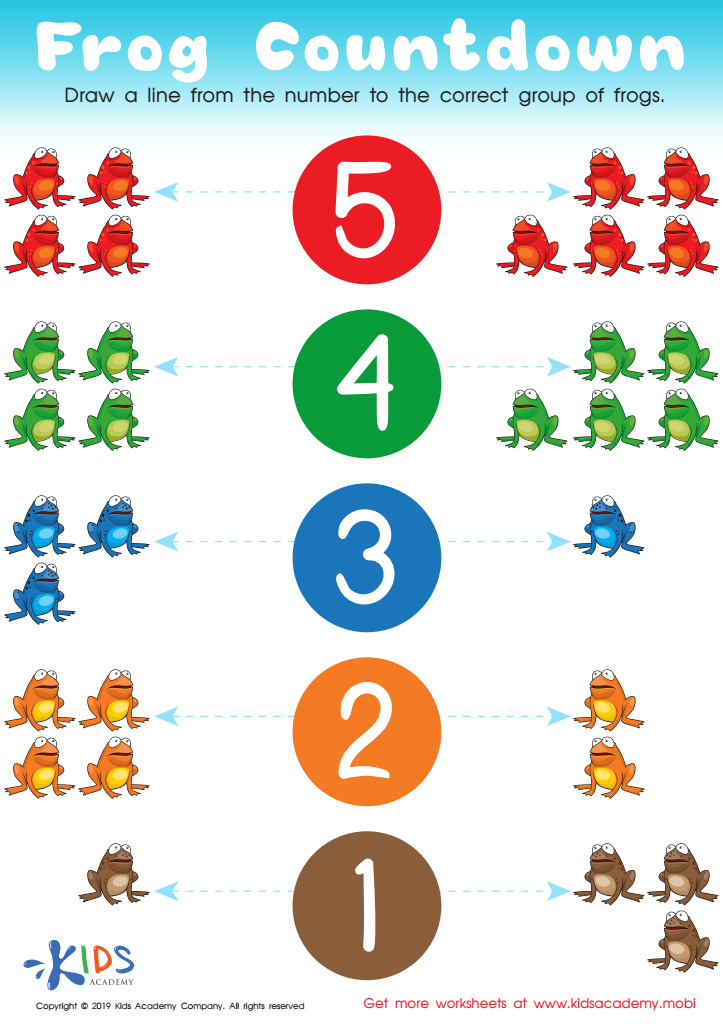
Frog Countdown Worksheet
Make learning fun for kids with traceable printouts! This exercise has kids counting frogs and drawing a line to match the number. Expand their knowledge with activities like this, beyond the basics they learn in school. Help them explore new ways of learning and make it enjoyable.
Frog Countdown Worksheet
Worksheet
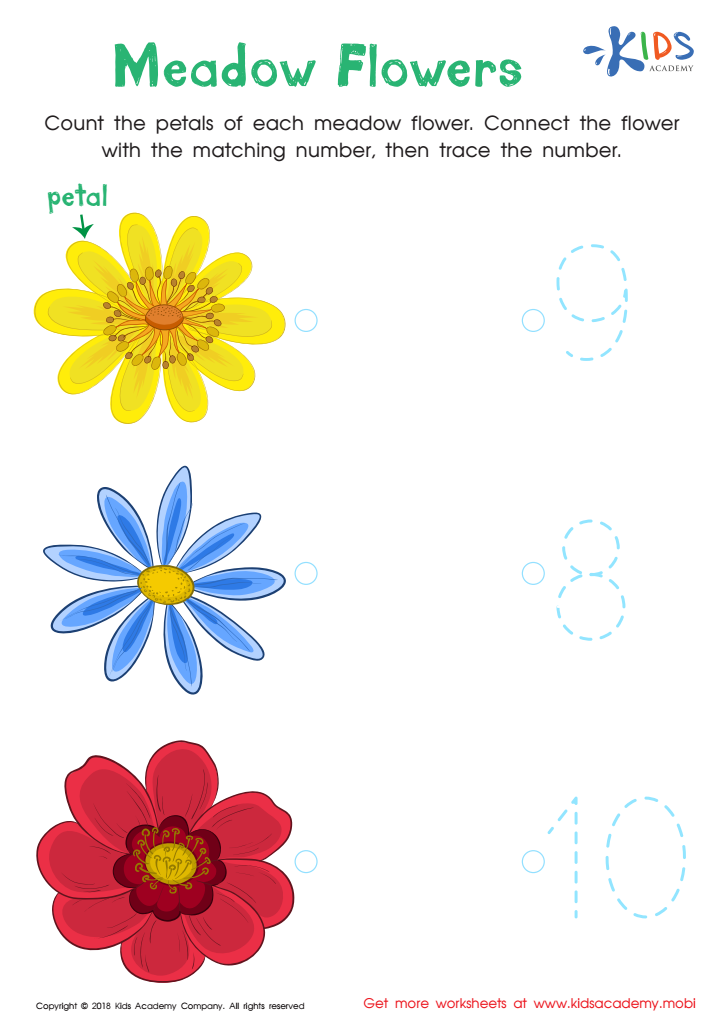
Kindergarten Number Tracing: Medow Flowers Worksheet
Take your child to the garden to count flower petals and trace numbers with this fun kindergarten PDF worksheet. They'll learn to count and write, all while enjoying the sweet scent of the flowers.
Kindergarten Number Tracing: Medow Flowers Worksheet
Worksheet
Join Kids Academy for Free
Who is primarily going to use this learning content?








Number sequencing for ages 3-4 is a crucial area of early childhood education that significantly impacts a child's cognitive development. At this age, children are developing foundational math skills that will support their future learning. Understanding and mastering number sequences helps children recognize patterns, which is essential for mathematical concepts like addition and subtraction.
When children learn to sequence numbers, they begin to grasp the order and value of numbers, promoting their counting abilities. This skill lays the groundwork for more advanced math learning later on, such as understanding place value and performing operations. Additionally, engaging with number sequences introduces the basics of critical thinking and problem-solving skills, as children learn to arrange and recognize patterns logically.
For parents and teachers, it is essential to foster these skills through interactive and playful activities that make learning enjoyable. This not only supports academic readiness but also builds a child's confidence and resilience in tackling new challenges. By prioritizing number sequencing, adults help ensure that children are well-prepared to succeed academically and develop a positive attitude toward math that can lead to lifelong learning. Ultimately, nurturing these early skills sets the foundation for future mathematical success and overall cognitive growth.