
Addition skills Normal Math Worksheets for Ages 3-4
7 filtered results
Difficulty Level
Grade
Age
-
From - To
Subject
Activity
Standards
Help your little ones master the fundamentals of addition with our engaging Normal Math Worksheets designed specifically for ages 3-4. These worksheets make learning simple and fun, incorporating colorful visuals and interactive exercises that capture children's attention. Tailored to enhance early math skills, our addition activities promote number recognition and basic counting while encouraging cognitive development. Each worksheet is crafted to provide children with the confidence they need as they begin their mathematical journey. With our thoughtful approach, your child will gain essential addition skills in an enjoyable way, laying a strong foundation for future learning. Download your worksheets today!
Favorites
With answer key
Interactive
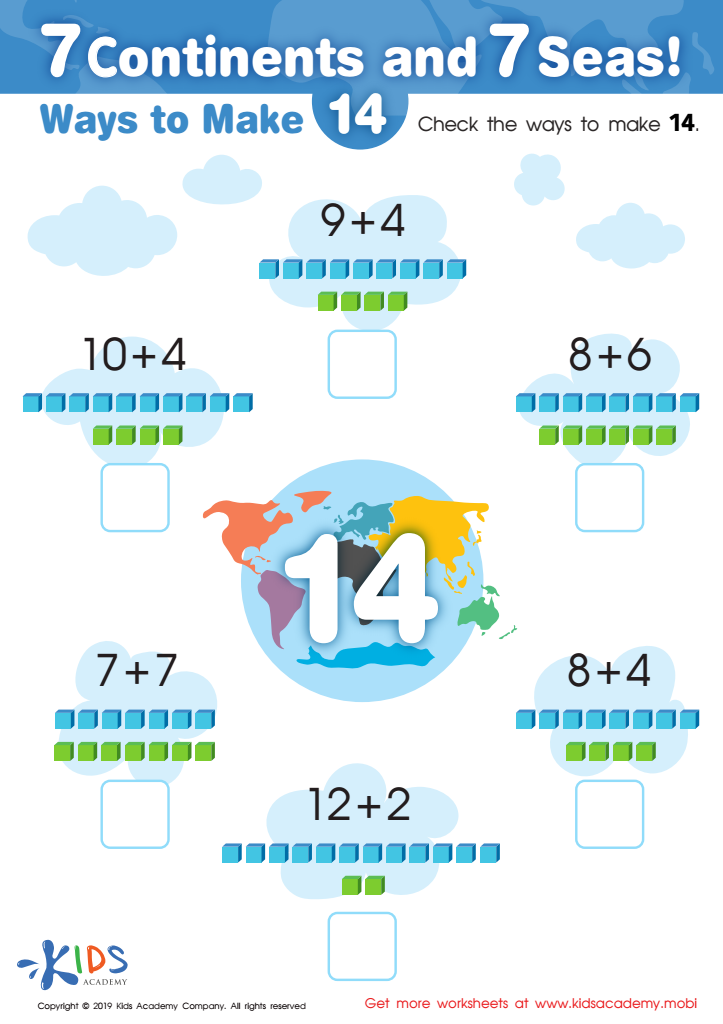
7 Continents and 7 Seas Worksheet
Remind kids of the continents and show them how different numbers can add up to the same figure. Give examples, like 2+2 =4, and 3+1 =4. Ask if they can provide other examples, then work through the simple additions in this worksheet with them. Ask them to circle all equations that make 14.
 Assign to My Students
7 Continents and 7 Seas Worksheet
Worksheet
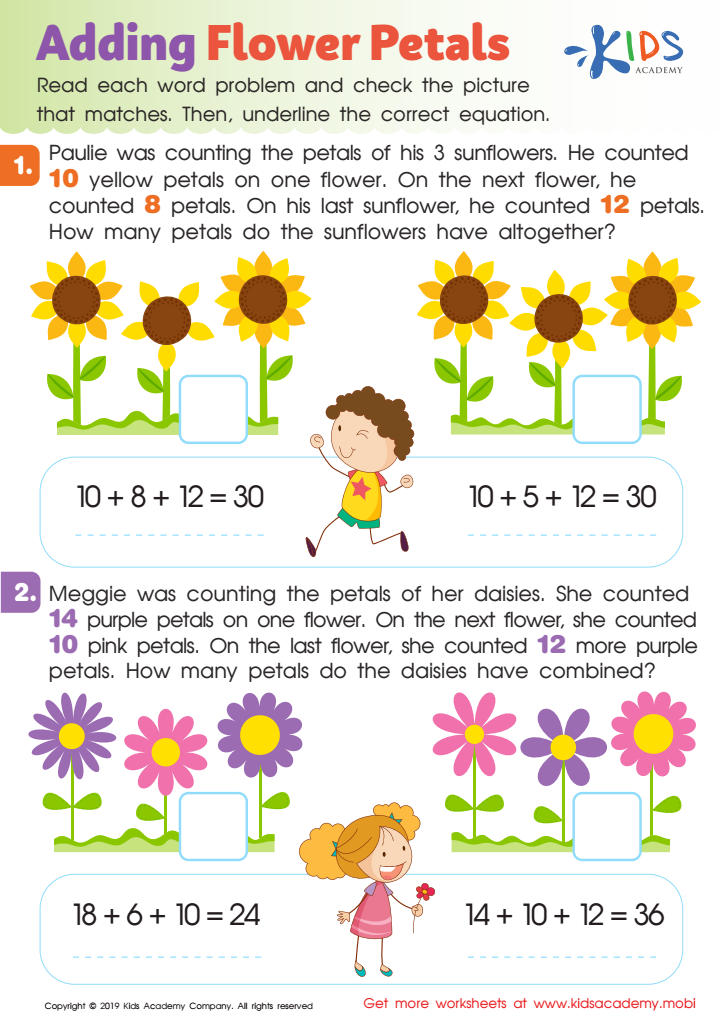
Adding Flower Petals Worksheet
This free worksheet helps little mathematicians learn to understand word problems. They'll read each one and match it to the corresponding picture. Important info is highlighted, teaching kids to look for key info when solving problems. Then they'll underline the correct number equation that matches the picture. A great way to practice problem-solving skills!
Adding Flower Petals Worksheet
Worksheet
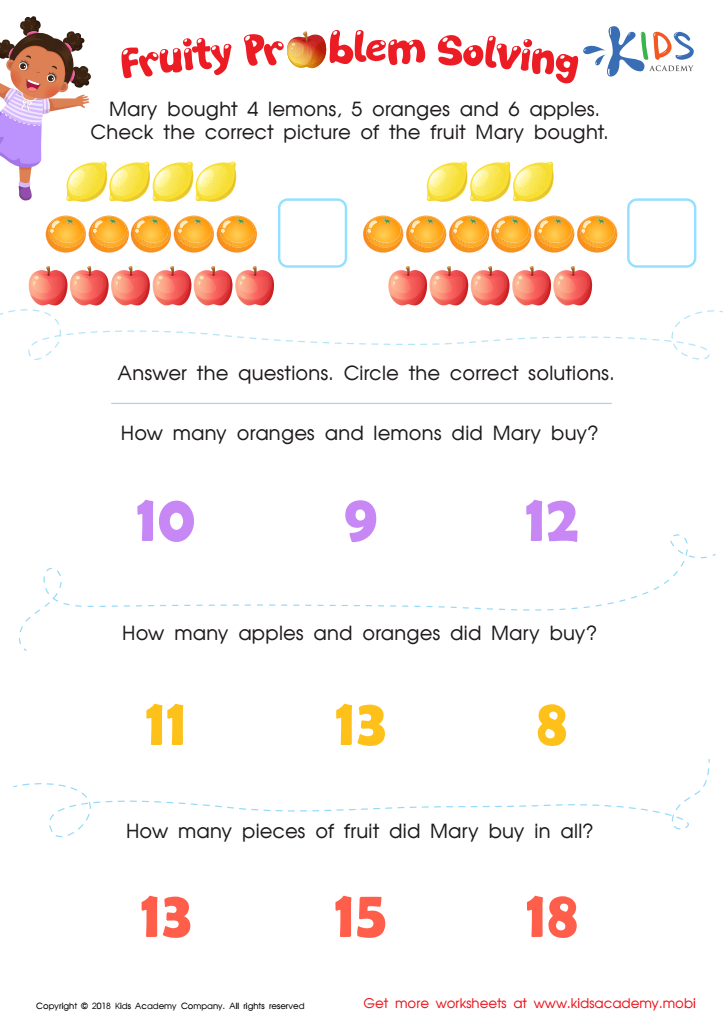
Fruity Problem Solving Worksheet
Practice addition word problems with young mathematicians using this PDF worksheet featuring fruit. As they read each problem carefully and circle the correct sums, they'll reinforce attention to detail and fine motor skills. Tangible representations are key to helping them with basic addition.
Fruity Problem Solving Worksheet
Worksheet
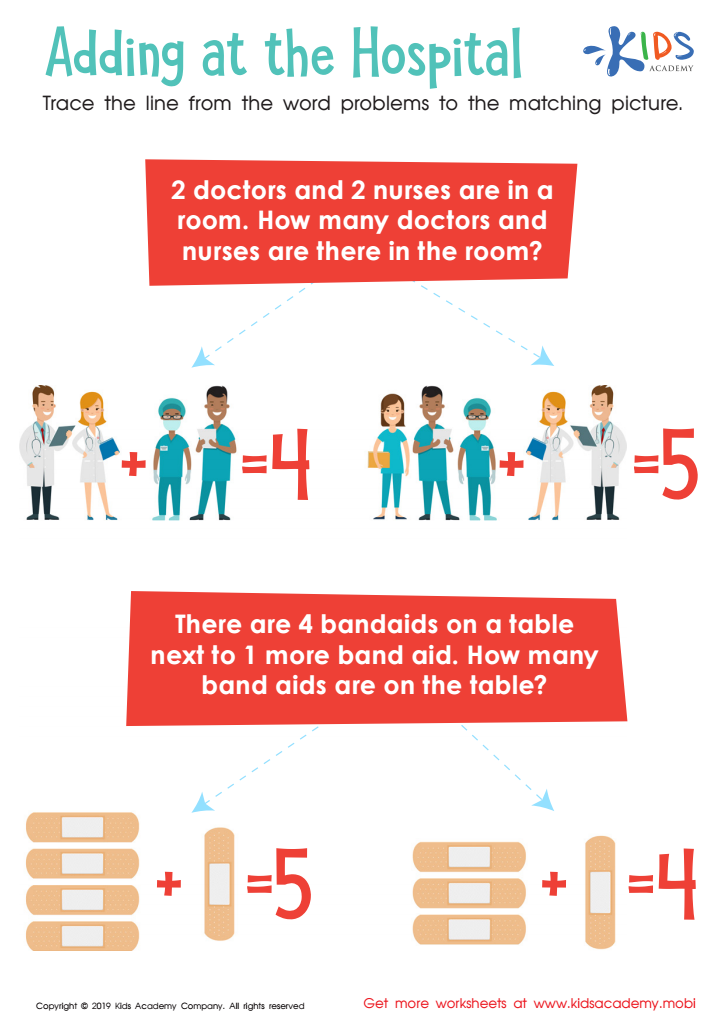
Adding at the Hospital Worksheet
A hospital visit doesn't have to be scary for kids. With this worksheet, they can count along with doctors and nurses, by reading the word problems and tracing lines to the corresponding picture. Guide them through it and you'll help them have a fun experience.
Adding at the Hospital Worksheet
Worksheet
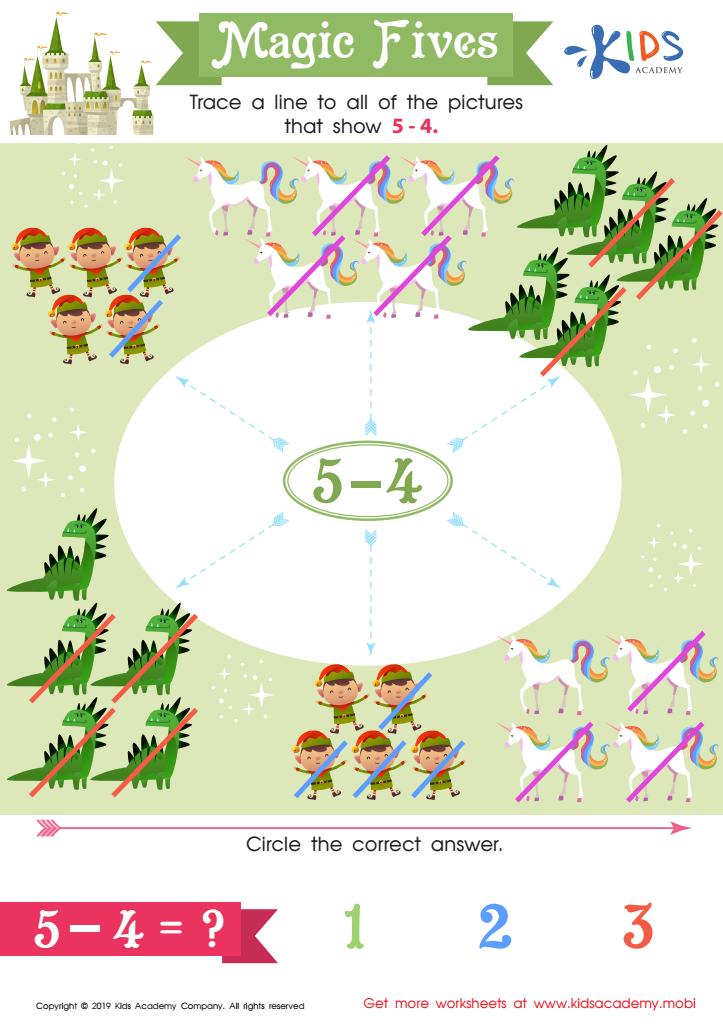
Magic Fives Worksheet
Help your students identify the objects & people in the worksheet. Point to the equation 5 -4 in the center, then get them to count the items and trace a line connecting those that add up to 5 - 4.
Magic Fives Worksheet
Worksheet
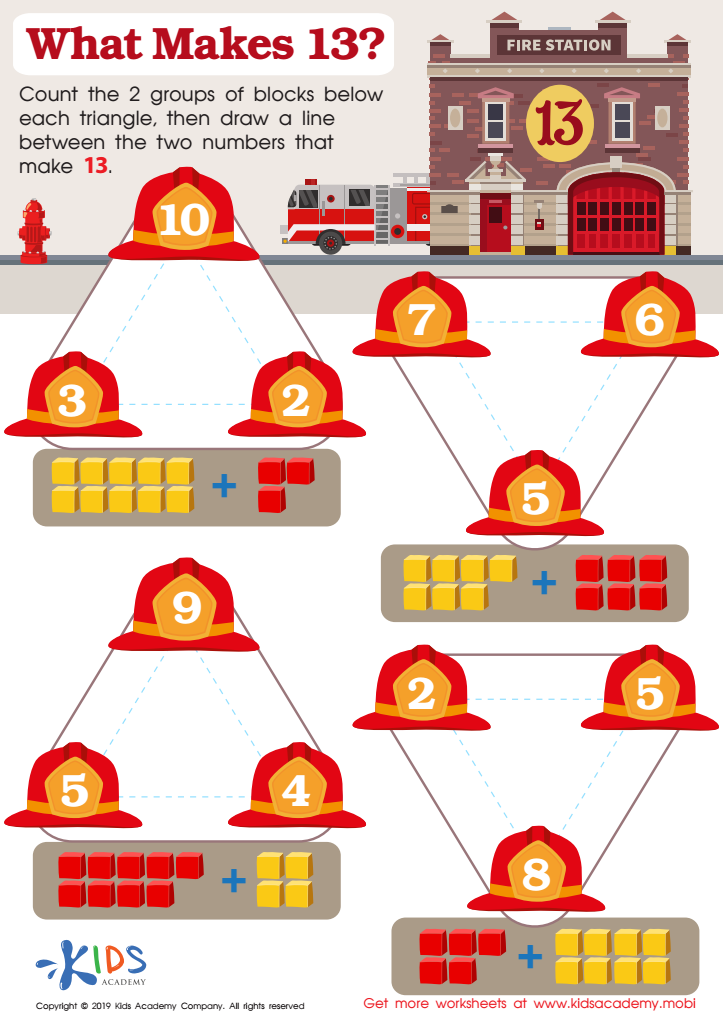
What Makes 13 Worksheet
Help your kids practice maths with this worksheet! With colourful images and simple equations, your kids will be more engaged in learning. Go through the four equations and help them add up the numbers. Then, draw a line between the numbers that make 13. Doing this will aid their learning and understanding.
What Makes 13 Worksheet
Worksheet
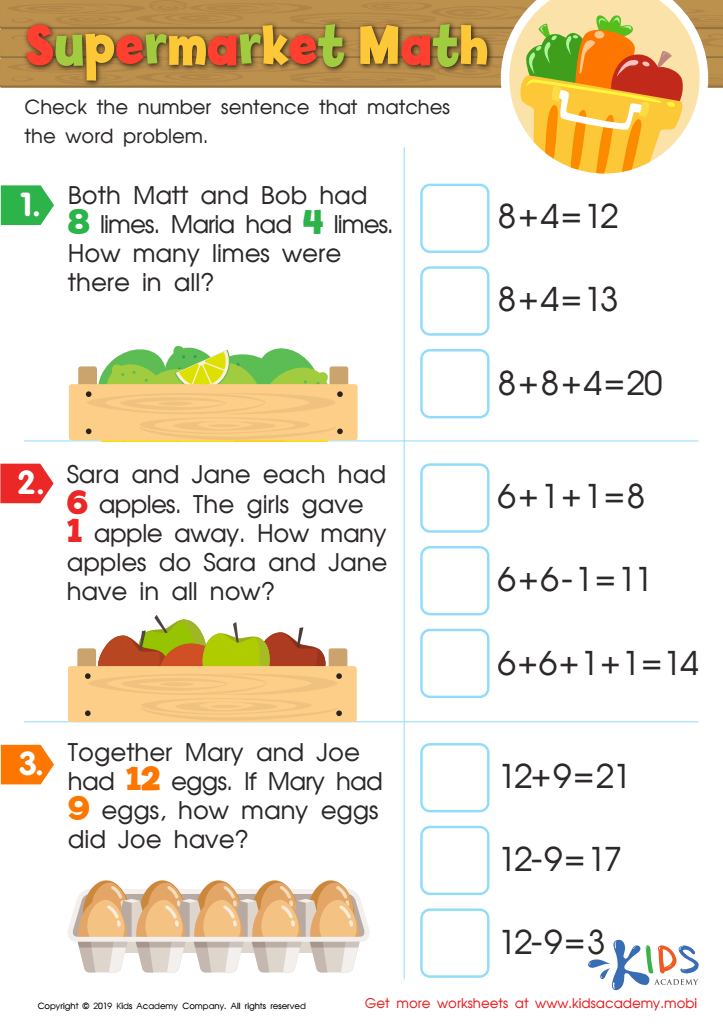
Supermarket Math Worksheet
Take your kids to the supermarket and ask what they're looking forward to buying. Help them solve the three questions in the worksheet by interpreting each one into an equation, then choose the right answer.
Supermarket Math Worksheet
Worksheet
Join Kids Academy for Free
Who is primarily going to use this learning content?








Parents and teachers should care about addition skills for children aged 3-4 because foundational math abilities are critical for a child's overall cognitive development and future academic success. At this stage, children are naturally curious and receptive to learning, making it an ideal time to introduce basic math concepts through fun and engaging methods.
Developing addition skills helps children understand how numbers work, fostering their analytical thinking and problem-solving abilities. Simple addition games, such as using physical objects like toys or snacks, not only teach math but also promote fine motor skills and enhance social interaction as children play together.
Moreover, mastering addition lays the groundwork for more complex mathematical concepts. By grasping these early skills, children become more confident and comfortable with math, reducing anxiety as they progress through their education. This early confidence in math helps combat negative perceptions about the subject, leading to a more positive attitude toward learning.
In summary, promoting addition skills in young children is essential as it nurtures cognitive development, fosters a love for learning, builds confidence, and ultimately ensures a strong academic foundation for future success. Engaging in early math activities can create a lifelong appreciation and understanding of mathematics.








