Understanding Quantities Normal Math Worksheets for Ages 3-4
3 filtered results
-
From - To
Introduce your little learners to the fundamentals of math with our "Understanding Quantities Normal Math Worksheets for Ages 3-4". Perfectly designed for young minds, these engaging worksheets help children recognize and compare quantities, nurturing their analytical and observational skills. Through fun and interactive exercises, kids will learn to count, identify numbers, and understand basic math concepts. Ideal for preschool and kindergarten students, these printables make learning enjoyable and effective, paving the way for future math success. Embark on this educational journey with us and watch your child's confidence and competence in math grow!
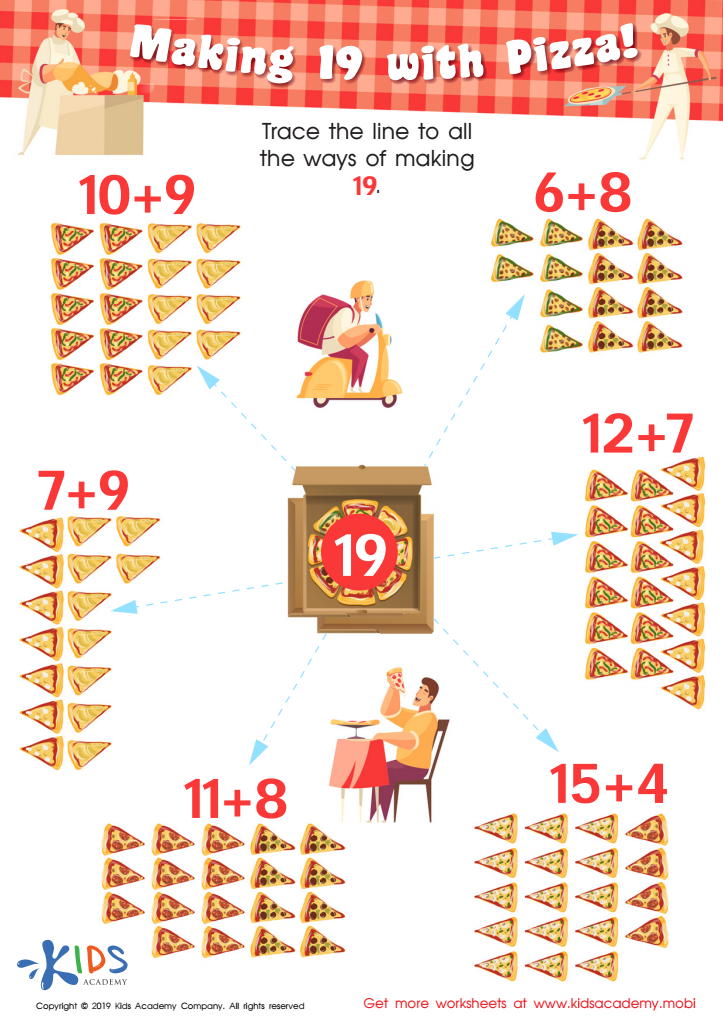
Making 19 with Pizza! Worksheet
 Assign to My Students
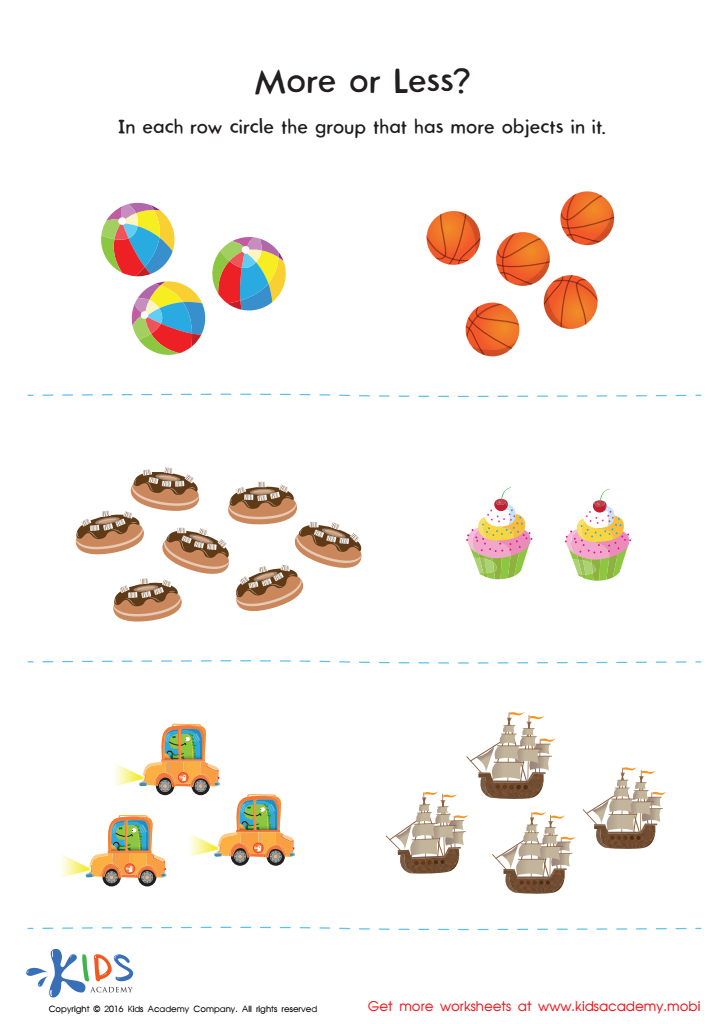
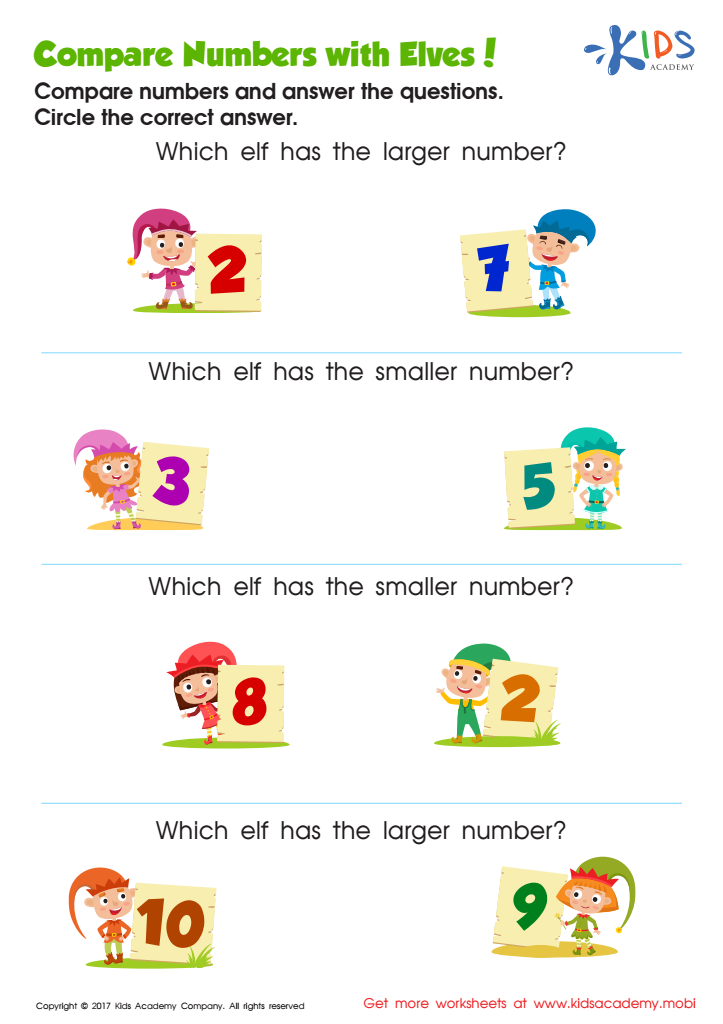
Comparing Numbers Worksheet for Kindergarten








Parents and teachers play a crucial role in fostering early math skills, specifically understanding quantities, in children aged 3-4. This foundational knowledge sets the stage for more complex mathematical concepts and cognitive development. When children grasp the idea of quantities, they start to comprehend numbers beyond mere counting. This essential skill helps them understand concepts like "more" and "less," "bigger" and "smaller," enabling them to make sense of their immediate environment.
Early exposure to quantity understanding promotes problem-solving and critical thinking abilities. It helps children recognize patterns, establish order, and make comparisons, which are vital for academic success in various subjects beyond just math. Moreover, engaging with quantities through playful and everyday activities also helps enhance language skills, as kids love to describe their actions and observations.
Encouraging quantity understanding at this age demystifies math, making it an enjoyable and integral part of daily life rather than a daunting subject. Parents and teachers who nurture these skills provide children with a confident, competent start. This early advantage can enhance lifelong learning attitudes and achievements in STEM fields, fostering a generation well-prepared for future educational challenges.
By emphasizing early quantity concepts, parents and teachers don't just teach numbers—they cultivate curiosity, analytical thinking, and a love for learning.








