Visual Perception Skills Normal Math Worksheets for Ages 3-4
3 filtered results
-
From - To
Unlock your child's potential with our Visual Perception Skills Normal Math Worksheets designed for ages 3-4. These engaging worksheets are crafted to enhance young learners' ability to interpret and respond to visual information. Featuring fun activities like pattern recognition, shape matching, and picture puzzles, our worksheets support the development of critical math skills while keeping your child entertained. Ideal for preschool preparation, each activity nurtures concentration, fine motor skills, and cognitive development. Help your child build a strong foundation for future learning with Kids Academy's expertly designed math resources. Start your child's educational journey today!
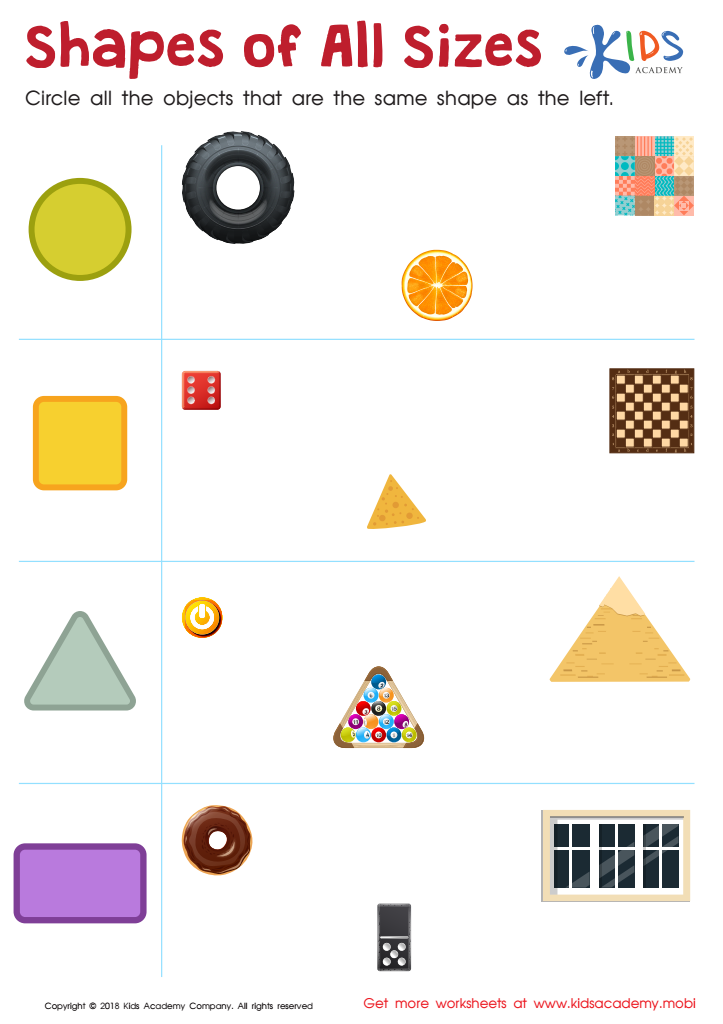
Shapes of All Sizes Worksheet
 Assign to My Students
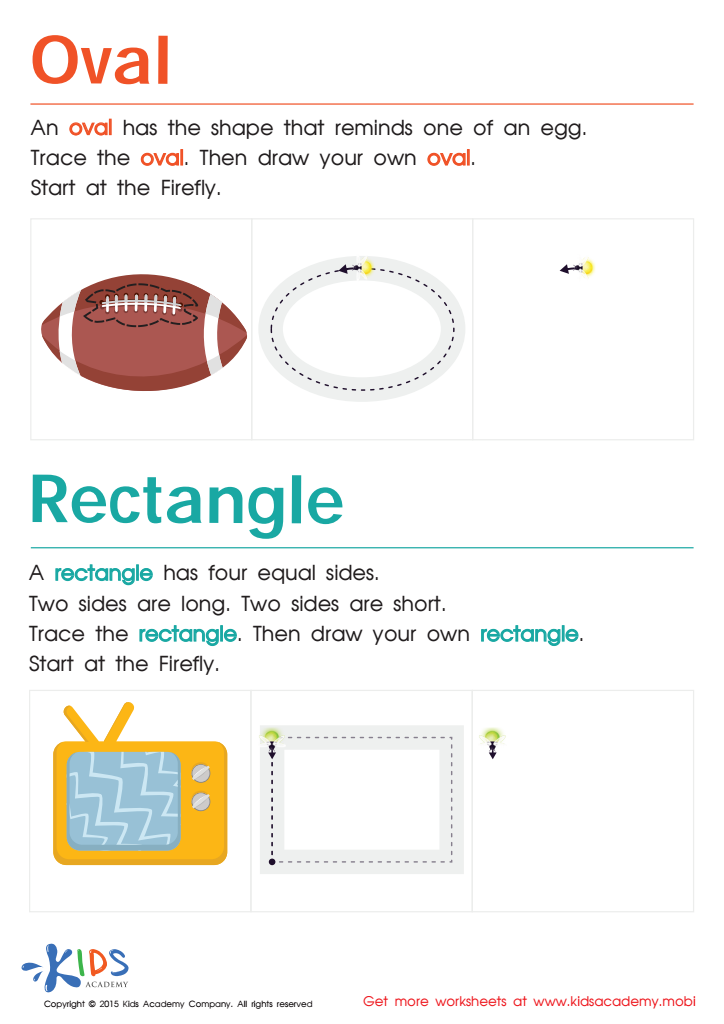
Easy Drawing of Ovals And Rectangles Worksheet
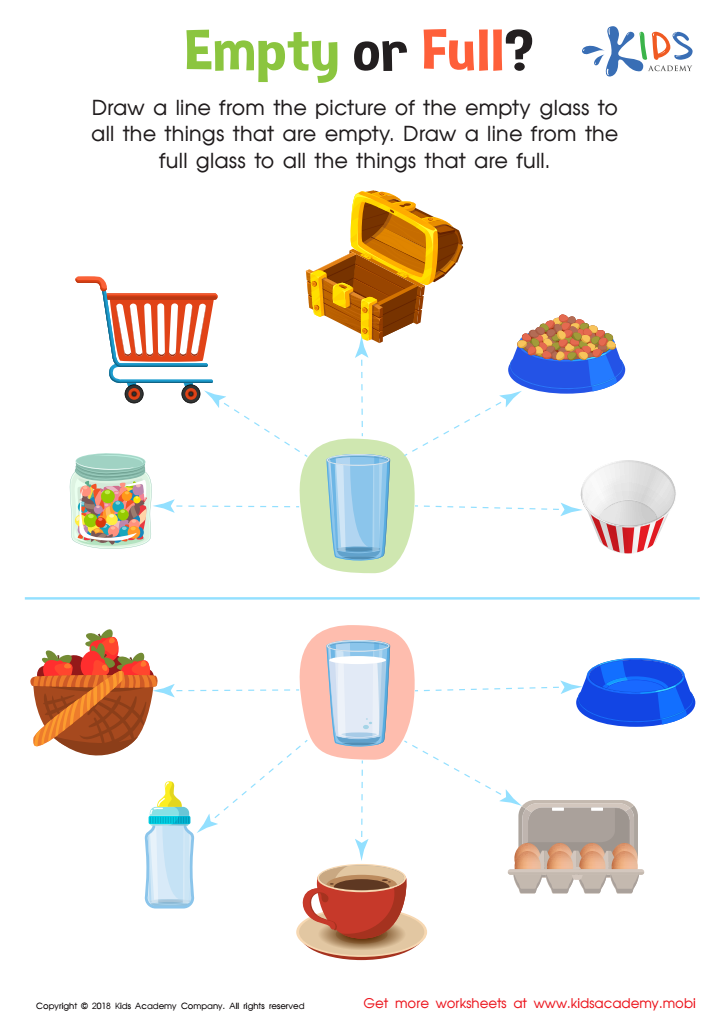
Empty or Full? Worksheet








Visual perception skills are crucial for young children aged 3-4 as they form the foundational abilities necessary for academic success and daily functioning. For parents and teachers, fostering these skills is important because they directly impact a child's ability to learn and interact with their environment effectively.
Visual perception involves the brain's capacity to make sense of visual information received from the eyes. It encompasses various abilities such as visual discrimination, spatial awareness, visual memory, and visual-motor integration. These skills are imperative when it comes to understanding and performing tasks in math, as well as in other subject areas.
In the context of early math skills, visual perception helps children recognize numbers, understand quantities, and differentiate between shapes and patterns. For example, when a child is able to discern the difference between similar-looking numerals (like 3 and 8), or match objects based on sizes and shapes, it showcases good visual discrimination. These skills are foundational for later, more complex math problems and logical reasoning.
Furthermore, strong visual perception skills contribute to a child's overall cognitive development and confidence. They assist in activities like drawing, cutting with scissors, and completing puzzles, which in turn, promote fine motor skills and spatial reasoning. Proactively supporting these abilities ensures that children are well-prepared for the structured learning environment in kindergarten and beyond.








