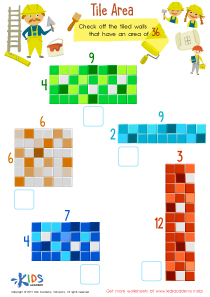
Counting skills Normal Matching Worksheets for Ages 3-4
6 filtered results
-
From - To
Enhance your child's counting skills with our engaging Normal Matching Worksheets designed specifically for ages 3-4. These worksheets provide a fun and interactive way for little learners to connect numbers with corresponding objects, strengthening their numeracy and matching abilities. Each activity is visually appealing, promoting concentration and making learning exciting. Ideal for both home and preschool settings, these worksheets support early math development in a playful manner. Encourage your child's confidence with counting and matching as they explore numbers through vibrant illustrations and hands-on activities. Download these resources today and inspire curiosity in your little one’s mathematical journey!
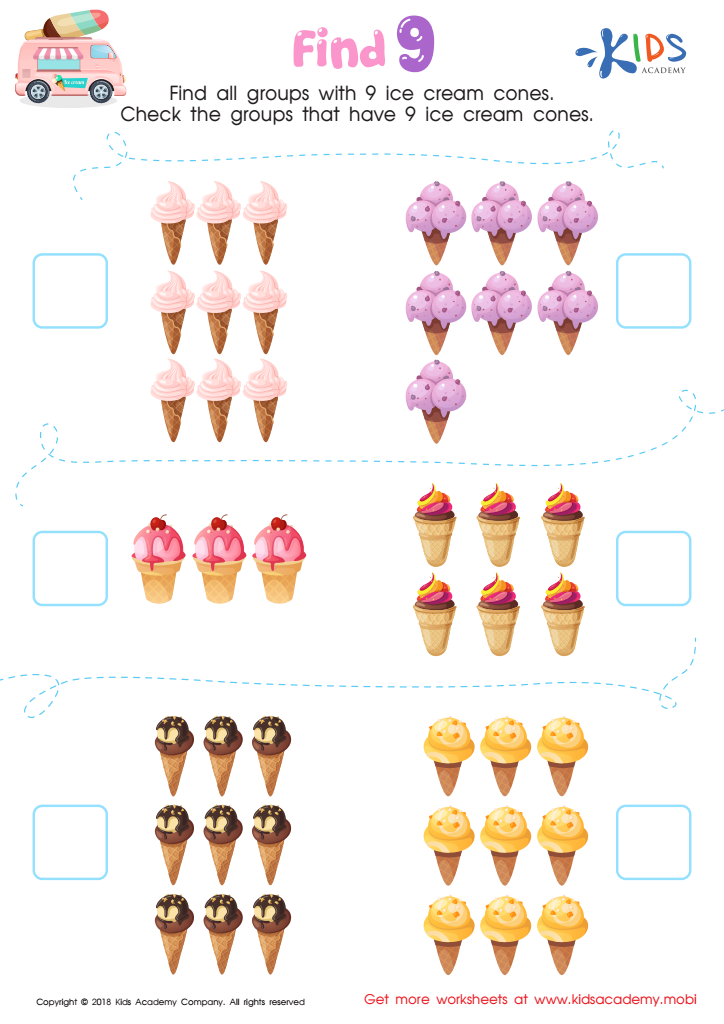
Find 9 Worksheet
 Assign to My Students
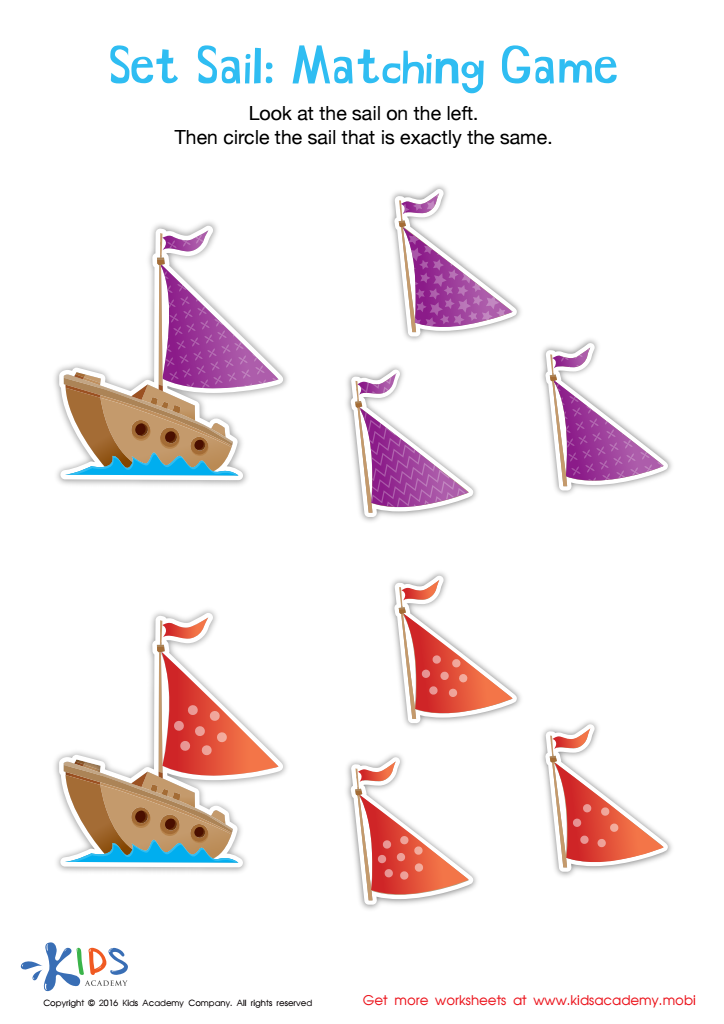
Set Sail Worksheet
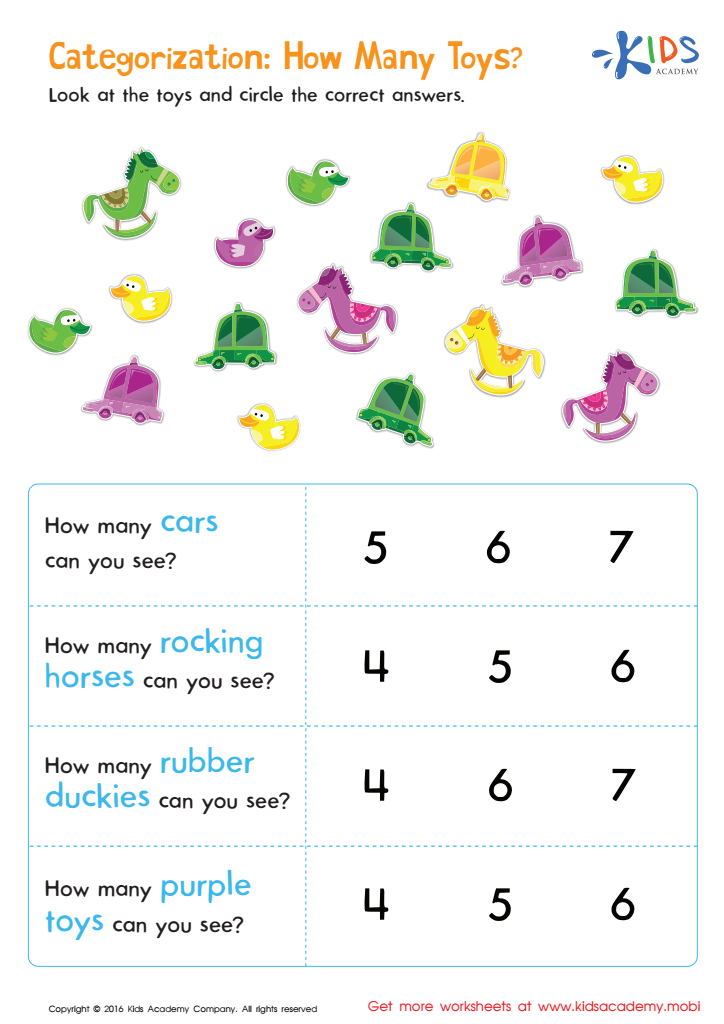
Classifying Toys by Type and Color Sorting Worksheet
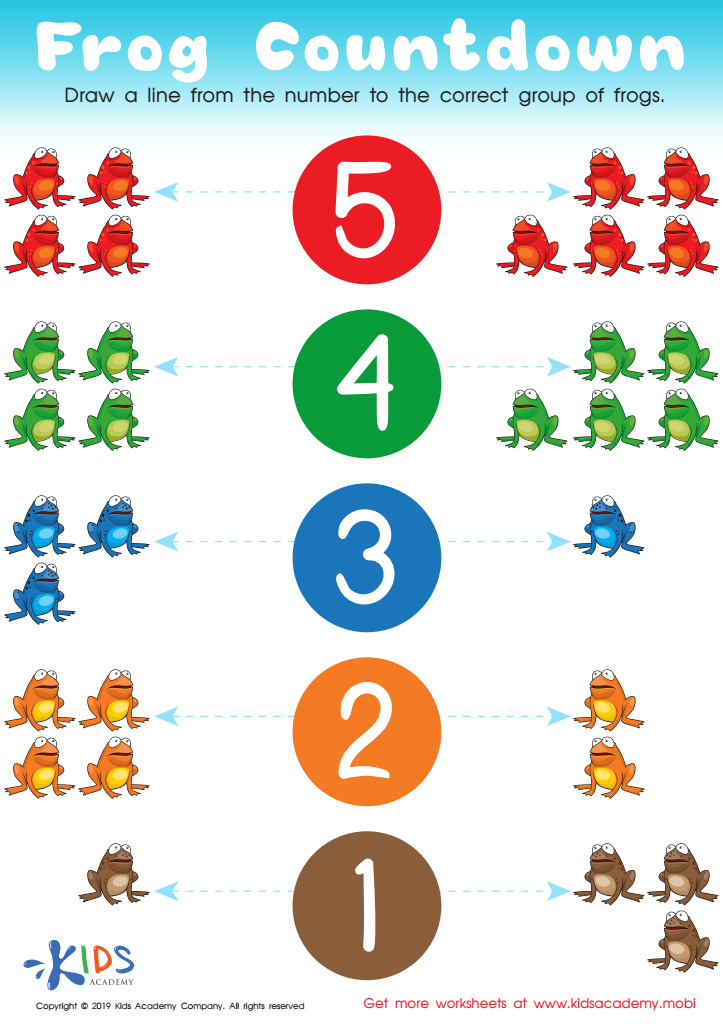
Frog Countdown Worksheet
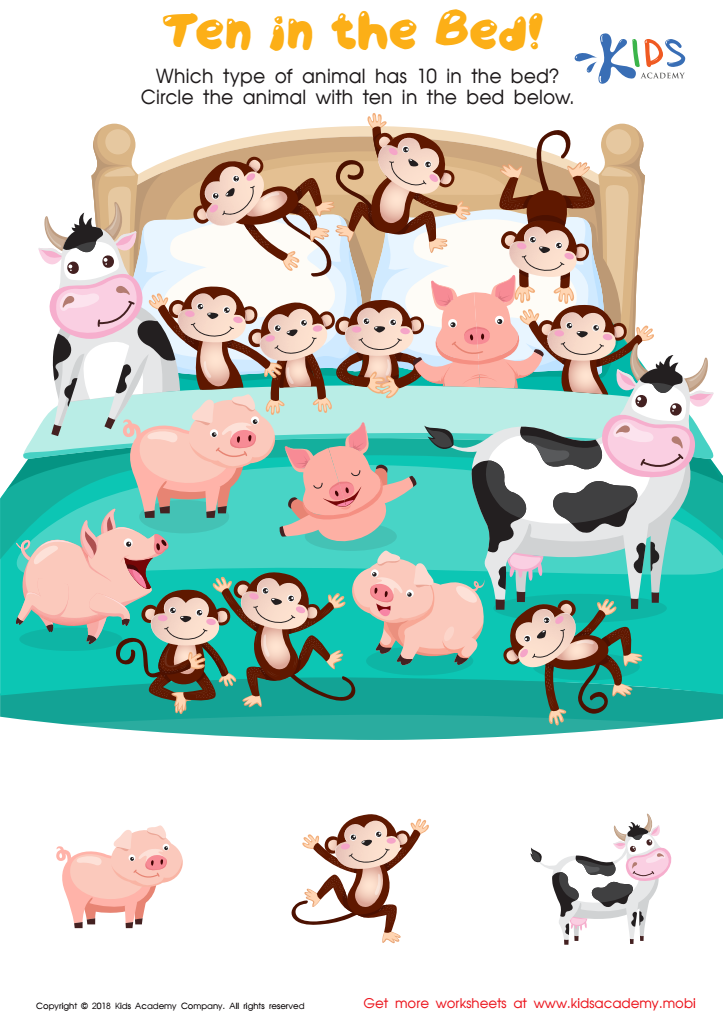
Ten in the Bed Worksheet
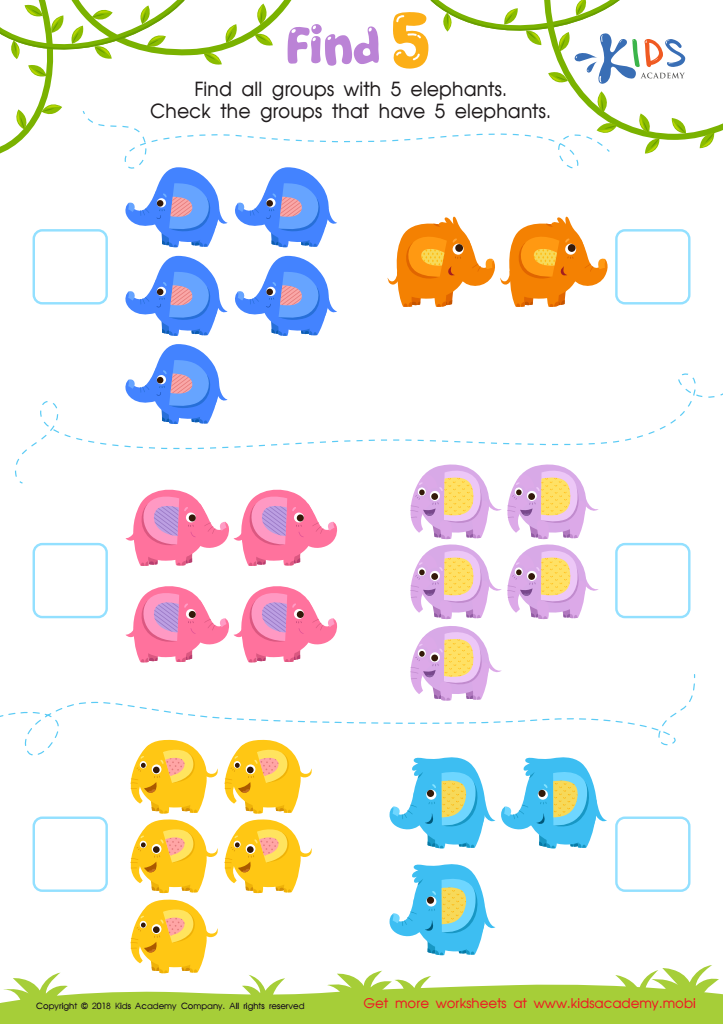
Find 5 Worksheet








Counting skills and normal matching are fundamental abilities that lay the groundwork for a child’s early mathematical understanding and overall cognitive development. For children aged 3-4, developing these skills is crucial, as they provide the foundation for future math learning. Mastering counting helps children recognize numbers, understand quantity, and fosters numeracy skills, all essential for successful engagement in school.
Moreover, normal matching activities, which involve pairing similar items or identifying differences, enhance critical thinking and visual perception. These skills aid in the development of focus, attention to detail, and the ability to categorize—important cognitive processes that children will use throughout their educational journey.
Parents and teachers should actively engage in activities that promote counting and matching, as these not only boost children's math skills but also encourage play-based learning, making education enjoyable. By nurturing these foundational skills, caregivers can build confidence in young learners and set them on a positive trajectory for academic success. Furthermore, counting and matching can be seamlessly integrated into daily routines and play, allowing for practical learning experiences that resonate with children's natural curiosity and desire to explore the world around them.