
Fine Motor Skills Normal Matching Worksheets for Ages 3-4
4 filtered results
Difficulty Level
Grade
Age
-
From - To
Subject
Activity
Standards
Unlock your child's potential with our Fine Motor Skills Normal Matching Worksheets for Ages 3-4. Expertly designed to nurture young minds, these engaging activities help children develop critical fine motor abilities while having fun. Through interactive matching exercises, kids enhance hand-eye coordination, visual perception, and concentration, laying a strong foundation for future academic success. Each colorful worksheet captivates young learners, sparking curiosity and excitement in learning. Perfect for parents, teachers, and caregivers, these worksheets offer a perfect blend of education and entertainment. Provide your child with the essential tools they need to flourish—download our worksheets today!
Favorites
With answer key
Interactive
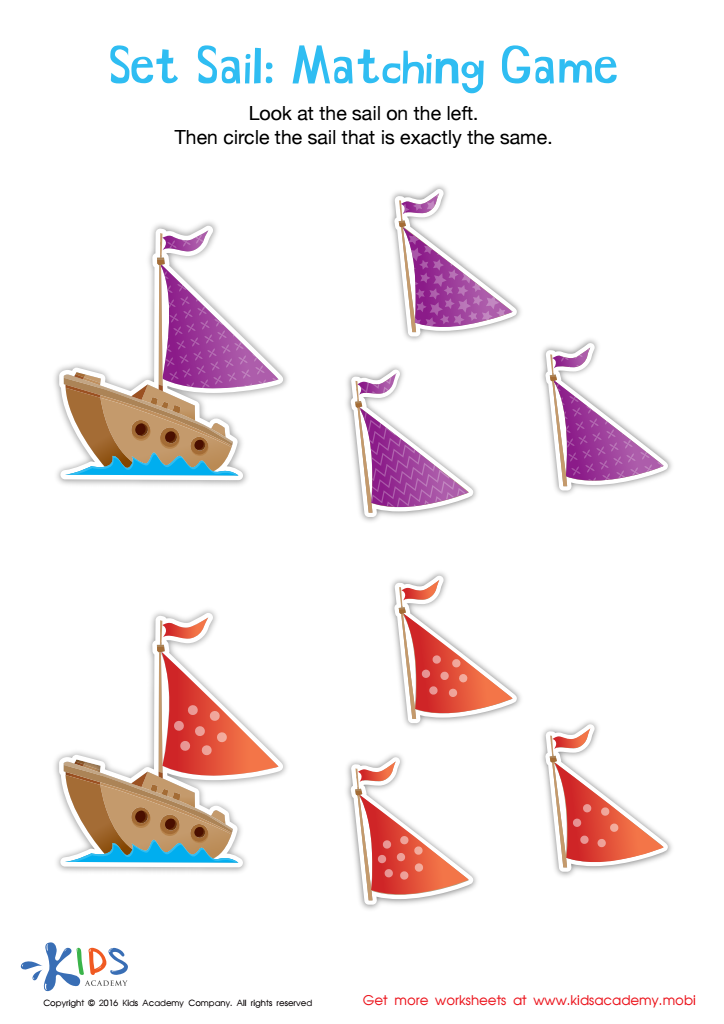
Set Sail Worksheet
Set sail with this fun matching game for toddlers! Kids will love finding the same pattern on the sails, improving their problem-solving and counting skills. Enjoy this bright and engaging worksheet!
 Assign to My Students
Set Sail Worksheet
Worksheet

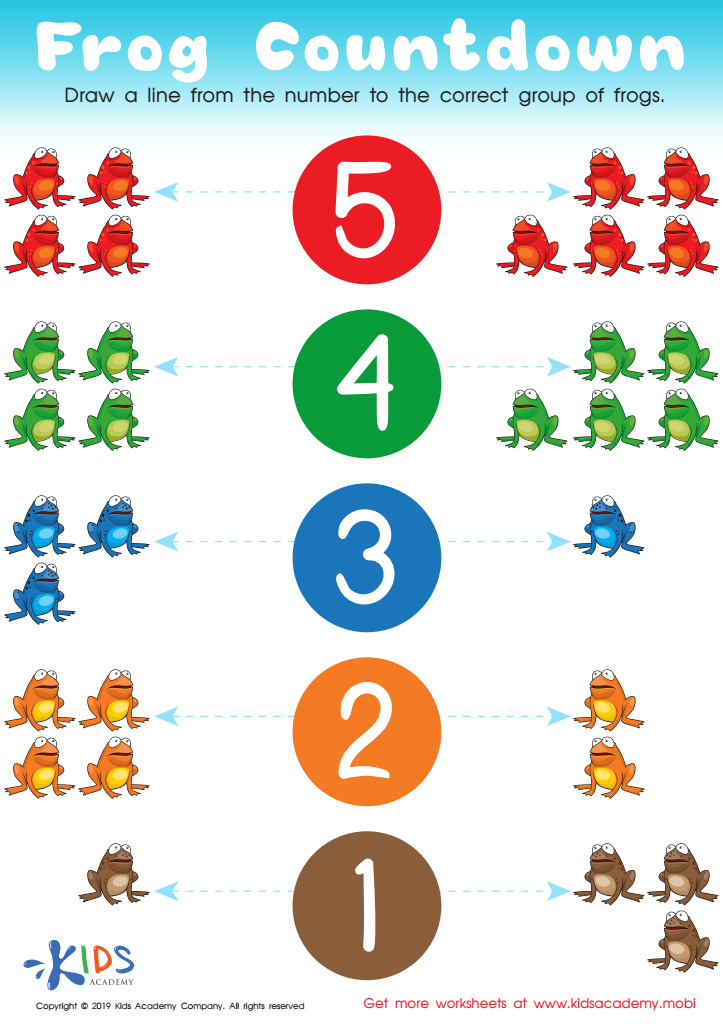
Frog Countdown Worksheet
Make learning fun for kids with traceable printouts! This exercise has kids counting frogs and drawing a line to match the number. Expand their knowledge with activities like this, beyond the basics they learn in school. Help them explore new ways of learning and make it enjoyable.
Frog Countdown Worksheet
Worksheet
Join Kids Academy for Free
Who is primarily going to use this learning content?








Fine motor skills are crucial developmental milestones in young children, ages 3-4, involving the coordination of small muscles, especially in the hands and fingers, with the eyes. Parents and teachers should care about the normal progression of these skills because they are foundational to many everyday activities and crucial academic tasks. These skills enable children to perform precise movements like holding a pencil, cutting with scissors, stringing beads, and buttoning clothing. Mastery in these areas facilitates greater independence and confidence in young learners.
Ignoring or delaying intervention in fine motor skill development can impact a child’s ability to succeed once they enter formal schooling. Activities typically considered part of a preschool or early elementary curriculum, such as writing, drawing, and using tools, heavily depend on well-developed fine motor skills. Furthermore, strong fine motor skills often go hand-in-hand with cognitive development as they’re integral in enhancing concentration and problem-solving abilities.
By fostering fine motor skills through play-based activities and thoughtful interventions, parents and teachers can support the comprehensive development of children, preparing them for future academic success and day-to-day functional activities. Early recognition and support ensure that children develop these crucial skills at the right pace, catering to both educational outcomes and overall well-being.








