Pattern recognition Normal Patterns Worksheets for Ages 3-4
5 filtered results
-
From - To
Our "Pattern Recognition Normal Patterns Worksheets for Ages 3-4" are designed to build foundational math skills in young learners. Through colorful and engaging activities, children enhance their ability to recognize, identify, and complete patterns using familiar shapes and objects. These worksheets boost cognitive skills, critical thinking, and problem-solving abilities, ensuring a fun and educational experience. Perfect for preschoolers, each worksheet nurtures confidence and mastery in early math concepts, preparing your child for future academic success. Visit our website to explore a variety of printable resources that make learning patterns an enjoyable adventure.
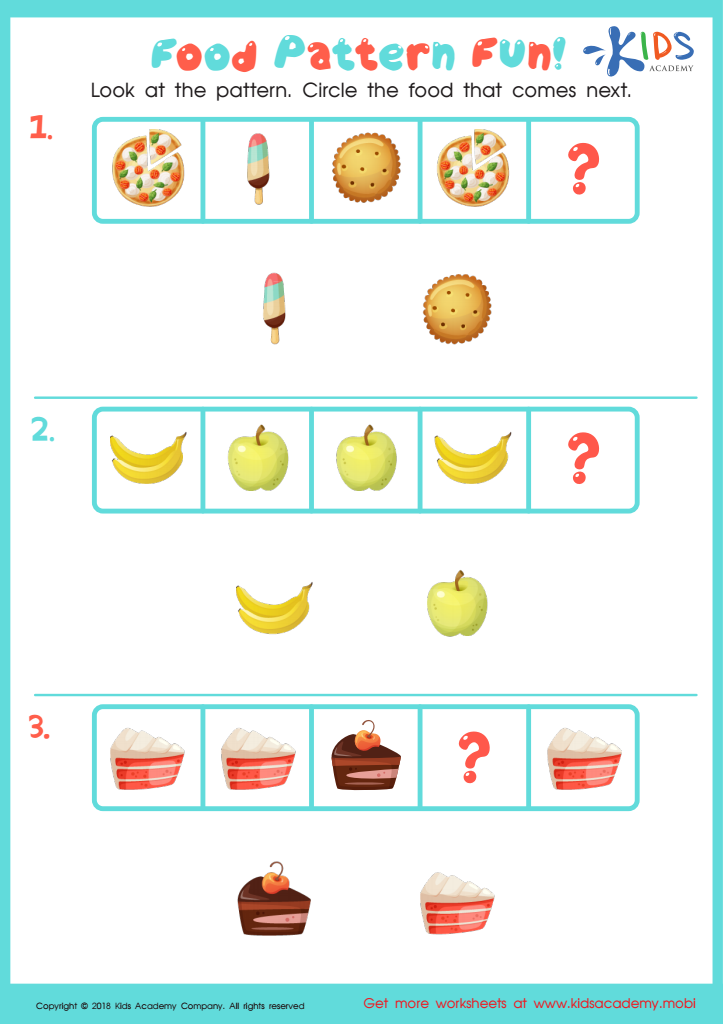
Food Pattern Fun Worksheet
 Assign to My Students
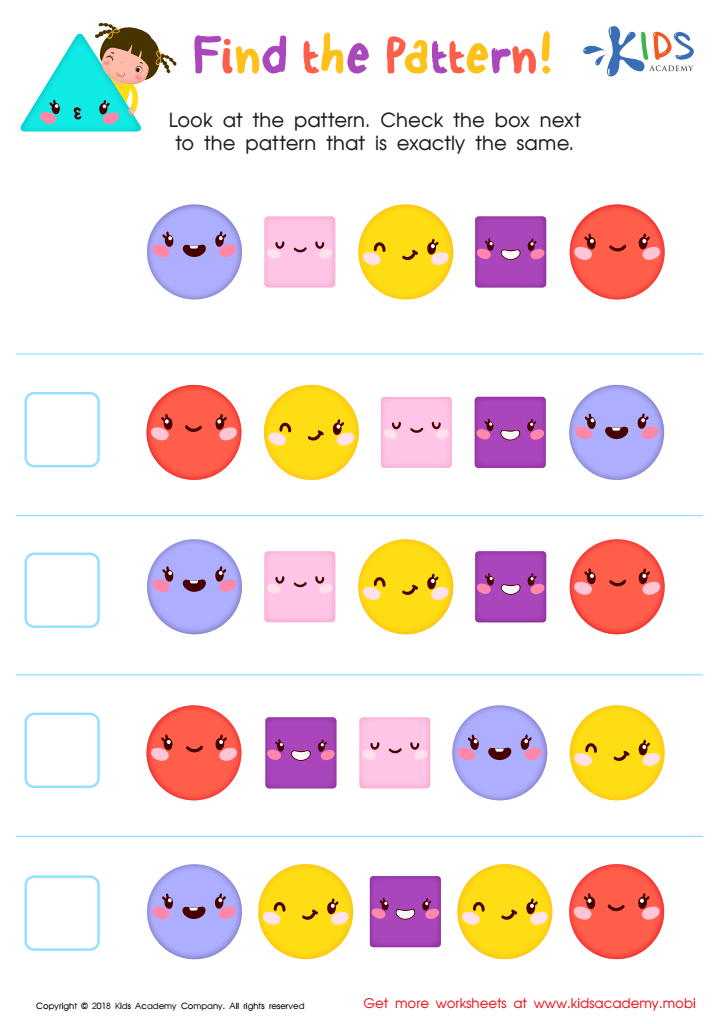
Find the Pattern Worksheet
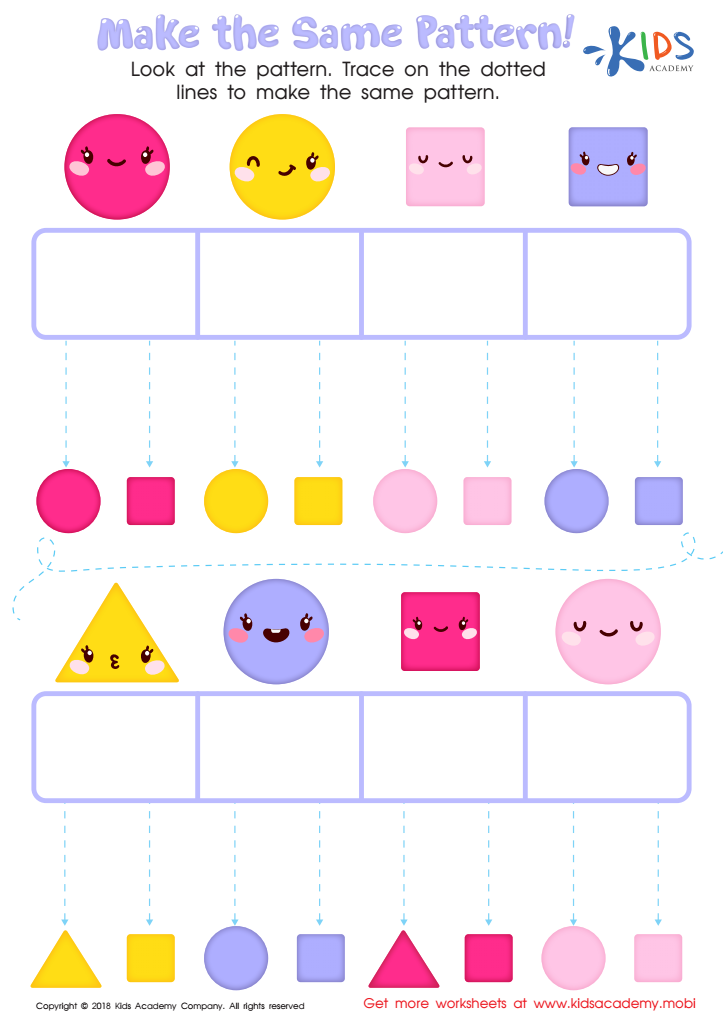
Make the Same Pattern Worksheet
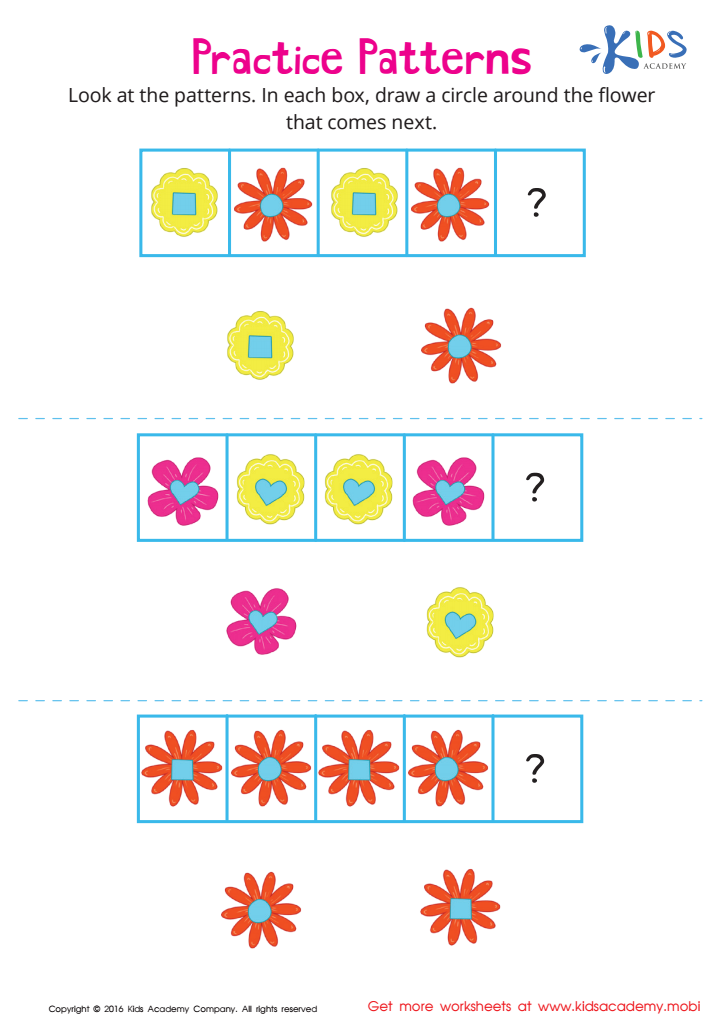
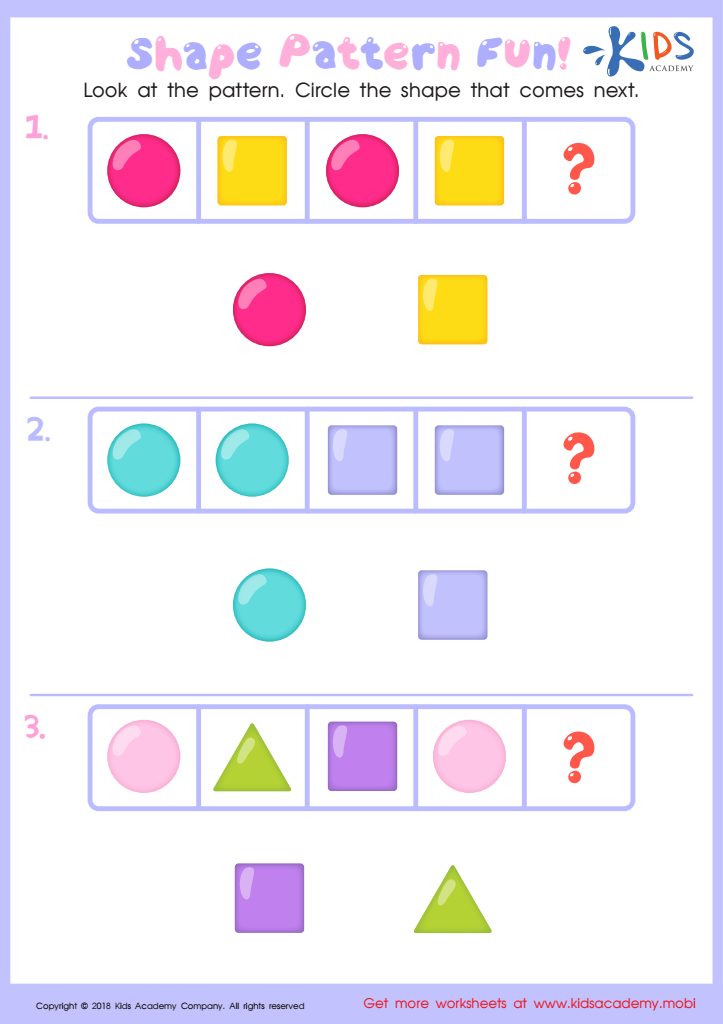
Shape Pattern Fun Worksheet








Pattern recognition is a crucial cognitive skill that forms the foundation for a variety of learning processes, making it essential for parents and teachers to focus on nurturing this ability in children aged 3-4. At this developmental stage, children begin to notice and predict regularities and sequences in their environment, helping them make sense of the world around them.
Developing pattern recognition skills can significantly enhance a child's ability to understand and work with numbers, paving the way for future success in mathematical concepts. Recognizing patterns helps them grasp basic arithmetic, understand sequencing, and develop problem-solving skills. For example, when children identify patterns in objects, colors, or sounds, they start to apply this understanding to numerical patterns, laying the groundwork for addition, subtraction, and eventually more complex operations.
Beyond mathematics, pattern recognition also aids in language development. Recognizing repetitive sound patterns and syllables boosts phonological awareness, a critical precursor to reading. When children understand rhythm and repetition in language, they become better equipped to decode words and sentence structures.
Moreover, sharpening these skills promotes cognitive flexibility and critical thinking. Children learn to observe, compare, and analyze, which are vital for academic success and everyday decision-making. Investing in pattern recognition activities fosters curiosity and confidence, encouraging exploration and learning in young minds.
In summary, focusing on pattern recognition in early childhood is crucial. It catalyzes cognitive development across various domains, ensuring a solid foundation for future learning and problem-solving abilities.








