Counting skills Normal Word Problems Worksheets for Ages 3-4
4 filtered results
-
From - To
Unlock your child's math potential with our Counting Skills Normal Word Problems Worksheets, perfect for ages 3-4! These engaging worksheets are designed to make learning fun while developing essential counting abilities. Each problem presents relatable, age-appropriate scenarios that encourage children to practice counting through colorful visuals and interactive exercises. From identifying numbers to answering simple questions, these worksheets promote critical thinking and early math skills. Whether at home or in the classroom, our resources provide a solid foundation for young learners to excel. Give your child the tools to succeed in math with our thoughtfully crafted worksheets today!
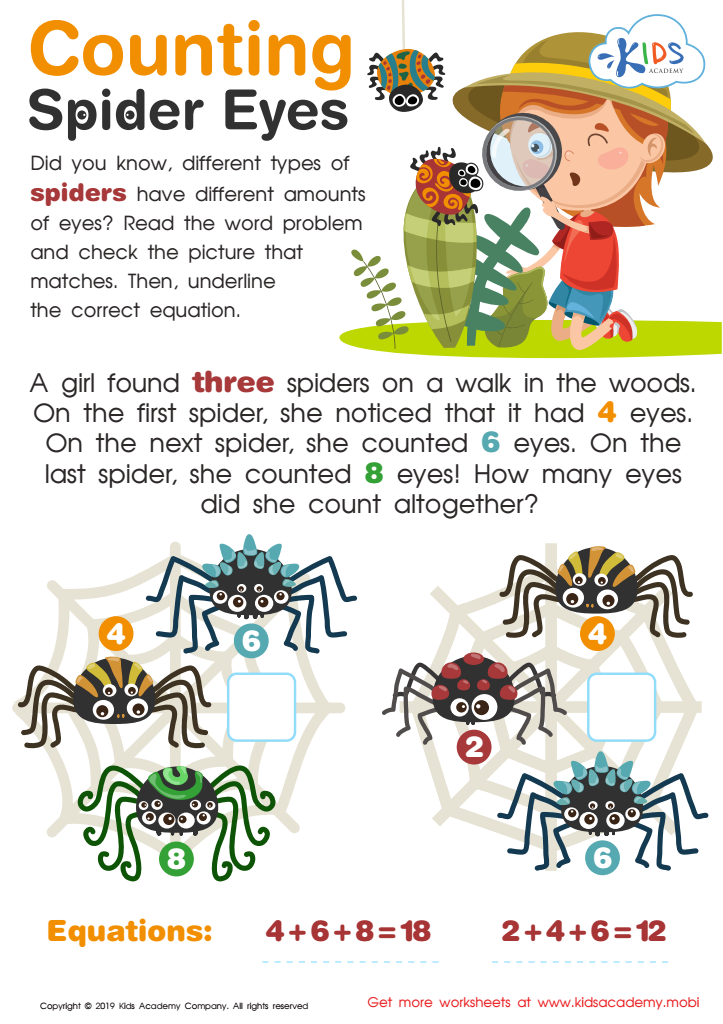
Counting Spider Eyes Worksheet
 Assign to My Students
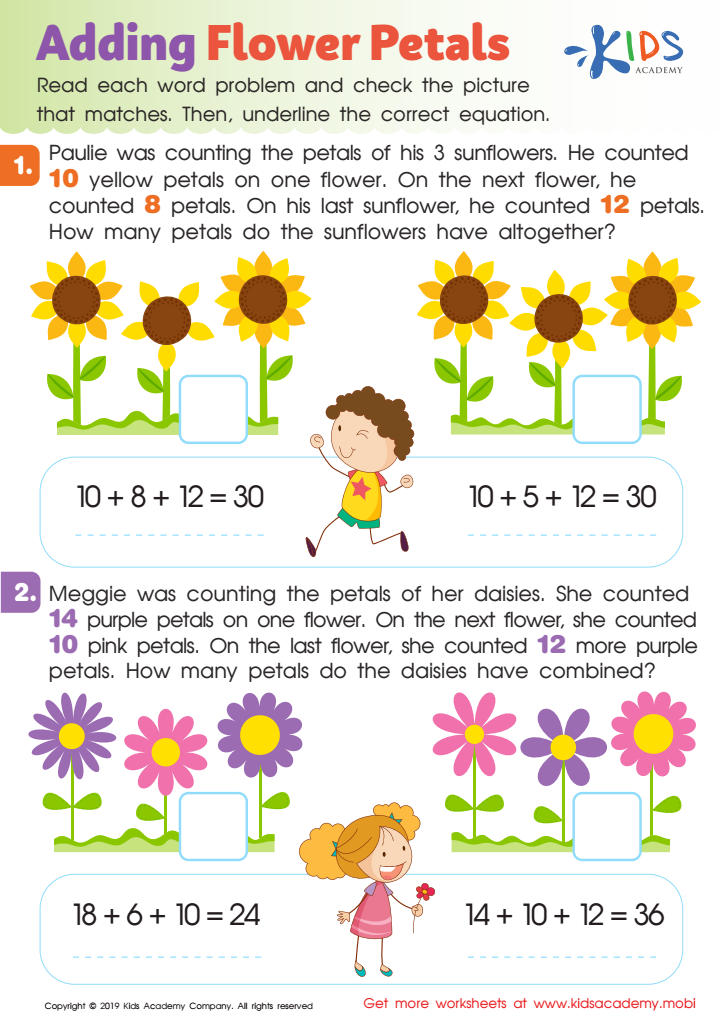
Adding Flower Petals Worksheet
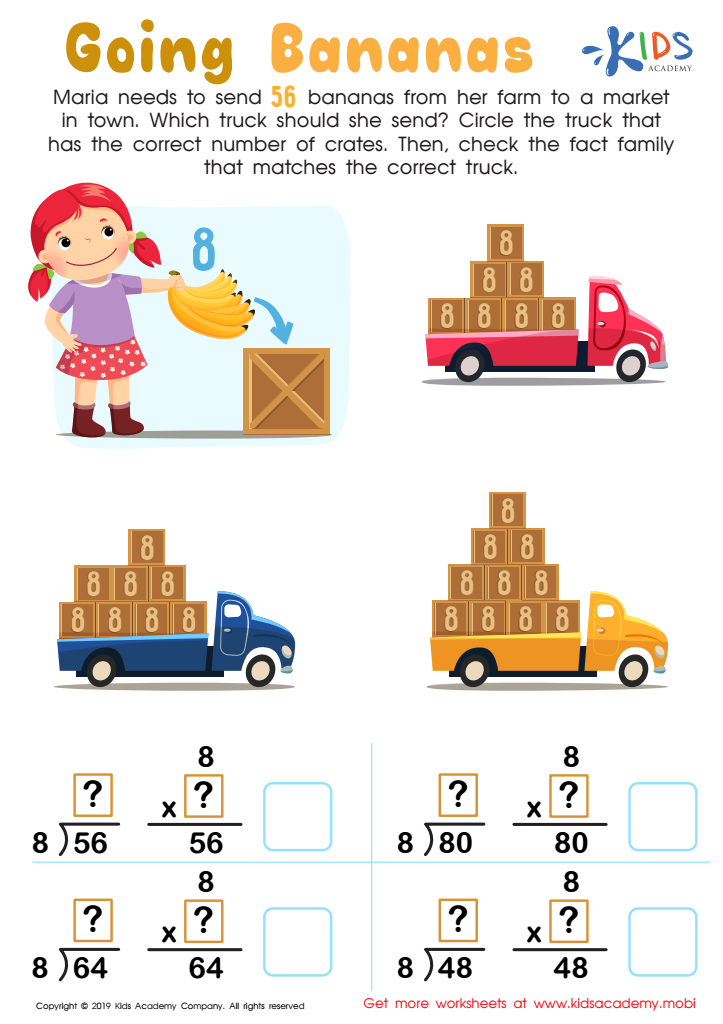
Going Bananas Worksheet
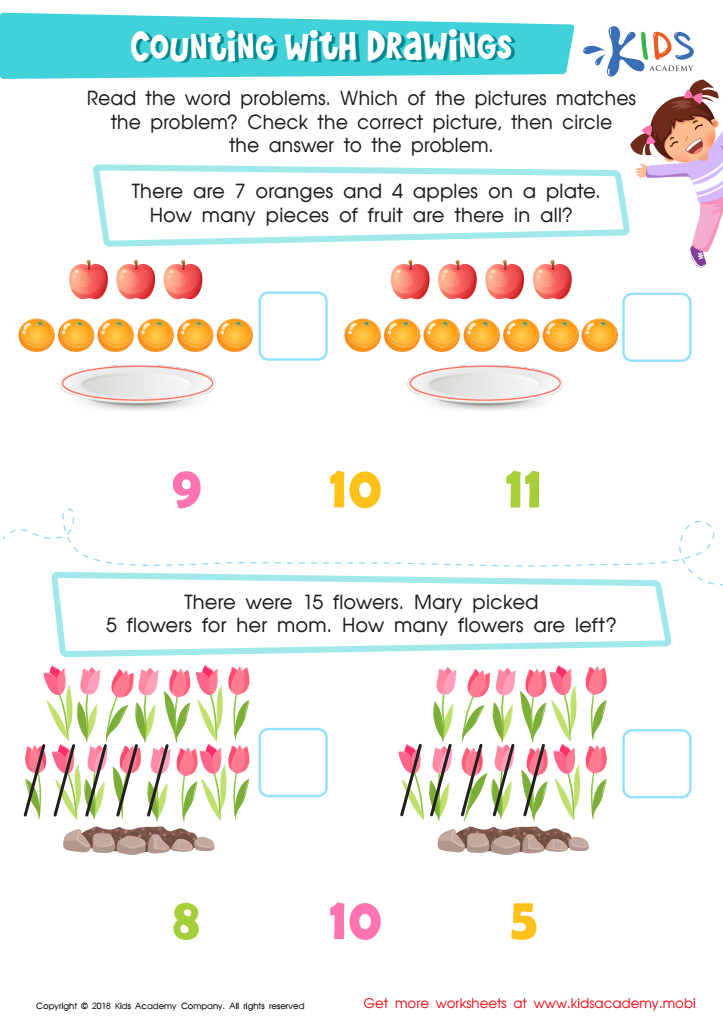
Counting with Drawings:Fruits & Flowers Worksheet








Counting skills and the ability to solve normal word problems are fundamental for children ages 3-4, as they lay the groundwork for their mathematical development. At this early stage, counting is not just a skill; it is a form of cognitive play that helps children understand the concept of numbers and the relationships between them. By engaging with simple word problems, young learners build critical thinking skills, learn to sequence events, and make sense of real-life situations.
Parents and teachers should care about these skills because they promote number sense, essential for later academic success in mathematics. When children grasp counting and can solve straightforward problems involving addition and subtraction, they gain confidence and enthusiasm for learning. Moreover, such skills support language development, as children must comprehend and verbally articulate the problems presented to them.
Introducing counting through engaging, relatable scenarios encourages curiosity and exploration, fueling a love for learning. By paying attention to these foundational skills, adults can empower children, fostering resilience and problem-solving abilities that will last a lifetime. The early nurturing of counting and word problem-solving is a crucial investment in a child’s cognitive, social, and educational growth.








