Reading comprehension Normal Word Problems Worksheets for Ages 3-4
8 filtered results
-
From - To
Enhance your child's learning journey with our "Reading Comprehension Normal Word Problems Worksheets" designed for ages 3-4. At Kids Academy, our worksheets focus on strengthening young learners' reading comprehension skills through engaging word problems in math. Each worksheet challenges preschoolers to analyze simple stories, understand context, and solve accompanying math questions. These exercises not only develop critical thinking but also prepare your child for future academic success. Perfect for both classroom and at-home use, our expertly crafted resources make learning enjoyable and effective. Unlock your child's potential today with these essential reading comprehension tools.
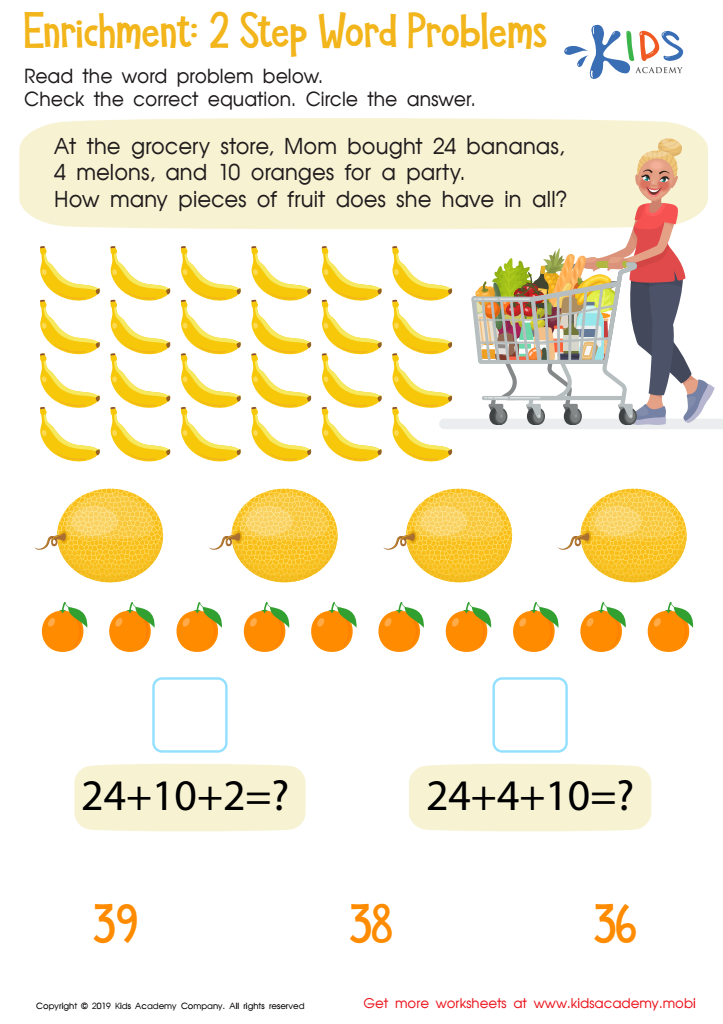
Enrichment -2 Step Word Problems Worksheet
 Assign to My Students
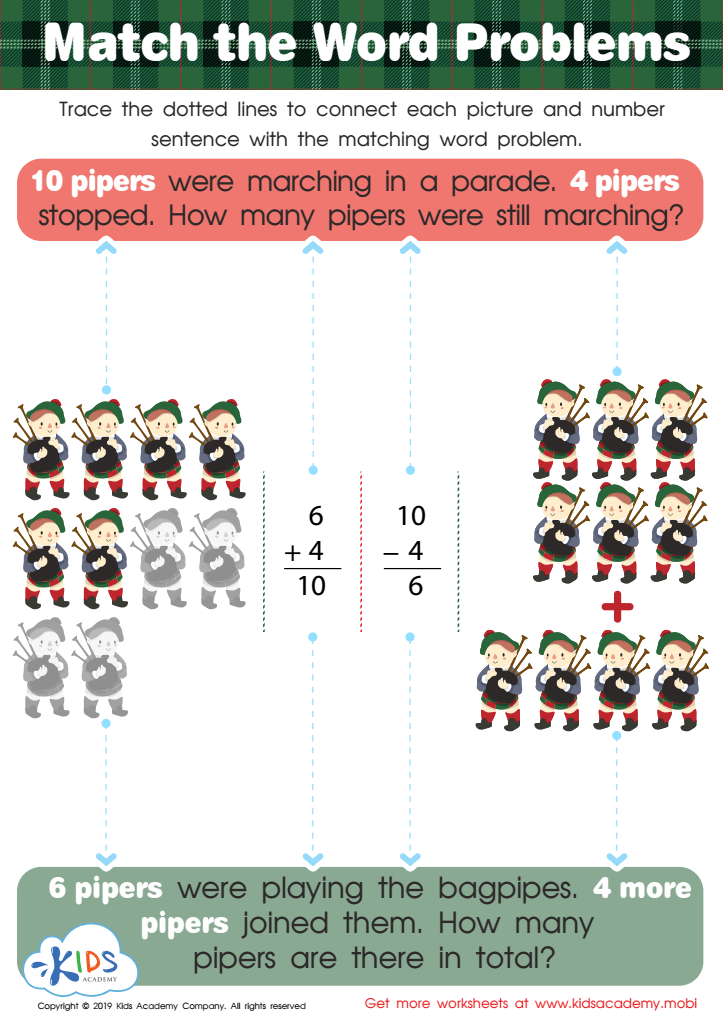
Match the Word Problems Worksheet
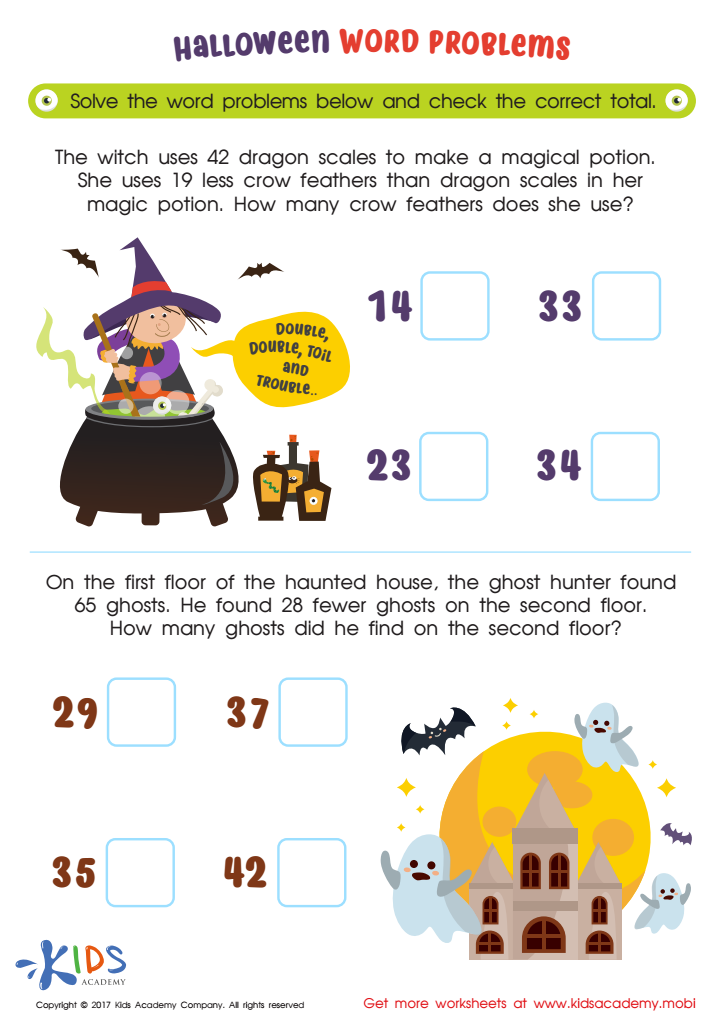
Halloween Word Problems Printable
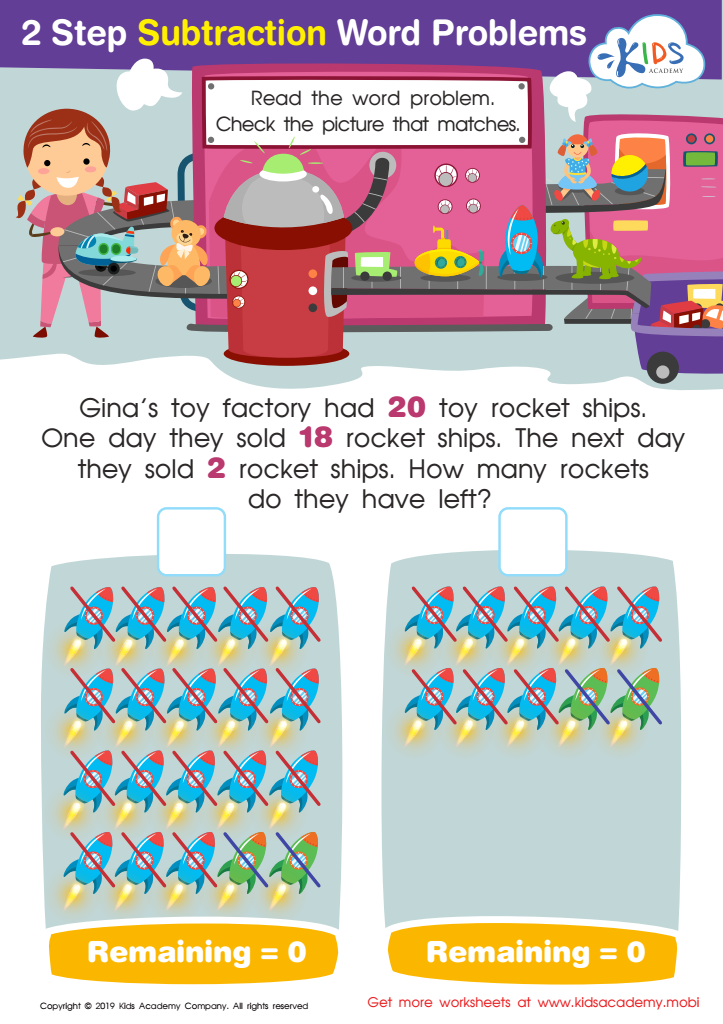
Step Subtraction Word Problems Worksheet
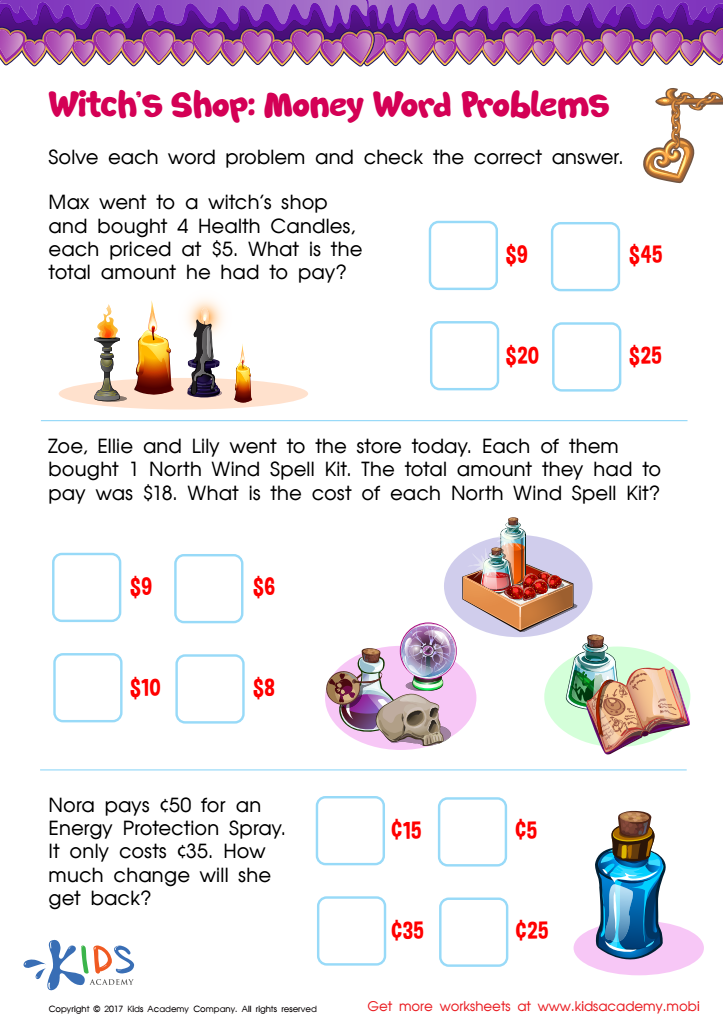
Money Word Problems Printable
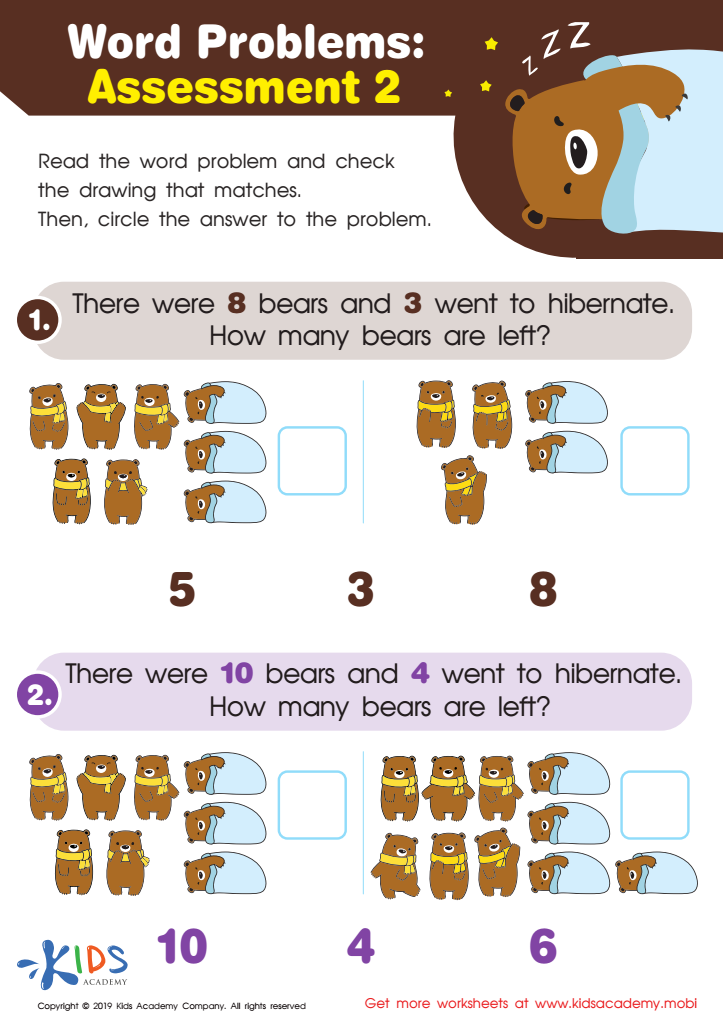
Word Problems: Assessment 2 Worksheet
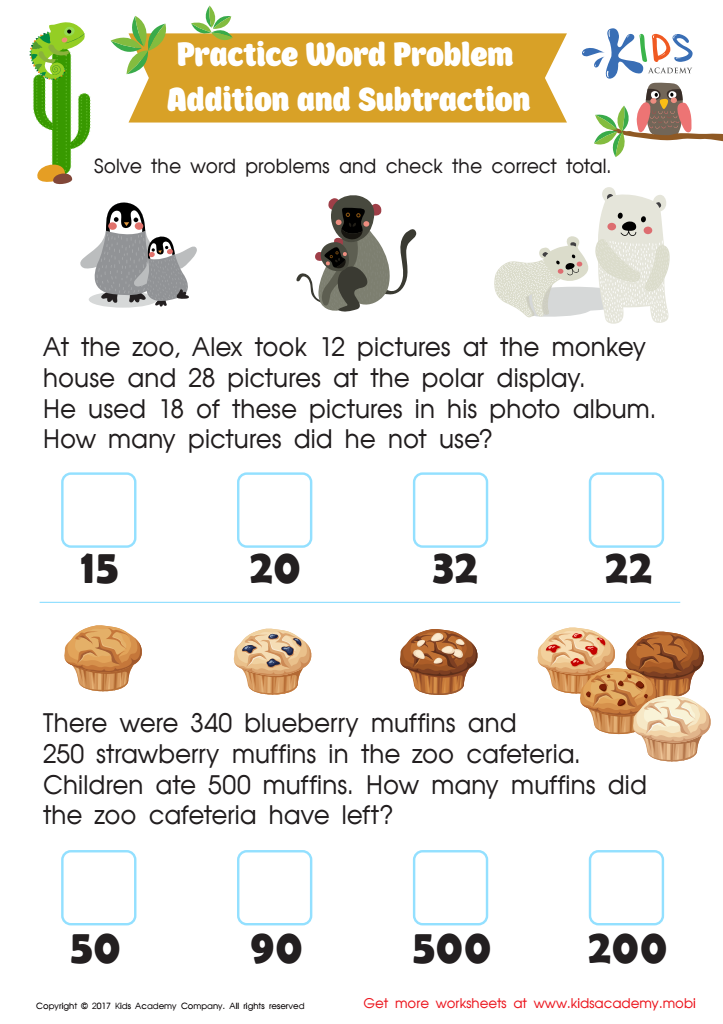
Addition and Subtraction: Word Problems Worksheet
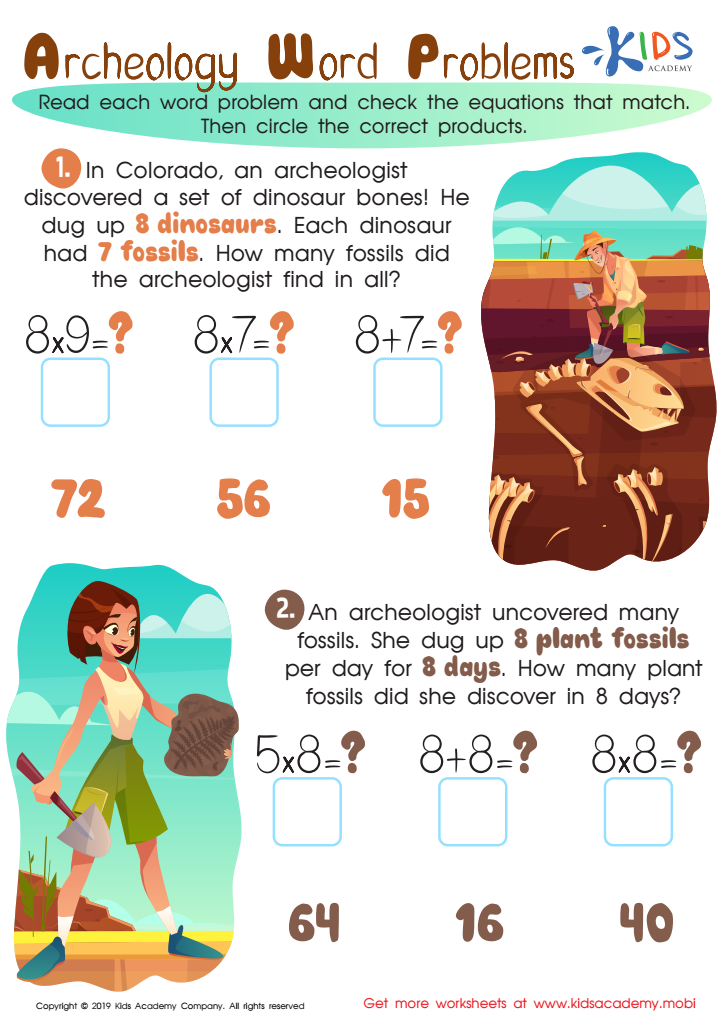
Archeology Word Problems Worksheet


.jpg)





Reading comprehension and normal word problems are foundational skills that parents and teachers should prioritize for children aged 3-4 due to their significant impact on learning and cognitive development. At this formative stage, children’s brains are rapidly developing, making it an ideal time to introduce basic comprehension and problem-solving skills through age-appropriate reading and simple word problems.
Learning to understand and process stories or instructions enhances vocabulary, improves sentence structure awareness, and fosters listening skills. This foundational knowledge helps children make sense of the world around them, providing a framework for understanding more complex concepts later on. Regular exposure to reading comprehension activities promotes curiosity and a love of learning, crucial for long-term academic success.
Additionally, solving normal word problems enhances critical thinking and early numeracy skills in a relatable context. This practice helps children understand simple mathematical concepts through everyday scenarios, thereby polishing their analytical abilities. It also supports memory retention and develops an ability to follow multi-step processes.
Parents and teachers investing time in reading comprehension and problem-solving activities nourish essential cognitive skills, laying the groundwork for future educational achievements. Introduced in an engaging and supportive environment, these practices can boost confidence and enjoyment in learning, setting children on a successful educational path.








