Logical thinking Normal Reading Worksheets for Ages 3-4
3 filtered results
-
From - To
Enhance your child's logical thinking skills with our engaging Normal Reading Worksheets for Ages 3-4. Specifically designed for early learners, these worksheets provide fun and interactive activities that help develop critical thinking and problem-solving abilities. Each worksheet emphasizes skill-building through puzzles, pattern recognition, and simple narratives, making reading enjoyable and educational. Our carefully crafted content ensures that your little ones are not only building their vocabulary but also learning to think logically. Perfect for parents and educators looking to enrich early childhood learning experiences, these worksheets are an essential tool for a strong foundation in literacy and cognitive development.
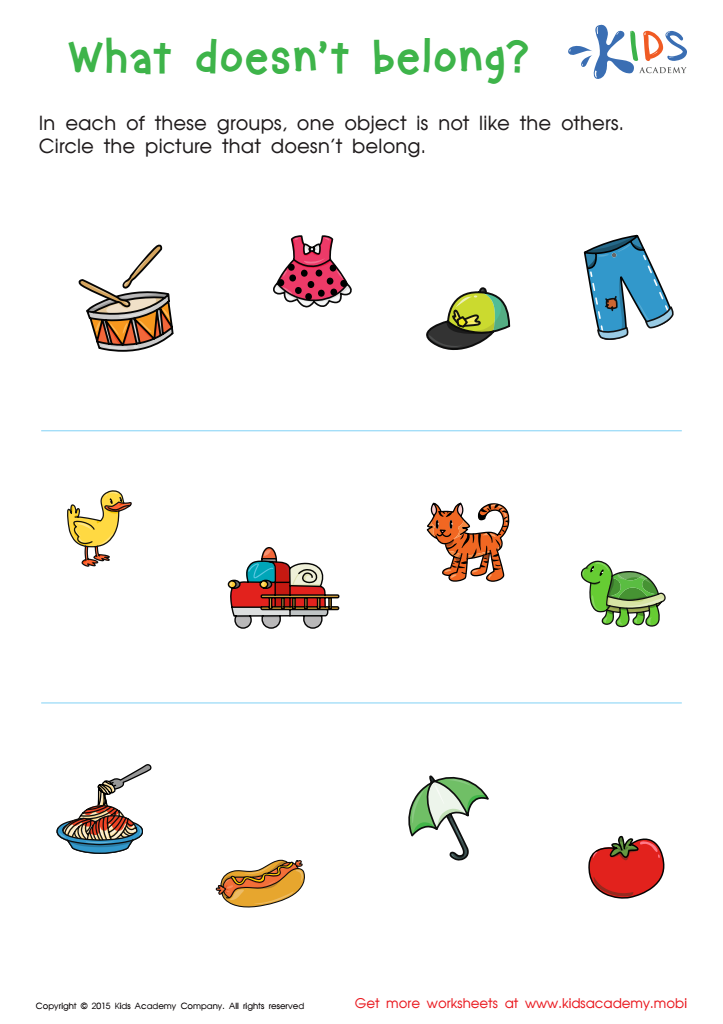
First Words: What Doesn't Belong Worksheet
 Assign to My Students
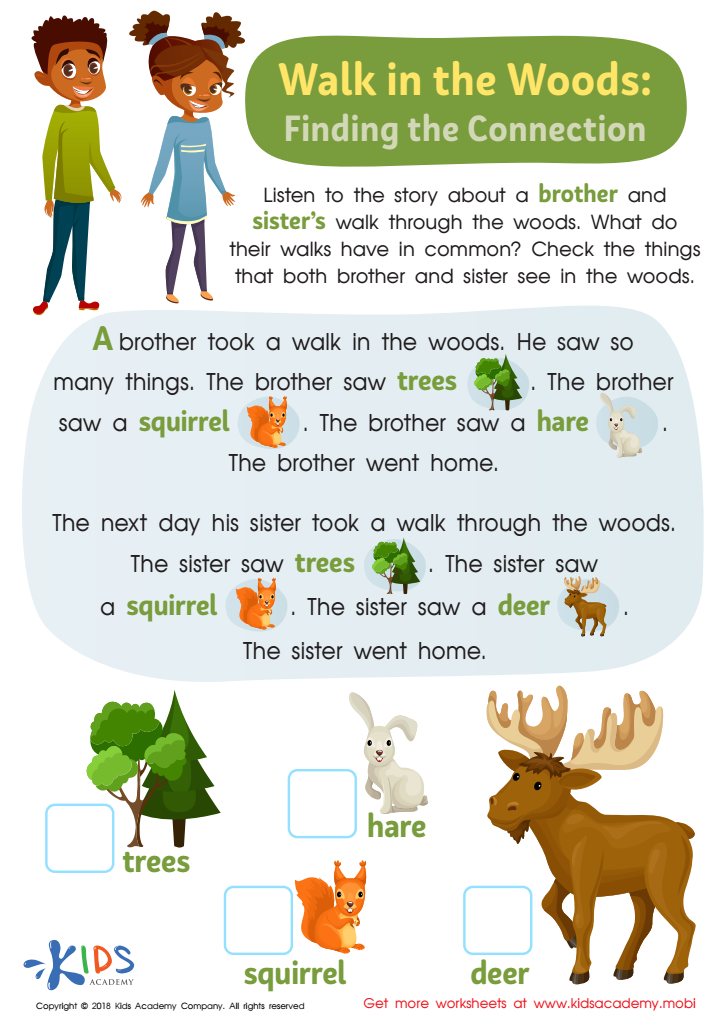
Walk In the Woods: Finding Connections Worksheet
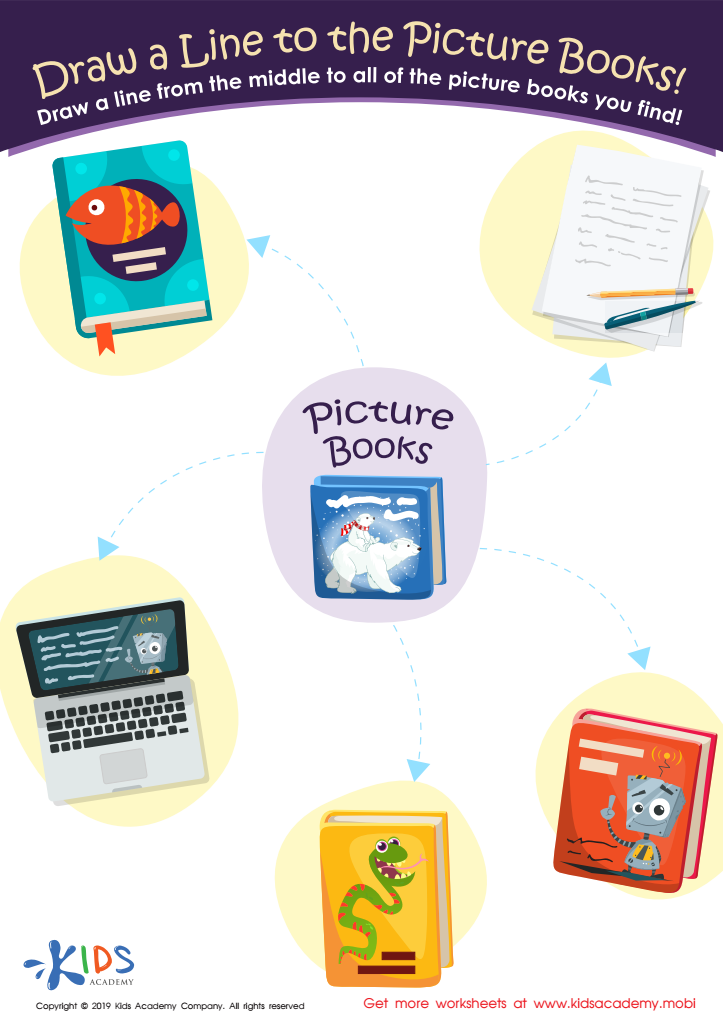
Draw a Line to the Picture Books Worksheet





.jpg)

Logical thinking and reading comprehension are foundational skills that set the stage for lifelong learning in children ages 3-4. At this stage, children are naturally curious, and nurturing their logical reasoning fosters critical thinking, pattern recognition, and problem-solving abilities. These skills are essential as children begin to navigate their world, understand cause-and-effect relationships, and tackle everyday challenges.
Moreover, engaging in normal reading activities enhances vocabulary and comprehension skills, which are crucial for early literacy development. When children are exposed to stories, both through reading and listening, they learn to sequence events, make predictions, and analyze characters' motivations and actions. This not only enriches their language skills but also sharpens their logical reasoning.
For parents and teachers, fostering these capabilities helps to build independent thinkers who can approach problems creatively and confidently. Encouraging logical thinking through interactive reading can create a warm environment where children feel supported in their inquiry and expression. Ultimately, focusing on these skills early on leads to greater academic success in future years, making it essential for parents and educators to prioritize and invest effort into cultivating these critical developmental areas. Engaging children at this stage creates a solid foundation for all future learning.








