Story sequencing Normal Reading Worksheets for Ages 3-4
6 filtered results
-
From - To
Enhance your child's reading skills with our Story Sequencing Normal Reading Worksheets designed specifically for ages 3-4. These engaging worksheets focus on helping young learners understand the flow of stories by arranging pictures and events in the correct order. By interacting with fun, age-appropriate illustrations, children develop critical comprehension skills and improve their ability to retell tales. Our worksheets provide an enjoyable way for parents and educators to encourage literacy at home or in the classroom. Dive into an imaginative world of storytelling while fostering creativity and critical thinking. Start your little one's reading journey today with our carefully crafted resources!
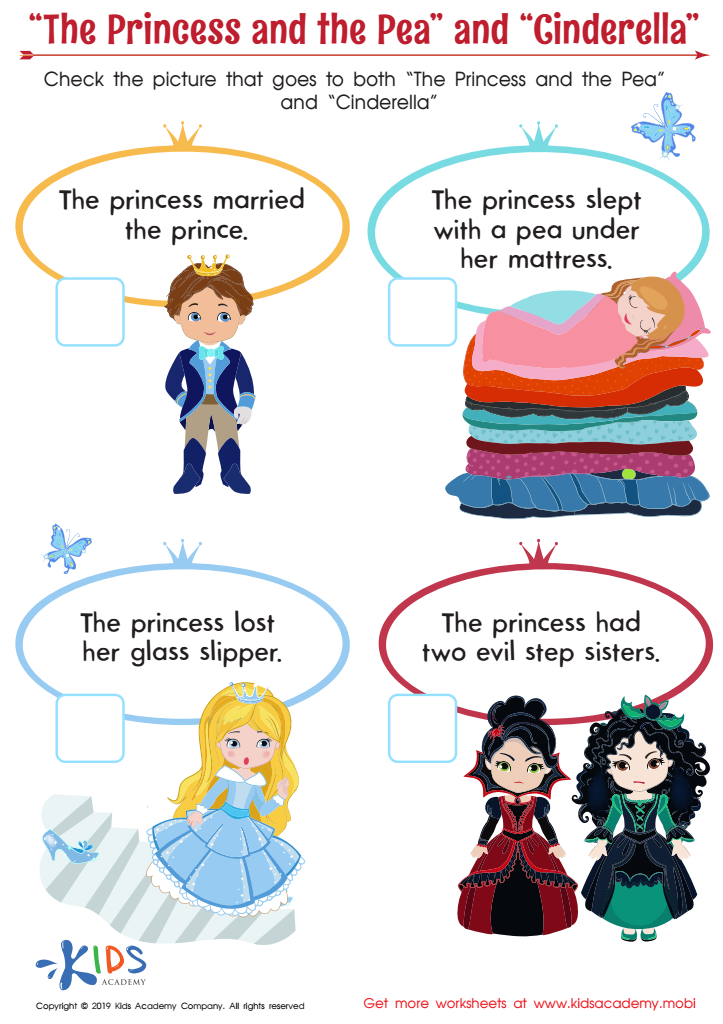
“The Princess and the Pea” and “Cinderella” Worksheet
 Assign to My Students
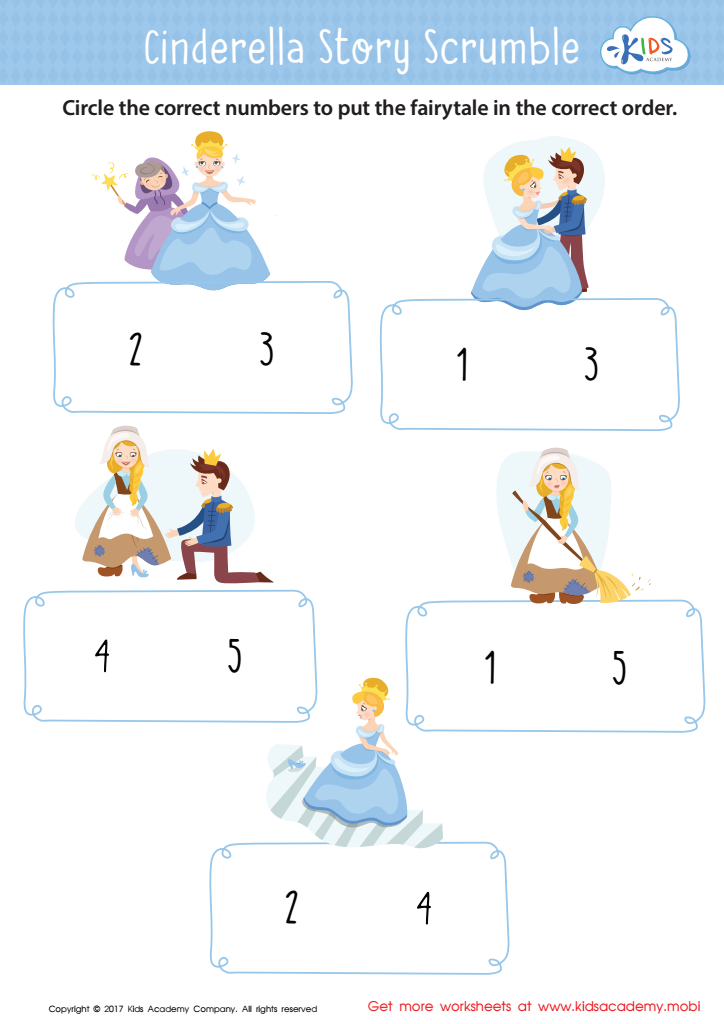
Cinderella Story Sequencing Worksheet
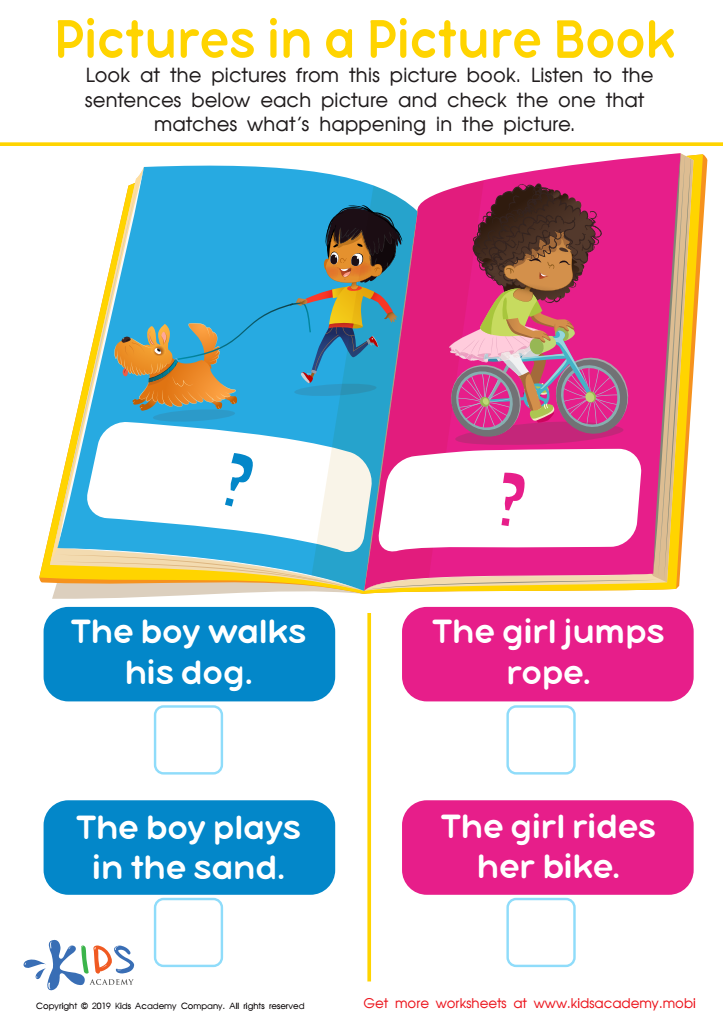
Picture in Books Worksheet
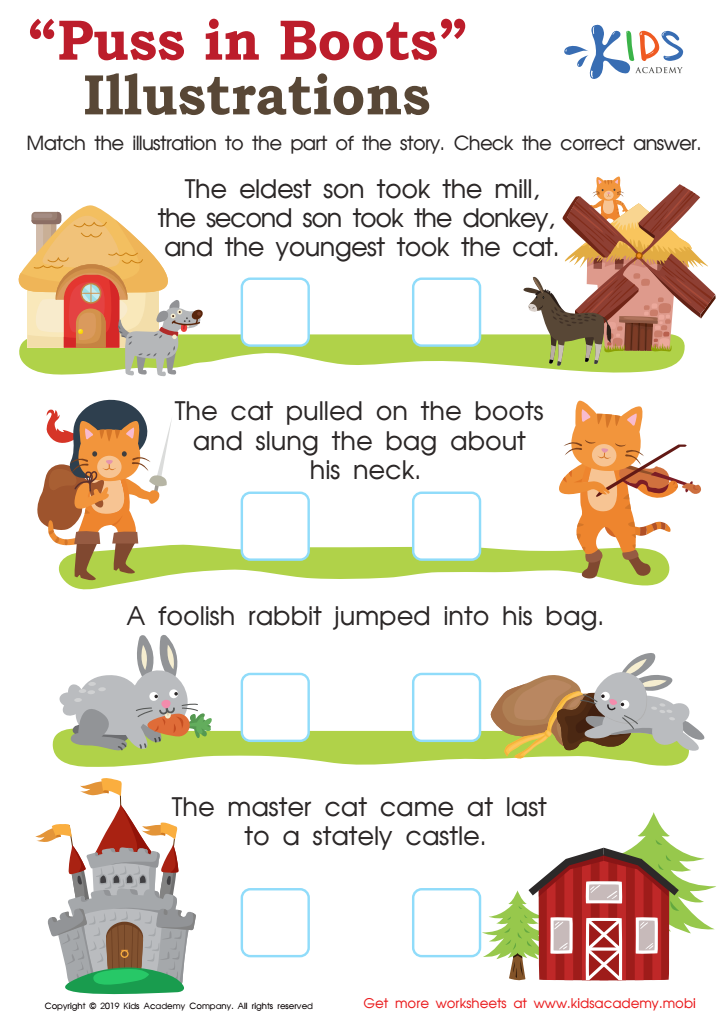
Puss in Boots Illustrations Worksheet
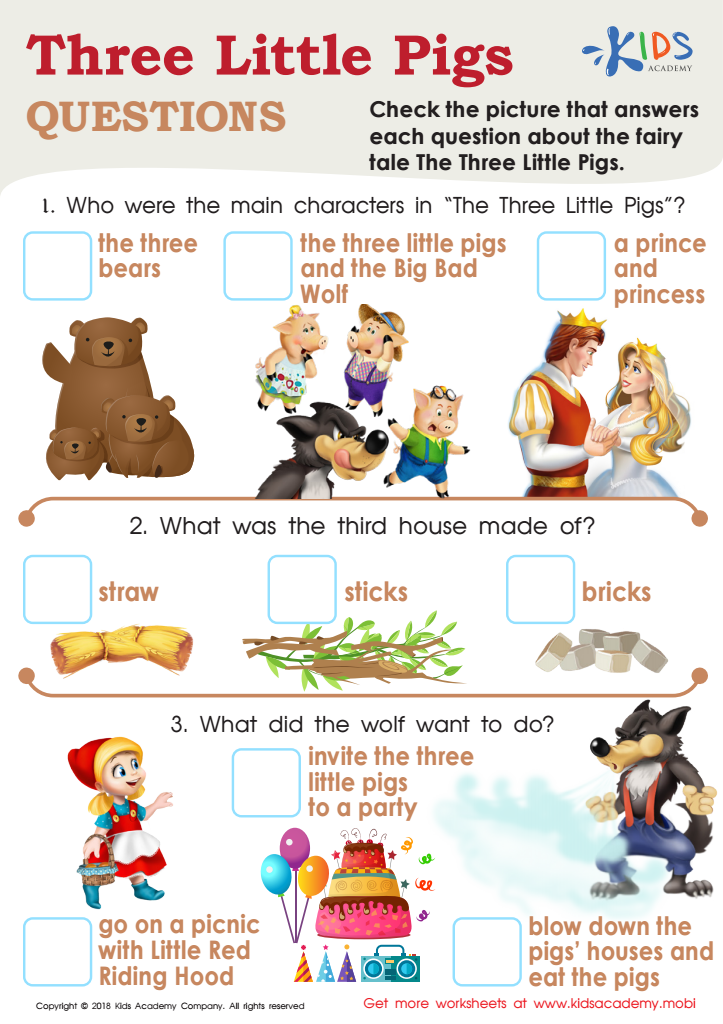
Three Little Pigs Questions Worksheet
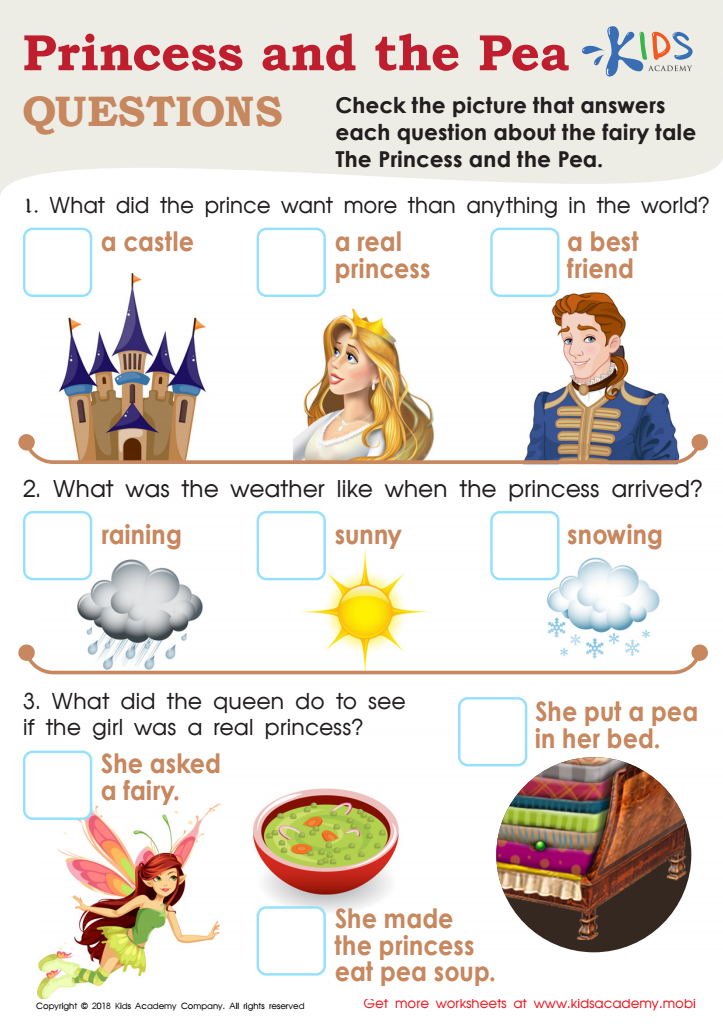
Princess and the Pea Questions Worksheet


.jpg)



.jpg)

Story sequencing is an essential skill for young children aged 3-4, playing a crucial role in their literacy development. Parents and teachers should care about this skill because it lays the groundwork for effective reading comprehension and narrative skills. When children practice story sequencing, they learn to identify the beginning, middle, and end of a story, understand the order of events, and connect cause and effect. This understanding not only enhances their ability to recount stories but also fosters critical thinking, allowing them to predict outcomes, infer meanings, and engage more deeply with text.
Moreover, story sequencing encourages language development. As children arrange events in order, they expand their vocabulary and comprehend sentence structure, ultimately improving their own storytelling abilities. Engaging in story sequencing activities promotes social skills as well, allowing children to work collaboratively and listen to different perspectives.
By focusing on story sequencing, parents and teachers can help children to develop a love for reading while building foundational skills that are critical for their academic journey. The skills acquired through story sequencing not only support literacy but also enhance a child's overall cognitive growth and emotional intelligence. Investing in this area is an investment in a child’s future success.








