Analytical skills Normal Reading Fiction Worksheets for Ages 3-4
5 filtered results
-
From - To
Enhance your child's analytical skills with our engaging Normal Reading Fiction Worksheets designed for ages 3-4. These worksheets not only cultivate a love for reading but also foster critical thinking and comprehension. Packed with colorful illustrations and diverse storylines, they encourage little ones to explore characters, plot details, and reasons behind actions. By engaging with these thoughtfully crafted activities, children will develop the ability to predict outcomes, make connections, and draw conclusions. Support your child’s early literacy journey while nurturing essential analytical abilities that will serve them in their educational future! Discover the joy of learning through play today!
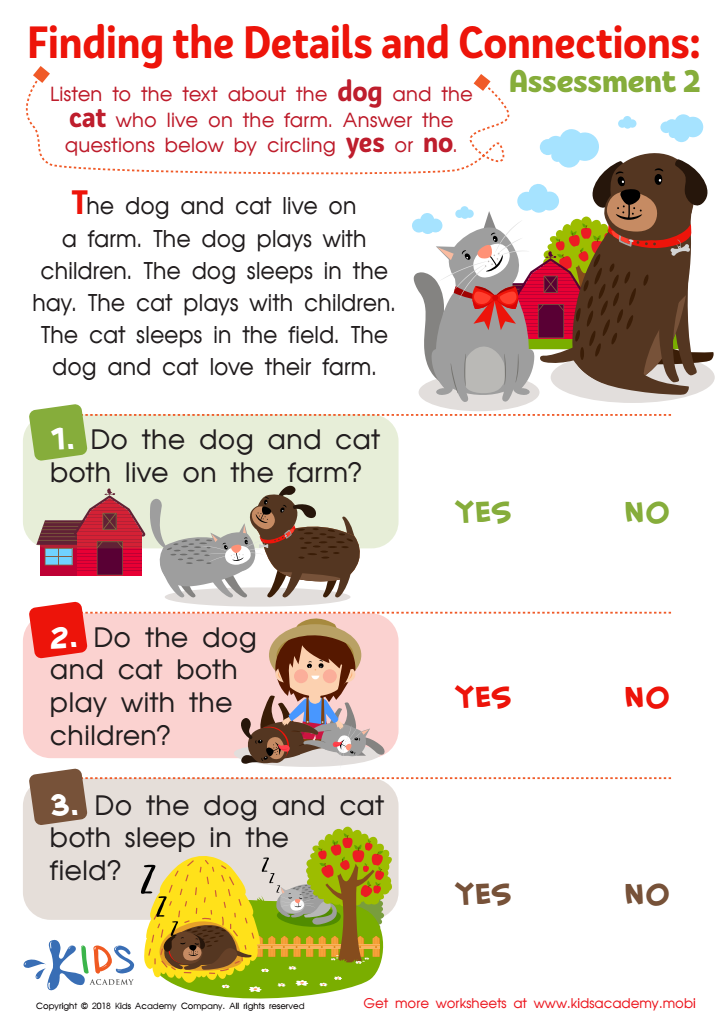
Finding the Details and Connections: Assessment 2 Worksheet
 Assign to My Students
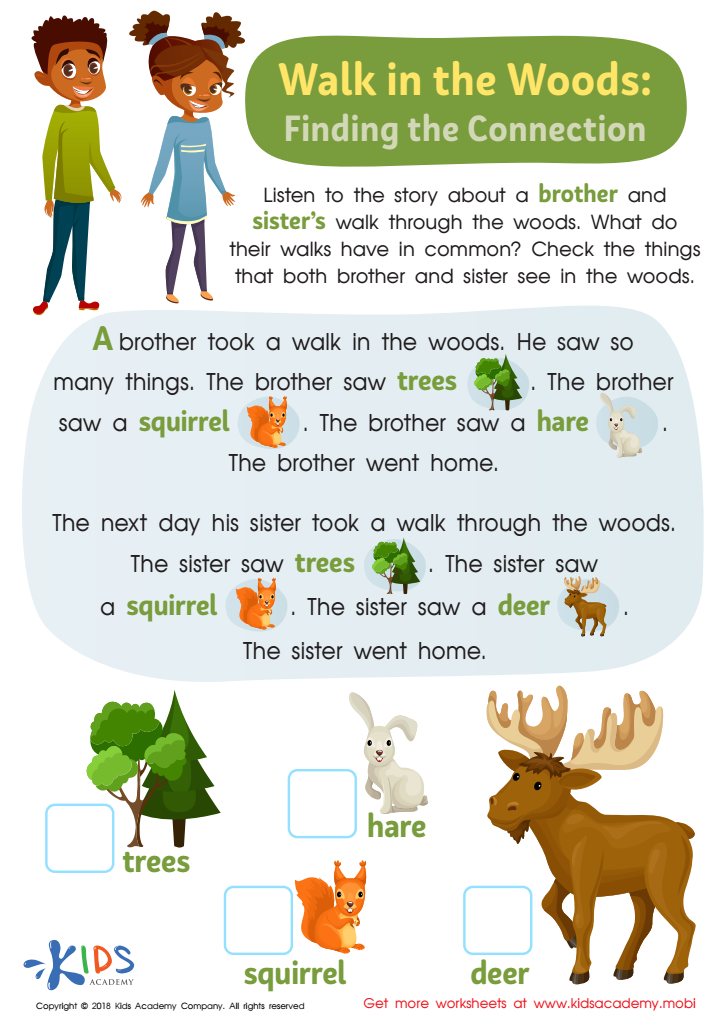
Walk In the Woods: Finding Connections Worksheet
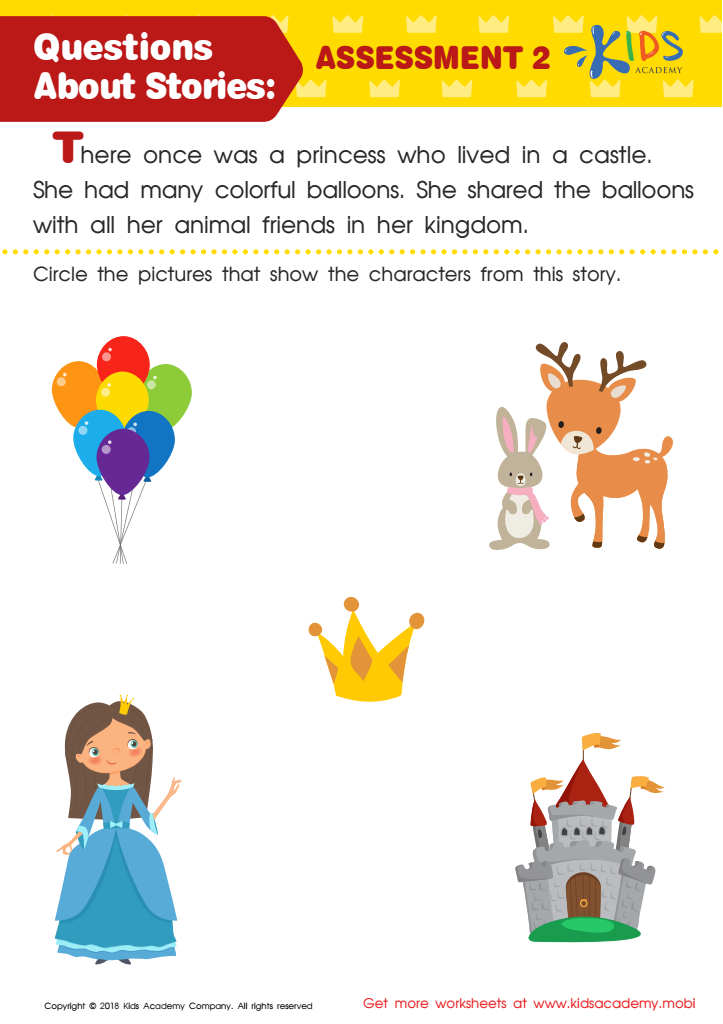
Questions About Stories: Assessment 2 Worksheet
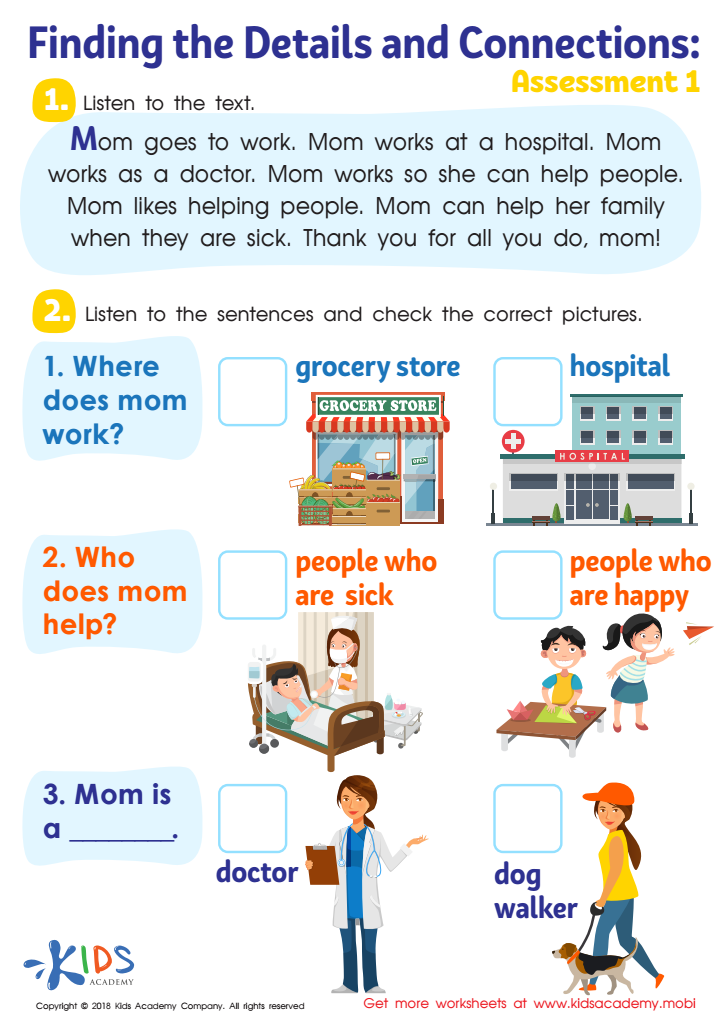
Finding the Details and Connections: Assessment 1 Worksheet
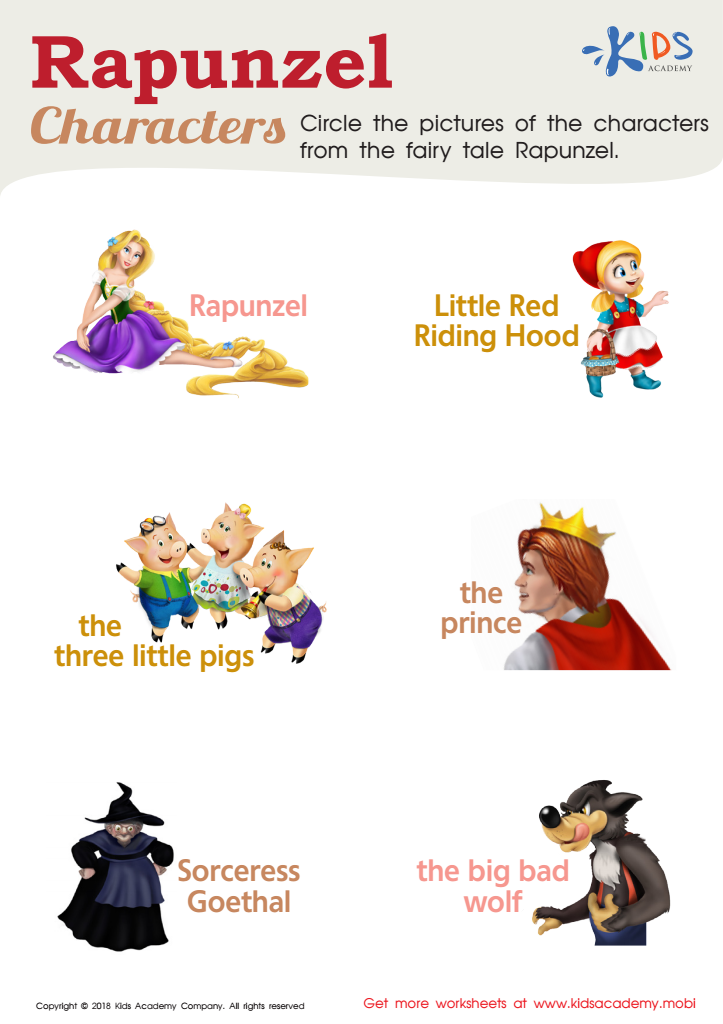
Rapunzel Characters Worksheet








Parents and teachers should prioritize analytical skills development in reading fiction for children aged 3-4 because these skills lay the foundation for critical thinking and problem-solving in later years. During this early stage of cognitive growth, children are naturally curious and eager to explore the world around them through stories. Engaging them in fiction allows them to navigate different perspectives, understand characters' motivations, and predict outcomes, all of which are key components of analytical thinking.
Moreover, fiction helps to enhance vocabulary and language development, enabling children to articulate thoughts and questions more clearly. By encouraging children to discuss the story, ask questions, and make connections to their lives, adults can foster an environment that promotes deeper understanding and cognitive engagement.
Additionally, nurturing analytical skills through reading cultivates empathy and social awareness, as children learn to interpret emotions and actions of characters in narrative contexts. This holistic development not only prepares them for academic success but also equips them with essential life skills they will use throughout their lives. Ultimately, prioritizing analytical skills in early reading experiences supports not just literacy but the overall development of confident, thoughtful, and inquisitive learners.







