Reading comprehension Normal Reading Fiction Worksheets for Ages 3-4 - Page 2
27 filtered results
-
From - To
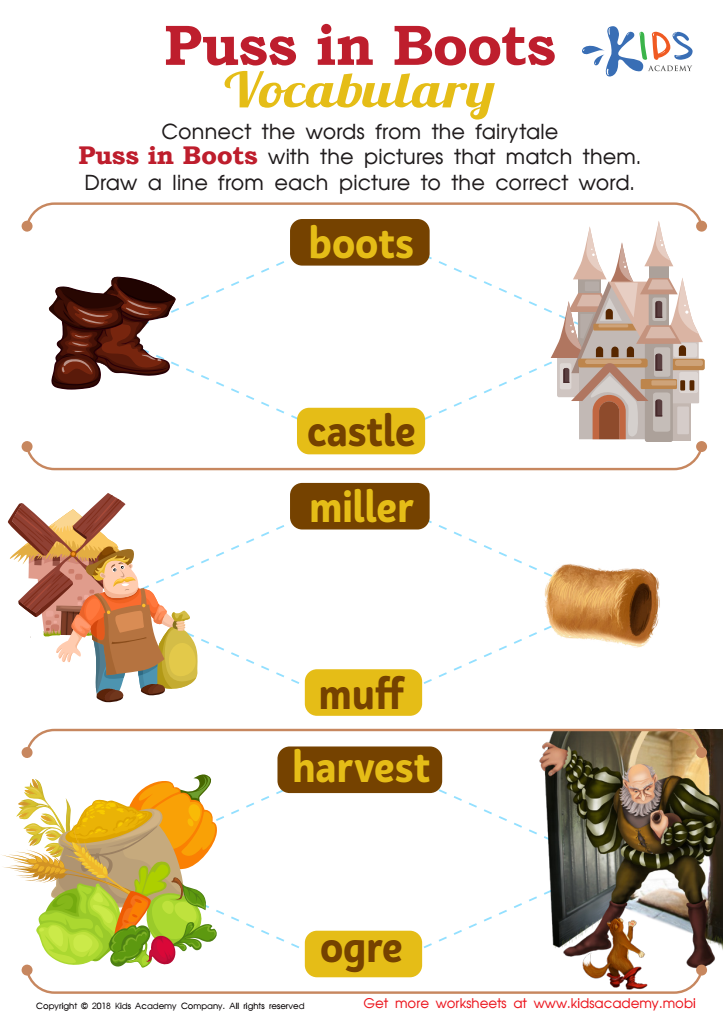
Puss in Boots Vocabulary Worksheet
 Assign to My Students
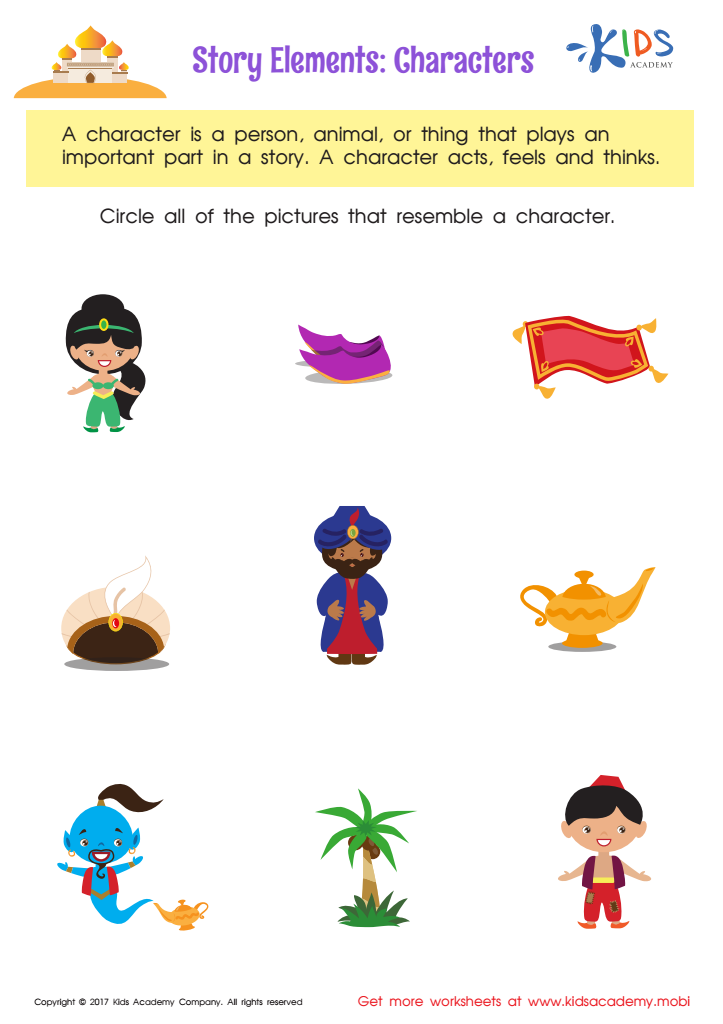
Story Elements Printable
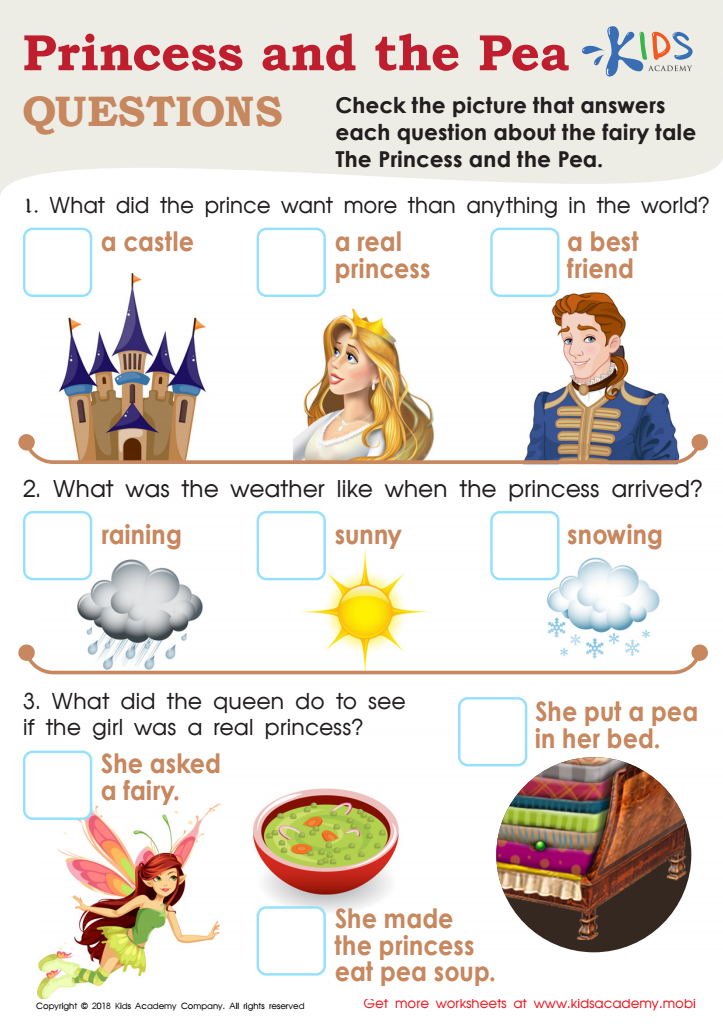
Princess and the Pea Questions Worksheet







.jpg)
Reading comprehension in young children, particularly those aged 3-4, is critical for several reasons. At this early age, children are not only grasping the foundations of language but are also developing cognitive and social skills that will last a lifetime. Engaging with fiction during these formative years cultivates imagination and creativity, allowing children to explore new worlds and ideas while enhancing their ability to empathize with characters and understand different perspectives.
When parents and teachers prioritize reading comprehension in normal reading fiction, they encourage children to think critically about stories. This fosters dialogue and discussion, helping them articulate their thoughts and make connections to their own experiences. Improved comprehension skills also serve as a springboard for vocabulary development, setting the stage for future academic success.
Moreover, the act of sharing stories strengthens the bond between parents, teachers, and children, fostering a love for reading that can positively influence academic achievement later on. All these benefits underscore the importance of prioritizing both reading and comprehension, ensuring that children are equipped with the tools they need for lifelong learning and enjoyment of literature. Thus, investing in children’s reading at this stage is a foundational step towards their future educational journeys.







