Story sequencing Normal Reading Fiction Worksheets for Ages 3-4
6 filtered results
-
From - To
Discover our engaging Story Sequencing Normal Reading Fiction Worksheets designed specifically for children ages 3-4. These worksheets help young learners enhance their reading comprehension and logical thinking skills by arranging story elements in the correct order. With vibrant illustrations and simple storylines, kids will enjoy interacting with familiar characters while developing essential sequencing abilities. Ideal for homeschooling or classroom settings, our printable resources support early literacy development through fun and interactive learning experiences. Get your FREE worksheets today and watch your little one's confidence and creativity flourish as they embark on their reading journey!
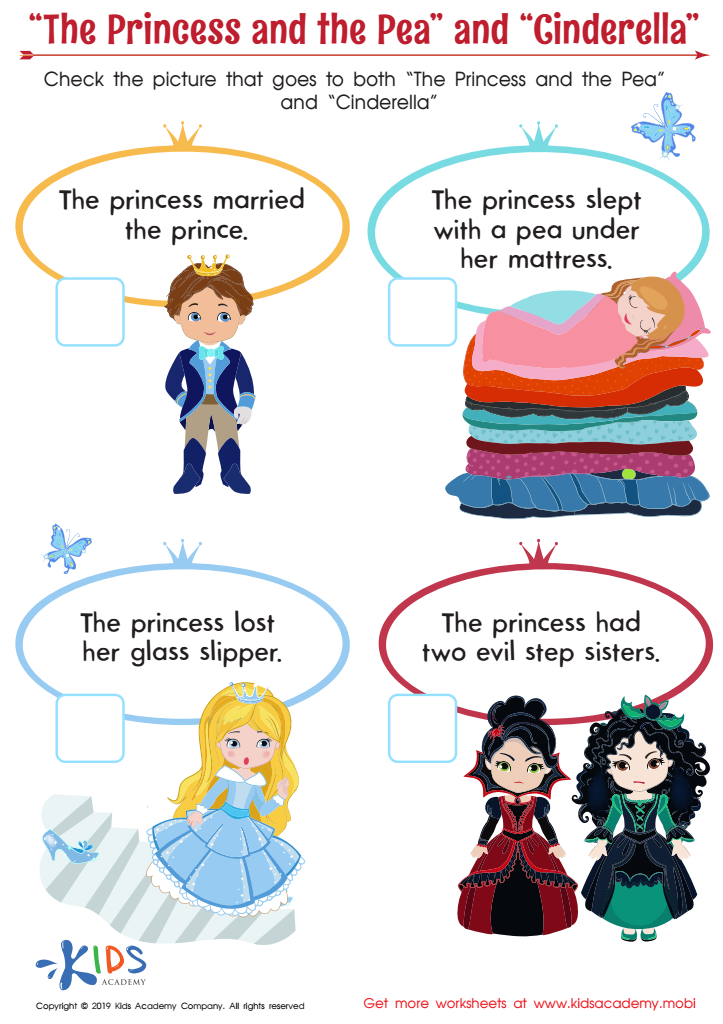
“The Princess and the Pea” and “Cinderella” Worksheet
 Assign to My Students
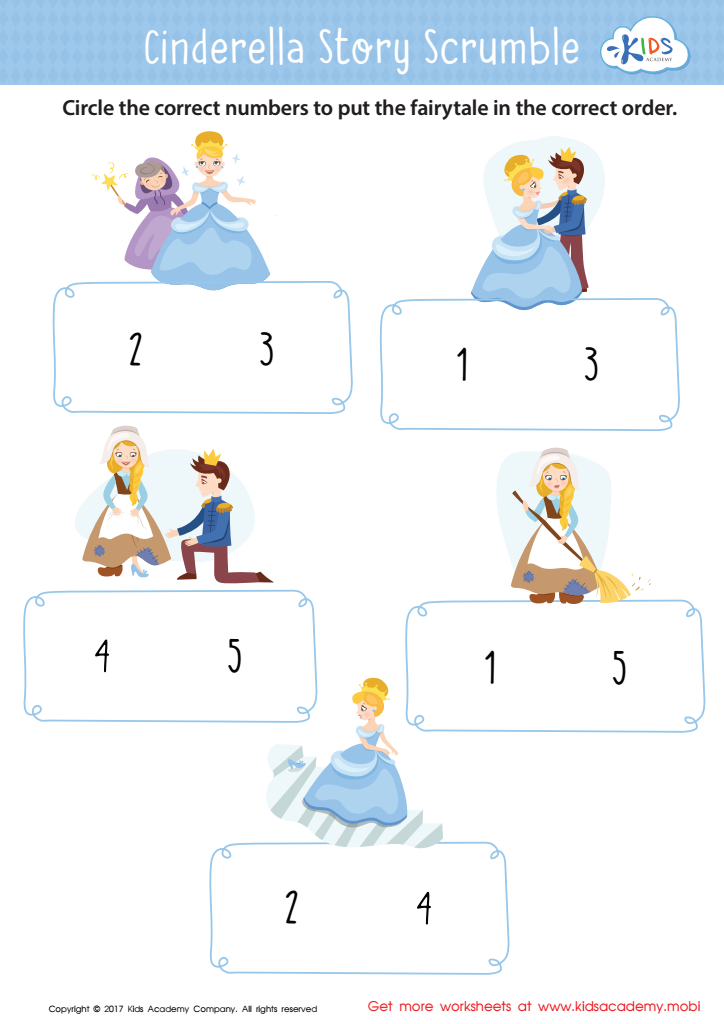
Cinderella Story Sequencing Worksheet
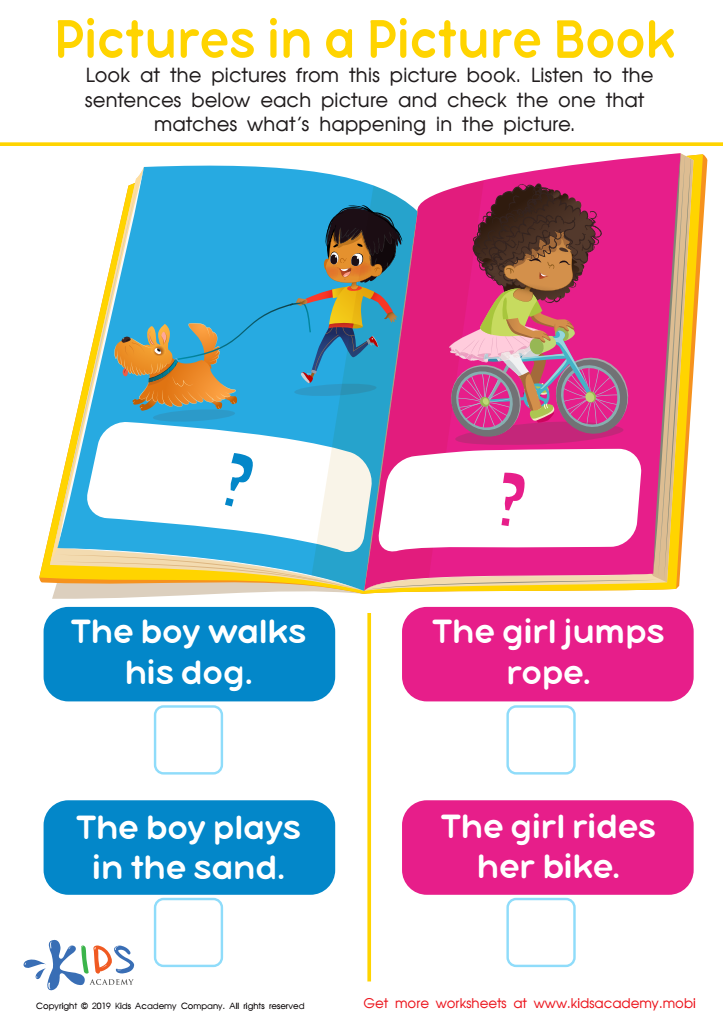
Picture in Books Worksheet
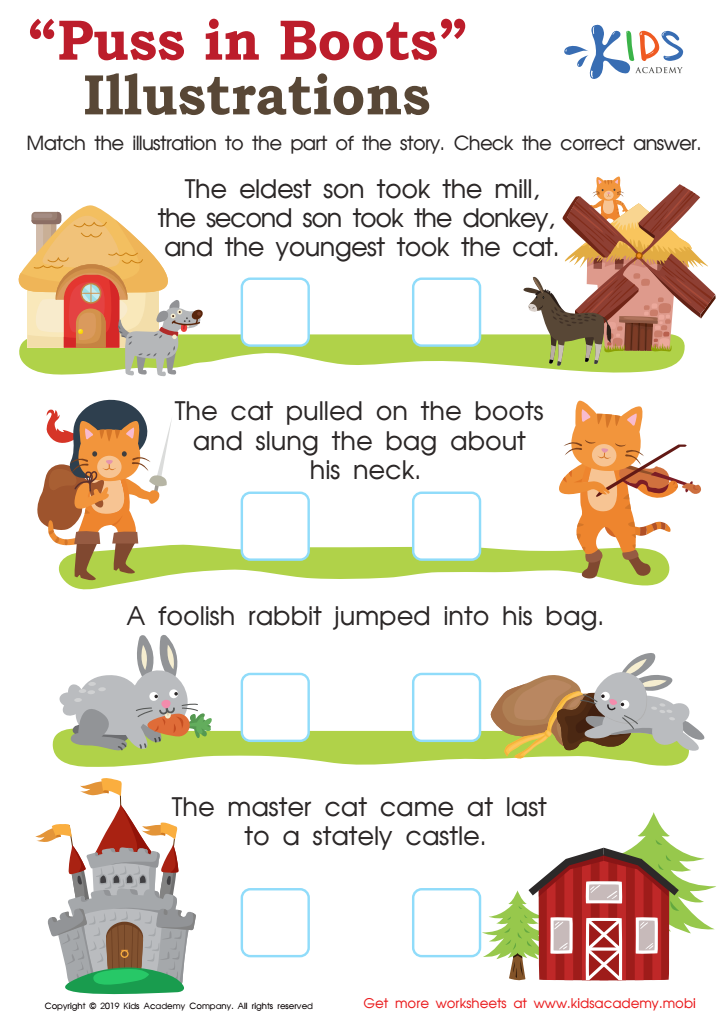
Puss in Boots Illustrations Worksheet
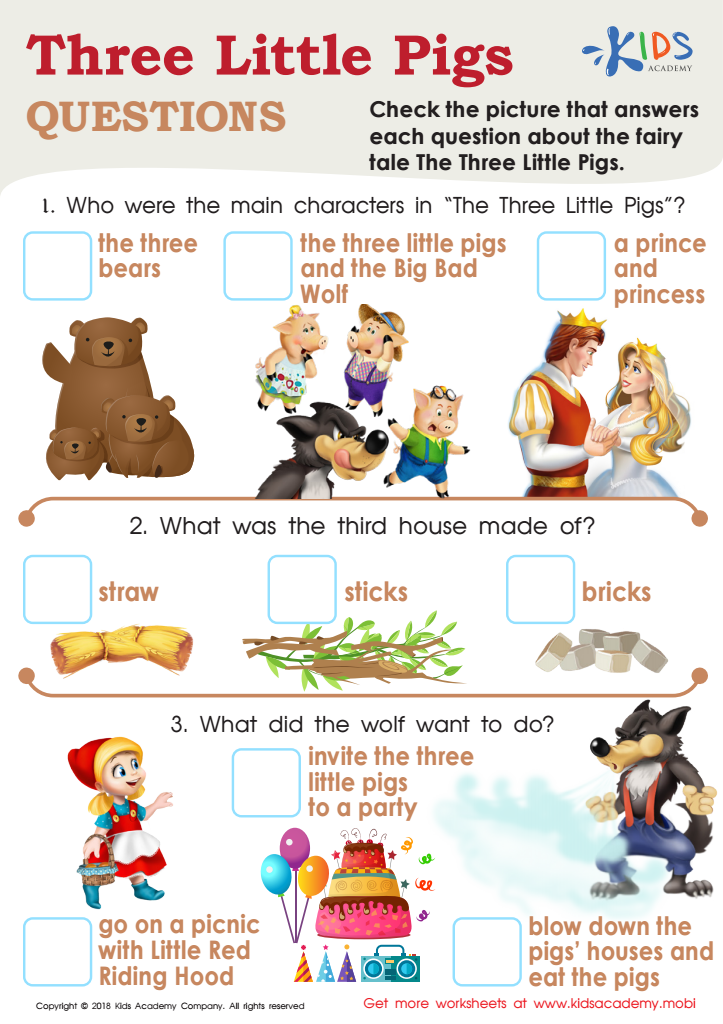
Three Little Pigs Questions Worksheet
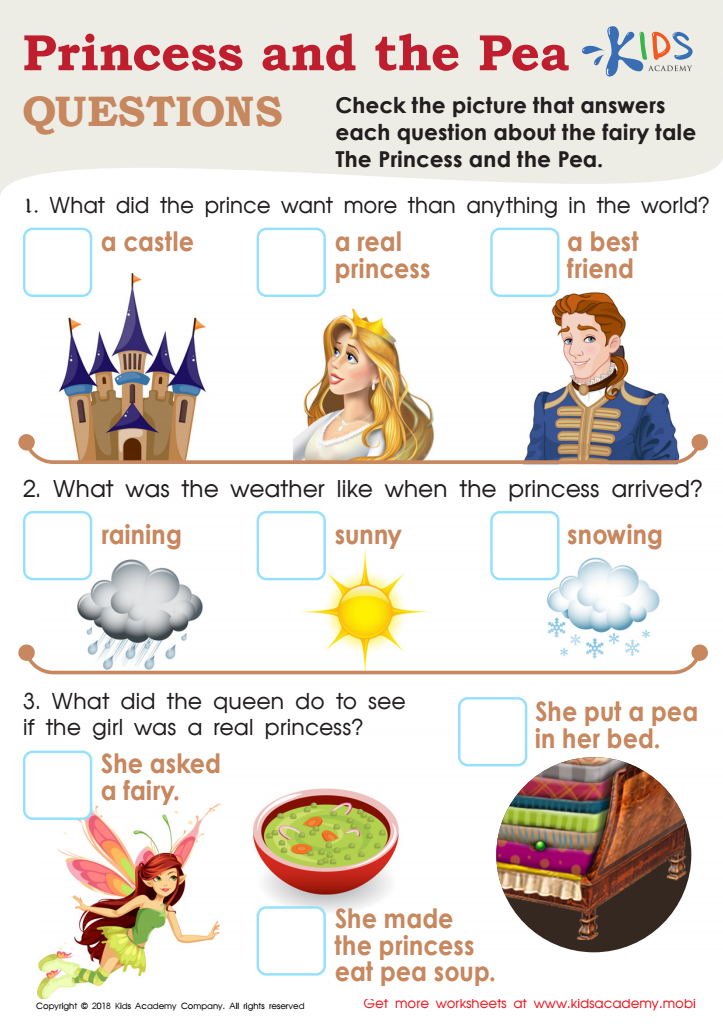
Princess and the Pea Questions Worksheet


.jpg)




Story sequencing is a fundamental skill that supports early literacy development in young children, particularly for ages 3-4. This skill involves understanding and arranging the events of a story in the order they occur, which enhances comprehensibility and cognitive organization. Parents and teachers should prioritize story sequencing for several reasons.
First, it fosters critical thinking. As children learn to identify the beginning, middle, and end of a story, they are encouraged to think analytically about plot structure and character actions. This analytic approach sets the foundation for later reading comprehension.
Second, story sequencing nurtures language development. Discussing the sequence encourages children to engage in conversations, expand their vocabulary, and practice narrative skills. Speaking about the events also enhances their storytelling abilities.
Additionally, mastering story sequencing promotes memory skills. Remembering the order of events helps kids develop their recall abilities and improves their overall cognitive function.
Finally, engaging with stories promotes a love for reading. When children grasp the flow of narratives, they become more excited about books, creating lifelong readers. Thus, by nurturing this skill, parents and teachers not only boost early literacy but also foster a broader love for learning.







