
Vocabulary enhancement Normal Animals Worksheets for Ages 3-4
3 filtered results
Difficulty Level
Grade
Age
-
From - To
Subject
Activity
Standards
Introducing our "Vocabulary Enhancement Normal Animals Worksheets for Ages 3-4"! Specially designed for curious preschoolers, these engaging worksheets help young learners identify and describe common animals. Boost your child's early vocabulary skills as they discover fluffy bunnies, playful puppies, and colorful fish. With interactive activities such as coloring, matching, and tracing, these worksheets make learning fun and effective. Perfect for home or classroom use, they nurture language development and early scientific curiosity. Spark your child's language journey with our delightful animal-themed vocab worksheets! Download and print to start the adventure today.
Favorites
With answer key
Interactive
Animal Homes Worksheet
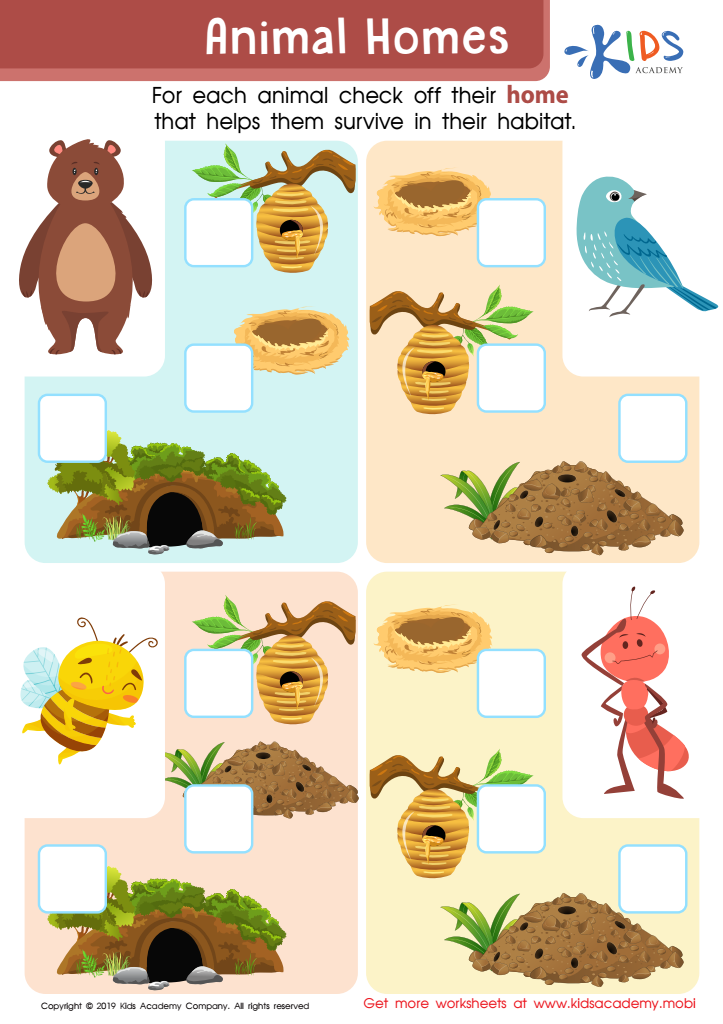
It's your duty as a teacher to protect, direct and guide your students while they're at school. Ask your kindergartners what a home means and why it's special. Use this worksheet to teach them that both people and animals have homes. Show them the pictures, and have them check off which is the home of each animal.
 Assign to My Students
Animal Homes Worksheet
Worksheet
Animal Homes Worksheet
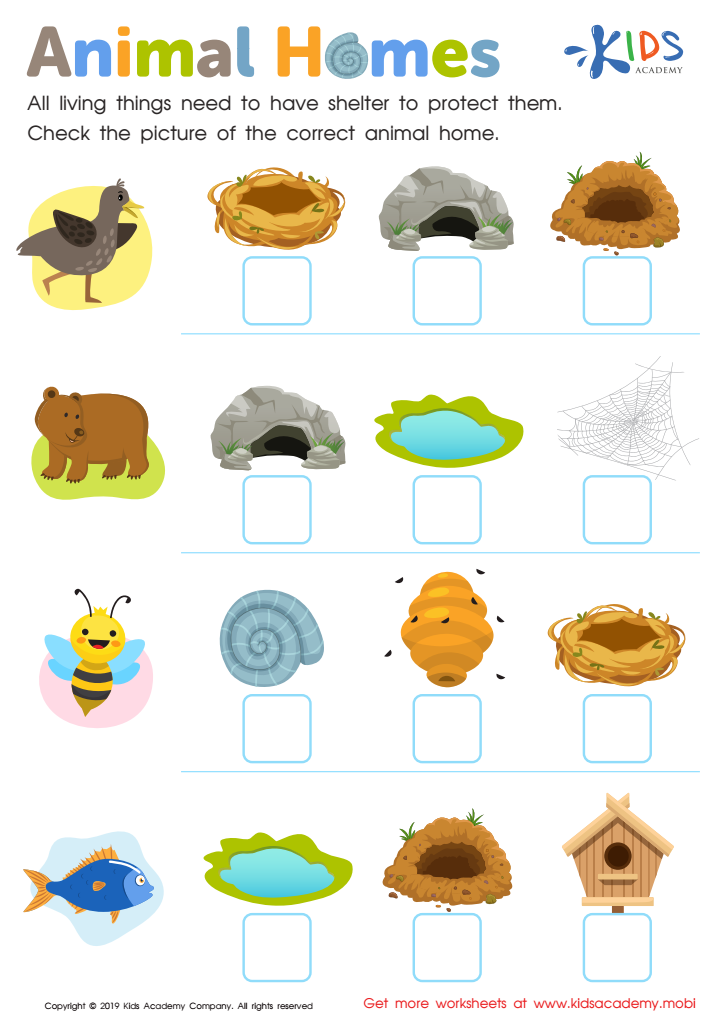
Students have homes where they can do things they love, sleep and stay safe from bad weather. Check the worksheet for animals and their shelters. Ask your kids to identify each and match the animal home to the picture. (80 words)
Animal Homes Worksheet
Worksheet
Join Kids Academy for Free
Who is primarily going to use this learning content?








For children aged 3-4, vocabulary enhancement is crucial as it lays the foundation for their overall language development and future learning achievements. During these formative years, children’s brains are incredibly receptive to learning new words, and introducing them to a rich vocabulary can substantially improve their communication skills and cognitive abilities.
Focusing on "normal animals" (common animals one might see regularly, either in real life or in storybooks) as a theme for vocabulary enhancement is particularly effective. These animals are often subjects of picture books, cartoons, and everyday conversations, making them highly relatable for young children. By learning the names and characteristics of these animals, children not only expand their vocabulary but also sharpen their understanding of the world around them.
Engaging with animal-themed vocabulary can also facilitate early reading skills. Familiar contexts make it easier for children to connect words with meanings, improving both comprehension and memory retention. Parents and teachers can use activities like storytelling, picture cards, songs, and interactive play to make learning fun and engaging.
Additionally, a broad vocabulary at an early age has long-term benefits, including better academic performance, enhanced critical thinking, and stronger social interaction skills. Therefore, investing time in vocabulary enhancement specific to relatable themes like normal animals not only boosts language skills but also supports holistic developmental growth.








