Logical Reasoning Normal Science Worksheets for Ages 3-4
4 filtered results
-
From - To
Discover our engaging Logical Reasoning Normal Science Worksheets for ages 3-4, designed to spark curiosity and develop critical thinking skills in young learners. These fun, interactive worksheets encourage preschoolers to explore concepts through puzzles, matching activities, and problem-solving tasks tailored to their developmental stage. Each worksheet promotes logical reasoning while introducing foundational scientific concepts, ensuring your child builds essential skills in a playful way. Perfect for teachers and parents alike, our worksheets are easy to use and align with early childhood education standards. Start nurturing your child's curiosity and reasoning abilities today with our captivating science worksheets!
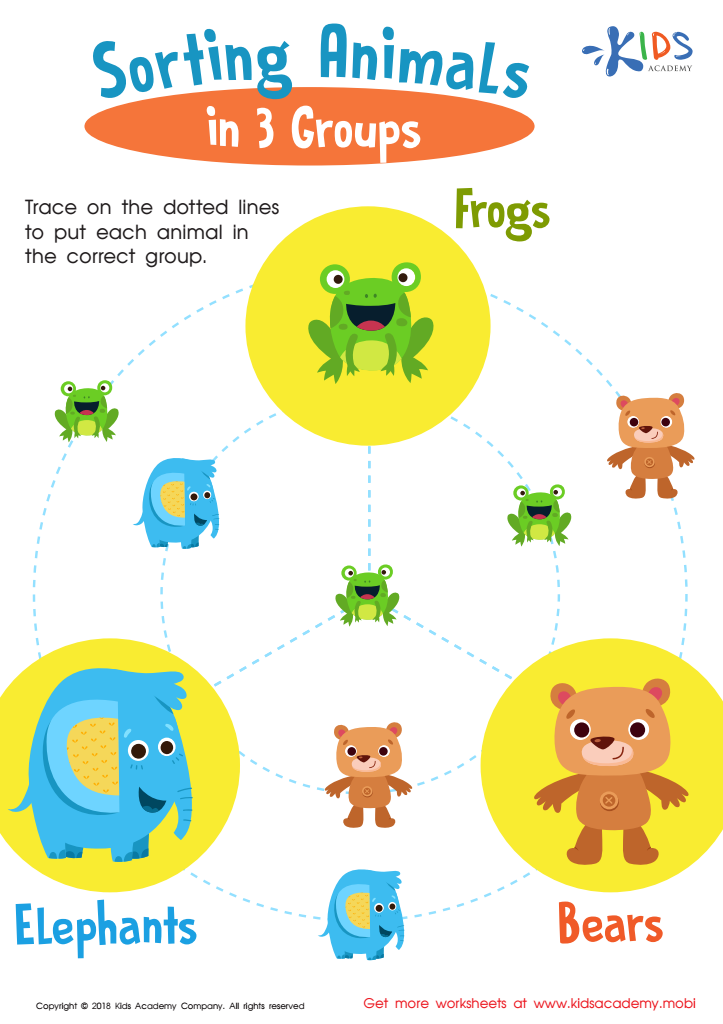
Sorting Animals in 3 Groups Worksheet
 Assign to My Students
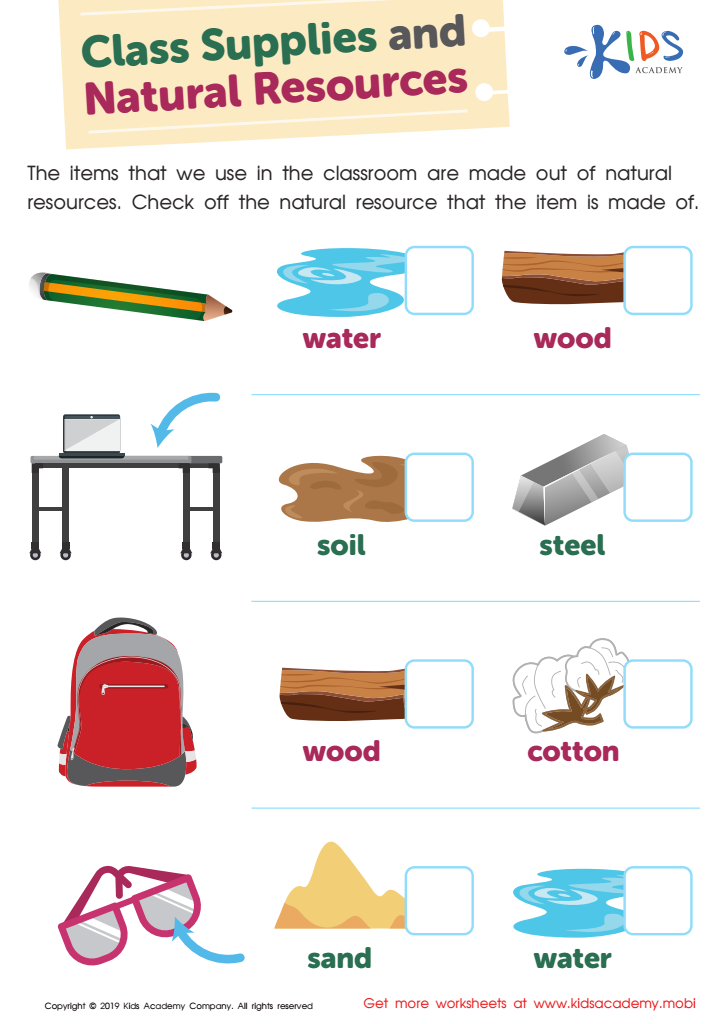
Class Supplies and Natural Resources Worksheet
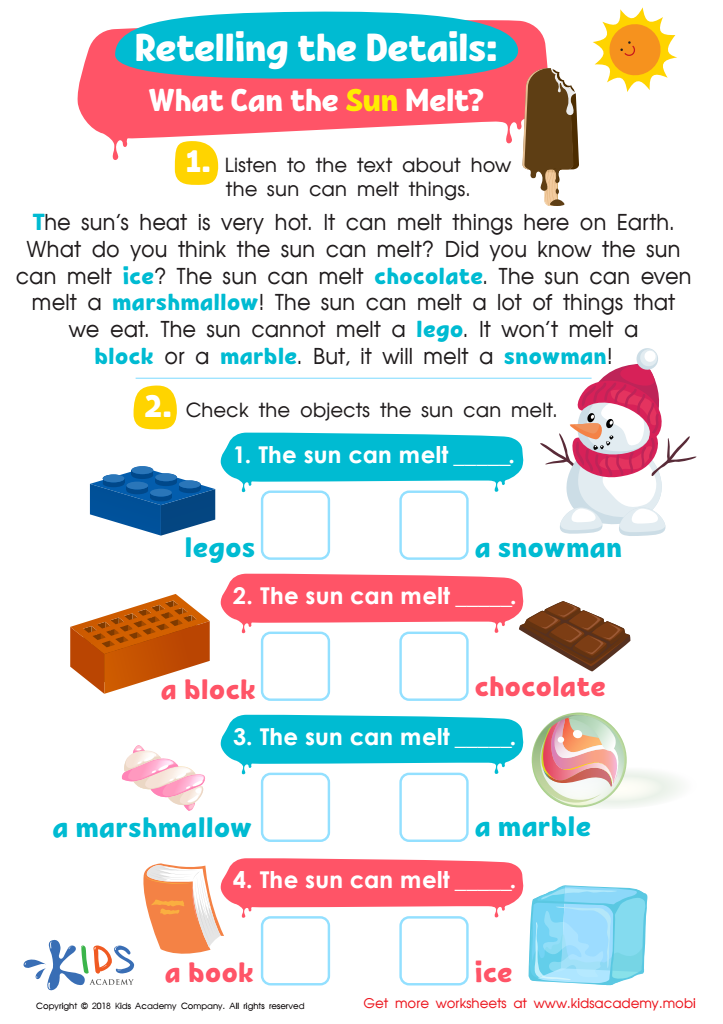
Retelling the Details: What Can the Sun Melt? Worksheet
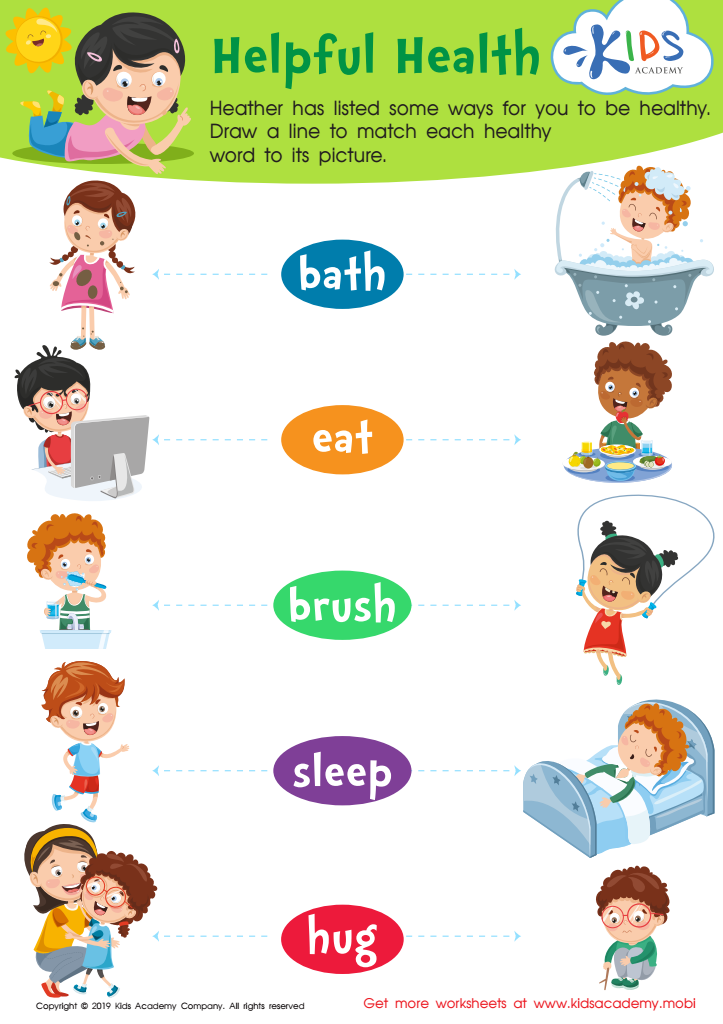
Helpful Health Worksheet








Logical reasoning and basic scientific principles are pivotal for children ages 3-4, as they lay the groundwork for critical thinking and problem-solving skills. At this age, children are naturally curious about the world around them, making it an ideal time to nurture their inquisitiveness through normal science activities that incorporate logical reasoning.
Parents and teachers should care about fostering these skills because they help children make sense of their experiences and engage in exploration. Engaging toddlers in activities such as sorting objects, identifying patterns, or simple experiments not only enhances their cognitive development but also encourages collaboration, communication, and independent thinking.
Additionally, these skills have long-term benefits. Early logical reasoning can boost academic performance in later years, as children learn to analyze information, draw conclusions, and apply knowledge to real-world situations. This foundation is integral for success in science and mathematics as they progress through school.
Moreover, nurturing logical reasoning through science promotes a love for learning and exploration, creating lifelong learners who are competent in navigating complexities of the world. In parallel, it enhances emotional intelligence, as children learn to make informed decisions and understand cause-and-effect relationships. Ultimately, investing in these skills at this developmental stage enriches the overall growth of young children.







