Understanding directions Normal Science Worksheets for Ages 3-4
3 filtered results
-
From - To
Nurture your child's cognitive development with our "Understanding Directions Normal Science Worksheets for Ages 3-4." Designed specifically for young learners, these enchanting worksheets enhance directional skills through engaging activities. Children will explore fundamental concepts such as left, right, up, and down, all while fostering their observational abilities and problem-solving skills. Ideal for at-home learning or classroom environments, these colorful sheets make mastering directions fun and interactive. Equip your little explorers with the essential tools they need for future learning adventures. Give your child a head start with captivating, curriculum-aligned activities tailored to their developmental needs.
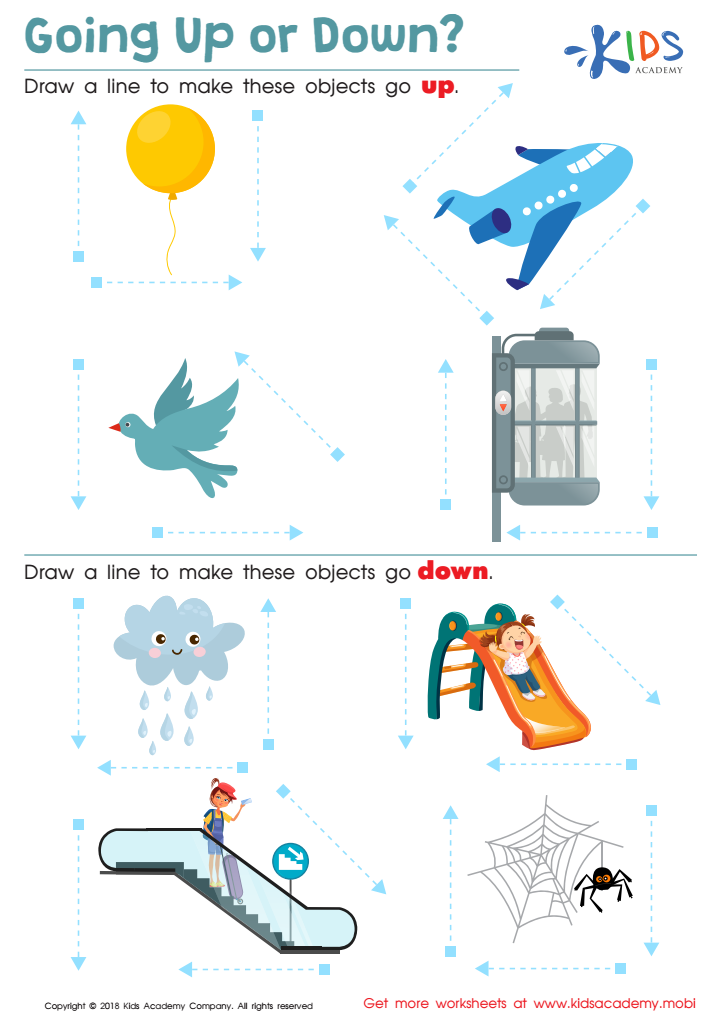
Going up or Down? Worksheet
 Assign to My Students
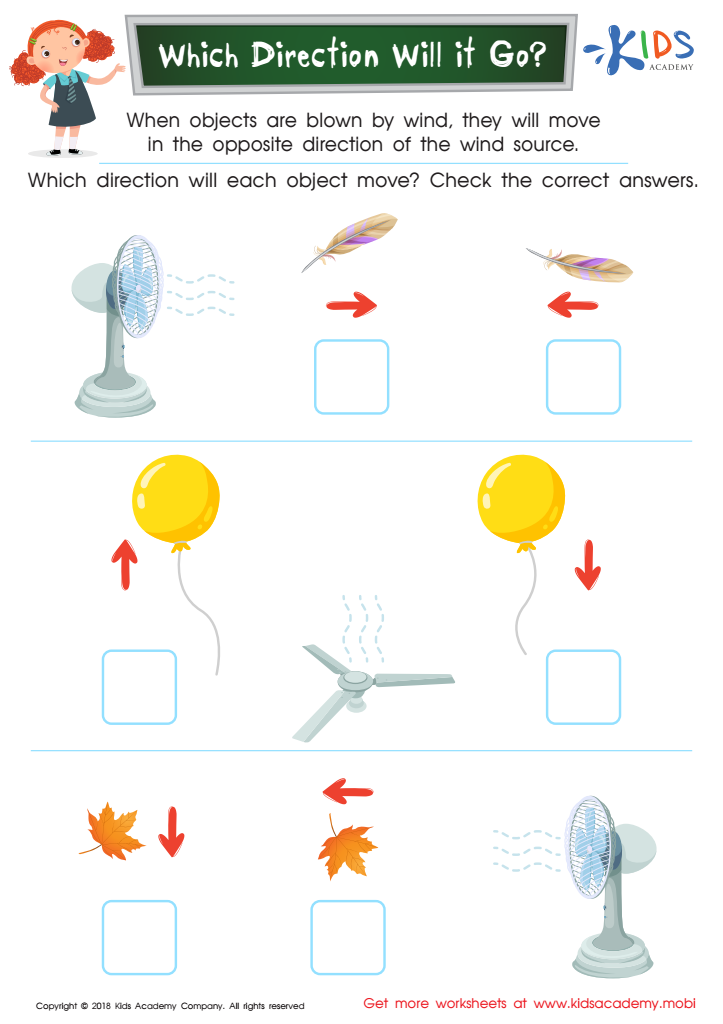
Which Direction Will it Go? Worksheet
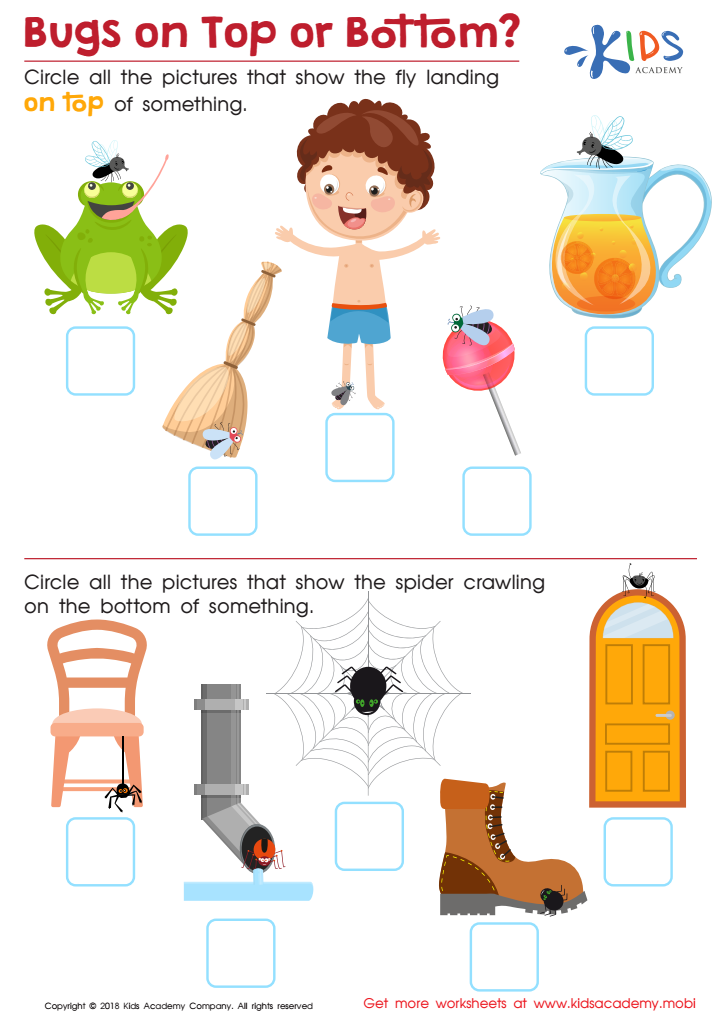
Bugs on Top or Bottom? Worksheet







Helping children aged 3-4 understand directions is crucial for both their safety and academic development. At this formative age, kids are naturally curious and constantly exploring their environment. Physical safety becomes a primary concern: knowing simple directional cues like "stop," "come here," or "wait" can protect them from dangers such as traffic or unsafe play areas.
In addition to safety, understanding directions bolsters cognitive development. Children begin to grasp the structure and pattern of language, which informs their ability to follow multi-step instructions—a skill they'll use throughout their educational journey and daily life. For instance, activities like "Simon Says" ingrain the significance of sequence and listening comprehension. Following directions also enhances focus and attention span, foundational skills essential for later learning topics like math, science, and reading comprehension.
Social skills are another key area impacted. Kids who can follow directions can better participate in group activities, fostering interactions with peers and learning to collaborate or share. This competency builds confidence and helps in forming friendships. Therefore, parents and teachers must prioritize teaching and reinforcing these skills through consistent, age-appropriate activities. When kids understand and follow directions well, they lay down a robust foundation for a lifetime of learning and safety.







