
Vocabulary development Normal Science Worksheets for Ages 3-4
5 filtered results
Difficulty Level
Grade
Age
-
From - To
Subject
Activity
Standards
Enhance your child's vocabulary development with our engaging Science worksheets for ages 3-4! Designed to captivate young learners, these materials help build essential language skills through fun and interactive activities. Each worksheet features vibrant illustrations and age-appropriate topics, encouraging your child to explore scientific concepts while expanding their vocabulary. Activities include word matching, fill-in-the-blanks, and visual aids that promote understanding and retention. Ideal for parents, teachers, or homeschoolers, our worksheets provide a solid foundation for early literacy and language development. Unlock the joy of learning and foster a love for science in your little ones with these thoughtfully crafted worksheets!
Favorites
With answer key
Interactive
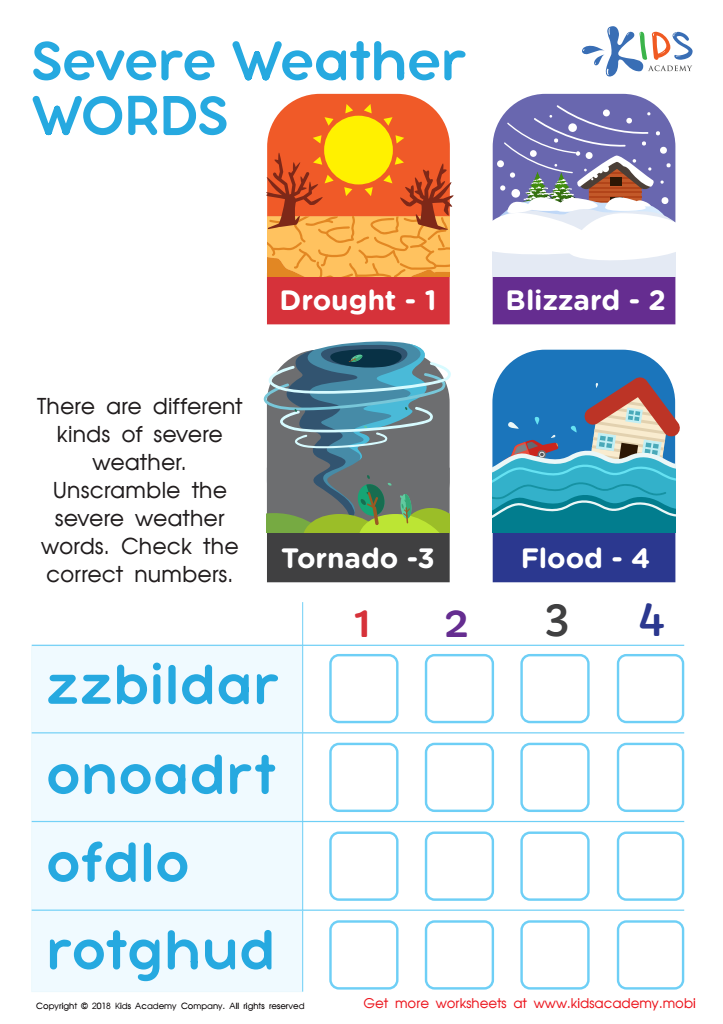
Severe Weather Words Worksheet
Help your child learn about severe weather with this PDF worksheet! Review each image's term and discuss, then have kids unscramble the words. Match the picture number to the term by selecting the correct box. Let your kids work through it and become weather-savvy!
 Assign to My Students
Severe Weather Words Worksheet
Worksheet
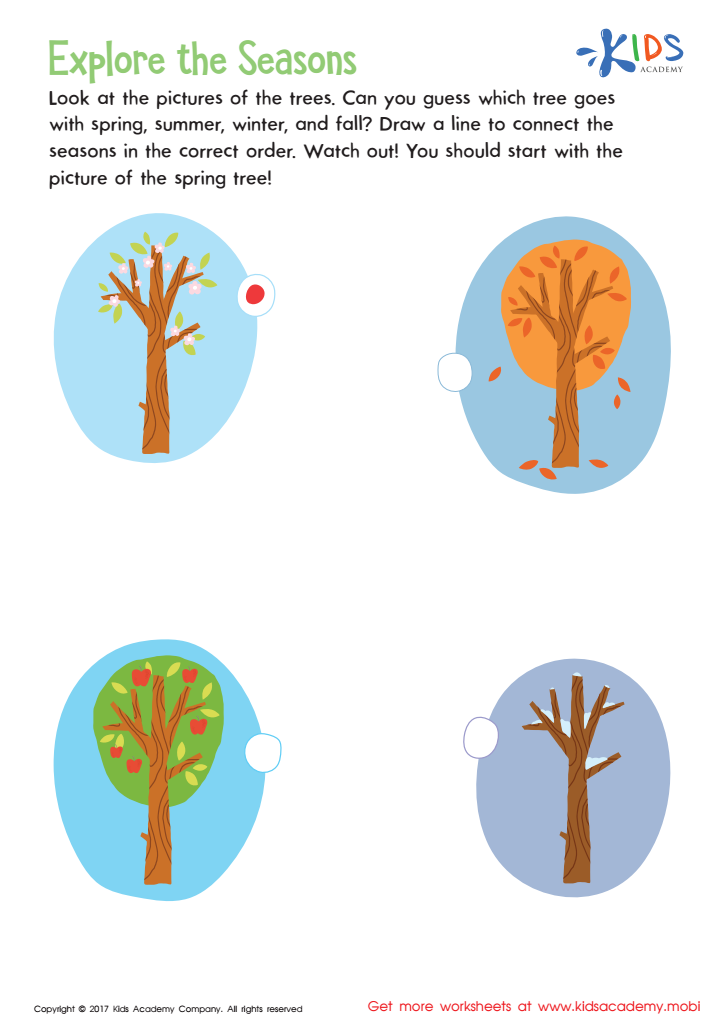
Explore the Seasons Worksheet
Introduce kids to the abstract concept of time with the explore the seasons printable. It helps build logical reasoning and problem-solving skills while teaching how trees change with the weather. Plus, it lets kids make real-life connections to what they're learning. So have them recall the seasons that have passed this year and prepare to be amazed!
Explore the Seasons Worksheet
Worksheet
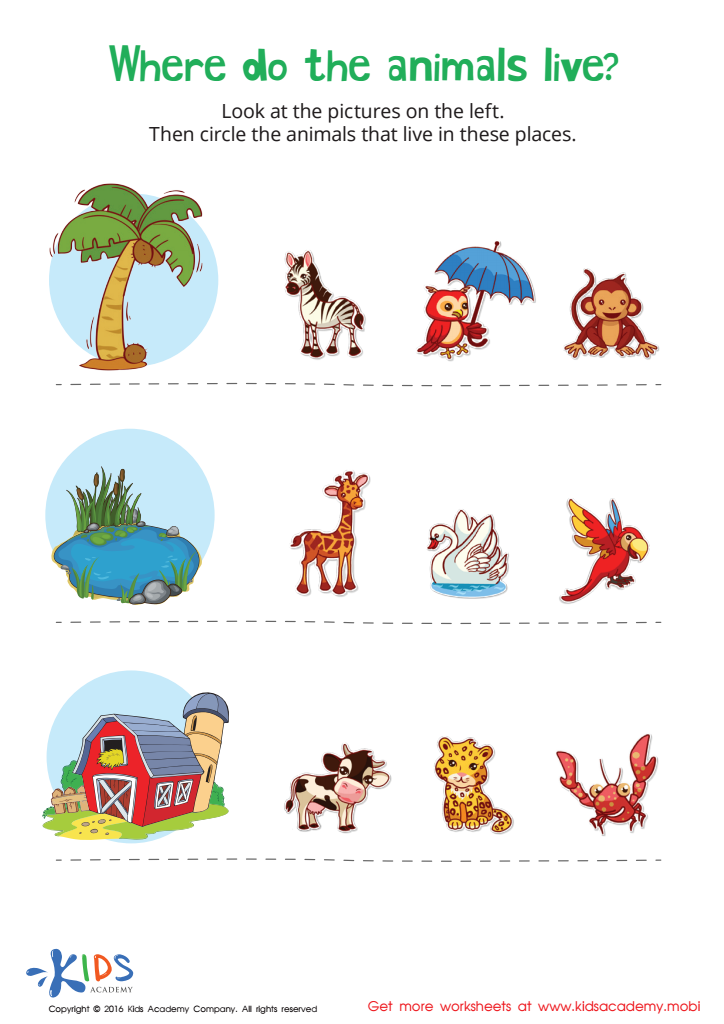
Where Animals Live Worksheet
Teaching early reading and math skills is important, but don't forget about science. With the Where Animals Live PDF worksheet, kids can identify their favorite animals and the environments they live in. Ask them what type of environment the animals like and introduce them to geography. It's great for logical reasoning and classification skills. Your kid will practice with their favorite animals and love the trip to the zoo afterwards!
Where Animals Live Worksheet
Worksheet
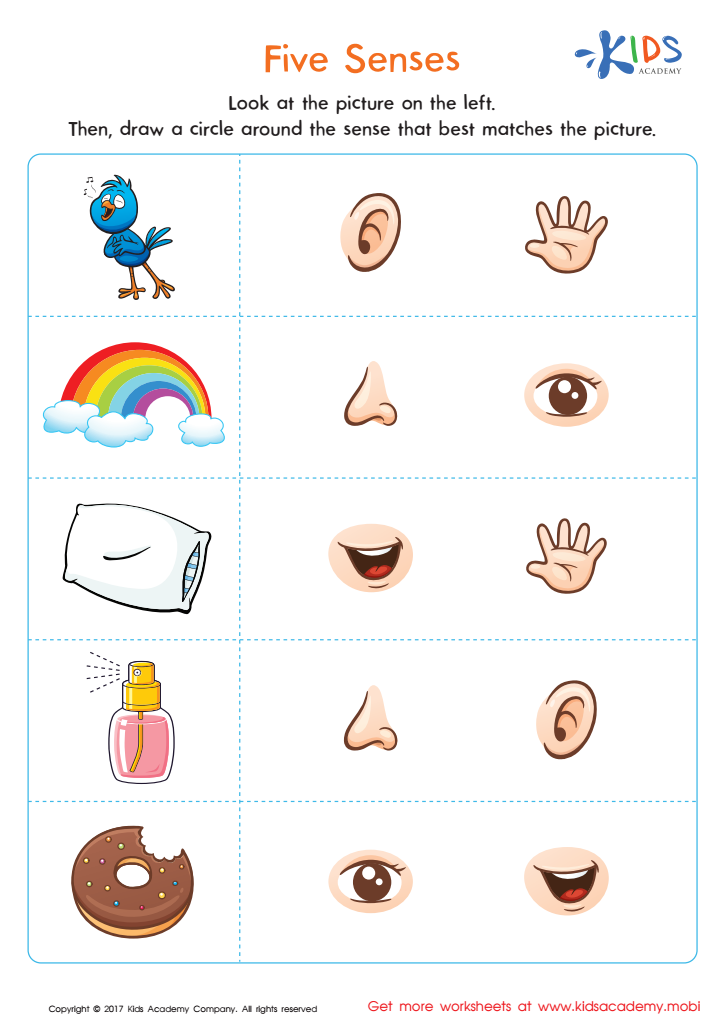
Five Senses Printable
For an easy way to jumpstart your child's critical thinking and introduce the five senses, print our free worksheets! These are great for reviewing each sense and practicing critical thinking skills. Work with your child and discuss each image. After completing the worksheet, find objects around the house so they can quiz themselves!
Five Senses Printable
Worksheet
Join Kids Academy for Free
Who is primarily going to use this learning content?








Vocabulary development in early childhood, particularly for ages 3-4, is crucial for children's overall cognitive and academic growth. During this stage, children are rapidly expanding their language skills, and a robust vocabulary lays the foundation for effective communication, comprehension, and critical thinking. By engaging with varied vocabulary, children can articulate their thoughts and feelings more clearly, facilitating better interactions with peers and adults.
For parents and teachers, fostering vocabulary development enhances early literacy skills, as a rich vocabulary correlates strongly with reading proficiency later on. Children with extensive vocabularies are more adept at understanding texts and expressing themselves in writing. Moreover, vocabulary development is linked to social skills; children who can communicate effectively are often better able to navigate social situations, build friendships, and resolve conflicts.
In addition, investing time in vocabulary growth during these formative years can help reduce later learning challenges. Including science-related vocabulary in discussions—like words related to nature, the environment, and basic scientific concepts—can stimulate curiosity and encourage exploration. This enriched learning environment helps cultivate a love for knowledge and inquiry, ultimately preparing young children for success in school and beyond. Therefore, supporting vocabulary development is essential for holistic child development.







