Spelling Skills Normal Writing Worksheets for Ages 3-4
5 filtered results
-
From - To
Unlock the magic of letters with our "Spelling Skills Normal Writing Worksheets for Ages 3-4." Designed to nurture young minds, these printables offer a playful and engaging way for children to explore the basics of spelling. With vibrant illustrations and age-appropriate activities, kids will develop essential writing and literacy skills while having fun. Our worksheets facilitate letter recognition, phonetics, and basic word formation, ensuring a strong foundation for future learning. Perfect for parents and educators, these resources make early education joyful and effective. Visit Kids Academy to download and start nurturing your child's spelling abilities today!
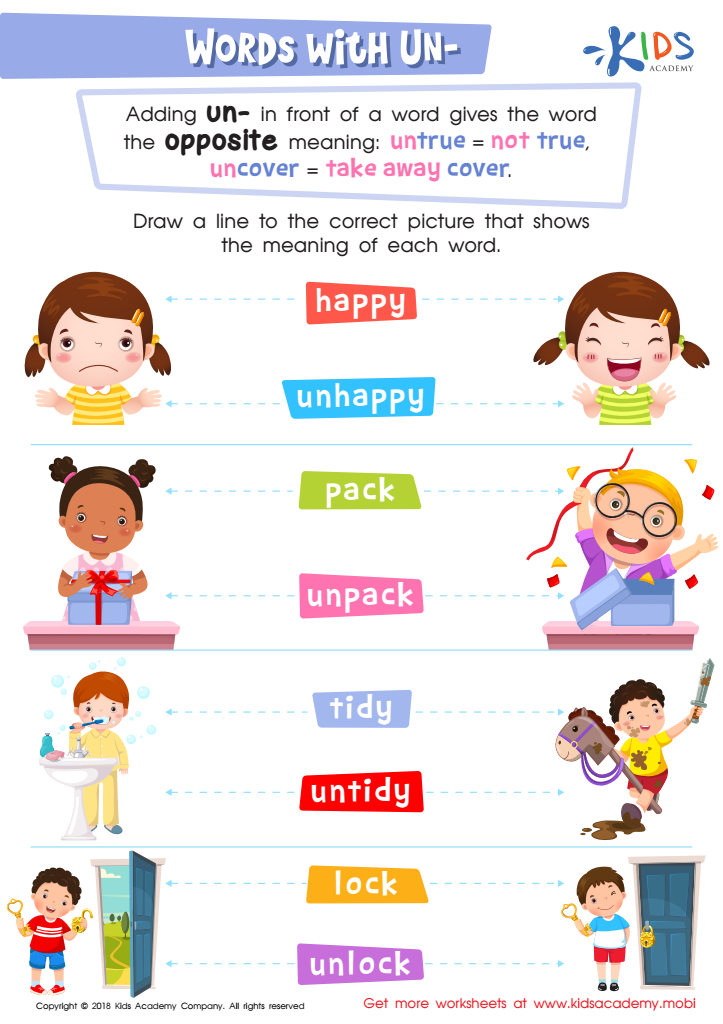
Words with Un– Worksheet
 Assign to My Students
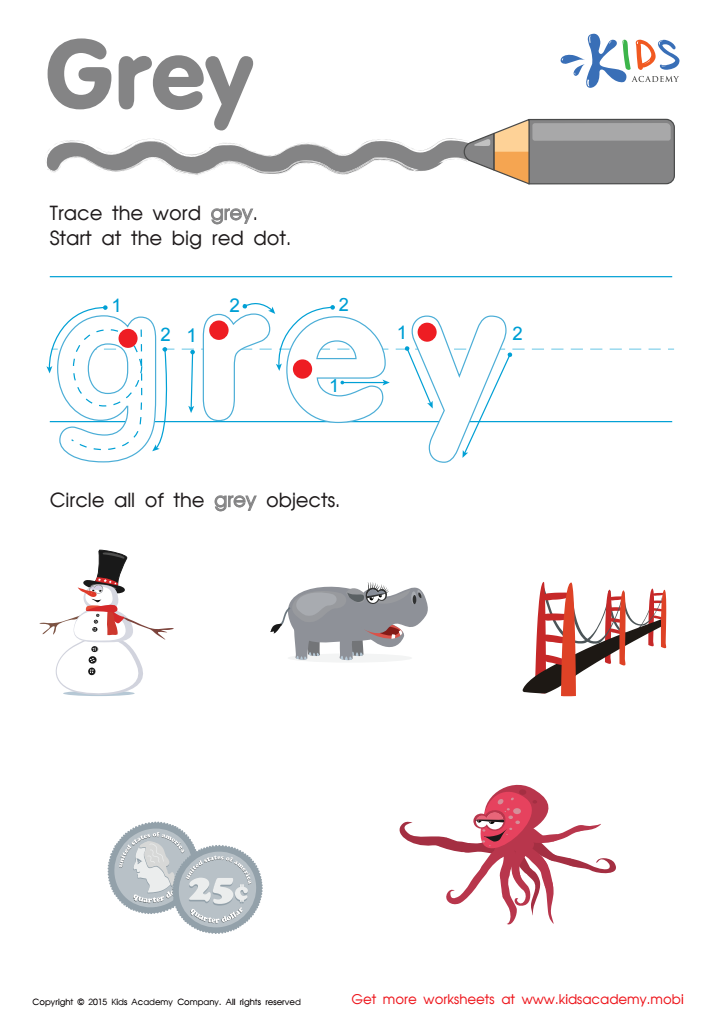
Grey Tracing Color Words Worksheet
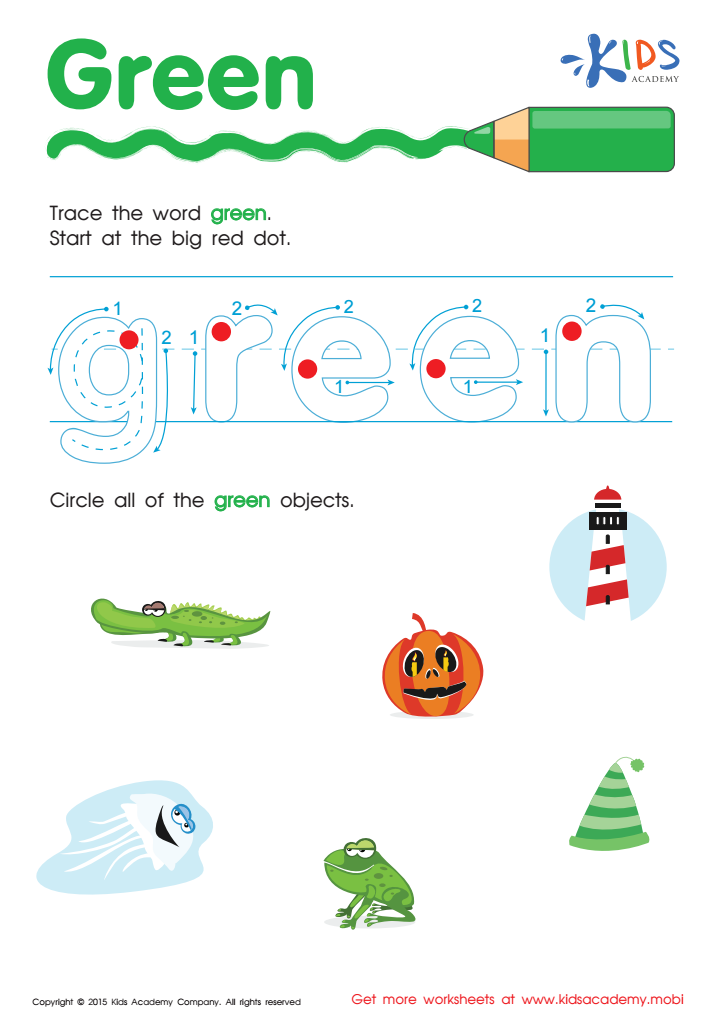
Green Tracing Color Words Worksheet
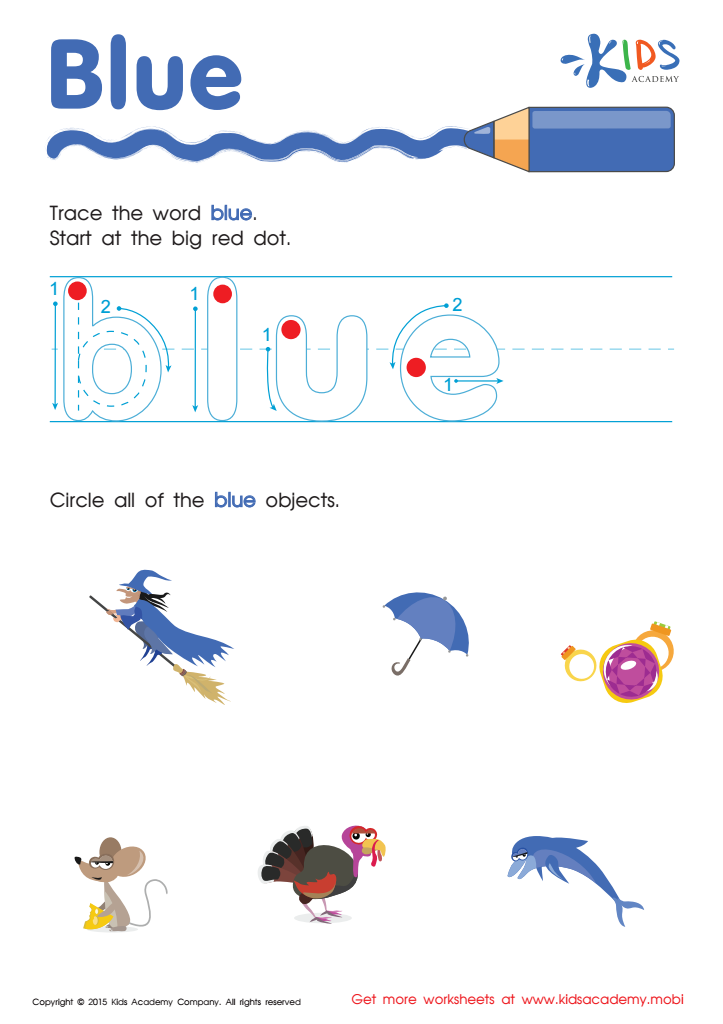
Blue Tracing Color Words Printable
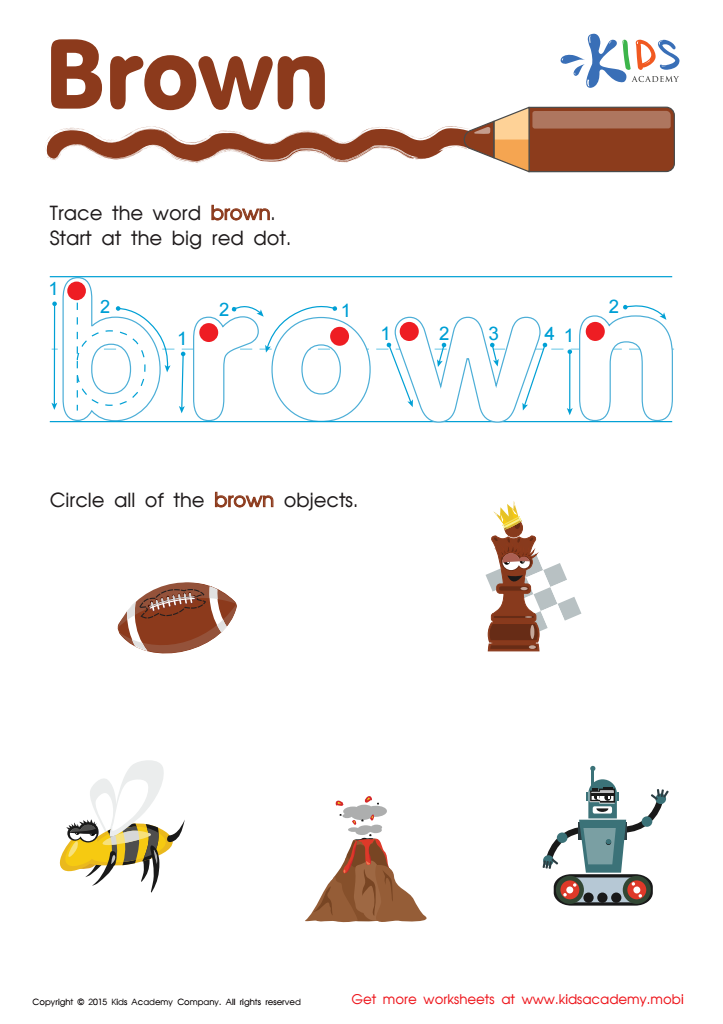
Brown Tracing Color Words Worksheet







Teaching spelling skills to children aged 3-4 sets a strong foundation for their future literacy and communication abilities. At this critical developmental stage, young children are extraordinarily receptive to learning new concepts, and introducing them to spelling can have several long-term benefits.
First and foremost, early spelling instruction helps children understand the structure and patterns of language. Recognizing and writing letters, and linking these letters to their corresponding sounds, lays the groundwork for reading and phonetic competency. These are essential skills that facilitate smoother transitions to more complicated literacy tasks as children grow older.
Secondly, spelling activities can improve fine motor skills. Writing letters and words require precision and coordination, aiding the development of hand-eye coordination and dexterity. This not only benefits their writing abilities but can also contribute positively to other tasks requiring fine motor skills.
Moreover, early exposure to spelling fosters cognitive development. It challenges young minds to remember letter shapes, sounds, and word structures. These activities enhance memory, attention span, and problem-solving skills, which are crucial for overall intellectual growth.
Finally, being able to spell basic words boosts a child’s confidence and encourages a positive attitude towards learning. Positive early experiences with spelling and writing can cultivate a lifelong love for reading and education, setting children up for academic success.