Understanding patterns Normal Worksheets for Ages 3-5
3 filtered results
-
From - To
Explore our "Understanding Patterns Normal Worksheets" designed specifically for children aged 3-5! This engaging resource helps young learners recognize and create patterns using colorful visuals and fun exercises. Each worksheet fosters essential cognitive skills, promoting critical thinking and problem-solving abilities. Kids will delight in identifying shapes, colors, and sequences, all while enjoying interactive learning. Our user-friendly format makes it easy for parents and teachers to integrate these activities into daily lessons. Support your child's early mathematical understanding with these vibrant and stimulating worksheets, guiding them toward a foundational appreciation of patterns in the world around them. Download and start today!
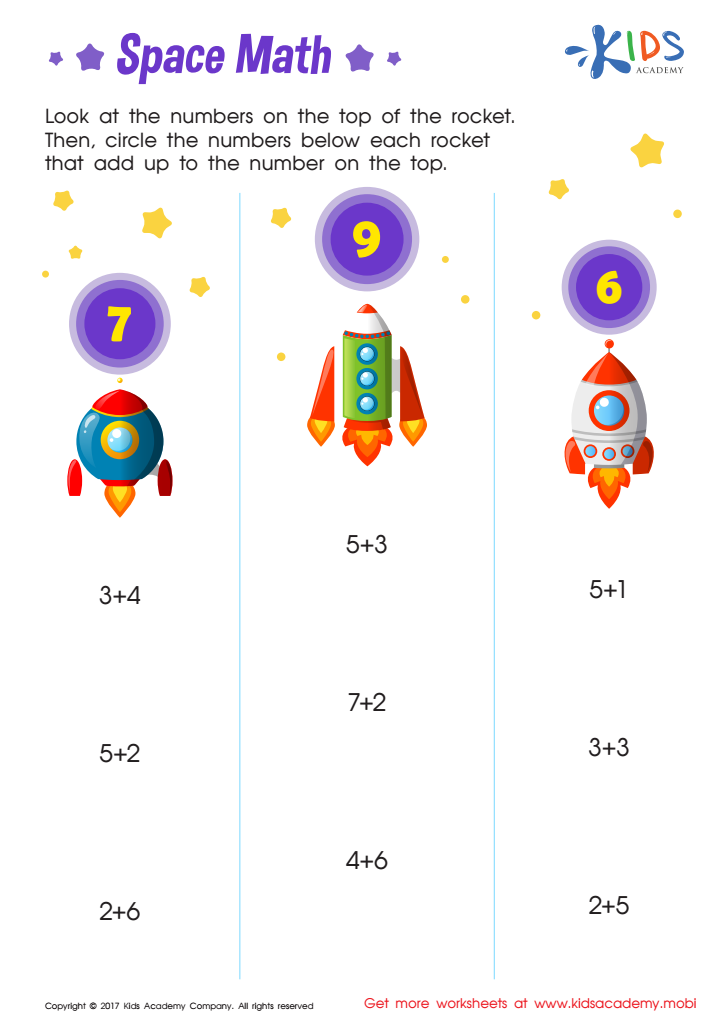
Addition: Space Math Worksheet
 Assign to My Students
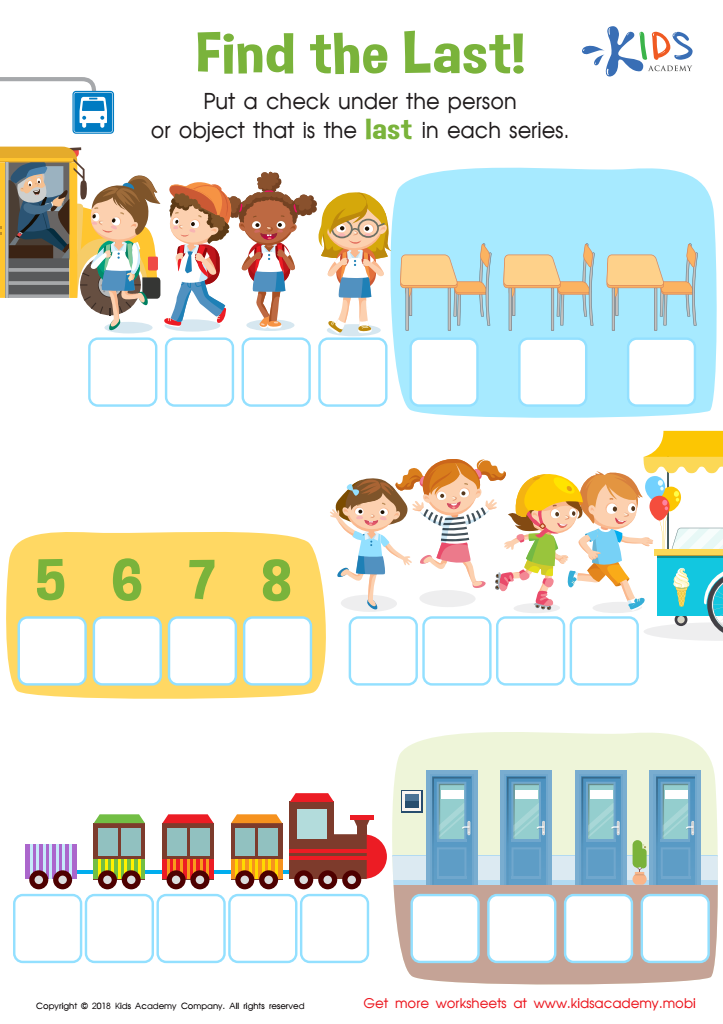
Find the Last! Worksheet
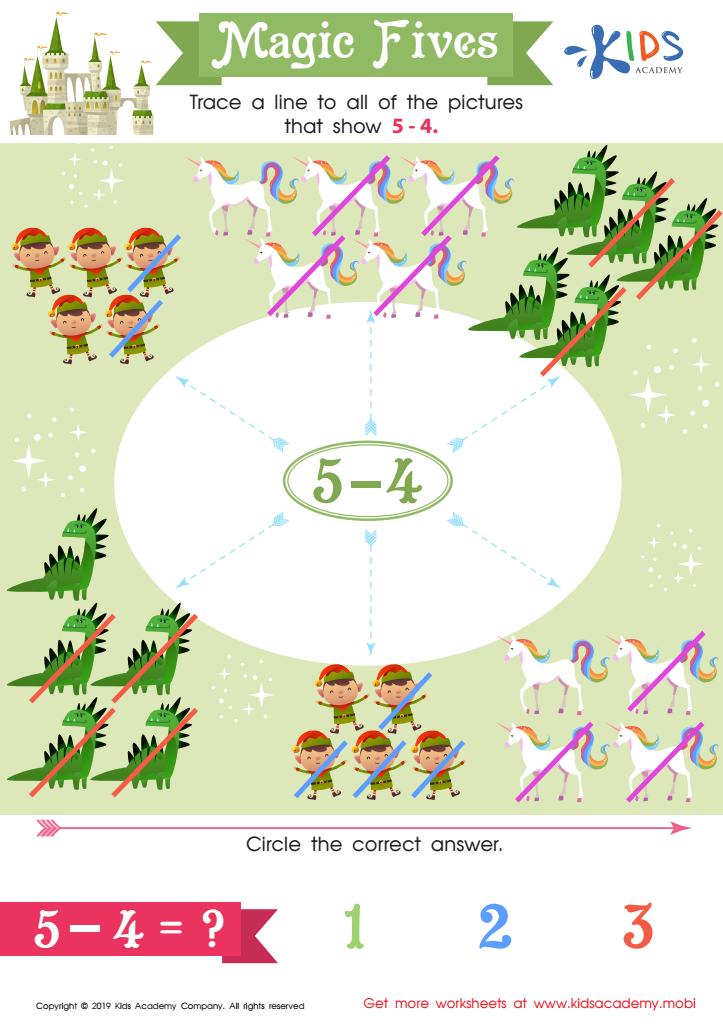
Magic Fives Worksheet







Understanding patterns is crucial for children ages 3-5 as it forms the foundation for essential cognitive and academic skills. At this stage, children are developing their ability to make connections and recognize relationships among objects and ideas. When parents and teachers emphasize pattern recognition, they are enhancing critical thinking, problem-solving, and mathematical reasoning abilities.
Recognizing patterns helps children develop predictive skills, as they learn to anticipate what comes next based on established sequences. This foundational skill is a precursor to more advanced mathematical concepts, such as addition and subtraction, and eventually, algebra. Additionally, patterns play a significant role in language development, as they assist in understanding rhythms and rhymes in songs and stories.
Moreover, nurturing pattern recognition in early childhood fosters a sense of order and organization, promoting emotional and cognitive stability. Engaging children through playful activities, such as matching games and art projects, not only makes learning enjoyable but also reinforces their analytical skills.
Ultimately, by prioritizing pattern understanding, parents and teachers equip young learners with the tools they need to succeed academically and in everyday problem-solving, laying the groundwork for lifelong learning.








