Uppercase identification Normal Worksheets for Ages 3-5
5 filtered results
-
From - To
Discover our engaging Uppercase Identification Normal Worksheets designed specifically for children aged 3-5. These worksheets provide a fun and interactive way for early learners to recognize and identify uppercase letters. Featuring colorful illustrations and captivating activities, children will enjoy building their letter recognition skills through various exercises tailored to their developmental stage. Ideal for both home and classroom use, these worksheets encourage creativity while enhancing literacy foundational skills. Help your little ones gain confidence in their reading abilities! Explore our collection and watch your child’s understanding of uppercase letters grow with each enjoyable worksheet. Perfect for play-based learning!
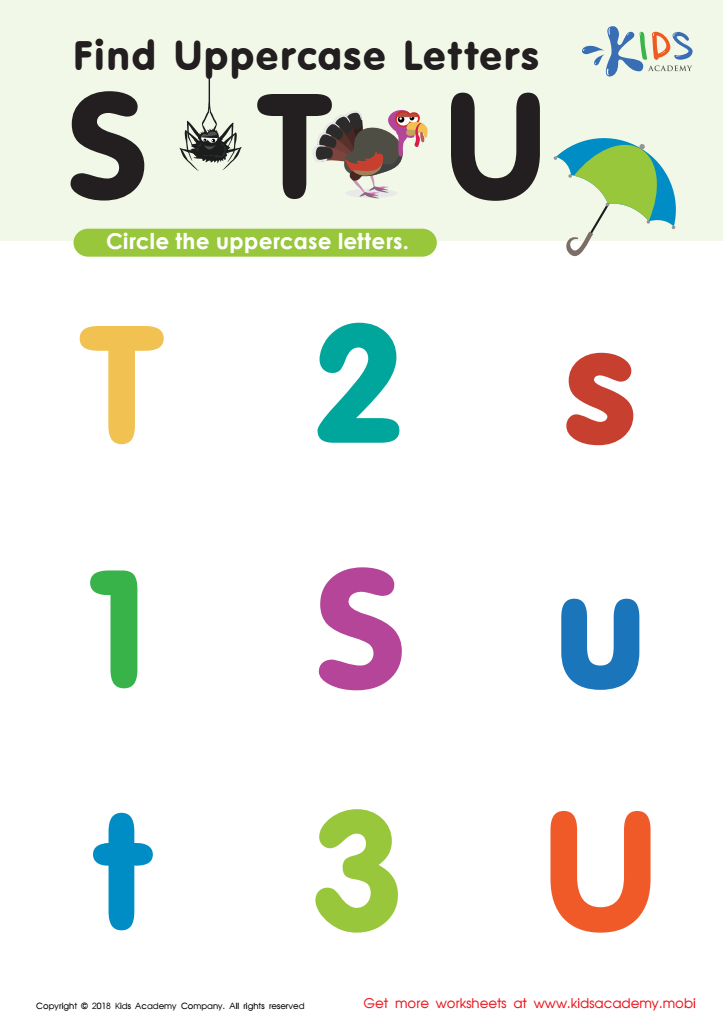
Find Uppercase Letters Worksheet
 Assign to My Students
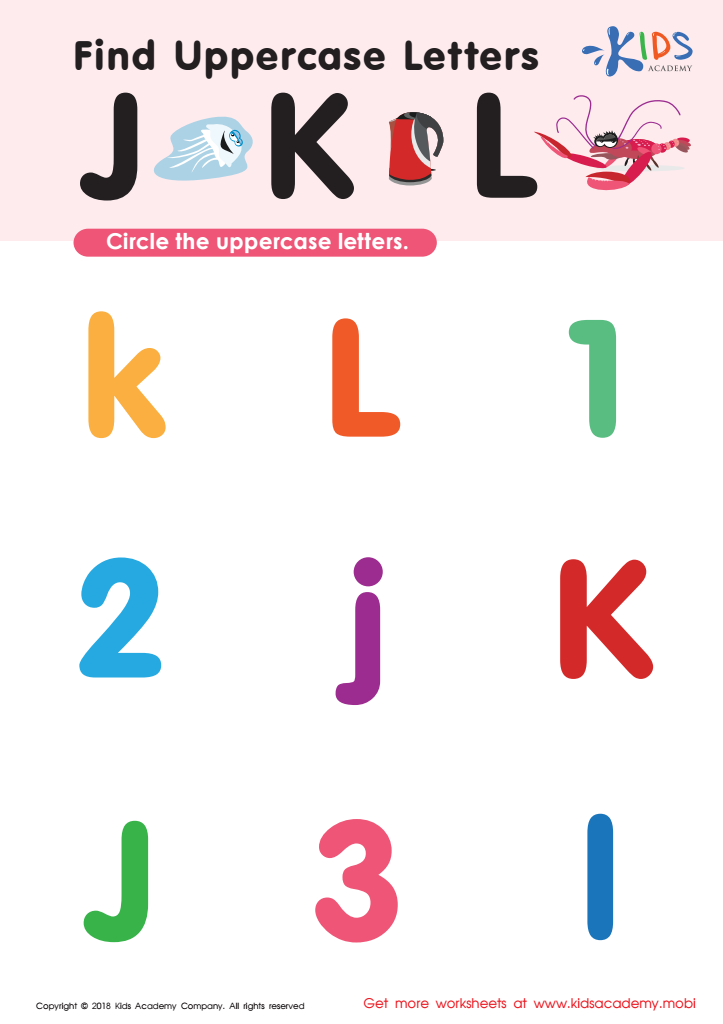
Find Uppercase Letters J, K, and L Worksheet
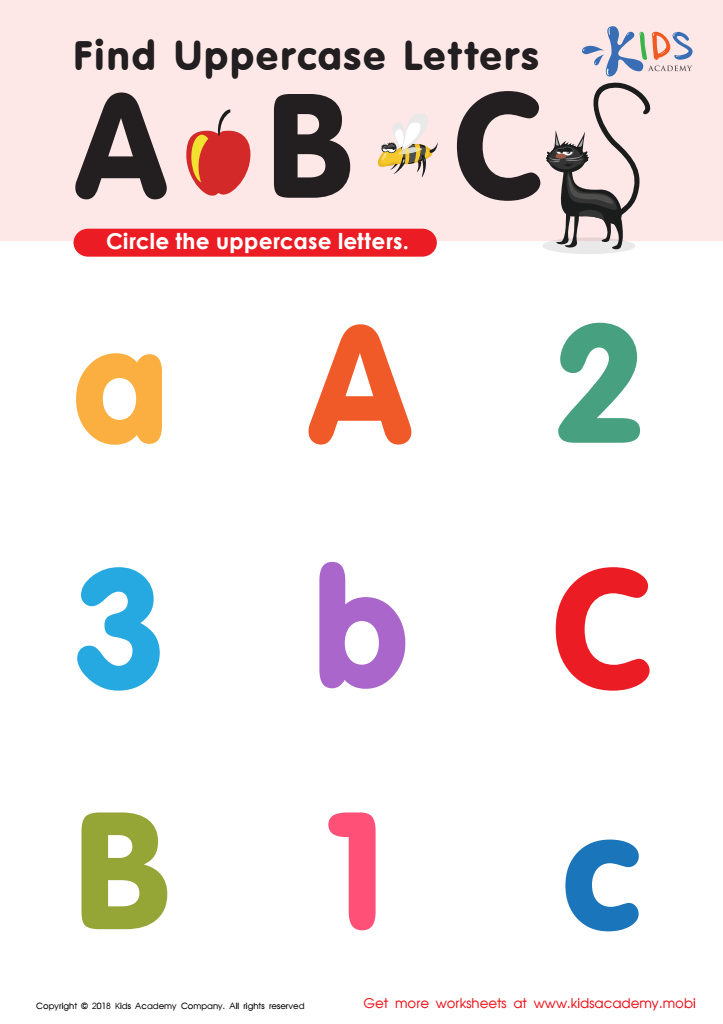
Find Uppercase Letters A, B, and C Worksheet
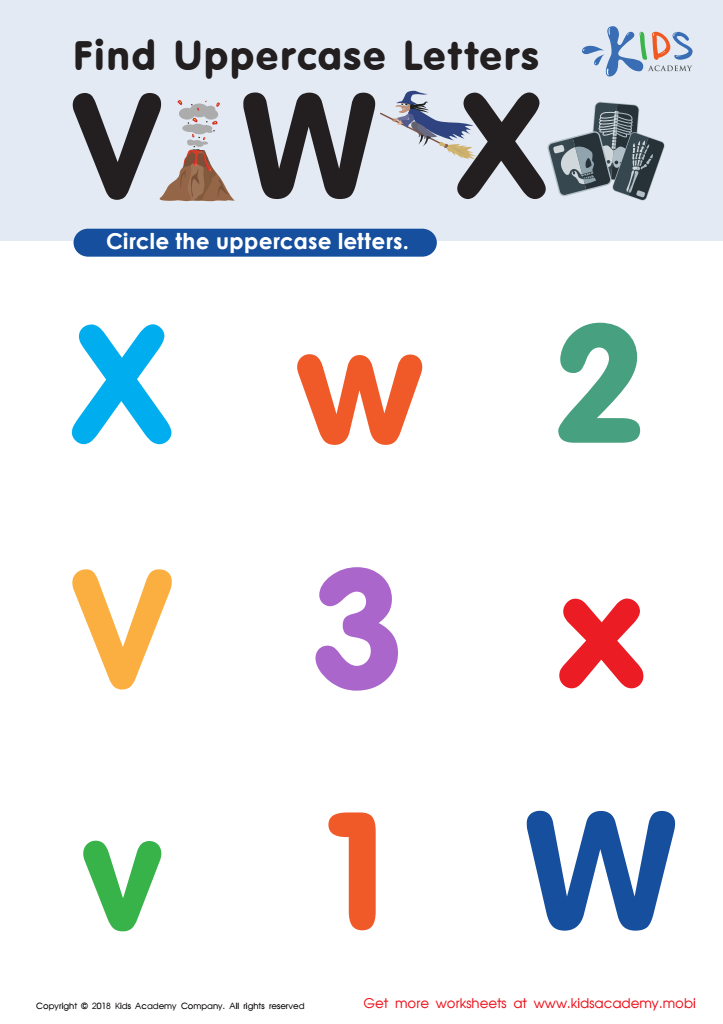
Find Uppercase Letters V, W, X Worksheet
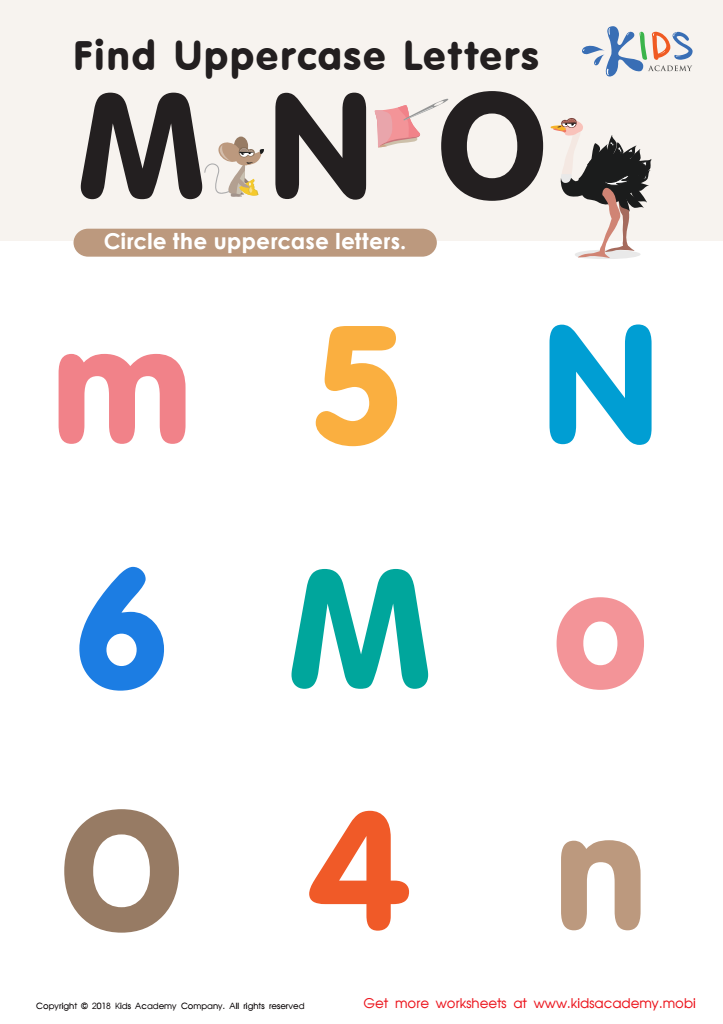
Find Uppercase Letters M, N, and O Worksheet








Uppercase letter identification is crucial for children aged 3-5, as it forms the foundation for literacy development. At this early age, children are developing their phonemic awareness, which is essential for reading and writing. Recognizing uppercase letters is often the first step in learning the alphabet, helping children to differentiate between letters and understand that they represent sounds.
Parents and teachers should care about uppercase letter identification because it directly impacts a child’s readiness for reading. Mastering uppercase letters can boost a child's confidence and enthusiasm for learning, making it easier for them to transition into reading and writing activities. Furthermore, knowledgeable caregivers can use this opportunity to create engaging activities that reinforce letter recognition, such as crafting, singing the alphabet song, or reading picture books.
Additionally, identifying uppercase letters reinforces language skills and can foster a love for books. Early interventions and support in this area can mitigate future reading difficulties, setting children on a path to academic success. Thus, emphasizing uppercase letter identification should be a central focus in early education strategies, as it is a key predictor of literacy skills in later years.








