Cognitive Development Normal 2D Shapes Worksheets for Ages 3-5
5 filtered results
-
From - To
Introduce your little learners to the exciting world of 2D shapes with our Cognitive Development Normal 2D Shapes Worksheets for Ages 3-5! These worksheets are designed to enhance shape recognition and understanding, promoting critical cognitive skills in young children. Engaging visuals and fun activities allow kids to explore circles, squares, triangles, and more while developing essential math skills. Our thoughtfully crafted exercises encourage problem-solving, shape matching, and creative thinking, making learning enjoyable and interactive. Ideal for home or classroom use, these worksheets lay a solid foundation for future mathematical concepts, ensuring your child is poised for success in their educational journey!
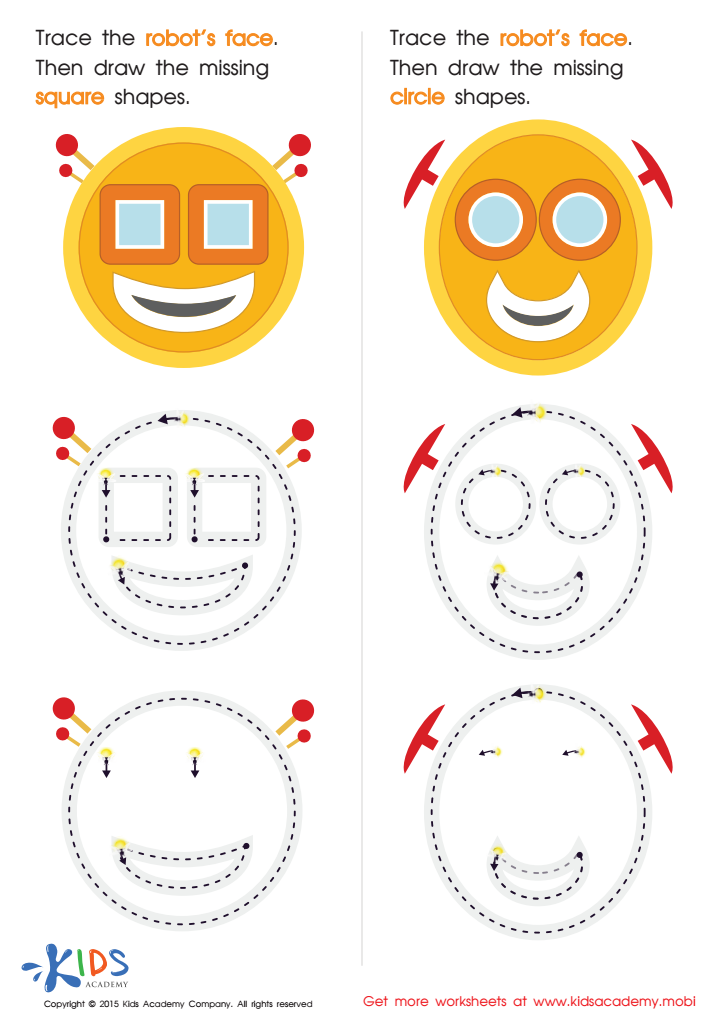
Practicing to Draw Circles And Squares Printable
 Assign to My Students


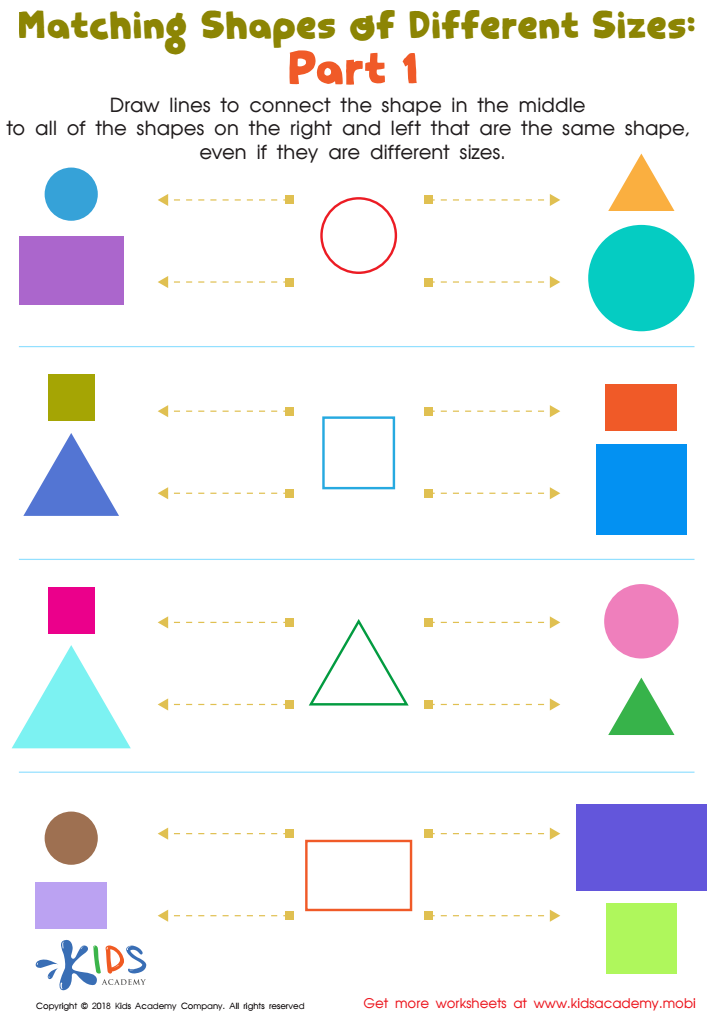
Geometry: part 1 Worksheet
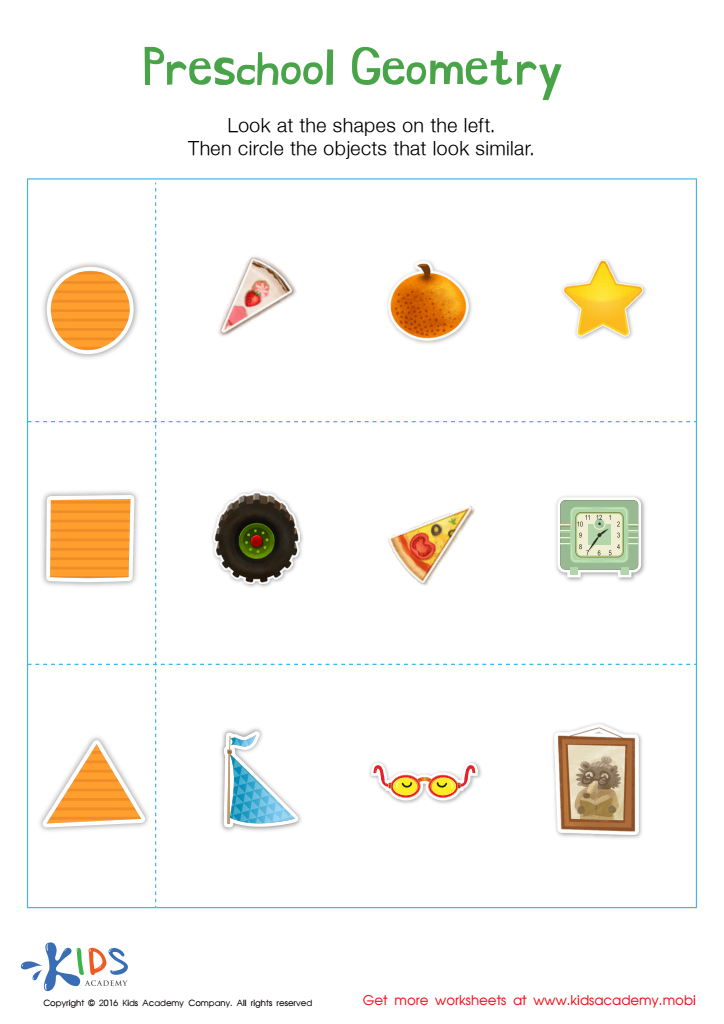
Preschool Geometry Match Up Worksheet
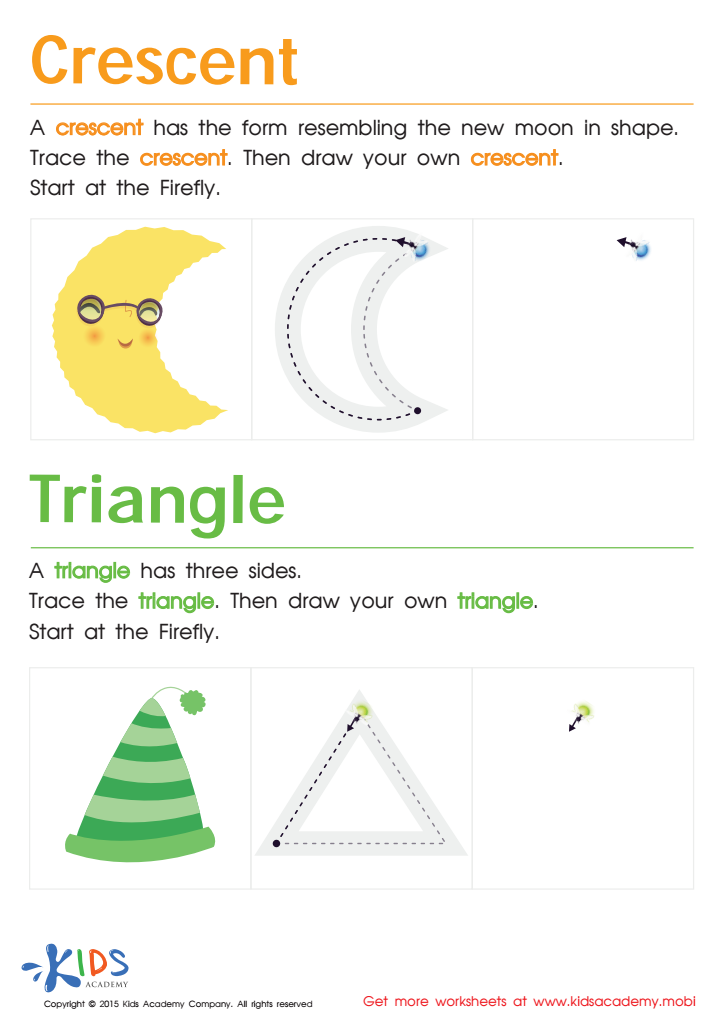
Learning to Draw Crescents And Triangles Worksheet
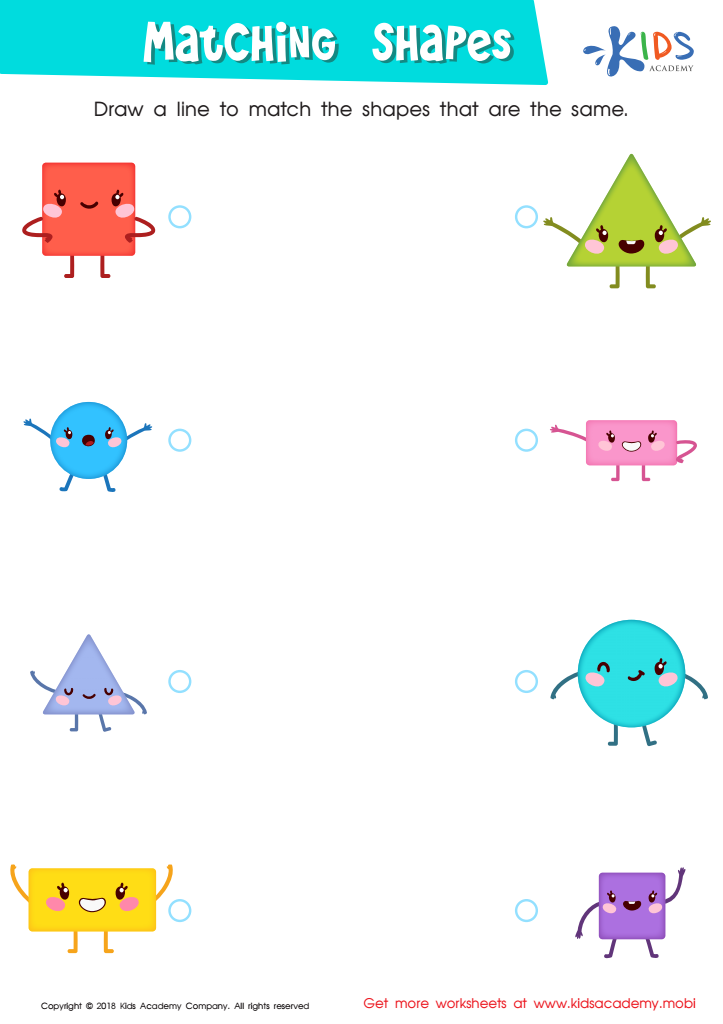
Matching Shapes Worksheet








Parents and teachers should prioritize cognitive development through the exploration of 2D shapes for children aged 3-5 for several reasons. Firstly, recognizing and naming shapes is fundamental to a child's early mathematical understanding. It helps them make sense of the world around them, forming a basis for problem-solving and logical reasoning. By identifying shapes, children enhance their spatial awareness, crucial for tasks like reading maps or constructing objects as they get older.
Moreover, engaging with shapes fosters creativity and imagination. Activities such as drawing, crafting, or playing shape-related games encourage and stimulate a child’s expressive skills, creating opportunities for imaginative play. These interactions can also support language development; as children describe shapes and their properties, they expand their vocabulary and communication skills.
Lastly, understanding 2D shapes can influence early literacy skills. Patterns in shapes introduce concepts of sequencing and categorization, which are key for later reading and writing.
In essence, early shape recognition is not merely about learning their names; it is a multi-faceted approach that supports overall cognitive development, enhancing mathematical skills, creativity, language acquisition, and foundational literacy—all essential tools for lifelong learning.