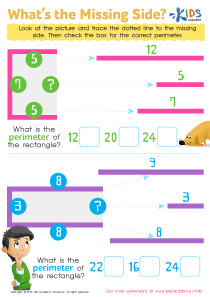
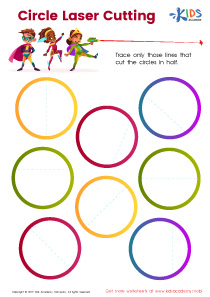
Critical Thinking Normal 2D Shapes Worksheets for Ages 3-5
5 filtered results
-
From - To
Discover the engaging "Critical Thinking Normal 2D Shapes Worksheets" designed for young learners aged 3-5! These interactive worksheets focus on enhancing critical thinking skills while introducing fundamental 2D shapes. Children will explore various shapes through fun activities that encourage observation, reasoning, and problem-solving. As they identify, match, and compare different shapes, they develop essential cognitive skills that serve as a foundation for future math learning. Ideal for preschool and kindergarten settings, these printable worksheets provide a playful and educational way to stimulate curiosity and creativity in early childhood education. Start fostering critical thinkers today with our colorful, stimulating shapes worksheets!
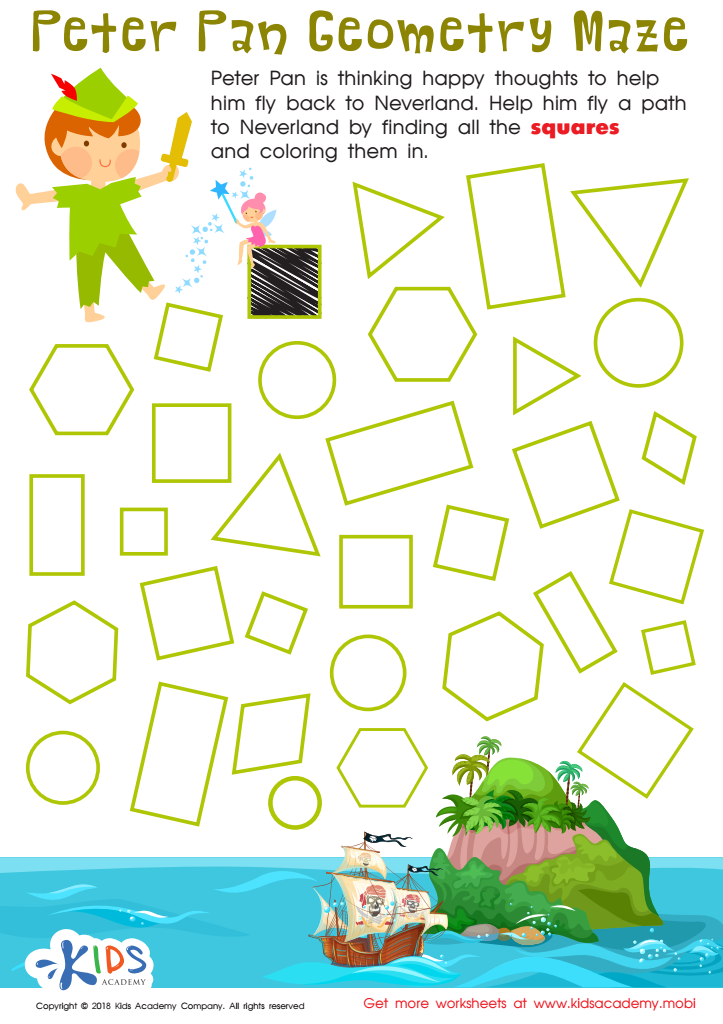
Peter Pan Worksheet
 Assign to My Students


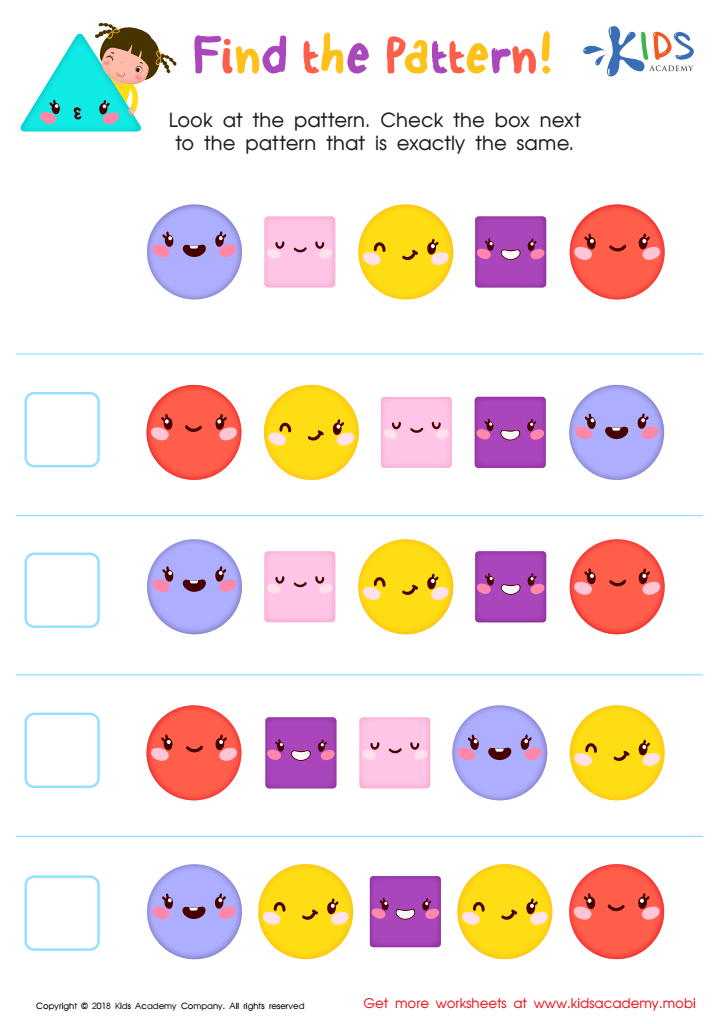
Find the Pattern Worksheet
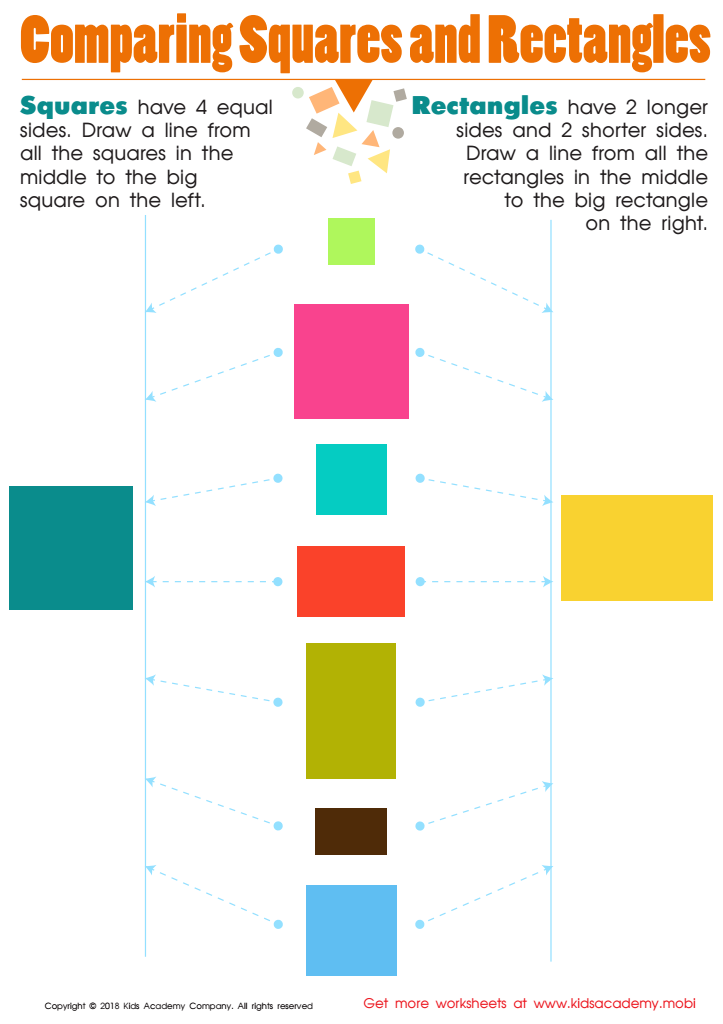
Comparing Squares Rectangles Worksheet
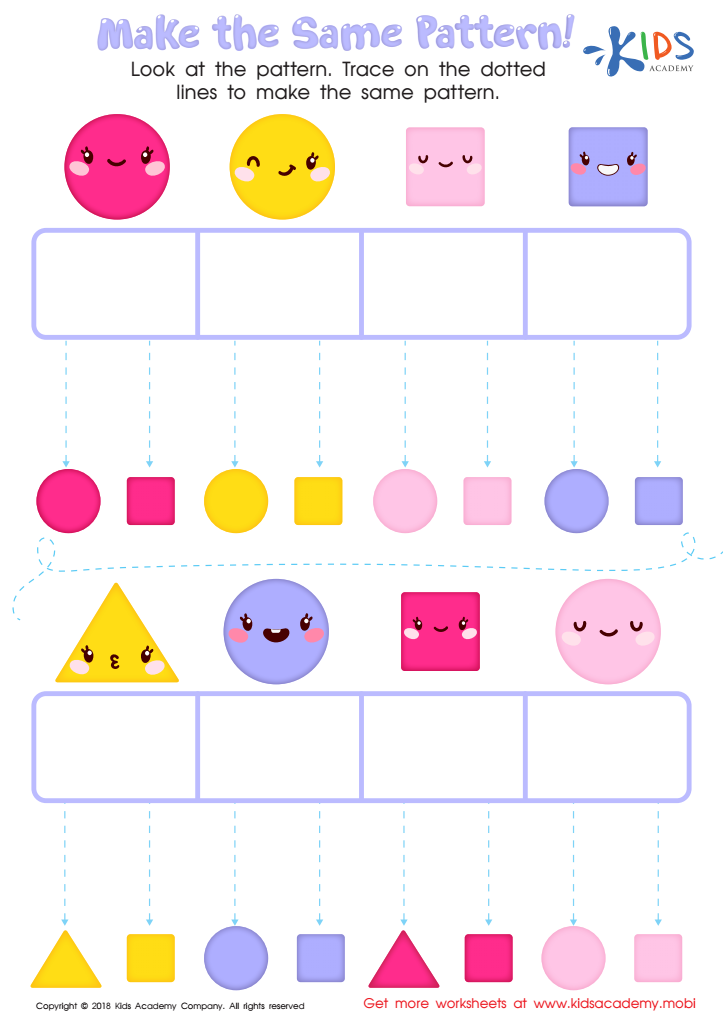
Make the Same Pattern Worksheet
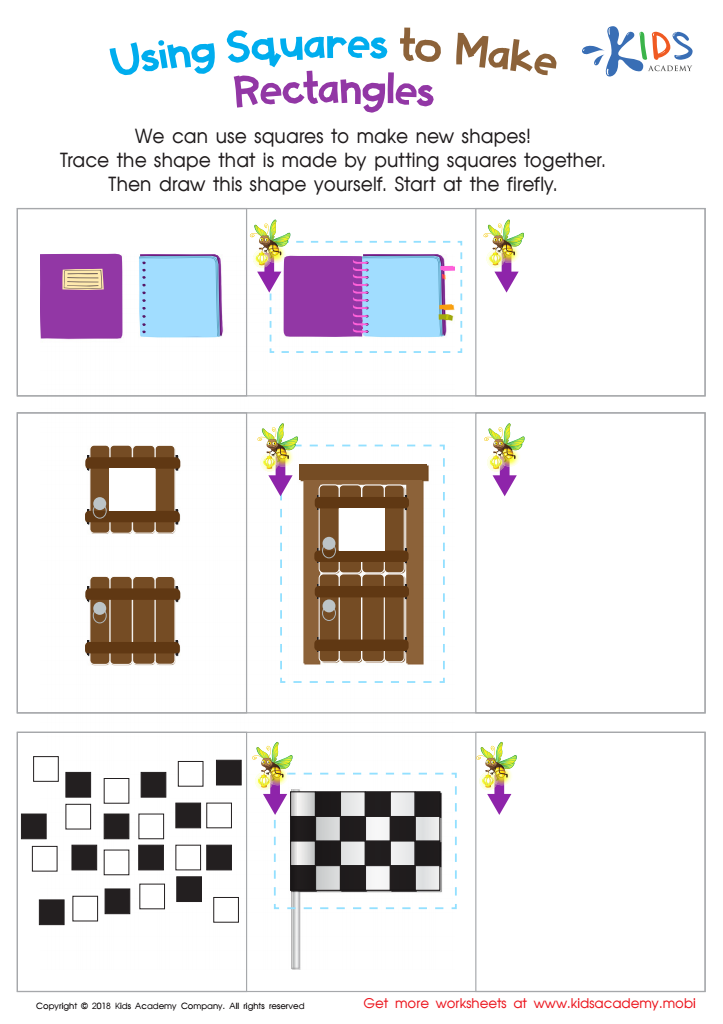
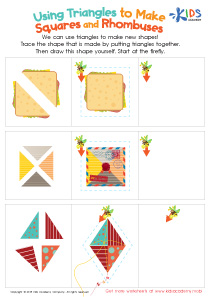
Using Squares to Make Rectangles Worksheet








Parents and teachers should prioritize critical thinking in exploring 2D shapes for children aged 3-5 because it lays the foundation for essential cognitive skills. At this tender age, children are naturally curious and eager to make sense of the world around them. Introducing 2D shapes—like circles, squares, triangles, and rectangles—stimulates their thought processes as they begin to categorize, identify characteristics, and examine relationships between different shapes.
Critical thinking during shape recognition encourages children to ask questions, solve problems, and develop reasoning abilities. For instance, when children learn to recognize that a square is a type of rectangle, they are not only engaging in shape identification but also exploring concepts of hierarchy and classification. This practice enhances their analytical skills, promoting logical reasoning and the ability to draw comparisons, which are crucial for future learning.
Additionally, these activities foster creativity as children manipulate shapes to create patterns or art, offering a blend of logical and imaginative thinking. Ultimately, nurturing critical thinking around 2D shapes prepares children for more complex subjects, transitions into math concepts, and supports their overall academic success, making it an invaluable focus for educators and parents.